
Yokohama’s ramen map is strongest away from the waterfront postcard route, in station neighborhoods where counter shops serve local regulars before tourists arrive. Yokohama Ramen Tagamiya belongs to that practical, low-friction side of the city: an 11-seat counter in Gumyoji with Tabelog 100 Ramen Kanagawa recognition and a price band that keeps the focus on the bowl rather than the ceremony.
Pearl is the En Primeur Club membership app — saves, bookings, and concierge access live there. Same editors, same standards.
- Address
- 神奈川県横浜市南区通町3-48
- Website
- tabelog.com
 Saves & bookings on Pearl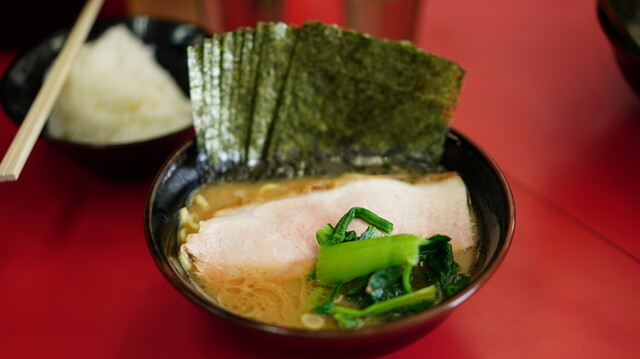
Approaching Gumyoji, Yokohama changes register. Port imagery gives way to lived-in residential rhythm: station exits, shopping streets, narrow shopfronts, and ramen counters built for turnover rather than lingering. Yokohama Ramen Tagamiya fits a neighborhood ramen culture that rewards early movement, solo diners, and a clear read on house rules.
This is not the Yokohama of hotel lobbies and Minato Mirai skyline dinners. It is the everyday city mapped in our full Yokohama restaurants guide, where small formats compete on consistency, broth identity, and local repeat traffic. Selection for Tabelog 100 Ramen Kanagawa 2025 gives the shop a public benchmark in a crowded prefectural category, while appearances in Tabelog’s ramen selections in 2024, 2018, and 2017 point to durability, not one season of attention.
Gumyoji ramen culture favors counters over ceremony
Kanagawa ramen faces two pressures: Tokyo’s dense specialist scene to the north and Yokohama’s own ie-kei reputation, the pork-and-soy style born in the city. Yokohama’s better neighborhood shops are therefore less about theatre than definition. A small counter, concise category, and steady local audience can matter more than a long menu or polished dining-room choreography.
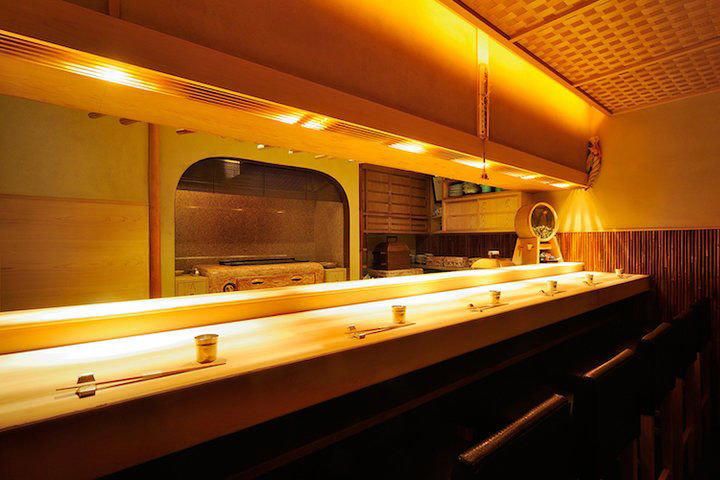
Yokohama Ramen Tagamiya fits that grammar. The format is counter seating only, with 11 seats, and the listed category is ramen. That scale matters. In a city where diners move among casual Chinese rooms, curry houses, tonkatsu counters, and ramen shops, a room this small frames the meal as quick and focused. It also suits solo dining and small groups more than destination-dinner planning.
Price places the shop in a clear bracket. At JPY 1,000 to JPY 1,999, it sits above the lowest-budget ramen options but far below Yokohama’s spendier casual-dining rooms. Compared with Ramen Taiko or Ryusei Ken, both in a sub-JPY 999 bracket, it is a more deliberate ramen spend; compared with Tonkatsu Souki, at JPY 3,000 to JPY 4,999 depending on meal period, it remains everyday. Ramen Torikku shares the JPY 1,000 to JPY 1,999 band, a useful lens for ramen-specific choices rather than broader restaurant categories.
That comparison works across Yokohama’s casual spectrum. A meal at 1000 (Yakitori (Grilled chicken skewers)) reads through grilling and drink-friendly pacing; Aichun and Ajowan sit in different local lanes; Alpenjiro Honten shows Yokohama’s casual meals are not limited to noodles. Ramen compresses the choice: line, seat, bowl, exit.
The appeal is the Yokohama neighborhood equation
Gumyoji’s position shapes the meal before ordering. Nearest-station geography makes the restaurant part of a local circuit rather than a waterfront add-on, important for travelers who default to Yokohama Station, Kannai, or Minato Mirai. The reward is not spectacle but a sharper view of how the city eats outside polished visitor corridors.
The house format reinforces that. Reservations are unavailable, payment is cash-only, and the dining room is non-smoking. Photography is limited to food, keeping the small counter from becoming a content set. The shop is family friendly for school-age children, solo-diner friendly, and suitable for friends, though the counter naturally favors compact parties who can move with the room.
For wider Yokohama itineraries, this stop pairs better with neighborhood wandering than a dressed-up evening. The city’s hospitality and drinking scenes run on different rhythms, better handled through our full Yokohama hotels guide and full Yokohama bars guide. Ramen here is a daytime or early-meal anchor, not a long-form night out. Travelers planning beyond restaurants can also use our full Yokohama wineries guide and our full Yokohama experiences guide for the rest of the city map.
The broader Japanese casual-dining context helps. Yokohama’s ramen counter belongs to a national habit of tightly specialized, low-seat venues: different from Anzen Shokudo in Fukuoka, (Shoku) Vietnam in Kawasaki, or [Curry Senmon Ten] Maruyama Kyoju. in Sapporo, but driven by the same expectation that a specialist room is judged by execution and repetition. Even outside Japan, focused formats such as Jōdo Saké Bar in Los Angeles or Onigiri Time in Pasadena show how tightly defined Japanese categories travel when the format remains legible.
How to read its recognition without overcomplicating the meal
Tabelog 100 Ramen Kanagawa recognition is useful because it filters a huge category by prefecture rather than treating ramen as one national field. For diners, that matters. A Kanagawa selection places Yokohama Ramen Tagamiya against nearby noodle specialists and regional expectations, not Tokyo’s highest-profile counters or destination ramen shops across Japan.
The shop’s Tabelog score of 3.72 adds another signal, though ramen ratings in Japan need care. Scores reward consistency and public consensus, but they do not replace fit. Some diners want speed and low spend; others want a recognized counter with a tighter room and fewer distractions. This address is stronger for the second group, especially travelers who know a small ramen shop can require more planning than its price suggests.
There is useful restraint in what should be said. No named chef is publicly attached in the available details, and no official website is listed, so the sharper editorial read comes from format, neighborhood, award history, and operating cues rather than biography. That is often the right way to approach ramen in Yokohama: the bowl may draw you in, but city context explains why the experience differs from a central Tokyo queue or hotel-adjacent dining room.
For travelers extending the comparison beyond Yokohama, the contrast with destination dining elsewhere in Japan is instructive. -Grilled beef Sukiyaki- KAMAKURA TANUKIAN 鎌倉 たぬき庵 in Kamakura belongs to a more composed meal category, while. 鮪と炭火焼き うお炭 秋葉原店 in Tokyo.cafe in Osaka, and.know in Kumamoto show how city, format, and category shift expectations before price enters the conversation. Gumyoji’s ramen counter is quieter than all of that, and more revealing because of it.
A Minimal
Comparable venues to calibrate price, style, and recognition.
| Venue | Cuisine | Price | Notes |
|---|---|---|---|
| Yokohama Ramen TagamiyaThis venue — the venue you are viewing | Minami, Traditional Yokohama iekei ramen | $ | Not listed |
| Baron Noodle | Nishi, Ramen & Tsukemen | $ | Not listed |
| Shinachiku Tei | Kanagawa, Ramen | $ | Not listed |
| Chuka Soba Takano | Not listed | $ | Kanagawa, Classic Japanese ramen (chuka soba) |
| Jikaseimen Kamikaze | Totsuka, Traditional Japanese Ramen | $ | Not listed |
| Ramen Jiro Nakayama ekimae ten | Midori, Jiro-style Ramen | $ | Not listed |
Recognition history
Dated appearances from independent guides and award organizations, with the underlying list record or original source where available.
Tabelog 100 #6 · No. 6
Tabelog · Tabelog 100 - Ramen - KANAGAWA - 2025









At a Glance
- Classic
- Cozy
- Well Known
- Intimate
- Solo
- Family
- Casual Hangout
- After Work
- Chefs Counter
- Standalone
A compact, counter-only house-restaurant with an intimate, no-frills feel where guests sit elbow-to-elbow at 11 seats, focused on steaming bowls of classic Yokohama iekei ramen in a casual, lively atmosphere.