
Ebisu’s soup-curry culture sits between Sapporo inheritance and Tokyo’s lunch-counter pragmatism. YELLOW COMPANY Ebisu honten brings that format into a 50-seat Shibuya address with Tabelog Curry TOKYO 100 selection in 2024, plus repeat appearances in earlier editions. The draw is not ceremony; it is spice, broth, local-ingredient intent, and a format that works for casual groups as well as solo curry hunting.
Pearl is the En Primeur Club membership app — saves, bookings, and concierge access live there. Same editors, same standards.
- Address
- 東京都渋谷区東3-14-19 オークヒルズ 1F
- Phone
- +81354852723
- Website
- yellowcompany.jp
 Saves & bookings on Pearl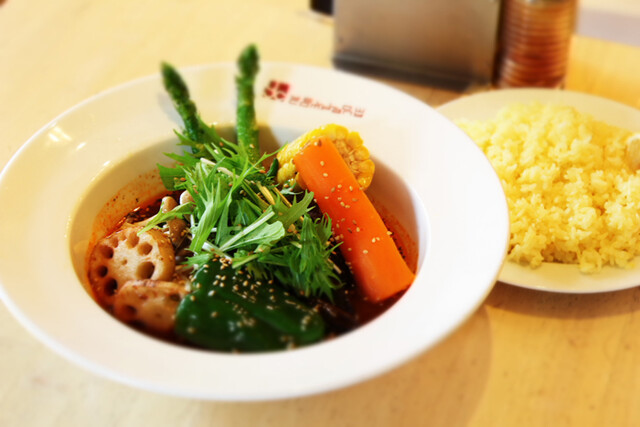
Approaching the Higashi side of Ebisu, the mood shifts from station-side office traffic to smaller streets where Tokyo’s serious casual restaurants often do their work without theatrical signage. Soup curry suits that setting. It is less about plate architecture than heat, broth clarity, vegetable structure, and the way rice becomes a pacing device rather than a filler. YELLOW COMPANY Ebisu honten belongs to that practical Tokyo category: a specialist room where the format is legible before the first spoonful, and where the city’s appetite for regional Japanese curry is treated with more care than trend-chasing.
Tokyo curry is too broad to reduce to one lineage. There is European-style yoshoku curry, Indian and Nepalese cooking adapted to the city’s commuter rhythms, spice-curry shops influenced by Osaka, and the Sapporo-born soup-curry tradition that prizes broth and vegetables over the thick roux familiar from cafeterias. This Ebisu address sits in the last camp. Its selection for Tabelog Curry TOKYO 100 in 2024, after appearances in 2019, 2020, 2022, and 2023, places it within the city’s recognized curry specialists rather than the general comfort-food field.
Soup curry in Ebisu is about broth, vegetables, and controlled heat
Soup curry’s appeal lies in separation. Rice, broth, protein, vegetables, and spice level are not blended into a single heavy mass; they remain readable. That matters in Tokyo, where curry can swing from railway-station speed to tasting-menu seriousness. Here the editorial value is in the middle: a regional style from Hokkaido made useful for an Ebisu audience that may be coming from work, shopping, or a cross-town food crawl.
The sourcing angle matters because soup curry exposes weak produce more than roux curry does. Vegetables sit in the bowl as individual components, and the broth has to carry spice without masking everything else. YELLOW COMPANY describes a daily additive-free soup curry, a spice blend that includes 30 types of spices, and an effort to use local ingredients where possible. Those details explain why the format has lasted in Tokyo rather than reading as a transplanted novelty from Sapporo.
The restaurant’s public positioning also leans into accessibility without flattening the food. Takeaway is available across the soup-curry menu, and frozen soup curry has been sold online, which reflects how Tokyo’s casual specialists increasingly operate beyond the dining room. The point is not luxury; it is repeatability. Curry shops with lasting followings usually win on consistency, speed, and a house balance of spice and body, not on a single photogenic dish.
For comparison within the city, 3 Chome no Curry Ya San speaks to another side of Tokyo’s curry map, while [Curry Senmon Ten] Maruyama Kyoju. in Sapporo points back toward Hokkaido’s broader curry culture. Readers mapping the category across Japan can also place this alongside [ki:] in Kyoto, .cafe in Osaka, .know in Kumamoto, and (Shoku) Vietnam in Kawasaki, each useful for seeing how casual specialist dining changes by city.
A casual specialist room with enough structure for groups
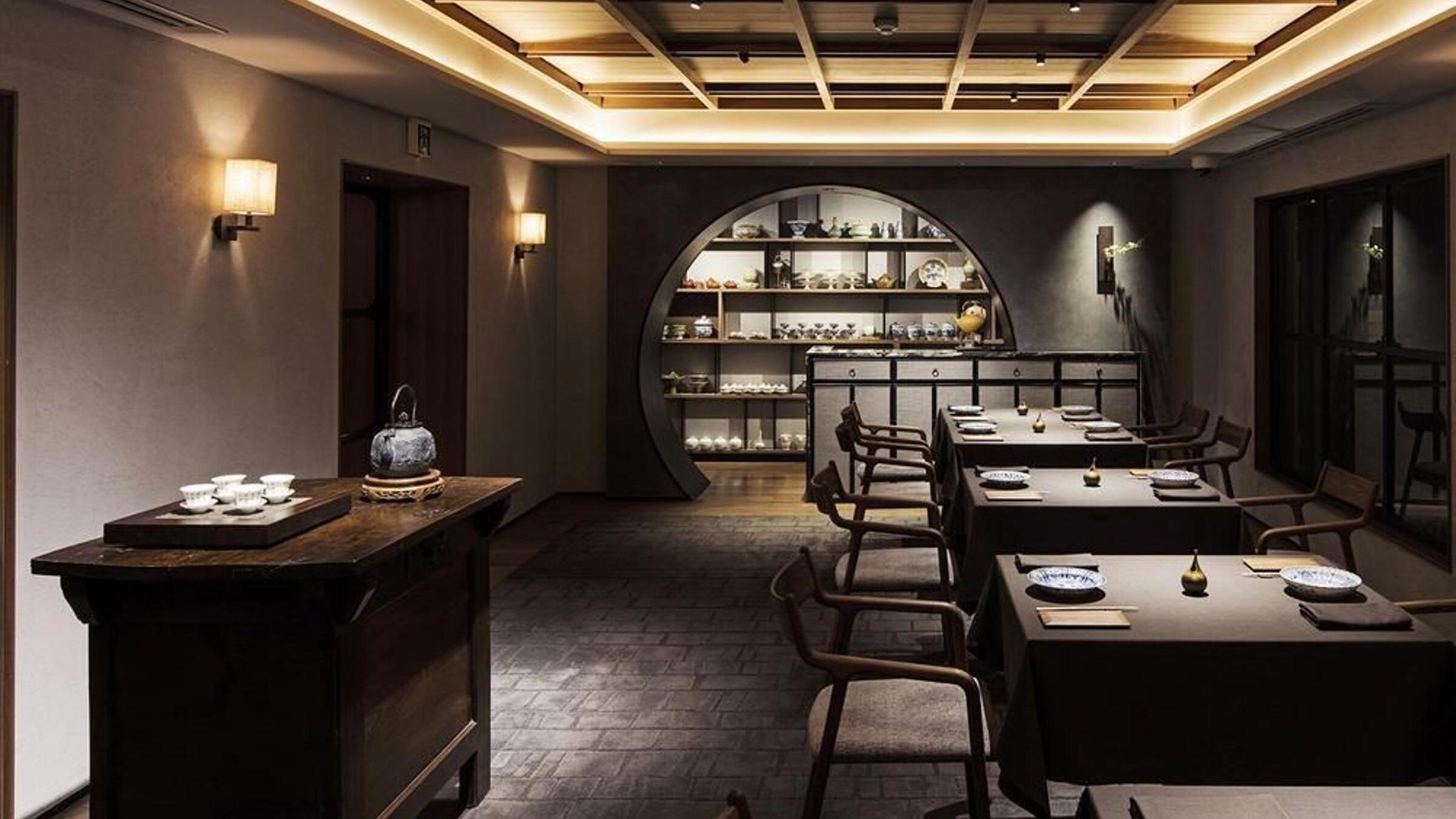
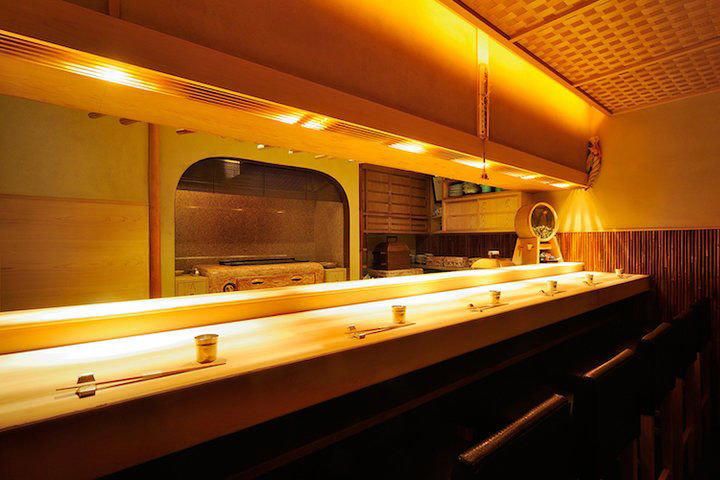
The physical setup is part of the argument. Fifty seats is large for a Tokyo specialist curry address, especially in a neighbourhood where many independent restaurants trade intimacy for scarcity. The room includes counter seating and loft seating, and pet-friendly seating is directed to the loft. That makes it more flexible than the narrow counter-only curry shops that dominate parts of central Tokyo, without pushing it into chain-restaurant anonymity.
Family use is also built into the format. Children are welcomed, strollers are accepted, and a no-spice option is listed. That detail matters in Tokyo, where serious casual dining can be friendly in spirit but restrictive in practice. Soup curry’s adjustable heat gives it a wider range: spice-focused adults can stay in the category, while younger diners are not forced into a separate menu logic.
Ebisu itself helps explain the fit. The neighbourhood can support French dining such as Bistro YEBISU, Chinese cooking such as Wasa, and higher-spend meat or tempura formats in the wider Tokyo field, including Horumon Yaki Rukuma Tokyo and 天ぷら 元吉. Against that backdrop, soup curry occupies a different decision point: lower-ceremony, spice-led, and easier to fold into an ordinary day. The Tabelog score of 3.72 and 2024 Curry TOKYO 100 recognition give it external validation without changing its basic promise.
For broader Tokyo planning, the curry stop pairs naturally with other food-led itineraries rather than hotel-lobby dining. EP Club’s city coverage can extend the route through Our full Tokyo restaurants guide, then outward into Our full Tokyo hotels guide, Our full Tokyo bars guide, Our full Tokyo wineries guide, and Our full Tokyo experiences guide. Within the restaurant map, nearby contrasts can be sharpened through 12/10 Shinjuku ten, 124. KAGURAZAKA (Yakitori), 2D Cafe, and. 鮪と炭火焼き うお炭 秋葉原店.
Where it fits in a Tokyo itinerary
This is the kind of address that rewards category interest more than ceremony seeking. Diners looking for hushed service, tasting-menu progression, or chef-counter choreography should look elsewhere. Diners trying to understand how Tokyo absorbs regional Japanese food forms should pay attention. Soup curry from Sapporo has become part of the capital’s casual dining vocabulary, and Ebisu gives it an audience that appreciates speed, spice, and specificity.
The practical value is strongest for a lunch or low-key dinner built around Ebisu, Daikanyama, or Shibuya rather than a destination evening. The restaurant’s recognition gives it credibility, but the real reason to go is clearer: it shows how a regional curry style can survive in Tokyo by being useful, adaptable, and ingredient-aware. For wider comparison beyond Japan, casual specialist formats such as Jōdo Saké Bar in Los Angeles and Onigiri Time in Pasadena make a related point overseas, where narrow Japanese formats succeed when they keep their logic intact. For a domestic contrast outside Tokyo’s curry frame, -Grilled beef Sukiyaki- KAMAKURA TANUKIAN 鎌倉 たぬき庵 in Kamakura shows a more set-piece Japanese dining decision.
Reputation First
Side-by-side context: comparable cuisine and price.
| Venue | Cuisine | Price | Notes |
|---|---|---|---|
| YELLOW COMPANY Ebisu hontenThis venue — the venue you are viewing | Soup curry | $ | Not listed |
| DANDELION CHOCOLATE Fakutorii&kafe kuramae | Bean-to-bar chocolate café | $ | Taitō |
| Dans Dix ans | Artisan Japanese Bakery | $ | Kichijoji |
| Shiroichi Shibuya ten | Raw milk soft serve & ice cream shop | $ | Shibuya |
| AMAMERIA ESPRESSO | Specialty coffee roastery café | $ | Shinagawa |
| Katane Bakery | Neighborhood bakery & café | $ | Shibuya |
Recognition history
Dated appearances from independent guides and award organizations, with the underlying list record or original source where available.
Tabelog 100 #87 · No. 87
Tabelog · Tabelog 100 - Curry - TOKYO - 2024












At a Glance
- Cozy
- Lively
- Solo
- Casual Hangout
- After Work
- Group Dining
- Family
- Standalone
Casual, modern and unpretentious soup curry shop with a cozy, spacious feel, counter and table seating, and a relaxed neighborhood atmosphere suited to solo diners or small groups.