
Dans Dix ans places Kichijoji’s bread culture in a tightly choreographed takeaway format rather than a café routine. Recognition on Tabelog’s Bread TOKYO 100 list in 2022, alongside earlier Bread 100 selections, gives it a credible place in Tokyo’s serious bakery circuit without turning the experience into a formal meal.
Pearl is the En Primeur Club membership app — saves, bookings, and concierge access live there. Same editors, same standards.
- Address
- 2 Chome-28-2 Kichijoji Honcho, Musashino, Tokyo 180-0004, Japan
- Phone
- +81 422-23-2595
- Website
- dansdixans.net
 Saves & bookings on Pearl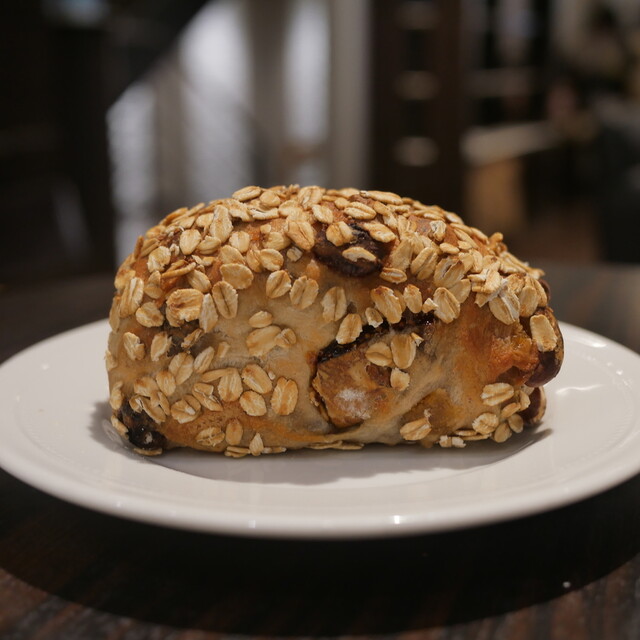
Approaching a serious Tokyo bakery is less like entering a restaurant than joining a small civic ritual: read the room, move with the queue, decide quickly, and know the counter has its own rhythm. In Kichijoji, where shopping streets, school routes, cafés, and residential blocks overlap, bread sits apart from Ginza sushi or Aoyama pâtisserie. It is daily luxury, portable and precise. Dans Dix ans belongs to that register, with a takeaway-only format that makes buying bread part of the experience, not a detail around it.
Tokyo’s bread scene has long moved beyond French-boulangerie imitation. Its serious bakeries filter European technique through Japanese expectations of portion, texture, packaging, and timing. Restraint matters: not a theatrical dining room or chef’s speech, but the practiced exchange between customer and staff. Tabelog selected Dans Dix ans for its Bread TOKYO 100 list in 2022, with earlier Bread 100 selections in 2017, 2018, 2019, and 2020. In Tokyo’s crowded bread field, repeated category recognition signals consistency, not one season of attention.
Kichijoji bread culture runs on routine, not spectacle
Kichijoji suits this bakery because the neighbourhood rewards repeatable pleasures. It is both destination district and lived-in western Tokyo, tied to commuting, schools, Inokashira Park traffic, and weekend browsing. Bread shops here compete less on ceremony than on how well they fit into a day. A bakery earns a following by making the purchase orderly, quick, and considered, then letting the product travel home, to a bench, or into the next errand.
The ritual at Dans Dix ans is unusually explicit. It operates as takeout, with a staff-mediated selection process: customers choose, staff place bread on a tray, the tray moves to the register, payment follows, and the order is handed over. That choreography changes the pace. It discourages grazing with tongs and turns the counter into a controlled exchange, closer to a specialty shop than a self-service bakery. In Tokyo, where etiquette often sits in service mechanics rather than written rules, this is part of the point.
The spending bracket keeps the decision casual by Tokyo standards. Compared with Liberte Patisserie Boulangerie Tokyo honten・kichijoji, which sits in a higher listed range for part of its trade, the restaurant reads as a narrower bread-focused stop, not a full café-boulangerie outing. Against nearby casual food addresses such as LITTLE SPICE, Sabo Musashino Bunko, or Hikiniku to Kome Kichijouji, it belongs to another meal pattern: not lunch as a seat, but bread as a planned acquisition. That distinction helps travellers treating Kichijoji as a half-day neighbourhood rather than a single reservation.
The appeal is the disciplined purchase, not a dining-room performance
There is no need to force restaurant language onto this bakery. It is better read as part of Tokyo’s high-functioning takeaway culture, where packaging, queuing, payment, and product choice all shape the experience. The format also makes demand visible. When a shop sells until items run out, timing becomes part of the ritual, and late-day browsing carries more risk than an earlier stop. That is not scarcity theatre; it is small-batch retail in a city that takes bread seriously.
The Tabelog score of 3.82 adds another signal. In Japan’s user-review culture, scores in that range are not casual noise, especially in a category with broad public participation and many low-cost alternatives. The award history matters more than the number, but together they place the bakery in a credible Tokyo tier: not a luxury restaurant masquerading as a bread shop, and not a neighbourhood convenience buy, but a specialist address with sustained recognition.
For a visitor, the right frame is restraint. Do not expect a long seated meal, tasting format, or chef-led narrative of the kind that defines high-end counters elsewhere in the city. The pleasure is choosing within a controlled retail system and folding the purchase into a Kichijoji walk. It works well in a day built around western Tokyo rather than a cross-city dash between famous names. Tokyo rewards that planning; the strongest food days often combine one serious stop with several modest ones in the same district.
EP Club readers building a wider itinerary can treat this as a counterpoint to formal Tokyo dining. For a broader restaurant map, use Our full Tokyo restaurants guide; for a sleep strategy across the city, see Our full Tokyo hotels guide. Drinking routes sit separately in Our full Tokyo bars guide, while Our full Tokyo wineries guide and Our full Tokyo experiences guide help round out days not built only around meals.
How to place it inside a Tokyo food day
The smart use of the restaurant is as a daytime anchor in Kichijoji, not a dinner substitute. Tokyo’s food culture works in layers: a bakery purchase, a curry counter, a yakitori booking, a bar later in the evening. That is why a bread stop can sit beside addresses with entirely different rhythms, from 3 Chome no Curry Ya San to 124. KAGURAZAKA (Yakitori), 12/10 Shinjuku ten, or. 鮪と炭火焼き うお炭 秋葉原店. The comparison is not cuisine; it is pacing. Tokyo rewards travellers who know when a place is a stop, when it is a meal, and when it is the main event.
That logic applies beyond the city. Japan’s smaller formats often carry the strongest editorial interest, whether café design, regional cooking, or a narrow specialty. Readers tracing that pattern can compare the bakery ritual here with 2D Cafe, -Grilled beef Sukiyaki- KAMAKURA TANUKIAN 鎌倉 たぬき庵 in Kamakura.cafe in Osaka.know in Kumamoto, (Shoku) Vietnam in Kawasaki, [Curry Senmon Ten] Maruyama Kyoju. in Sapporo, and [ki:] in Kyoto. For a transpacific view of Japanese casual formats, Jōdo Saké Bar in Los Angeles and Onigiri Time in Pasadena show how narrow concepts travel, change, and become legible to different audiences.
- パン・オ・ルヴァン (Pain au levain)
- バゲット・ダンディゾン (Baguette Dans Dix ans)
- シュシュ
- ロッゲンミッシュブロート
- 蔵出しもちもちパン
- ミューズリー
Where It Fits
Comparable venues in the metro at similar price points.
| Venue | Cuisine | Price | Notes |
|---|---|---|---|
| Dans Dix ansThis venue — the venue you are viewing | Artisan Japanese Bakery | $ | Not listed |
| Boulangerie Passage à Niveau | French-style neighborhood bakery | $ | Musashino |
| Chirimulo | Dessert and cake shop | $ | Shibuya |
| itokito | Bakery Cafe | $ | Ōta |
| Italiano Jerato Ya | Italian-style gelato & ice cream shop | $ | Taitō |
| woodberry's Honten | Seasonal frozen yogurt & gelato | $ | Kichijoji |
Recognition history
Dated appearances from independent guides and award organizations, with the underlying list record or original source where available.
Tabelog 100 #96 · No. 96
Tabelog · Tabelog 100 - Bread - TOKYO - 2022
Continue exploring
More in Tokyo
Restaurants in Tokyo
Browse all →



Bars in Tokyo
Browse all →



Hotels in Tokyo
Browse all →




Wineries in Tokyo
Browse all →
At a Glance
- Cozy
- Classic
- Solo
- Family
- Casual Hangout
- After Work
- Standalone
- Design Destination
- Farm To Table
- Local Sourcing
Current opening hours
- Monday
- 11 AM–6 PM
- Tuesday
- Closed
- Wednesday
- Closed
- Thursday
- 11 AM–6 PM
- Friday
- 11 AM–6 PM
- Saturday
- 11 AM–6 PM
- Sunday
- 11 AM–6 PM
Hours can change for holidays and private events. Last verified .
A small basement bakery with a calm, understated atmosphere where customers line up at the counter as staff select breads for them on trays; the focus is on the bread itself rather than on-site dining, giving it a classic, quietly refined feel.