Yekta Kabobi
On a Rockville Pike corridor that functions as one of the East Coast's most concentrated Persian-American dining districts, Yekta Kabobi occupies the position of a community reference point rather than a casual discovery. The kitchen operates inside a tradition where koobideh, barg, and tahdig are judged by regulars who know exactly what the dishes should be. Located at 1488 Rockville Pike A, it is accessible via the Red Line Metro.
Pearl is the En Primeur Club membership app — saves, bookings, and concierge access live there. Same editors, same standards.
- Address
- 1488 Rockville Pike A, Rockville, MD 20852
- Phone
- +13019840005
- Website
- yekta.com
- Directions
- Get directions
 Saves & bookings on Pearl
Persian Kabob on Rockville Pike: Reading Yekta Kabobi Inside a Broader Corridor
Rockville Pike operates on a logic that few American dining strips can match: a dense, ethnically diverse commercial corridor where Persian, Chinese, Korean, Indian, and Latin kitchens sit within blocks of each other, competing less on atmosphere than on the authority of their cooking. In that context, a Persian kabob house is not a novelty but a category with real stakes. The question is never whether the genre exists here, but which kitchen handles the fundamentals with the discipline. Yekta Kabobi, at 1488 Rockville Pike, has held a position in that conversation for long enough to be treated as a reference point rather than a discovery.
The Corridor Context
The stretch of Rockville Pike running through Montgomery County has accumulated among the more concentrated Persian-American dining scenes on the East Coast. That is not incidental. The Washington D.C. metro area hosts one of the largest Iranian diaspora communities in the United States, and the suburbs of Montgomery County, particularly Rockville and Bethesda, became a gravitational center for that community from the 1980s onward. Persian restaurants followed the residential pattern, and by the 2000s the Pike had enough kabob houses, bakeries, and grocery stores to function as a genuine neighborhood anchor for the community. Yekta Kabobi sits inside that social and culinary history, which matters for understanding what the kitchen is doing and for whom it is cooking.
The broader Rockville dining scene has diversified considerably in recent years. Places like A&J Restaurant anchor Chinese regional cooking, Bombay Bistro covers the Indian end of the spectrum, and Botanero and Al Carbon represent the Latin side of the corridor. Asia Cafe adds another layer of East Asian cooking to the mix. The corridor functions as a serious multi-ethnic dining district, not a food-court simulacrum. The restaurant competes inside that comparable set on the terms that matter in this neighborhood: ingredient quality, preparation honesty, and the confidence that comes from cooking for a community that knows exactly what the dish should taste like.
What Persian Kabob Cooking Demands
Persian kabob is a tradition with precise expectations. The koobideh, ground lamb or beef pressed onto flat skewers and charcoal-grilled, is judged on texture and seasoning, not on novelty. The barg, thin-cut beef tenderloin or lamb, lives or dies by the quality of the marinade and the temperature control of the grill. The joojeh, saffron-marinated chicken, requires enough saffron to be tasted rather than just implied. Rice is as consequential as the protein: the tahdig, the crusted base that forms when Persian rice is cooked correctly, is a litmus test that experienced diners use immediately to assess the kitchen's seriousness. These are not dishes that reward improvisation. They reward repetition, attention, and the kind of institutional memory that builds over years of service to a community that applies exacting standards.
Kabob houses that cook for a diaspora audience operate under a particular pressure that does not apply in the same way to restaurants cooking an unfamiliar cuisine for a general audience. The regulars know what the dish should be. That pressure has historically produced more reliable cooking than the absence of it.
Evolution and Staying Power on the Pike
The editorial angle here is durability. The Rockville Pike dining scene has seen significant turnover across decades: concepts open, formats shift, and the competition for foot traffic and community loyalty is ongoing. Restaurants that remain reference points across multiple generations of a neighborhood's dining life are doing something more than serving food. They are functioning as community infrastructure. The restaurant's address on the Pike places it inside a commercial strip that has evolved considerably since the corridor's initial build-out, with newer mixed-use development and demographic shifts changing the pedestrian character of the area. Holding a position in a neighborhood that is actively changing requires more than consistency. It requires the kind of accumulated trust that does not transfer easily to a newer entrant.
For diners who approach Rockville's dining scene from outside the Persian-American community, the restaurant offers a point of entry into a cooking tradition that is underrepresented in American dining coverage relative to its sophistication. The cuisine sits at the intersection of Central Asian, Caucasian, and Middle Eastern culinary histories, and the kabob tradition specifically reflects techniques refined across centuries of nomadic and urban Persian cooking. That depth of history is not visible on the plate in any theatrical way. It shows in the restraint: correct seasoning, proper fire management, rice that behaves the way rice is supposed to behave.
Planning Your Visit
The restaurant is located at 1488 Rockville Pike A in Rockville, Maryland 20852, and is accessible from the Rockville or White Flint Metro stations on the Red Line, making it reachable without a car from central D.C. For diners building a broader Rockville itinerary, the full Rockville restaurants guide covers the corridor across cuisines and price points. Timing matters on busy weekend evenings when the Persian community turns out in numbers, so arriving at off-peak lunch hours offers a more relaxed experience. No booking data is available in our records, so confirming hours and any reservation policy directly with the restaurant before visiting is advisable.
For readers whose dining reference points run to destinations like The Inn at Little Washington, Le Bernardin in New York City, Alinea in Chicago, Lazy Bear in San Francisco, Blue Hill at Stone Barns in Tarrytown, The French Laundry in Napa, Providence in Los Angeles, Addison in San Diego, Atomix in New York City, Single Thread Farm in Healdsburg, Emeril's in New Orleans, or 8 1/2 Otto e Mezzo Bombana in Hong Kong, the restaurant operates at the other end of the format spectrum: no tasting menus, no wine programs, no chef narrative to consume alongside the food. It is a case study in a different kind of restaurant authority, one built on repetition and community trust rather than critical apparatus.
Recognition Snapshot
Comparable venues nearby, for context on price, style, and recognition.
| Venue | Cuisine | Price | Notes |
|---|---|---|---|
| Yekta KabobiThis venue — the venue you are viewing | Authentic Persian Kabobs | $$ | Not listed |
| Asia Cafe | Chinese Takeout | $$ | Downtown Rockville |
| Java Nation | Latin American Fusion Café | $$ | North Bethesda |
| Owen's Ordinary | American Tavern | $$ | North Bethesda |
| Al Carbon | Authentic Wood-Fire Latin American | $ | Rockville |
| Fontina Grille | Italian Trattoria with Wood-Fired Pizzas | $$ | King Farm |
Continue exploring
More in Rockville
Restaurants in Rockville
Browse all →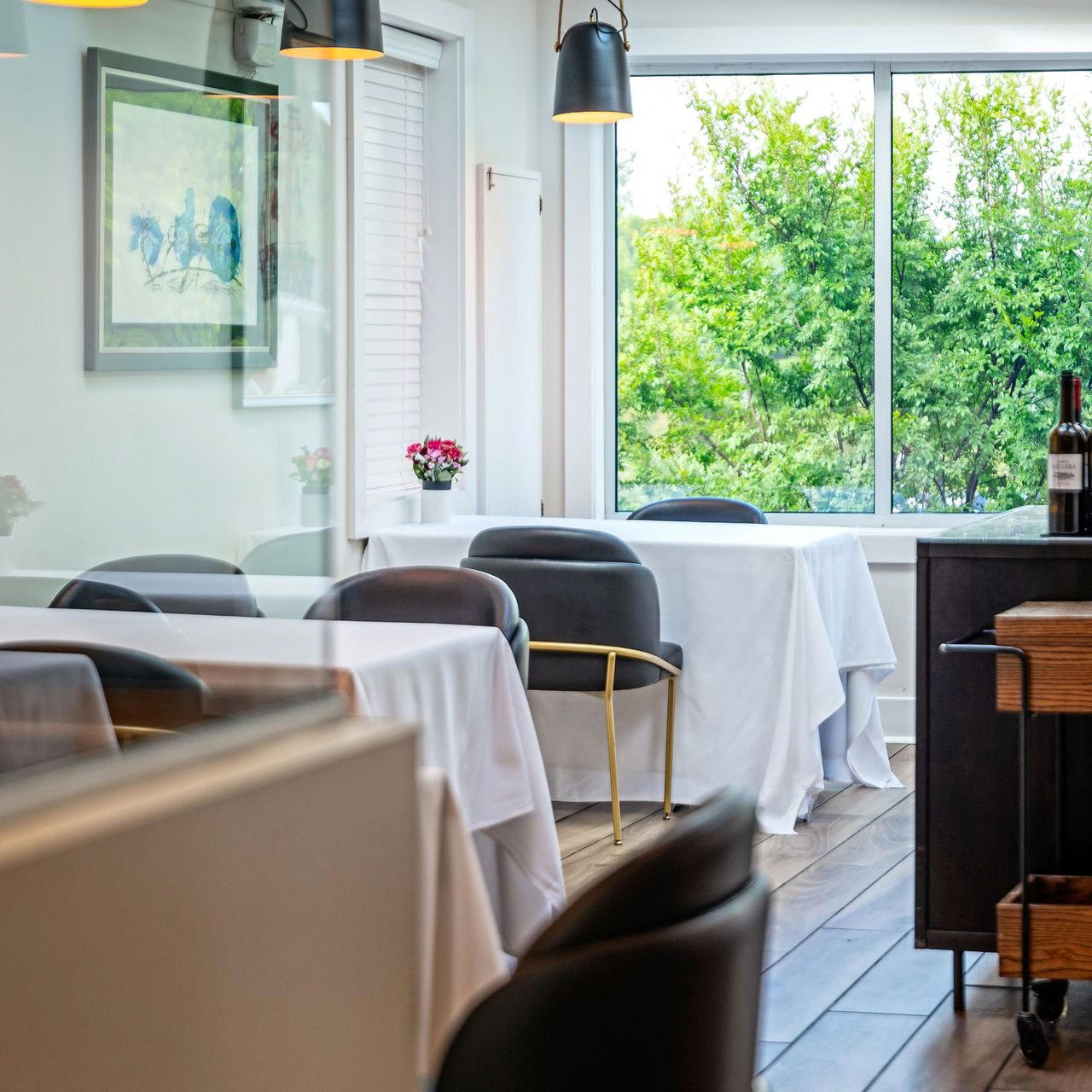
Bars in Rockville
Browse all →
Hotels in Rockville
Browse all →

At a Glance
- Classic
- Family
- Group Dining
- Casual Hangout
- Standalone
Current opening hours
- Monday
- 11 AM–9 PM
- Tuesday
- 11 AM–9 PM
- Wednesday
- 11 AM–9 PM
- Thursday
- 11 AM–9 PM
- Friday
- 11 AM–9 PM
- Saturday
- 11 AM–9 PM
- Sunday
- 11:30 AM–7 PM
Hours can change for holidays and private events. Last verified .
Persian-style dining with white tablecloths, attentive service, and a welcoming atmosphere.