
Michelin Plate
Our verdict
Yanyu at Chengdu's SKP mall brings Fujian coastal cuisine into direct conversation with Sichuan cooking traditions. Most seafood and produce is shipped directly from Fujian province, including Zhangzhou squid prepared in shuizhu style. The menu moves from briny-sweet soups to oolong-infused desserts, tracing a considered arc between two of China's most distinct regional food cultures.

Pearl is the En Primeur Club membership app, where members save venues, book tables and use the concierge.
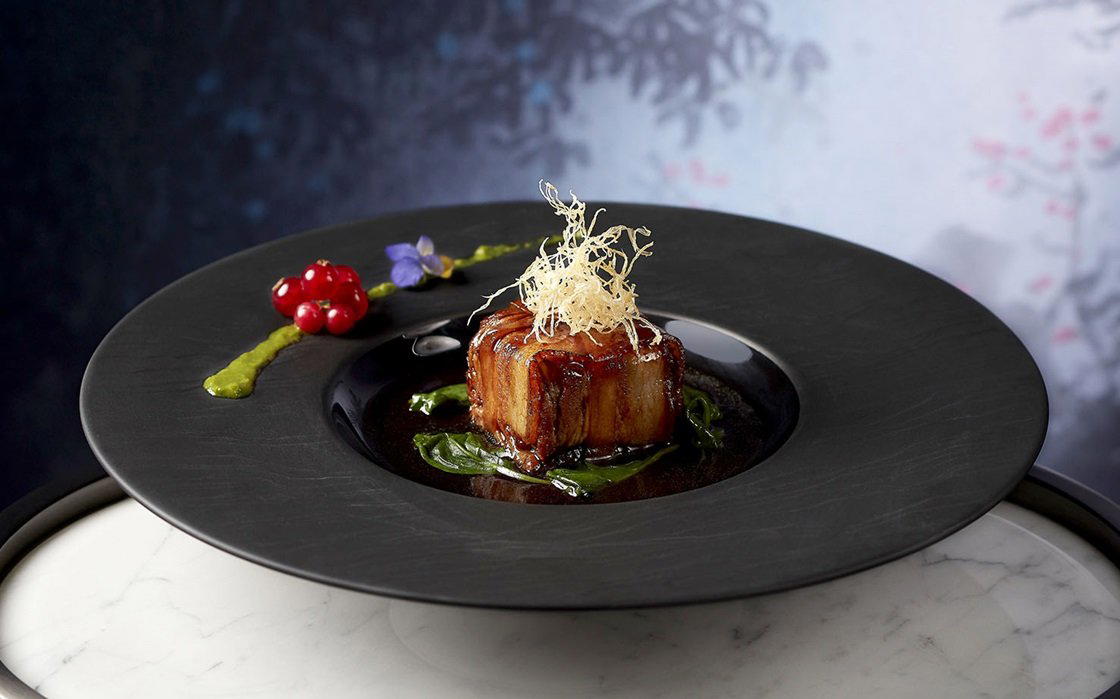
The menu
What to order
- Buddha jumps over the wall
- Squid shuizhu
- Oolong tea panna cotta
Where Fujian Meets the Basin: The Premise at SKP Wuhou
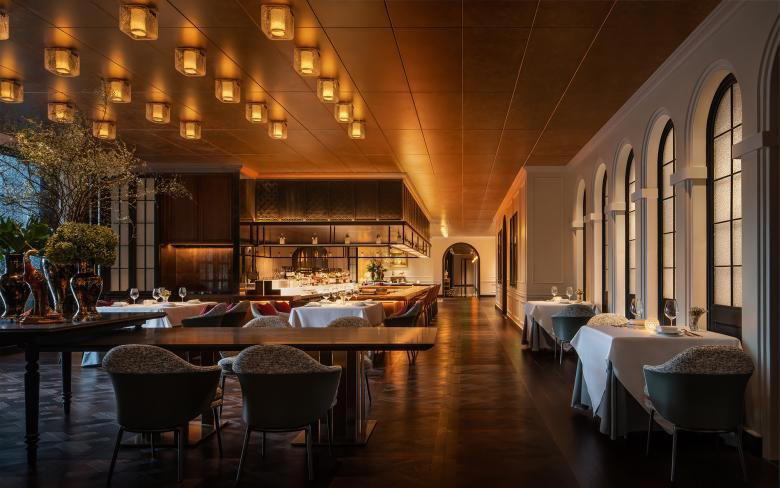
Chengdu's mall dining scene has matured considerably over the past decade. What once meant food-court pragmatism now, at the upper floors of developments like SKP on Tianfu Avenue's North Section, means serious kitchens with regional sourcing programs and menus that reward attention. Yanyu occupies the second floor of SKP's East Pavilion in the Wuhou district, and the setting matters as context: this is a room designed for a city that increasingly expects coastal seafood precision alongside its native spice.
The concept Yanyu operates on is not a fusion experiment. It is a deliberate geographic bridge. Fujian cuisine, the cooking of China's southeastern coast, is one of the country's most distinct regional traditions: broth-oriented, seafood-heavy, attuned to dried and fermented ingredients in ways that produce a depth of flavor most visitors associate with long-simmered technique. Sichuan cooking, by contrast, works through heat, numbing spice, and the aromatic complexity of doubanjiang and peppercorn. Placing these two traditions in the same kitchen is an editorial decision as much as a culinary one, and at Yanyu, the execution follows through.
The Sourcing Argument
The clearest signal of intent at Yanyu is the supply chain. Most produce and seafood arrives from Fujian province directly, a logistical commitment that shapes what appears on the menu and when. Squid from Zhangzhou, a coastal city in southern Fujian known for its fishing industry, is among the flagged ingredients. That specificity of origin is worth noting: Zhangzhou squid has a particular texture and salinity that makes it behave differently in the wok than squid from closer inland sources.
That squid is prepared in shuizhu style, the Sichuan technique of poaching protein in a heavily seasoned broth loaded with dried chilies and Sichuan peppercorns, finished with hot oil poured over aromatics at the table. Applied to Fujian coastal seafood rather than the more common beef or fish from local rivers, the method produces something that reads as genuinely new rather than gimmicky. The oceanic brine of the squid cuts through the fat of the oil pour; the numbing heat intensifies the sea-salt note rather than overwhelming it. This is where the cross-regional premise earns its credibility.
For readers tracking how Fujian food has traveled across China, the broader pattern is instructive. Restaurants like Hokkien Cuisine have also brought the coastal tradition into Chengdu, and Xin Rong Ji (Taizhou), which operates in the Taizhou style, represents another node of the same broader trend: inland Chinese cities increasingly sustaining serious coastal kitchens.
The Meal as Arc: From Soup to Dessert
Thinking about a meal at Yanyu as a progression rather than a collection of dishes clarifies the kitchen's logic. The sequence moves from the dense, time-intensive to the refined and aromatic.
The anchoring dish is Buddha Jumps Over the Wall, the Fujian classic that has become something of a benchmark course wherever serious Fujianese cooking is found. The version here is built on gourmet dried seafood, a category that includes ingredients like sea cucumber, dried scallop, and fish maw, each of which contributes a layered, briny-sweet richness that no fresh ingredient can replicate. Dried seafood carries concentrated umami precisely because water has been removed, intensifying proteins and amino acids over time. The soup that results is thick without being heavy, complex without being inscrutable. Encountering this dish in Chengdu, a city defined by assertive flavors, is a useful reminder of how quiet intensity can register just as strongly as heat.
The meal closes with panna cotta incorporating dai hong pao oolong tea, one of Fujian's most celebrated export products. Dai hong pao is a heavily roasted oolong from the Wuyi Mountains, known for its mineral character and a floral, slightly charred finish. In dessert form, the tea's earthiness works against the dairy sweetness of the panna cotta, producing a finish that extends the Fujian sourcing logic all the way to the final course. It is an unusually coherent ending for a kitchen working across two regional traditions.
For comparison, restaurants like Yu Zhi Lan (Sichuan) and Fang Xiang Jing (Sichuan) represent Chengdu's more inward-looking fine dining tradition, where the emphasis stays on native Sichuan ingredients and technique. Yanyu sits in a different register, one that imports its primary material from the coast and applies local method selectively.
Placement in Chengdu's Mid-to-Upper Tier
SKP's positioning as an upmarket retail and dining destination places Yanyu in a specific bracket. The price point is not the casual end of Chengdu dining, where Fu Rong Huang (Sichuan) and neighborhood Sichuan staples operate, but it is also not the full-ceremony territory of a multi-course tasting menu restaurant. This is serious restaurant cooking in a polished mall setting, the kind of format that has become increasingly common in Chinese tier-one cities where retail-anchor dining draws diners who might not otherwise seek out a standalone address.
For travelers building a Chengdu itinerary around regional breadth rather than depth in a single tradition, Yanyu fills a specific slot. The same principle applies to restaurant touring elsewhere in China: Xin Rong Ji (Xinyuan South Road) in Beijing and Ru Yuan in Hangzhou both demonstrate how coastal Chinese traditions can be transplanted and maintained at a high standard. Yanyu belongs to that pattern.
Internationally, the model of transporting a coastal seafood tradition inland and sustaining it through direct sourcing is not unusual. Le Bernardin in New York City has done this for French seafood technique for decades; the underlying discipline is comparable even if the cuisine is not.
Planning a Visit
Yanyu is located on the second floor of SKP's East Pavilion at 2001 North Section of Tianfu Avenue in Wuhou district, accessible by Chengdu Metro. Given the SKP context and the sourcing-driven menu, reservations are advisable, particularly on weekends when the mall draws strong foot traffic. For a broader view of dining options across the city, our full Chengdu restaurants guide covers the range from Sichuan classics to contemporary formats. Travelers also planning around accommodation and bars can reference our Chengdu hotels guide and our Chengdu bars guide for the wider picture.
Frequently asked questions
What kind of recognition has Yanyu (Wuhou) received?
Yanyu (Wuhou) has received recognition including: This restaurant in an upmarket shopping mall serves an array of Fujian dishes with a Sichuanese twist. Most produce and seafood is shipped from Fujian, including squid from Zhangzhou, which is cooked in typical Sichuanese shuizhu style. The….
What's the address for Yanyu (Wuhou)?
Yanyu (Wuhou) is located at E2005, 2F, East Pavilion, SKP, 2001 North Section of Tianfu Avenue, Wuhou, Chengdu.
What do people recommend at Yanyu (Wuhou)?
Three dishes draw the most attention: the shuizhu-style squid sourced from Zhangzhou in Fujian, the slow-built 'Buddha jumps over the wall' soup made with dried seafood for briny-sweet depth, and the panna cotta finished with dai hong pao oolong tea. The squid preparation is particularly noted because it applies a classic Sichuanese technique to Fujianese coastal produce, a combination rarely executed at this address category in Chengdu.
What's the best way to book Yanyu (Wuhou)?
Yanyu is located on the second floor of SKP's East Pavilion at 2001 North Section of Tianfu Avenue, Wuhou district, reachable via Chengdu Metro. No direct booking phone number or website is listed publicly for this location, so contacting SKP's guest services desk or arriving directly is the most reliable approach. For weekend visits, early coordination is advisable given SKP's foot traffic from the broader mall.
What's the defining dish or idea at Yanyu (Wuhou)?
'Buddha jumps over the wall' anchors the kitchen's concept most clearly: a nourishing, labour-intensive soup built from gourmet dried seafood that traditionally requires extended preparation and carries strong associations with Fujian banquet cooking. At Yanyu, this dish sits alongside shuizhu preparations that bring Sichuanese heat and oil to Fujian seafood, making the cross-provincial dialogue the kitchen's clearest throughline rather than any single ingredient.
Do they accommodate allergies at Yanyu (Wuhou)?
Given the kitchen's heavy use of dried and fresh seafood shipped from Fujian, including squid and the gourmet dried seafood base in 'Buddha jumps over the wall,' diners with shellfish or seafood sensitivities should communicate requirements directly when booking or upon arrival. Staff at SKP venues at this tier are generally equipped to relay kitchen queries.
How does Yanyu differ from standard Sichuan restaurants in Chengdu?
Yanyu is not a Sichuan restaurant in the conventional sense. The kitchen is built around Fujian cuisine, sourcing most produce and seafood directly from Fujian province, including squid from Zhangzhou, and then applying Sichuanese cooking methods such as shuizhu to that coastal material. That supply-chain commitment, running Fujian ingredients into a Sichuan technique framework, places it in a separate category from the hotpot-and-mala mainstream that defines most of Chengdu's dining at SKP's price bracket.
Peers You’d Cross-Shop
Comparable venues nearby, for context on price, style, and recognition.
| Venue | Cuisine | Price | Awards | Notes |
|---|---|---|---|---|
| Yanyu (Wuhou)This venue (the venue you are viewing) | Fujian with Sichuan Twist | Not listed | Michelin Plate | Not listed |
| Datenbank | Innovative Sichuan-Mexican Fusion | Not listed | Michelin Plate | Chengdushi |
| Nan's Gourmet | Refined Cantonese | $50–100 | Michelin Plate | Chengdushi |
| Nan Tang (Tianshun Road) | Sichuan Cuisine | Not listed | Michelin Plate | Chengdushi |
| Hidden Place | Ancient Sichuan Cuisine | $50–100 | Michelin Plate | Chengdushi |
| Cloud Arise (Chenghua) | Traditional Sichuanese | Not listed | Michelin Plate | Chengdushi |
Recognition history
Dated appearances from independent guides and award organizations, with the underlying list record or original source where available.
Michelin Plate
Michelin · 2026 Michelin Plate
Continue exploring
More in Chengdu
Restaurants in Chengdu
All restaurants in Chengdu →
Bars in Chengdu
All bars in Chengdu →


Details
- Elegant
- Modern
- Business Dinner
- Special Occasion
- Standalone
- Local Sourcing
- A La Carte
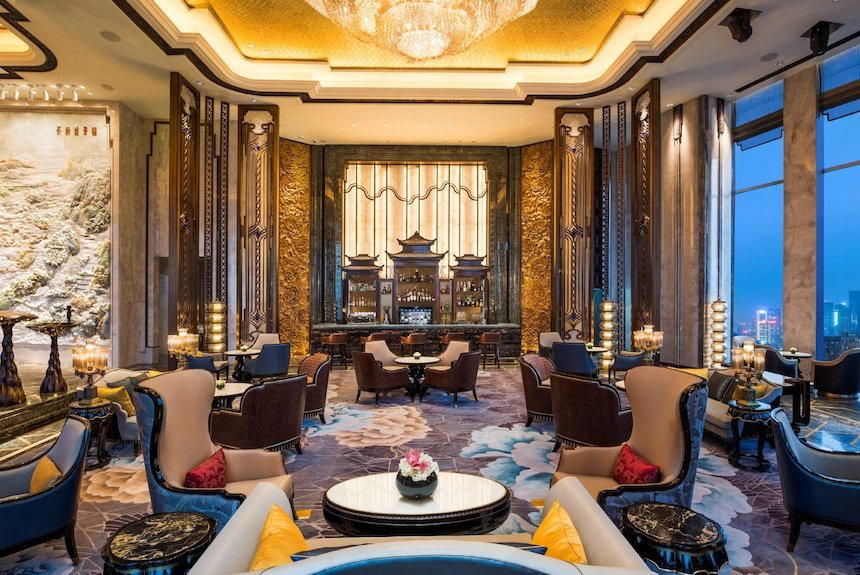
Upmarket shopping mall setting with elegant modern atmosphere.