Our verdict
Yakiniku ATSU operates in Kofu, Yamanashi — a prefecture that sits at the intersection of mountain agriculture and some of Japan's most carefully tended livestock traditions. The restaurant's address in the Wadomachi district places it within a city that has long been underserved by serious dining coverage, making it a reference point for grilled meat in a region where ingredient provenance carries genuine weight.

Pearl is the En Primeur Club membership app — saves, bookings, and concierge access live there. Same editors, same standards.
- Address
- 962-5 Wadomachi, Kofu, Yamanashi 400-0812, Japan
- Phone
- +81552676296
- Hours
- Mon 5–11 PMTue ClosedWed–Sun 5–11 PM
- Website
- yakiniku-atsu.com
- Directions
- Get directions
- Booking
- Book on TableCheck
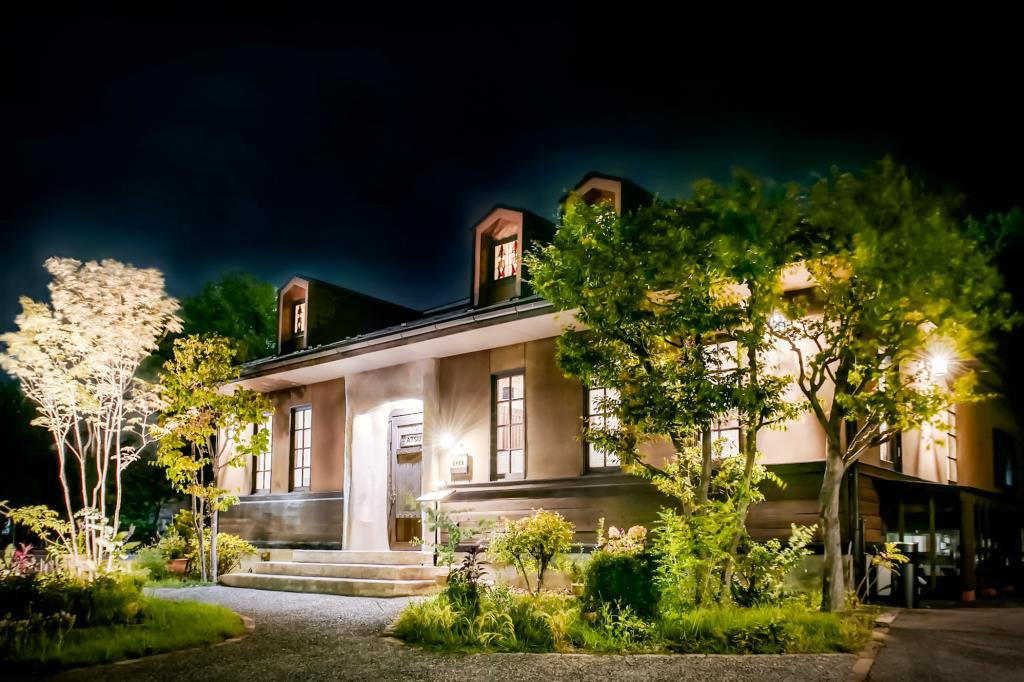
Yakiniku in Yamanashi: Where the Prefecture Does the Heavy Lifting
Japan's yakiniku scene splits fairly cleanly between urban showroom restaurants — where Wagyu pedigree certificates get framed on walls and prix-fixe courses run to thirty courses — and the kind of neighbourhood grills where the sourcing is serious but the presentation is not. Kofu, the capital of Yamanashi Prefecture, has historically belonged to the latter category, and Yakiniku ATSU, addressed at 962-5 Wadomachi, sits in that tradition. Yamanashi is not a prefecture that imports its food story from elsewhere. It grows peaches and grapes in volumes that make it one of Japan's most agriculturally productive prefectures relative to its size, and the livestock that moves through its valleys tends to do so on shorter, more transparent supply chains than what feeds the major urban markets. That context matters before a single piece of meat hits the grill.
For readers who approach yakiniku through the lens of Tokyo's premium counters, where Harutaka and its neighbours have defined what precision service looks like in the capital, Kofu operates in a different register entirely. The comparison is not unflattering to Kofu; it is simply a different argument. Urban high-end yakiniku asks you to pay for theatre alongside protein. Regional yakiniku, at its more considered end, asks you to pay for proximity to the source.
The Wadomachi Address and What It Signals
Wadomachi is not one of Kofu's tourist-facing districts. The address suggests a restaurant that draws primarily from the local population rather than passing visitors, a useful signal when assessing any dining destination, since venues that survive on local repeat business rather than transient footfall tend to maintain tighter quality discipline over time. Kofu itself sits roughly 100 kilometres west of Tokyo by rail, accessible in under two hours from Shinjuku on the JR Chuo Limited Express. The prefecture's dining scene is documented far less thoroughly than its wine and fruit production, which means that credible grill restaurants here operate with minimal external review pressure, a condition that tends to either liberate or destabilize kitchens depending on their internal standards.
For a broader picture of what Kofu's dining culture offers across categories, our full Kofu restaurants guide maps the city's most notable tables. Yakiniku ATSU's position in Wadomachi places it in a residential-commercial zone, the kind of location that signals operational focus over design statement.
Ingredient Geography: Why Yamanashi Provenance Matters for Grilled Meat
The editorial angle on any serious yakiniku restaurant begins with sourcing, and in Yamanashi that conversation has a distinct geographic shape. The prefecture's inland position and mountainous topography create microclimates that support specific livestock conditions. Yamanashi's access to clean water from the Southern Alps and its lower-density farming environment means that regional beef and pork reach grills with provenance that is trackable in ways that commodity supply chains are not. This is not a claim specific to ATSU, it is the structural condition that any serious yakiniku operation in this prefecture inherits and either builds upon or ignores.
Across Japan's regional dining tier, the most compelling grill restaurants have consistently been those where the kitchen's decisions about cut selection and preparation reflect knowledge of the specific animal rather than category-level purchasing. Restaurants like Goh in Fukuoka or Gion Sasaki in Kyoto demonstrate how deeply regional ingredient relationships can shape a restaurant's identity, even across very different cuisine formats. The principle applies equally to yakiniku: the grill is a relatively neutral surface, and what differentiates one serious operation from another is almost entirely upstream of it.
Yakiniku as a Format: What the Style Demands
Yakiniku as a dining format places unusual demands on sourcing transparency because the cooking method is so minimal. There is nowhere to hide behind sauce or extended preparation. Fat distribution, marbling grade, freshness, and the specific character of each cut are all immediately legible to anyone paying attention across the grill. This makes the format an unusually honest test of ingredient quality, and it is why the most trusted yakiniku restaurants, in cities across Japan, tend to build their reputations on supplier relationships rather than kitchen technique.
The format also has structural implications for the dining experience. Unlike tasting-menu formats, where the kitchen sequences decisions for the guest, as at HAJIME in Osaka or akordu in Nara, yakiniku is participatory. The guest manages the grill, making decisions about timing and doneness that affect the outcome of every piece. This shifts the locus of skill somewhat from kitchen to table, and it means that the quality of guidance provided, whether through a knowledgeable server or a kitchen that sends out cuts in a considered sequence, becomes part of the value proposition.
Regional Grilling Traditions Across Japan
Yakiniku's popularity in regional Japan has accelerated as urban dining costs have climbed. The format's flexibility, it can be pitched at a broad price range depending on cut selection, has made it a durable neighbourhood category in cities that cannot support the density of specialist restaurants common in Tokyo or Osaka. In cities like Kofu, where the dining scene is anchored more by local demand than culinary tourism, grilled meat restaurants often serve as the most reliable access point to serious local ingredients. That is a meaningful role, even if it comes without the critical infrastructure of Japan's larger markets. For comparable regional takes on quality-led dining in less-documented cities, the work being done at Bistro Ange in Toyohashi or Douze Miyajima in Hatsukaichi points to how regional Japan's mid-tier dining scene has quietly grown in ambition over the past decade.
Planning a Visit
Kofu is most efficiently reached from Tokyo via the JR Chuo Line Limited Express, with journey times typically under two hours from Shinjuku Station. Yakiniku ATSU's Wadomachi address is in the city's interior rather than the station precinct, so local transport or a short taxi will be needed from Kofu Station. Visiting on a weekday evening typically offers more flexibility at comparable regional restaurants in this tier. Phone and website details should be confirmed through local search before travel.
Frequently asked questions
Is Yakiniku ATSU good for families?
Yakiniku as a format tends to suit families well — the table grill creates a shared, interactive rhythm that works across age groups. ATSU's Wadomachi address in Kofu places it in a residential, locally oriented part of the city rather than a tourist corridor, which typically signals a relaxed, unpretentious setting.
How far is Yakiniku ATSU from Tokyo, and is it worth the trip from Shinjuku?
Kofu is under two hours from Shinjuku via the JR Chuo Line Limited Express, making ATSU reachable as a day or evening trip from Tokyo. The Wadomachi address — away from Kofu's station-facing tourist strip — means this is not a restaurant engineered around transit visitors. For anyone already spending time in Yamanashi, it represents the kind of locally anchored yakiniku that the city's residential neighbourhoods sustain, distinct from the Wagyu-certificate restaurants lining Tokyo's dining districts.
What's the best thing to order at Yakiniku ATSU?
In Yamanashi more broadly, the geographic proximity to quality beef and pork supply chains gives regional yakiniku restaurants a sourcing advantage worth asking about at the counter. The practical move is to ask the staff which cuts are in from local suppliers on the day.
What part of town is Yakiniku ATSU in?
Yakiniku ATSU is located at 962-5 Wadomachi, Kofu, Yamanashi 400-0812, Japan, Kofu.
Do they take walk-ins at Yakiniku ATSU?
For a Wadomachi-area restaurant in Kofu with a primarily local clientele, walk-ins are plausible outside peak dinner hours, but arriving without a booking on weekends carries risk. Confirming directly before visiting is the safer approach.
What's the defining dish or idea at Yakiniku ATSU?
The defining idea at a Yamanashi yakiniku restaurant is the cooking method itself: minimal preparation, high heat, and ingredients that have to hold up without sauce or technique to cover them. In a prefecture with legitimate proximity to quality meat sources, that transparency either rewards sourcing discipline or exposes the absence of it.
Side-by-Side Snapshot
Comparable venues nearby, for context on price, style, and recognition.
| Venue | Cuisine | Price | Awards | Notes |
|---|---|---|---|---|
| Yakiniku ATSUThis venue — the venue you are viewing | Omakase Yakiniku | $30–50 | Not listed | Not listed |
| Yakitori 58 | Modern Yakitori & Local Yamanashi Sake | $30–50 | Tabelog 100 #51 | Chuo, Kofu |
| Kitchen Umagoya | Specialist Tonkatsu (Pork Cutlet) Restaurant | $20–30 | Tabelog 100 #56 | Yumura |
| chainizu dainingu masamune | Modern Chinese Dining | $50–100 | Tabelog 100 #11 | Marunouchi |
| Unagi Yondaime Kikukawa | Traditional Japanese Unagi | $30–50 | Not listed | Kanazawa Station Area |
| Manten Sushi (まんてん鮨) | Edomae Omakase Sushi | $50–100 | Not listed | Marunouchi |
Continue exploring
More in Kofu
Restaurants in Kofu
Browse all →
Bars in Kofu
Browse all →
Hotels in Kofu
Browse all →

Details
- Sophisticated
- Intimate
- Date Night
- Special Occasion
- Sake Program
- Omakase
- A La Carte
Current opening hours
- Monday
- 5–11 PM
- Tuesday
- Closed
- Wednesday
- 5–11 PM
- Thursday
- 5–11 PM
- Friday
- 5–11 PM
- Saturday
- 5–11 PM
- Sunday
- 5–11 PM
Hours can change for holidays and private events. Last verified .