
Tabelog 100 #11
Our verdict
Kofu’s Chinese dining scene has a serious counter-format address in chainizu dainingu masamune, a 2026 Tabelog Chinese EAST 100 selection in Marunouchi. The draw is not scale but focus: Chinese cooking framed for Yamanashi, with wine, private rooms, counter seating, and a price tier that places it above casual neighborhood dining.

Pearl is the En Primeur Club membership app — saves, bookings, and concierge access live there. Same editors, same standards.
- Address
- 山梨県甲府市丸の内3-10-14
- Phone
- +817066480360
- Hours
- Mon–Wed 12–2:30 PM, 6–9:30 PMThu ClosedFri–Sun 12–2:30 PM, 6–9:30 PM
- Website
- tabelog.com
- Directions
- Get directions
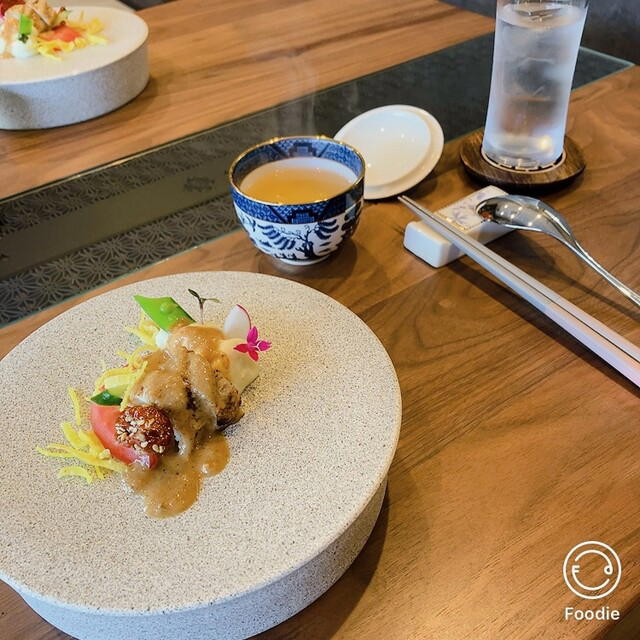
Marunouchi is not where Japan usually goes looking for Chinese dining prestige. Kofu’s center is more often read through station-side convenience, wine-country access, and the practical rhythms of a prefectural capital. That makes the presence of a Chinese counter in this district more interesting: it shifts the meal away from banquet-room abundance and toward a tighter, ingredient-led format suited to a smaller city with serious agricultural surroundings.
chainizu dainingu masamune sits in that category. Its 2026 selection for Tabelog Chinese EAST 100 matters because the list is not built around Tokyo alone; it captures restaurants across eastern Japan, where regional addresses have to compete for attention against larger urban dining markets. A Kofu Chinese restaurant appearing there signals more than local popularity. It points to a format that can carry regional identity without turning the meal into a tourist demonstration.
Chinese technique through a Yamanashi lens
Chinese cooking in Japan has long split between two poles: accessible chuka staples for daily eating and highly polished restaurants that treat Cantonese, Sichuan, Shanghai, or contemporary Chinese technique with the discipline usually associated with kaiseki or French tasting menus. In a city such as Kofu, the more compelling version is the latter only when it has a reason to be there. Yamanashi gives that reason through produce, fruit culture, mountain vegetables, freshwater resources, and a wine economy that changes how diners think about pairing.
The restaurant’s wine focus is a useful clue. Chinese dining in Japan has increasingly moved beyond beer and Shaoxing wine as default companions, particularly at restaurants working above the casual bracket. Yamanashi’s position as Japan’s historic wine center gives that shift local weight. The point is not novelty; it is fit. A Chinese kitchen working with layered sauces, heat, aromatics, and textural contrast can make a strong case for Japanese wine, especially when the meal is structured with the precision of counter dining rather than the sprawl of a large table order.
That sourcing angle also separates the experience from Kofu’s more familiar restaurant map. Kitchen Umagoya operates in a more everyday price lane, while Yakiniku ATSU and Yakitori 58 point to meat-led formats with clearer single-category expectations. Chinese dining at this level is less predictable. It depends on seasoning control, pacing, and the kitchen’s ability to make regional ingredients feel native to the cuisine rather than decorative.
A counter format, not a banquet script
Counter seating changes the grammar of Chinese dining. The cuisine is often associated with shared plates and volume, but a counter compresses the experience: fewer distractions, tighter sequencing, and closer attention to what leaves the kitchen. It also makes restraint more visible. A dish that might disappear into the momentum of a banquet has to justify itself when served in sequence, especially in a restaurant recognized among eastern Japan’s Chinese specialists.
The setting also gives Kofu a useful middle ground. Tokyo offers density and competition; regional Japan often offers stronger access to producers and a slower dining tempo. The smart move is not to imitate the capital, but to use the city’s scale. Private rooms broaden the restaurant’s function for local business meals or small celebrations, while the counter keeps the cooking in focus for diners who are there to read the meal course by course.
Opened in 2024, the restaurant reached the 2026 Tabelog Chinese EAST 100 quickly by Japanese restaurant standards. That timing is a sharper signal than longevity. In a category where reputations often build slowly through regulars, repeat visits, and word-of-mouth, early recognition suggests the format arrived with a clear point of view and enough consistency to register outside Kofu.
How it fits into a Kofu dining itinerary
Kofu rewards travelers who do not treat it only as a gateway to vineyards or mountain towns. The city’s restaurant scene is compact, but its strengths are varied: grilled meat, yakitori, casual Western-Japanese cooking, ramen, and increasingly destination-minded formats that suit a one-night stop as well as a longer Yamanashi itinerary. For a wider map, start with Our full Kofu restaurants guide, then build the rest of the trip around Our full Kofu hotels guide, Our full Kofu bars guide, Our full Kofu wineries guide, and Our full Kofu experiences guide.
The broader Japan context is useful because regional dining now travels well beyond the old Tokyo-Kyoto-Osaka axis. A traveler comparing formats might look from Kofu to -Grilled beef Sukiyaki- KAMAKURA TANUKIAN 鎌倉 たぬき庵 in Kamakura. 鮪と炭火焼き うお炭 秋葉原店 in Tokyo.cafe in Osaka.know in Kumamoto, (Shoku) Vietnam in Kawasaki, [Curry Senmon Ten] Maruyama Kyoju. in Sapporo, [ki:] in Kyoto, and #肉といえば松田 奈良本店 in Kashihara. For overseas Japanese dining contrasts, Jōdo Saké Bar in Los Angeles and Onigiri Time in Pasadena show how format and audience shift once the cooking leaves Japan.
The editorial case for chainizu dainingu masamune is specific: choose it when Chinese technique, Yamanashi ingredients, wine, and counter discipline are more appealing than a broad, casual meal. Kofu has easier dinners. This is the address for a traveler who wants to see how a young regional restaurant can enter a national conversation without abandoning the city that makes it legible.
Frequently asked questions
Is chainizu dainingu masamune a family-friendly restaurant?
It reads as a more adult-leaning room than a casual family spot: counter seating is listed, reservations are required, and private rooms are available in Kofu. The dinner range is JPY 10,000–JPY 14,999, with lunch from JPY 3,000–JPY 3,999.
What kind of setting is chainizu dainingu masamune?
The setting is counter seating, with private rooms also available. It sits at 山梨県甲府市丸の内3-10-14 in Kofu, and the restaurant accepts credit card, electronic money, and QR code payments.
Is chainizu dainingu masamune expensive?
Pricing at chainizu dainingu masamune is listed as JPY 10,000 - JPY 14,999 JPY 3,000 - JPY 3,999 View spending breakdown.
Where do I go for chainizu dainingu masamune?
chainizu dainingu masamune is located in Kofu.
Do I need a reservation for chainizu dainingu masamune?
Yes. The listing marks it as reservation only, which matters in a room that also has counter seating and private rooms. It is open Monday, Tuesday, Wednesday, Friday, Saturday, and Sunday, with Thursday closed.
What's the defining dish or idea at chainizu dainingu masamune?
The defining idea is Chinese dining presented in a compact counter format rather than a banquet hall model. Its Tabelog 100 selection for Chinese cuisine EAST 2026 gives that approach editorial weight in Kofu.
At-a-Glance Comparison
Comparable venues by cuisine and price in the same metro.
| Venue | Cuisine | Price | Awards | Notes |
|---|---|---|---|---|
| chainizu dainingu masamuneThis venue — the venue you are viewing | Modern Chinese Dining | $50–100 | Tabelog 100 #11 | Not listed |
| Yakiniku ATSU | Omakase Yakiniku | $30–50 | Not listed | Kofu City |
| Yakitori 58 | Modern Yakitori & Local Yamanashi Sake | $30–50 | Tabelog 100 #51 | Chuo, Kofu |
| Kitchen Umagoya | Specialist Tonkatsu (Pork Cutlet) Restaurant | $20–30 | Tabelog 100 #56 | Yumura |
| 美麗華 | 本格中国料理 | Not listed | Not listed | 安比高原 |
| fu-fu shisen | Organic Pescatarian Sichuan Course Dining | Not listed | Not listed | Fujisawa |
Recognition history
Dated appearances from independent guides and award organizations, with the underlying list record or original source where available.
Tabelog 100 #11 · No. 11
Tabelog · Tabelog 100 - Chinese cuisine - EAST - 2026
Continue exploring
More in Kofu
Restaurants in Kofu
Browse all →
Bars in Kofu
Browse all →
Hotels in Kofu
Browse all →

Details
- Cozy
- Intimate
- Date Night
- Business Dinner
- Celebration
- Special Occasion
- Private Event
- Chefs Counter
- Private Dining
- Standalone
- Extensive Wine List
- A La Carte
- Tasting Menu
- Counter Dining
- Set Menu
- Wine
Current opening hours
- Monday
- 12–2:30 PM, 6–9:30 PM
- Tuesday
- 12–2:30 PM, 6–9:30 PM
- Wednesday
- 12–2:30 PM, 6–9:30 PM
- Thursday
- Closed
- Friday
- 12–2:30 PM, 6–9:30 PM
- Saturday
- 12–2:30 PM, 6–9:30 PM
- Sunday
- 12–2:30 PM, 6–9:30 PM
Hours can change for holidays and private events. Last verified .
A compact Chinese dining room with counter seating and a cozy, intimate atmosphere, geared toward guests who reserve ahead for focused course-style meals rather than casual walk-ins.