
Open since 1995, Xingxian's original Mawei location holds back-to-back Michelin Bib Gourmand recognition (2024 and 2025) for its live-tank seafood and Fujian classics. Diners select from tanks before sitting down to lychee pork and Puxian lor mee. At a ¥¥ price point on Qingzhou Road in Mawei District, it remains the benchmark location for the chain.
Pearl is the En Primeur Club membership app — saves, bookings, and concierge access live there. Same editors, same standards.
- Address
- XFV9+4M5, Qingzhou Rd, Mawei District, Fuzhou, Fujian, China, 350201
- Phone
- +86 591 8398 1822
- Directions
- Get directions
 Saves & bookings on Pearl
Mawei's Seafood Counter and the Fujian Table
The working-port district of Mawei sits downstream from central Fuzhou where the Min River widens toward the sea, and the seafood culture here follows that geography closely. Restaurants along Qingzhou Road pull catch from waters that connect Fujian Province to the broader fishing circuits of the South China Sea, and the format most of them share is direct and unambiguous: live tanks at the entrance, a dining room behind, and a menu that pivots on what came in fresh that day. Xingxian has occupied this position since 1995, making it the founding address of what became a chain, and the Mawei location carries the weight of that origin. The Michelin Bib Gourmand, awarded consecutively in 2024 and 2025, confirms the restaurant's place in Fuzhou's dining scene.
The Live-Tank Model and What It Signals
Selecting your dinner from a live tank before being seated is a format with deep roots across southeastern Chinese coastal dining. It is a direct transaction between diner and kitchen, one that removes the uncertainty of pre-portioned menus and places quality control at the point of purchase. In cities like Fuzhou, Xiamen, and Guangzhou, this model operates across a wide price band, from bare-tiled neighborhood spots at single-digit-yuan-per-dish prices to formal banquet rooms where a single grouper can run into four figures. Xingxian at Mawei sits at the ¥¥ level, which in Fuzhou's context means value-conscious without being stripped down. The Bib Gourmand designation positions it clearly as a dependable, good-value restaurant.
For travelers comparing Fuzhou's seafood options, the live-tank model here contrasts with the more curated approach at higher-end Fujian cooking venues. Wenru No.9 (Fujian) and 167 Shan Hai Li represent a different register of Fujian cuisine, one oriented more toward composed courses. Xingxian's appeal is different: the interaction with the tank is part of the meal's logic.
What Fujian Actually Tastes Like
Fujian cuisine is less internationally legible than Cantonese or Sichuanese, and that relative obscurity understates its technical range. The cooking tradition draws on coastal produce, preserved ingredients, and a historical relationship with Southeast Asia that gave rise to dishes now eaten from Fuzhou to Penang. The province's pantry includes red yeast rice, shacha sauce, oyster vermicelli, and a range of fish pastes with no real equivalent in other regional Chinese cuisines.
At Xingxian, two dishes anchor the non-seafood side of the menu and are worth understanding in their cultural context. Lychee pork, Fuzhou's own reading of sweet-and-sour pork, is made with half-fatty pork coated in starch, deep-fried to a crackled exterior, then tossed in a sweet and sour glaze. The dish takes its name from the visual resemblance of the coated pork pieces to lychee fruit once fried, not from the fruit itself. It is a dish with firm local identity, distinct from the Cantonese version that most international diners know. Puxian lor mee, associated with the Putian region of Fujian, is a thick-sauced noodle dish built on layered toppings that shift the texture and flavor profile with each addition. The range of toppings is, by design, the point: diners who eat it the same way twice are eating it wrong.
These dishes connect Xingxian's menu to a wider Fujian culinary conversation. Those interested in tracking Fujian cooking across different city contexts might compare notes with Xin Rong Ji (Xinyuan South Road) in Beijing or Xin Rong Ji in Chengdu, both of which carry Fujian-origin cooking into other Chinese urban markets. For broader reference points on seafood-focused Chinese dining that has attracted international attention, Imperial Treasure Fine Chinese Cuisine in Guangzhou and Chef Tam's Seasons in Macau offer points of comparison at a higher price tier.
On Drink at a Seafood Table
Xingxian operates at a price point and in a format where a dedicated sommelier program or deep cellar is not part of the proposition. This is worth stating directly because the editorial angle of wine curation, relevant at venues like 102 House in Shanghai or Ru Yuan in Hangzhou, does not apply here in the conventional sense. What applies instead is the broader question of what drinks work against Fujian seafood, and the answer reflects the cuisine's own logic. Local Fujian yellow rice wines, often lightly sweet with mild acidity, have been paired with the province's fish and shellfish preparations for centuries. At informal seafood tables across Mawei and Fuzhou's port districts, baijiu appears on the table alongside cold beer, and both function as palate resets between strongly flavored tank-to-wok preparations. The absence of a wine list is not a gap; it is a statement about what kind of restaurant this is.
Travelers who want wine-forward dining in Fuzhou should look elsewhere in the city's dining mix. Those who want the clearest possible expression of Fujian coastal cooking at a price that reflects the local economy should consider this the starting point. For a broader view of where Fuzhou's restaurants sit across cuisine types and price points, our full Fuzhou restaurants guide maps the range.
Placing Xingxian in Fuzhou's Dining Structure
Fuzhou's restaurant scene is organized differently from China's more internationally documented food cities. It does not have the density of Michelin-recognized venues that Shanghai or Guangzhou carry, but the Bib Gourmand program has found a cluster of addresses that represent the city's most reliable cooking. Within that cluster, Xingxian at Mawei operates as the chain's origin point, a detail that matters because original locations often maintain a consistency and operational focus that branch locations dilute over time.
At the ¥¥ level, Xingxian competes in a tier alongside Fujian-focused restaurants like Jiangnan Wok‧Rong (Huaiyang), which operates a tier above at ¥¥¥, and Chosop (Sichuan) at the same price band but a different cuisine entirely. For noodle-focused Fujian eating at the ¥ level, A Xin Xian Lao (Gongnong Road) represents the more casual end of the spectrum. Xingxian's position between these poles, Michelin-recognized and mid-priced, makes it one accessible point of entry for travelers who want verified quality without the formality of a higher-end booking.
For seafood dining benchmarks outside China, Gambero Rosso in Marina di Gioiosa Ionica and Alici Restaurant on the Amalfi Coast represent the Mediterranean tradition of letting day-boat catch drive the menu, a format that shares structural DNA with what Xingxian does from the other side of the continent.
Planning Your Visit
Xingxian's Mawei location sits on Qingzhou Road in Mawei District (address reference: XFV9+4M5), which places it in the port-adjacent eastern reaches of Fuzhou rather than the historic city center. Visitors staying in central Fuzhou should account for transit time across the district. Reservations are recommended. Google gives it a 4.6 rating from 5 reviews.
A Quick Peer Check
Comparable venues nearby, for context on price, style, and recognition.
| Venue | Cuisine | Price | Awards | Notes |
|---|---|---|---|---|
| Xingxian (Mawei)This venue — the venue you are viewing | Traditional Fujian Seafood | $$ | Bib Gourmand | Not listed |
| Mei Ya Bo Hua Sheng Tang | Traditional Fuzhou Peanut Soup and Desserts | $ | Bib Gourmand | Taijiang |
| Min Shi Fu | Fujian Live Seafood | $$ | Bib Gourmand | Gulou |
| Guan Zhong Wang Shi | Shaanxi Hand-Pulled Noodles | $ | Bib Gourmand | Gulou |
| Lin Yi Nen Ming Pai Zhu Xue Hua | Traditional Fuzhou Noodles | $ | Bib Gourmand | Taijiang |
| Rong Ji Hai Xian Lao Hua (Cangshan) | Modern Fujian Seafood Lao Hua Noodles | $$ | Michelin Plate | Cangshan |
Recognition history
Dated appearances from independent guides and award organizations, with the underlying list record or original source where available.
Michelin Bib Gourmand
Michelin
Michelin Bib Gourmand
Michelin
Michelin Bib Gourmand
Michelin
At a Glance
- Classic
- Cozy
- Family
- Group Dining
- Casual Hangout
- Open Kitchen
- Local Sourcing
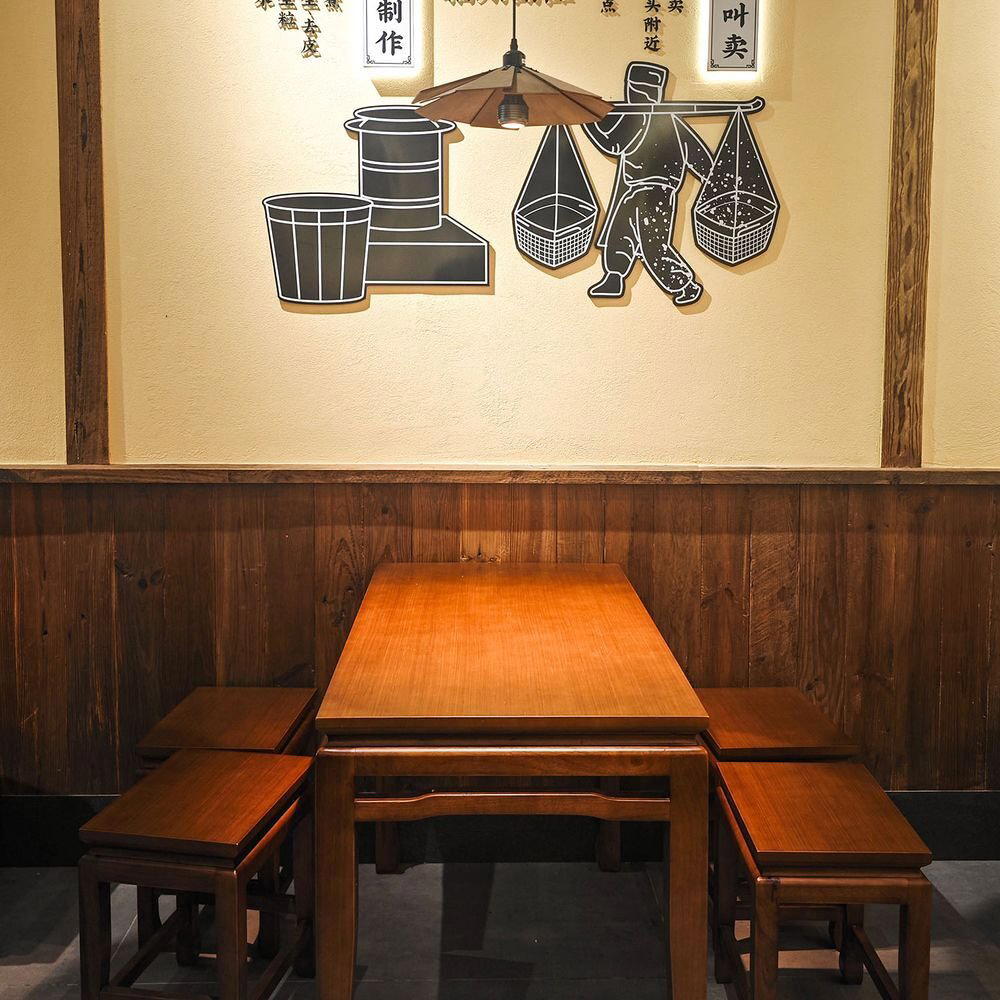
Practical and warm lighting in a functional dining room with long tables, private booths, and visible fish tanks, fostering honest social dining.