
A Xin Xian Lao on Gongnong Road is a Michelin Bib Gourmand-recognised noodle shop in Fuzhou's Gulou district, serving Fujian-style lao hua soup with 18 noodle varieties and MSG-free pork bone broth. Choose from dozens of toppings spanning offal, blood curd, oyster, and squid. Prices sit at the lowest tier in the city, making it one of Fuzhou's most accessible Michelin-recognised addresses.
Pearl is the En Primeur Club membership app — saves, bookings, and concierge access live there. Same editors, same standards.
- Address
- China, CN 福建省 福州市 鼓楼区 五四路 137 137信和广场1F06 邮政编码: 350001
- Phone
- +86 591 8789 8448
- Directions
- Get directions
 Saves & bookings on Pearl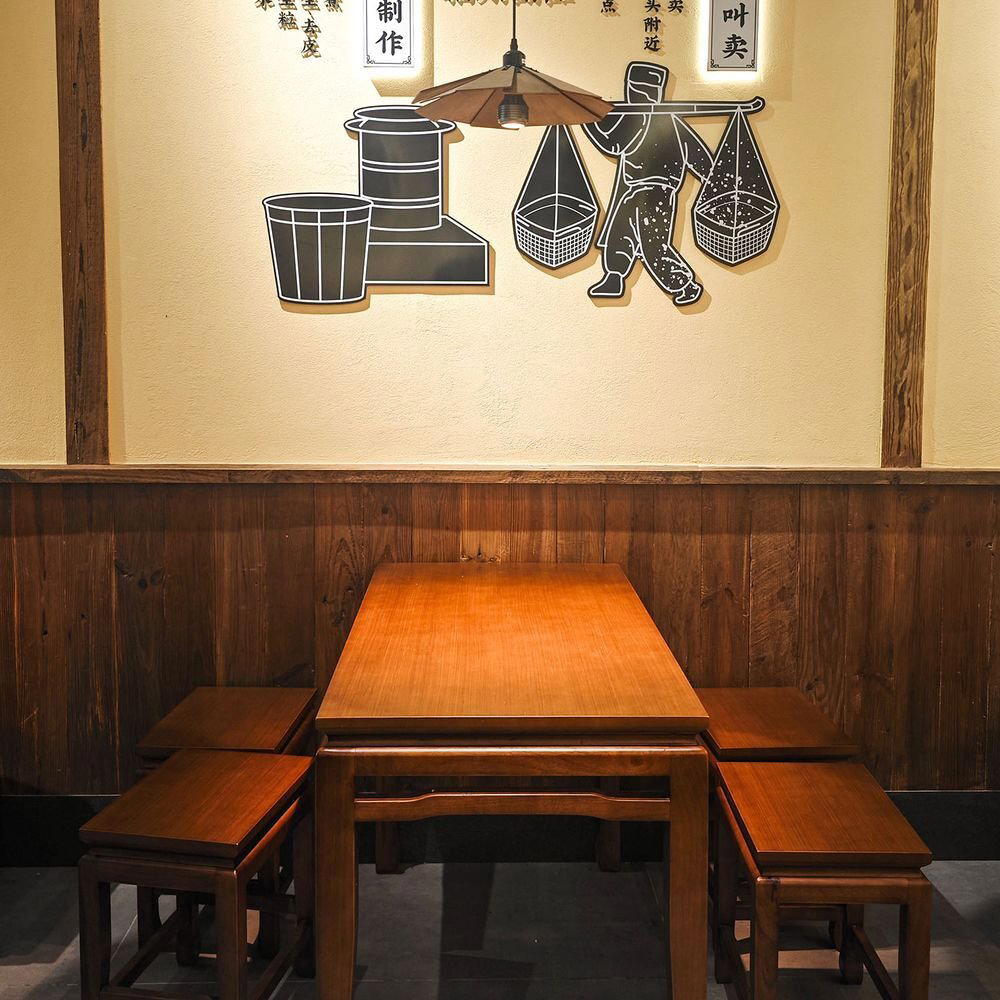
Fuzhou's Noodle Culture, Served at Counter Speed
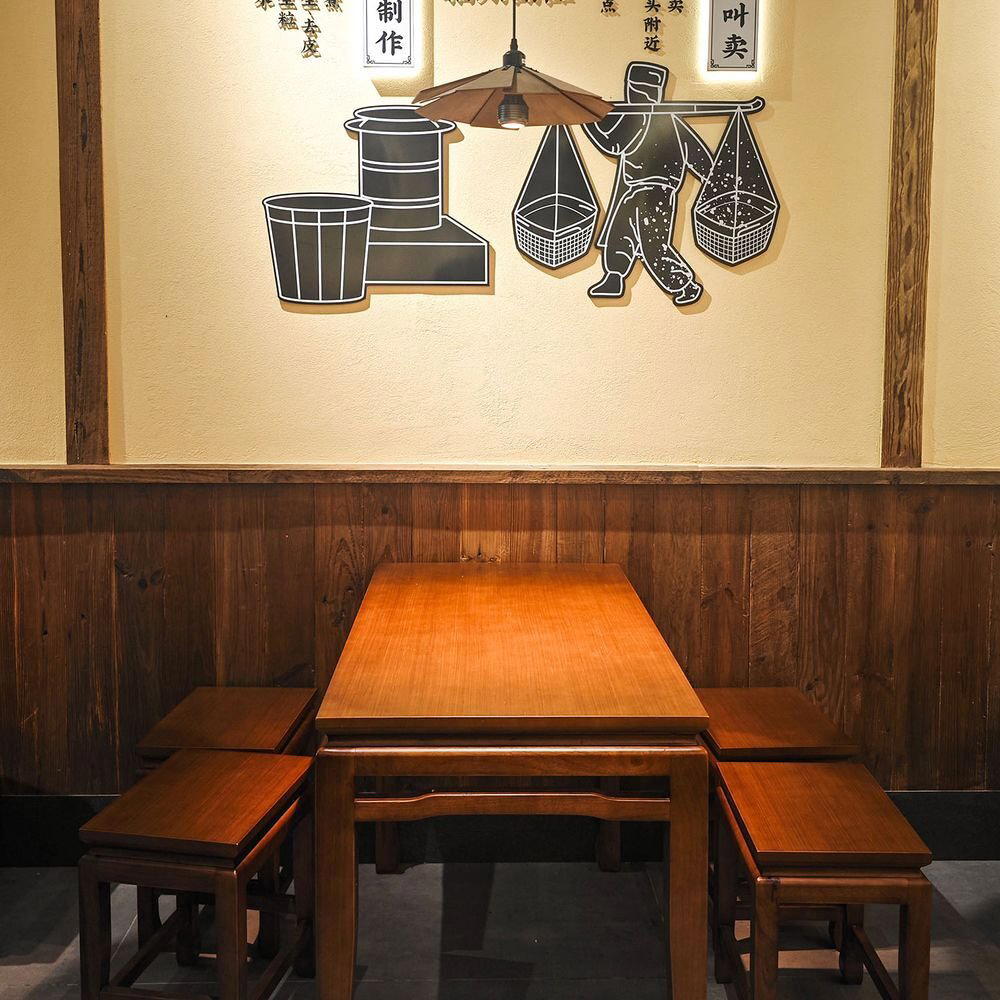
The 信和广场 shopping complex on Wusi Road sits in the administrative heart of Gulou district, where government buildings and midrise commercial blocks frame wide, traffic-heavy streets. At street level, the food stalls and small restaurants occupying the ground floors of these blocks tell a different story: Fuzhou's working eating culture, where a bowl of noodle soup at breakfast or lunch is less a leisure activity than a daily ritual. A Xin Xian Lao operates inside this context, occupying a unit on the first floor of 信和广场 at 137 Wusi Road, a location that trades scenic character for foot traffic and neighbourhood legitimacy.
The format is no-frills in the precise sense: you choose your noodles, you choose your toppings, and the bowl arrives quickly. There is no tasting menu architecture, no tableside theatre, and no dress expectation. What the shop does offer is the kind of repetition-honed consistency that earns returning customers in Chinese noodle culture.
Lao Hua: The Fujian Noodle Tradition Behind the Bowl
Lao hua, sometimes written 捞化, is one of Fuzhou's most locally specific food traditions. The name refers to a style of noodle soup built on a pork bone broth base, with rice vermicelli (or one of several other noodle forms) cooked to order and served with a customisable selection of toppings. The tradition is deeply embedded in Fuzhou's food identity in a way that sets it apart from the noodle cultures of neighbouring provinces: unlike the dry-tossed or spice-led noodles more common further inland, lao hua is broth-forward and relies on the depth of its stock rather than a sauce or seasoning paste applied at the end.
The pork bone broth at A Xin Xian Lao is made fresh daily and contains no MSG, a detail worth noting in a category where broth quality is the primary variable separating shops. The flavour depth comes from the stock itself, which positions this kitchen within the more labour-intensive end of the lao hua spectrum.
The Menu Logic: 18 Noodles, Dozens of Toppings
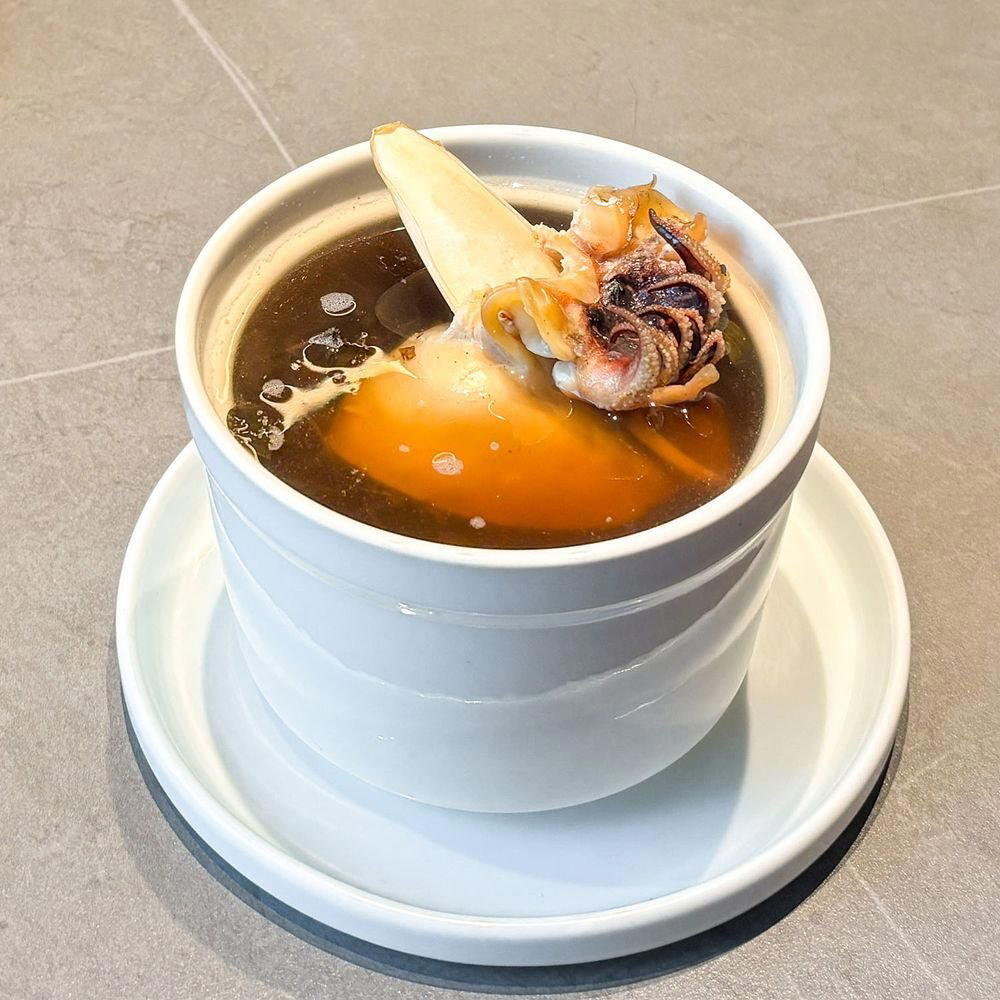
The ordering system here reflects how lao hua is meant to work: it is a personalised format, not a fixed dish. Eighteen noodle types are available, ranging across rice-based and wheat-based options with varying textures and thicknesses. The topping selection runs to dozens of choices and covers significant ground, offal, blood curd, oyster, and squid sit alongside more approachable proteins. The breadth of the offal selection in particular reflects Fuzhou's historical approach to whole-ingredient cooking, where organ meats are treated as premium toppings rather than secondary choices.
Among the topping options, the beef brisket fat dressed in a mildly spicy sauce has been specifically noted for its quality. The condiment bar, scallion, coriander, pickles, fried garlic, allows further customisation at the table, following the standard lao hua convention of finishing the bowl to individual taste. This is a format where the diner's choices directly shape the outcome, and familiarity with the ingredients rewards repeat visits.
The price tier sits at the single ¥ level, meaning a complete bowl with toppings falls at the lower end of Fuzhou's dining spectrum. For comparison, the city's mid-tier Fujian cuisine restaurants operate in the ¥¥ range, and Michelin-starred addresses like Jiangnan Wok·Rong push into ¥¥¥ territory. The value proposition here is clear: quality at accessible prices, not fine-dining ambition.
Fuzhou's Noodle Shops in a Wider Chinese Context
China's provincial noodle traditions have received increasing international attention over the past decade, with Lanzhou beef noodles, Chongqing xiao mian, and Suzhou noodles each developing recognisable profiles outside their home cities. Fuzhou's lao hua remains among the less-exported of these traditions, still functioning primarily as a local daily-eating format rather than a restaurant category that has scaled or been franchised widely. That insularity is part of what makes eating it in Fuzhou itself meaningful: the dish has not been reworked for broader palatability.
Across other Chinese cities, noodle shops operating at equivalent price tiers and with comparable Michelin Bib Gourmand recognition include A Bing Bao Shan Mian in Hangzhou and A Kun Mian in Taichung, both operating within their own distinct regional noodle traditions. The comparison is useful less for direct similarity than for illustrating how the Bib Gourmand framework identifies specific, locally rooted noodle shops as reference points within their respective scenes.
Closer in spirit to the no-frills eating format of A Xin Xian Lao is Guan Zhong Wang Shi in Fuzhou itself.
Planning Your Visit
A Xin Xian Lao sits at 137 Wusi Road, first floor of 信和广场, in Gulou district, the central administrative area of Fuzhou, well served by public transport and within walking distance of major civic landmarks along Wusi Road. The shop is walk-in friendly, and the address is 137 Wusi Road, first floor of 信和广场, in Gulou district. The price tier makes it accessible for a quick lunch or early dinner without advance planning.
For those building a regional itinerary that extends beyond Fujian, 102 House in Shanghai, Chef Tam's Seasons in Macau, and Xin Rong Ji in Chengdu cover different registers of Chinese cooking across the region.
Budget and Context
Comparable venues nearby, for context on price, style, and recognition.
| Venue | Cuisine | Price | Awards |
|---|---|---|---|
| A Xin Xian Lao (Gongnong Road)This venue — the venue you are viewing | Cangshan, Fujian Lao Hua Noodles | $ | Bib Gourmand |
| Longkushan Eatery | Jin'an, Fujian Home-Style Seafood | $ | Bib Gourmand |
| Hou Jie Lao Hua (216 Tonghu Road) | Gulou, Fuzhou Noodles | $ | Bib Gourmand |
| Jing Li | Taijiang, Modern Fujian Cuisine | $$$ | Bib Gourmand |
| Yu Xian Lou | Cangshan, Live Tank Fuzhou Seafood | $$ | Bib Gourmand |
| Lin Yi Nen Ming Pai Zhu Xue Hua | Taijiang, Traditional Fuzhou Noodles | $ | Bib Gourmand |
Recognition history
Dated appearances from independent guides and award organizations, with the underlying list record or original source where available.
Michelin Bib Gourmand
Michelin
Michelin Bib Gourmand
Michelin
Michelin Bib Gourmand
Michelin
At a Glance
- Rustic
- Casual Hangout