Our verdict
X BOWL • Noodle House sits on Calle de las Veneras in Madrid's Centro district, bringing a noodle-focused format to a city better known for cocido and cured meats. The kitchen operates at the intersection where imported Asian technique meets the ingredient logic of the Iberian peninsula. For Madrid diners looking beyond the tasting-menu circuit, it represents a specific, considered alternative.

Pearl is the En Primeur Club membership app — saves, bookings, and concierge access live there. Same editors, same standards.
- Address
- C. de las Veneras, 5, Centro, 28013 Madrid, Spain
- Phone
- +34910838119
- Website
- xbowl.es
- Directions
- Get directions
- Booking
- Book on OpenTable
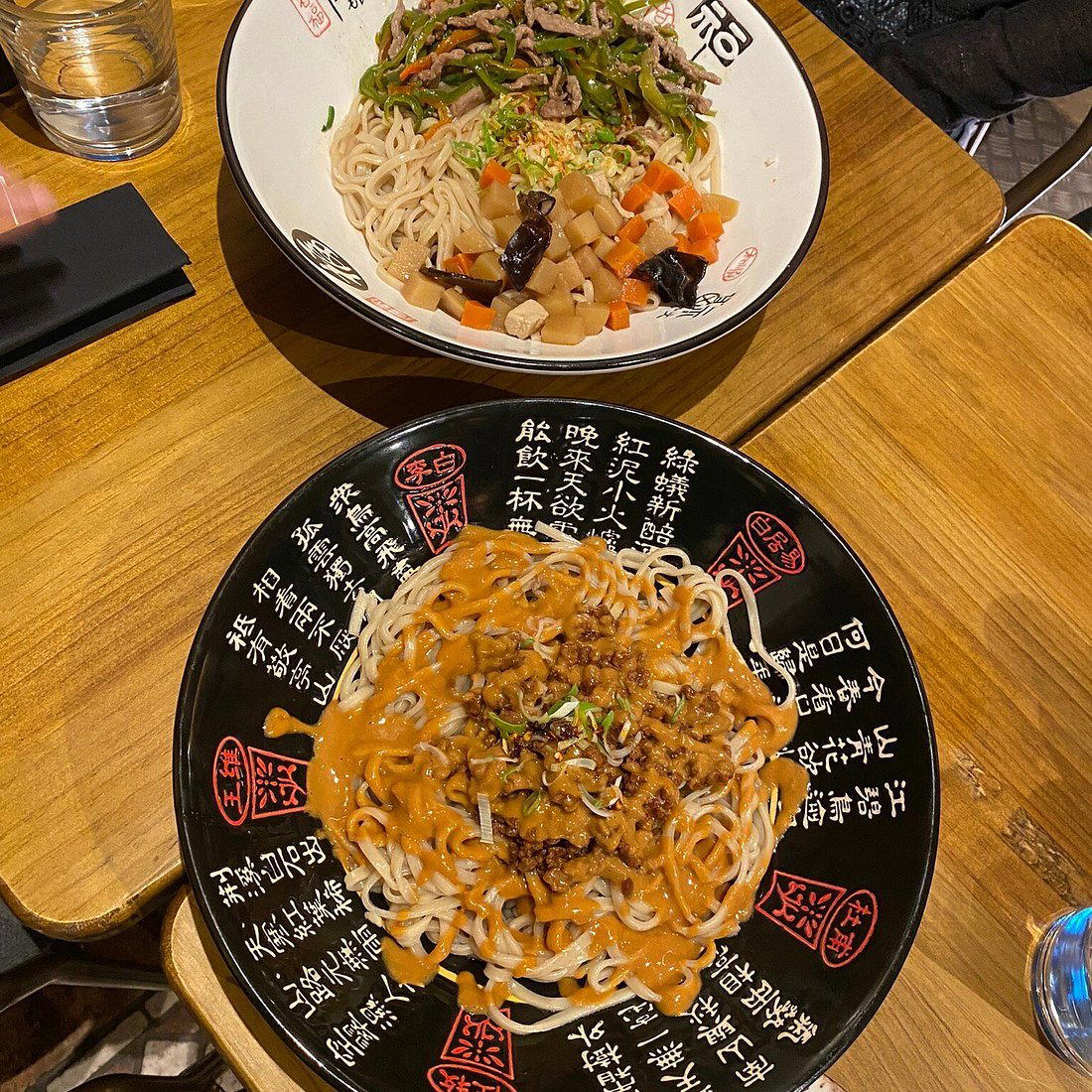
A Bowl of Something Different in the Centro
Madrid's Centro district runs on centuries of habit: roast suckling pig, braised tripe, cured ham sliced to order, and the slow arithmetic of the cocido. Against that backdrop, a noodle house on Calle de las Veneras is a deliberate counterpoint. The street sits close to the Convento de las Descalzas Reales, in a part of the city where tourists and locals share the same narrow pavements, and where the dining offer has historically leaned toward the traditional. X BOWL • Noodle House arrives into that context not as a novelty act but as a representative of a broader pattern reshaping how Madrid eats.
Across the city, the mid-market tier has fractured in interesting ways over the past decade. The €€€€ tasting-menu world — represented by the likes of DiverXO, Coque, Deessa, DSTAgE, and Paco Roncero — operates at a tier most diners visit once or twice a year. What has grown in the space beneath that ceiling is a more casual, format-driven style of eating: ramen bars, Korean-inflected small plates, gyoza counters, and noodle houses that take their craft seriously without requiring a two-hour sitting or a dress code conversation. X BOWL belongs to that cohort.
The Technique Behind the Bowl
The intersection of imported Asian cooking methods and local Iberian produce is not a Madrid invention, it has been central to the Spanish avant-garde for years. David Muñoz built his reputation at DiverXO partly on the productive tension between Asian flavour logic and Spanish raw material; Angel León at Aponiente applies it to Atlantic seafood; Mugaritz in the Basque Country has pushed the same conversation in a more abstract direction. What distinguishes the noodle-house format is that it applies this logic at everyday price points and with a focus on the bowl as the primary unit of flavour delivery.
Noodle broths are among the most technically demanding preparations in any kitchen. A clean tonkotsu demands twelve or more hours of extraction; a good dashi requires precision in temperature and timing; a properly seasoned tare needs to hold up across dozens of servings without drifting. These are disciplines that take years to calibrate, and they translate well to Iberian ingredients. Jamón bones carry a different fat profile and salt concentration than pork trotters used in Japanese ramen production, which changes the calculus of both the broth and the seasoning. The application of Asian stock-building logic to Spanish raw materials is not a shortcut, it is a genuine technical challenge, and when it works, the result is a bowl that tastes like neither its Asian reference point nor traditional Spanish soup, but something with its own internal coherence.
For a broader sense of how Spain's leading kitchens have worked through similar ingredient-meets-technique questions at the highest level, the work of El Celler de Can Roca, Arzak, Azurmendi, Martin Berasategui, Quique Dacosta, Ricard Camarena, Cocina Hermanos Torres, and Atrio documents the range of approaches that have defined Spanish cooking's engagement with global technique over the past two decades.
Where X BOWL Sits in Madrid's Eating Map
Calle de las Veneras is a short street, and the Centro location places X BOWL within walking distance of the Puerta del Sol and the Gran Vía corridor, an area with high foot traffic, a mixed dining public, and competition that ranges from tourist-facing tapas bars to more considered independent operations. The noodle-house format fits the neighbourhood's rhythm: it rewards a quick lunch or an early dinner without demanding the extended time commitment of a tasting menu.
In the context of Madrid's Asian-influenced dining, the city has moved considerably beyond the Chinese and Japanese restaurants that defined its international offer in the 1980s and 1990s. Korean barbecue, Vietnamese pho bars, Filipino canteens, and ramen specialists now occupy a meaningful segment of the mid-market. What distinguishes the more considered operators in this segment is specificity: a focus on one or two noodle formats rather than a pan-Asian menu that covers every base, and a visible investment in broth quality rather than relying on commercial seasoning bases. The noodle house as a format, stripped down, counter-friendly, built around the logic of a single bowl, is the kind of operation that develops a loyal local following over time rather than depending on tourist throughput. For a fuller picture of where X BOWL sits within Madrid's broader dining scene, our full Madrid restaurants guide maps the city's offer across price tiers and cuisines.
For comparative reference, New York's evolution of the same tension between Asian technique and local ingredients is well documented at Atomix, where Korean culinary logic is applied at a fine-dining register, and at Le Bernardin, where French precision and global ingredient sourcing have defined a long-running creative conversation. The noodle-house format operates at a different price point and register, but the underlying dialogue between imported technique and local produce is the same.
Planning Your Visit
X BOWL • Noodle House is located at C. de las Veneras, 5, Centro, 28013 Madrid. The address places it in one of the most central and walkable parts of the city, accessible from multiple Metro lines serving the Sol and Callao stations. Reservations: No booking data is currently available; walk-in is likely the operative model for a format of this type, and arriving outside peak lunch and dinner windows (before 14:00 or after 15:30 for lunch; before 21:00 for dinner) is generally the most reliable approach in high-traffic Centro locations. Website and phone: Not currently listed. Budget: Dress: No dress code applies to operations of this format.
Frequently asked questions
What should I order at X BOWL • Noodle House?
As a general principle in noodle-house formats, the broth-based bowls are the primary item the kitchen has calibrated its operation around, start there rather than with peripheral additions. If the menu includes a house special or a signature format, that is usually the most instructive starting point for a first visit.
What is the ideal way to book X BOWL • Noodle House?
No booking platform or contact details are currently listed for X BOWL. For a noodle-house format in a central Madrid location, walk-in is typically the standard mode of access. The Centro district sees high foot traffic at standard meal times, so arriving slightly before peak hours, around 13:30 for lunch or 20:30 for dinner, is a practical approach until confirmed booking information becomes available.
What is the standout thing about X BOWL • Noodle House?
The most editorially interesting aspect of X BOWL is its position at the intersection of Asian noodle technique and the Iberian ingredient context that Madrid provides. In a city whose dining identity has historically been built on slow-cooked proteins, cured meats, and the logic of the cocido, a kitchen organised around broth precision and noodle craft represents a specific and considered alternative, not a compromise between two traditions, but a direct engagement with both.
Can X BOWL • Noodle House adjust for dietary needs?
Noodle-house kitchens vary significantly in their ability to adjust broths and toppings for dietary requirements, some run entirely separate vegetarian broth lines, others do not.
Does X BOWL • Noodle House justify its prices?
Noodle-house formats in Madrid's Centro district generally operate at accessible mid-market price points, and the value case for a well-executed broth-based bowl is direct: the ingredient and labour costs in serious noodle production are higher than they appear, and a kitchen that manages broth depth and noodle texture consistently is delivering real technical work. Whether X BOWL's specific execution meets that bar requires firsthand assessment.
Is X BOWL • Noodle House suitable for a solo diner?
The noodle-house format is historically one of the most solo-diner-friendly in casual dining, the counter or single-seat model, common across Asian noodle traditions from Tokyo ramen bars to Vietnamese pho shops, is built around the individual bowl as a complete unit. Confirming seating arrangements directly with the venue is advisable once contact details are available.
Quick Comparison
A small set of peers for context, based on recorded venue fields.
| Venue | Cuisine | Price | Awards | Notes |
|---|---|---|---|---|
| X BOWL • Noodle HouseThis venue — the venue you are viewing | Authentic Chinese Street Noodles | $30–50 | Not listed | Not listed |
| DiverXO | Avant-Garde Spanish Tasting Menu | $300–500 | 3 Michelin Stars · World's 50 Best #4 | Progressive - Asian, Creative |
| Coque | Modern Spanish Fine Dining | $300–500 | 2 Michelin Stars · La Liste Top Restaurants | Spanish, Creative |
| Deessa | Modern Valencian Fine Dining | $150–200 | 2 Michelin Stars · La Liste Top Restaurants | Modern Spanish, Creative |
| Paco Roncero | Avant-Garde Spanish Fine Dining | $150–200 | 2 Michelin Stars · La Liste Top Restaurants | Creative |
| Smoked Room | Modern Japanese Fire Omakase | $200–300 | 2 Michelin Stars · La Liste Top Restaurants | Progressive Asador, Contemporary |
Continue exploring
More in Madrid
Restaurants in Madrid
Browse all →
Bars in Madrid
Browse all →
Hotels in Madrid
Browse all →


Details
- Casual
- Modern
- Trendy
- Casual Hangout
- Solo
- Standalone
- Open Kitchen
- A La Carte
- Counter Dining
Casual and modern with a quiet, relaxed atmosphere ideal for quick meals.