Wabisabi Ramen sits on Karolinenstraße in Hamburg's Schanzenviertel, a neighbourhood where casual dining formats consistently outperform their price bracket. Against Hamburg's dominant fine-dining axis of French and Mediterranean tasting menus, a ramen counter represents a different register entirely — one where bowl architecture and broth discipline do the critical work that plating theatrics do elsewhere.
Pearl is the En Primeur Club membership app — saves, bookings, and concierge access live there. Same editors, same standards.
- Address
- Karolinenstraße 6, 20357 Hamburg, Germany
- Phone
- +494053307921
- Directions
- Get directions
 Saves & bookings on Pearl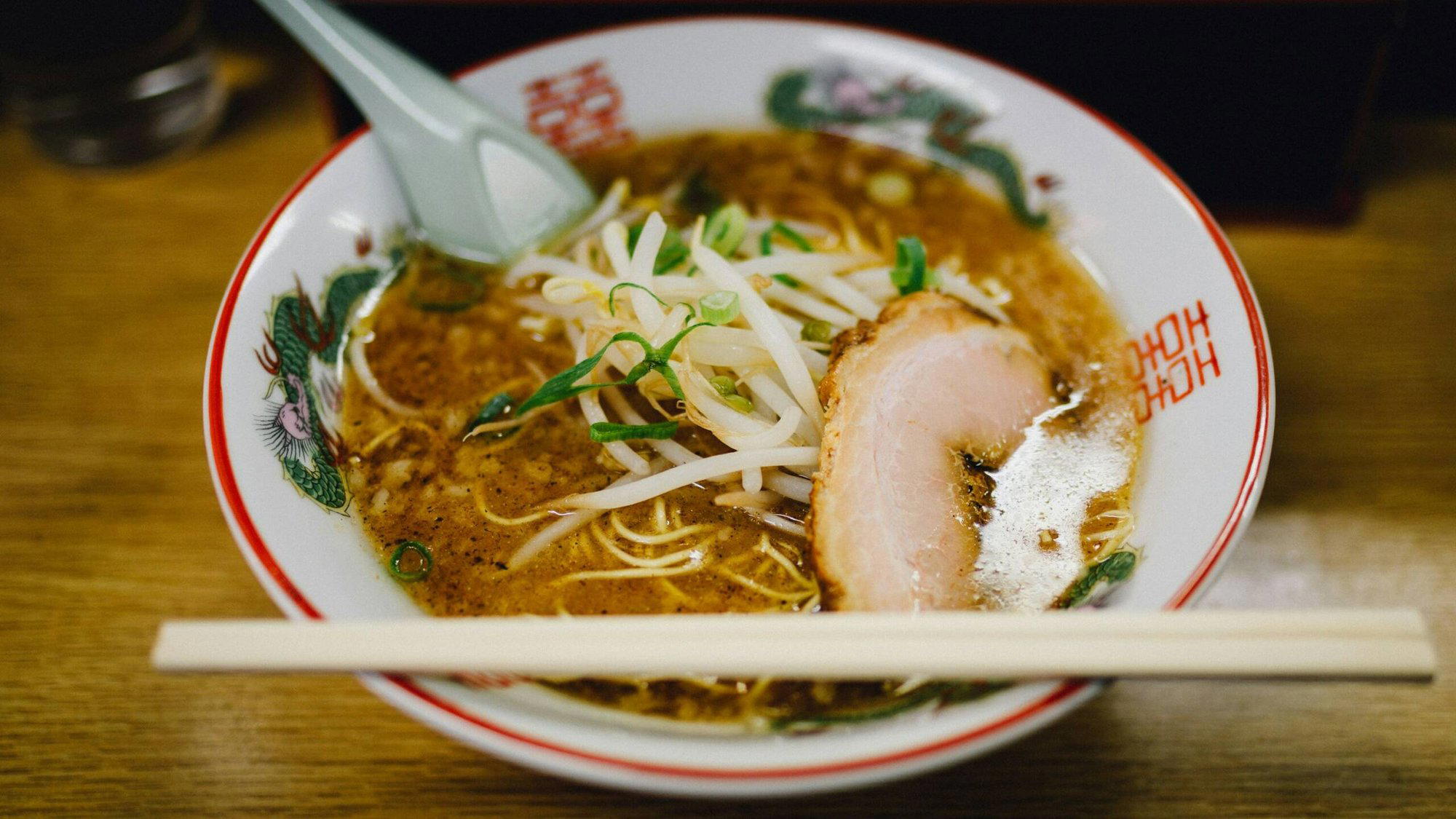
Karolinenstraße and the Schanzenviertel Ramen Counter
Hamburg's Schanzenviertel runs on a particular tension: it is simultaneously one of the city's most densely creative neighbourhoods and one of its most resistant to formal dining conventions. The streets around Karolinenstraße have long hosted restaurants that operate on informality as a deliberate position, not a default. A ramen counter fits that logic precisely. Where the city's upper dining tier — represented by three-Michelin-star operations like Restaurant Haerlin and The Table Kevin Fehling — stakes its identity on composed tasting menus and tableside service, the ramen format inverts almost every assumption: an open kitchen, a single focal ingredient (the broth), and a menu narrow enough that every element on it has been considered with the same intensity that a fine-dining kitchen applies to a sauce.
Wabisabi Ramen occupies Karolinenstraße 6, inside that Schanzenviertel fabric. The name itself is a double reference, wabi-sabi, the Japanese aesthetic philosophy of finding value in imperfection and transience, carries particular weight in a ramen context, where a bowl is by nature a temporary thing, consumed and gone, its quality measured only in the moment.
What the Menu Architecture Signals
In Japanese ramen culture, a restaurant's menu structure is one of its most legible signals. A shop that offers a single style, say, one tonkotsu or one shio, is making an argument about focus. A wider menu, moving across shoyu, miso, and tsukemen formats, stakes a different claim: range and technical breadth. Both are legitimate, but they attract different critical standards. The first asks to be judged on depth; the second on consistency across variables.
This architecture question matters because ramen, despite its street-food origins, has developed one of the most exacting quality hierarchies in Japanese food culture. Tokyo's leading ramen shops regularly earn queue times measured in hours, and the category has its own critical infrastructure, the Ramen Database (Ramendb) and Tabelog's ramen rankings function as serious evaluation systems, not casual aggregators. When a Japanese-inflected ramen concept opens in a European city, it inherits that tradition of scrutiny whether or not the local dining public is aware of it.
Against Hamburg's broader restaurant spectrum, a ramen counter occupies a middle register that is frequently underserved. The city's upper tier trends heavily toward European fine dining, 100/200 Kitchen, bianc, and Lakeside all work within European culinary frameworks. Below that tier, casual dining in the Schanzenviertel skews toward pizza, burger, and pan-Asian formats. A kitchen that takes broth seriously, spending the hours necessary to develop the collagen extraction that defines a proper tonkotsu, or the layered kombu-and-katsuobushi reduction behind a clean shio, occupies a gap that most European cities have been slow to fill with genuine craft.
Across Germany, the gap between ramen as a category and ramen done with technical seriousness is significant. Cities like Berlin and Munich have developed more mature ramen scenes faster, partly because of larger Japanese expat communities and higher tourist volumes from Japan. Hamburg's ramen offering has historically been thinner, which gives a focused operator on Karolinenstraße a meaningful position in a category that rewards depth over competition.
Ramen in the German Dining Context
Germany's relationship with Japanese cuisine has matured considerably over the past decade. The same critical apparatus that covers the country's Michelin-starred kitchens, from Aqua in Wolfsburg to JAN in Munich and Schwarzwaldstube in Baiersbronn, has also begun paying closer attention to Japanese-influenced casual formats. The question those critics increasingly ask is whether a concept understands its source material deeply enough to translate it, rather than simply approximate it.
That standard applies to ramen with particular force because the category is so technically demanding at its base. Getting broth right requires time, temperature control, and an understanding of how fat emulsification changes the mouthfeel of the finished bowl. Getting noodle texture right requires either sourcing from a serious noodle producer or making in-house at a hydration level calibrated to the broth it will enter. These are craft decisions, not atmospheric ones, and they are visible in the bowl even when the diner cannot name the technique that produced them.
For comparison, formats that have succeeded in extracting European critical recognition for Japanese-influenced work, Atomix in New York City at the fine-dining end, or CODA Dessert Dining in Berlin at the experimental edge, share a common trait: the source tradition is handled with enough specificity that the concept could not exist in any other culinary lineage. A ramen counter that achieves the same relationship to its tradition earns a different kind of authority than one that uses Japanese aesthetics as surface styling.
Planning a Visit
Karolinenstraße 6 sits in the western Schanzenviertel, walkable from the S-Bahn stop at Sternschanze and within a short distance of the neighbourhood's main dining and bar cluster. For visitors building a Hamburg evening around multiple stops, the address sits usefully between the denser Schulterblatt corridor and the quieter streets approaching Eimsbüttel. Ramen counters in this neighbourhood typically run highest demand in the evening from Thursday through Saturday, and queue or wait dynamics at smaller operators can be unpredictable. Arriving before the main dinner push, around opening or shortly after, tends to reduce wait times at counters without advance booking systems. Given that specific booking details for Wabisabi Ramen are not currently listed in public channels, arriving in person or checking for any updated contact information directly is the practical approach.
Visitors with broader Hamburg dining ambitions who want fine-dining anchors alongside casual stops can reference the full Hamburg restaurants guide, which maps the city's dining tiers from Michelin-level tasting menus to neighbourhood operators. For German fine-dining context further afield, Vendôme in Bergisch Gladbach, Victor's Fine Dining by Christian Bau in Perl, Waldhotel Sonnora in Dreis, Schanz in Piesport, Bagatelle in Trier, and ES:SENZ in Grassau each represent different regional expressions of the country's broader dining ambition. And for the transatlantic reference point on how Japanese-influenced cooking performs at the highest critical level, Le Bernardin in New York City offers a useful marker of how a single-discipline kitchen can achieve sustained institutional authority.
Continue exploring
More in Hamburg
Restaurants in Hamburg
Browse all →
Bars in Hamburg
Browse all →

Hotels in Hamburg
Browse all →

Wineries in Hamburg
Browse all →
At a Glance
- Cozy
- Intimate
- Classic
- Casual Hangout
- Group Dining
- Date Night
- Terrace
- Standalone
- Sake Program
- Beer Program
Current opening hours
- Monday
- 12–10 PM
- Tuesday
- 12–10 PM
- Wednesday
- 12–10 PM
- Thursday
- 12–10 PM
- Friday
- 12–10 PM
- Saturday
- 1–10 PM
- Sunday
- 1–10 PM
Hours can change for holidays and private events. Last verified .
Warm and inviting with vintage tiles, sake bottles, and hanging white lanterns creating a traditional Japanese aesthetic; outdoor terrace offers neighborhood charm.
Know Before You Go
- Getting there
- Karolinenstraße 6, 20357 Hamburg, Germany