Violet
Our verdict
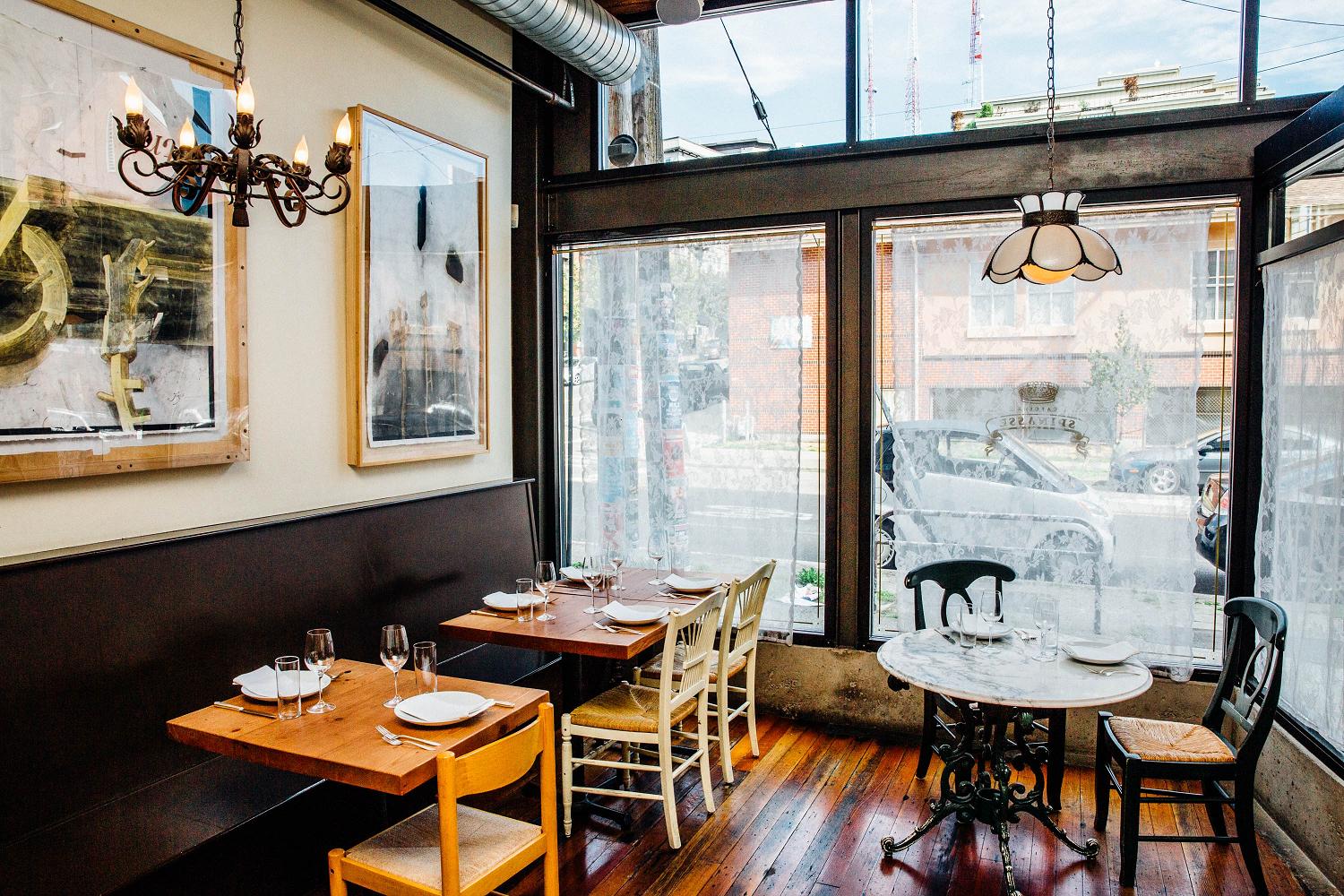
Located on Capitol Hill's 12th Avenue corridor, Violet operates within Seattle's growing tier of ingredient-driven dining rooms where Pacific Northwest produce meets technically precise cooking. The address alone places it in a neighbourhood that has quietly become one of the city's most serious stretches for independent restaurants. EP Club tracks it as part of the local-sourcing, global-method movement reshaping Seattle's dining scene.

Pearl is the En Primeur Club membership app, where members save venues, book tables and use the concierge.
12th Avenue and the Case for Neighbourhood Dining
Capitol Hill's 12th Avenue has, over the past decade, developed into one of Seattle's most consequential stretches for independent restaurants. It is not the waterfront, not the tourist corridor, and not the kind of address that appears on generic city guides. What it is, increasingly, is a strip where serious operators open without the overhead pressure of central locations, and where the cooking tends to be more considered for it. Violet, at 1734 12th Ave, sits inside that pattern. The address is the first signal.
Seattle's dining scene has long wrestled with a tension familiar to Pacific Northwest cities: the region produces some of the most compelling raw ingredients in North America, Dungeness crab, geoduck, Walla Walla onions, Cascade mushrooms, cold-water salmon, and yet the techniques used to honour them have historically lagged behind coastal markets like San Francisco or New York. That gap has been closing. A cohort of Seattle operators has spent the last several years importing method rather than product, applying French, Japanese, and modernist discipline to ingredients that rarely need rescue, only precision. Violet appears to operate within that cohort.
The Intersection of Local Product and Imported Method
The editorial angle that defines Seattle's most interesting dining tier right now is not provenance alone. Knowing where your salmon swam is table stakes. The differentiation comes from what technique does to a product once it arrives in the kitchen. Across the American West Coast, this approach has produced some of the country's most closely watched restaurants. Single Thread Farm in Healdsburg applies Japanese kaiseki structure to Sonoma County produce. Lazy Bear in San Francisco uses modernist plating conventions on Northern California forage. In Seattle, the same logic is at work in different kitchens, with different raw material.
Capitol Hill's dining rooms have been particularly active in this space. Joule, operating nearby with a New Asian framework, applies Korean-influenced technique to Pacific Northwest beef and seafood. The model is consistent: bring a codified external method to bear on what the region grows, catches, or forages.
What the address and neighbourhood context do confirm is that this is not an airport-district steakhouse or a hotel dining room built for expense-account lunches. Capitol Hill restaurants at this address tier are, as a category, cooking for a local audience with opinions. That tends to produce more honest kitchens.
Seattle in the National Conversation
To place Violet in a wider frame: Seattle operates in a national dining market where the reference points are demanding. Le Bernardin in New York City set a generational standard for technique-led seafood. Alinea in Chicago redrew what American fine dining could look like structurally. The French Laundry in Napa and Blue Hill at Stone Barns in Tarrytown established the farm-to-table mode as a serious, technically rigorous practice rather than a marketing position. Atomix in New York City demonstrated that Korean culinary tradition could anchor a fine dining format at the highest tier. Providence in Los Angeles and Addison in San Diego have pushed Southern California into that same conversation.
Seattle's own contenders in this tier include Canlis, which has operated as the city's benchmark for ambitious New American dining across multiple generations, and a smaller group of independent rooms that have emerged more recently. 1415 1st Ave, 1744 NW Market St, and 2963 4th Ave S represent other coordinates in the city's expanding serious-dining map. For a fuller picture of where Seattle's restaurant scene sits as a whole, EP Club's full Seattle restaurants guide tracks the broader field.
Internationally, operations like 8 1/2 Otto e Mezzo Bombana in Hong Kong and Emeril's in New Orleans illustrate how strongly a local ingredient story can anchor a restaurant's identity when the technique matches the ambition of the product. The Inn at Little Washington shows what decades of commitment to a local sourcing philosophy eventually produces at the recognition level. These are the peer-set reference points against which ambitious Pacific Northwest kitchens are increasingly being measured.
What the Capitol Hill Dining Pattern Tells You
Restaurants that open on Capitol Hill's 12th Avenue corridor are, structurally, betting on a neighbourhood audience rather than foot traffic or tourist volume. The economics of that bet require either strong local word-of-mouth, a defined format that rewards repeat visits, or a sufficiently clear identity to generate its own demand. The neighbourhood has produced all three types over the past decade, and the better-performing rooms tend to be those with a specific technical or ingredient story to tell rather than those chasing format trends.
The local-ingredients, global-technique model is particularly well-suited to this kind of neighbourhood operation. It gives a kitchen a clear sourcing brief that connects to place, and a technical framework that gives chefs trained in external traditions a coherent way to work with those ingredients. The result, when it works, is cooking that feels simultaneously rooted and precise, the opposite of the generic. Seattle's raw material is good enough that the technique, not the sourcing, becomes the variable that separates kitchens at this level.
Know Before You Go
- Address: 1734 12th Ave, Seattle, WA 98122
- Neighbourhood: Capitol Hill
- Practical note: Capitol Hill is accessible by the Link Light Rail (Capitol Hill Station) or by car with street parking available on and around 12th Ave
- EP Club status: Tracked as part of Seattle's ingredient-driven independent dining tier; full venue data pending confirmation
Frequently asked questions
Where is Violet located?
Violet is located at 1734 12th Ave, Seattle, WA 98122, Seattle.
How does Violet fit into Seattle's Capitol Hill dining corridor?
Violet is located at 1734 12th Ave in Seattle's Capitol Hill neighbourhood, a stretch that has become one of the city's most consequential addresses for independent, neighbourhood-first restaurants over the past decade. Restaurants in this corridor typically rely on repeat local custom rather than tourist foot traffic, which tends to produce more focused, less performative cooking. That structural reality places Violet in a peer group that includes some of Seattle's more serious independent kitchens.
What do people recommend at Violet?
Violet sits on Capitol Hill's 12th Avenue, a corridor that has attracted some of Seattle's most focused independent kitchens over the past decade. Specific dish recommendations aren't publicly documented at this time, but the restaurant's placement in that neighbourhood context points toward cooking grounded in local sourcing and precise execution. Checking recent guest posts or the restaurant's own channels will give the most current picture of what's resonating.
Is Violet reservation-only?
Capitol Hill restaurants of this scale and neighbourhood focus often run a mix of reserved and walk-in seating, but contacting the venue directly before visiting is the only reliable way to confirm current policy.
What's the signature at Violet?
Violet operates on Capitol Hill's 12th Avenue, a stretch where the editorial identity of Seattle's independent dining scene has sharpened considerably over the past ten years. The restaurant's address and neighbourhood positioning suggest a kitchen oriented toward the kind of product-led cooking that defines the better end of Seattle's independent tier.
Cost and Credentials
Comparable venues nearby, for context on price, style, and recognition.
| Venue | Cuisine | Price | Awards | Notes |
|---|---|---|---|---|
| VioletThis venue (the venue you are viewing) | American Omakase | $150–200 | Not listed | Not listed |
| Archipelago | Filipino-American Pacific Northwest | $200–300 | James Beard Award Semi Finalist | Columbia City, Filipino-American Pacific Northwest |
| Pidgin Cooperative | Filipino-Hawaiian Asian Fusion | $30–50 | Not listed | Interbay, Filipino-Hawaiian Asian Fusion |
| Prelude at McCaw Hall | Contemporary American | $50–100 | Not listed | Uptown, Contemporary American |
| Nell's | European-Inspired New American | $50–100 | Not listed | Green Lake Park, European-Inspired New American |
| Jeffry’s | Contemporary French-American Steakhouse | $50–100 | Not listed | Broadway, Contemporary French-American Steakhouse |