
Uzu to Kaminari belongs to Fujisawa’s serious ramen tier: a compact Hon-Kugenuma shop with Tabelog Ramen KANAGAWA 100 selection in 2025 and earlier Tabelog 100 recognition across 2022–2024. The appeal is not spectacle but ingredient-led ramen culture, where dashi, noodles, counter rhythm, and neighborhood access matter more than luxury cues.
Pearl is the En Primeur Club membership app — saves, bookings, and concierge access live there. Same editors, same standards.
- Address
- 3 Chome-5-7 Kugenumasakuragaoka, Fujisawa, Kanagawa 251-0027, Japan
- Website
- uzurai.stores.jp
 Saves & bookings on Pearl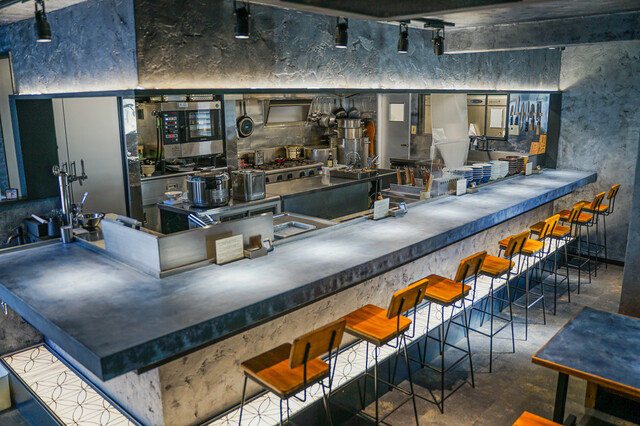
Hon-Kugenuma does not announce itself with the neon compression of Tokyo ramen districts. The approach is quieter: residential streets, Odakyu Enoshima Line rhythms, and a shop format built for people who came for a bowl rather than a scene. In that setting, Uzu to Kaminari reads as part of a newer Kanagawa ramen conversation, where sourcing, broth clarity, and noodle craft carry the status once reserved for long queues and oversized bowls.
Kanagawa’s ramen identity is broader than a single style. Yokohama leans into ie-kei history, coastal towns draw weekend traffic, and Fujisawa sits in between: close enough to Tokyo for serious ramen travelers, local enough that repeat custom matters. That tension suits a restaurant selected for Tabelog Ramen KANAGAWA 100 in 2025, with Tabelog 100 selections also listed for 2024, 2023, and 2022. Recognition here is not a luxury signal; it is a filter in a category where small shops, limited seating, and ingredient discipline define credibility.
Ingredient-led ramen in a compact Fujisawa room
The useful way to read this ramen shop is through restraint. The public description points to additive-free dashi and homemade noodles, which places the cooking in a different lane from heavier, impact-first ramen built around fat, garlic, or sheer volume. That matters in Fujisawa because the city’s dining range spans casual coastal eating, commuter-town comfort, and more formal regional cooking. Ramen at this level has to make its case through construction: stock, tare, noodle texture, and pacing.
The room reinforces that logic. Sixteen seats, split between counter seating and two small tables, keep the experience close to the kitchen’s cadence. Counter ramen has always been partly about timing: noodles do not wait politely while a dining room settles. A small format protects that immediacy, and it also explains why recognition in ramen carries different weight from recognition in kaiseki or sushi. The craft is compressed into a short service window, a single bowl, and a few minutes of peak texture.
Price also shapes the category, even when it is not the central story. Fujisawa can support higher-ticket dining, including comparison venues such as fu-fu shisen and Sushi Tomi at far steeper dinner budgets, but ramen’s value proposition remains blunt: technical cooking in a low-friction format. Men Dokoro Rajuku sits in a comparable everyday ramen price band, which makes Uzu to Kaminari’s Tabelog 100 record more meaningful. The distinction is not that ramen is inexpensive; it is that the category asks a small bowl to carry the full argument.
Why the sourcing angle matters more than the queue
Ingredient talk in ramen can easily become vague, but additive-free dashi and house-made noodles are concrete markers. Dashi defines the base architecture of the bowl, while noodles determine whether that architecture survives the first minutes at the counter. In Japan’s ramen culture, those choices are not decorative. They decide whether a shop belongs to casual convenience, specialist craft, or destination dining in miniature.
Fujisawa’s geography helps explain the appeal. The city sits within easy reach of Enoshima and the Shonan coast, but its stronger restaurants are not all beach-adjacent lifestyle plays. Several are embedded in residential or station-adjacent pockets, where regulars, solo diners, families, and travelers overlap. Uzu to Kaminari’s family-friendly and solo-dining-friendly signals fit that pattern. This is not a white-tablecloth interpretation of ramen; it is a neighborhood-scale shop operating with enough technical intent to draw attention beyond the neighborhood.
The Tabelog score of 3.86 gives another useful context point. In Japan, Tabelog scores tend to be conservative, especially compared with Western review platforms, and a score in that range indicates sustained user confidence rather than casual popularity alone. Combined with multiple Tabelog 100 appearances, the signal is consistent: this is a ramen counter with enough repeat validation to belong on a Fujisawa eating itinerary, particularly for travelers who care about broth and noodle decisions more than décor or ceremony.
How it fits into a Fujisawa food day
Fujisawa rewards a tighter plan than many visitors give it. The city is often treated as a gateway to Enoshima or Kamakura, yet its restaurant map has its own logic: ramen near the rails, casual grills, Chinese cooking, coastal Italian, and splurge formats within reach. For a broader city read, start with Our full Fujisawa restaurants guide, then cross-check nearby dining options such as Asahi Honten, Chinese Shunsai Chaamaen, clarita da marittima, COOKER'S GRILL, and elarte.
Travelers building a wider Shonan or Japan route can widen the net through Our full Fujisawa hotels guide, Our full Fujisawa bars guide, Our full Fujisawa wineries guide, and Our full Fujisawa experiences guide. Nearby and onward dining references include -Grilled beef Sukiyaki- KAMAKURA TANUKIAN 鎌倉 たぬき庵 in Kamakura. 鮪と炭火焼き うお炭 秋葉原店 in Tokyo.cafe in Osaka.know in Kumamoto, (Shoku) Vietnam in Kawasaki, [Curry Senmon Ten] Maruyama Kyoju. in Sapporo, Jōdo Saké Bar in Los Angeles, and Onigiri Time in Pasadena.
The editorial case is simple: choose this stop when ramen is meant to be the point, not a filler meal between coastal sightseeing and the train home. The restaurant sits in the small-format, ingredient-conscious lane of Fujisawa dining, where repeated Tabelog 100 recognition, a compact counter-and-table setup, and a dashi-and-noodle focus give the bowl its authority.
Side-by-Side Snapshot
Comparable venues by cuisine and price in the same metro.
| Venue | Cuisine | Price | Notes |
|---|---|---|---|
| Uzu to KaminariThis venue — the venue you are viewing | Modern Ramen | $$ | Not listed |
| Sengyo Toridashi Men Sawamura | Japanese Ramen | $ | Fujisawa |
| Men Dokoro Rajuku | Japanese Ramen | $ | Fujisawa |
| COOKER'S GRILL | American Grill / Burgers | $$ | Tsujido |
| Sushi Tomi | Traditional Sushi Counter | $$$ | Fujisawa |
| Asahi Honten | Japanese Senbei & Octopus Crackers | $ | Enoshima |
Recognition history
Dated appearances from independent guides and award organizations, with the underlying list record or original source where available.
Tabelog 100 #38 · No. 38
Tabelog · Tabelog 100 - Ramen - KANAGAWA - 2025










At a Glance
- Modern
- Cozy
- Minimalist
- Solo
- Casual Hangout
- Standalone
- Open Kitchen
- Beer Program
- Local Sourcing
Current opening hours
- Monday
- Closed
- Tuesday
- 11 AM–3 PM
- Wednesday
- 11 AM–3 PM
- Thursday
- 11 AM–3 PM
- Friday
- 11 AM–3 PM, 6–8:30 PM
- Saturday
- 11 AM–3 PM, 6–8:30 PM
- Sunday
- 11 AM–3 PM
Hours can change for holidays and private events. Last verified .
A quiet, refined ramen shop with an artisanal, understated atmosphere that emphasizes craft over spectacle.