
Asahi Honten belongs to Enoshima’s snack-and-sweets tradition rather than the reservation-led restaurant circuit. Its reputation rests on senbei, takeaway service, and a 2023 Tabelog 100 selection for Japanese traditional sweets and sweets cafes in East Japan, making it a useful stop for readers interested in regional food craft at a modest spend.
Pearl is the En Primeur Club membership app — saves, bookings, and concierge access live there. Same editors, same standards.
- Address
- 1 Chome-4-8 Enoshima, Fujisawa, Kanagawa 251-0036, Japan
- Phone
- +81 466-23-1775
- Website
- murasaki-imo.com
 Saves & bookings on Pearl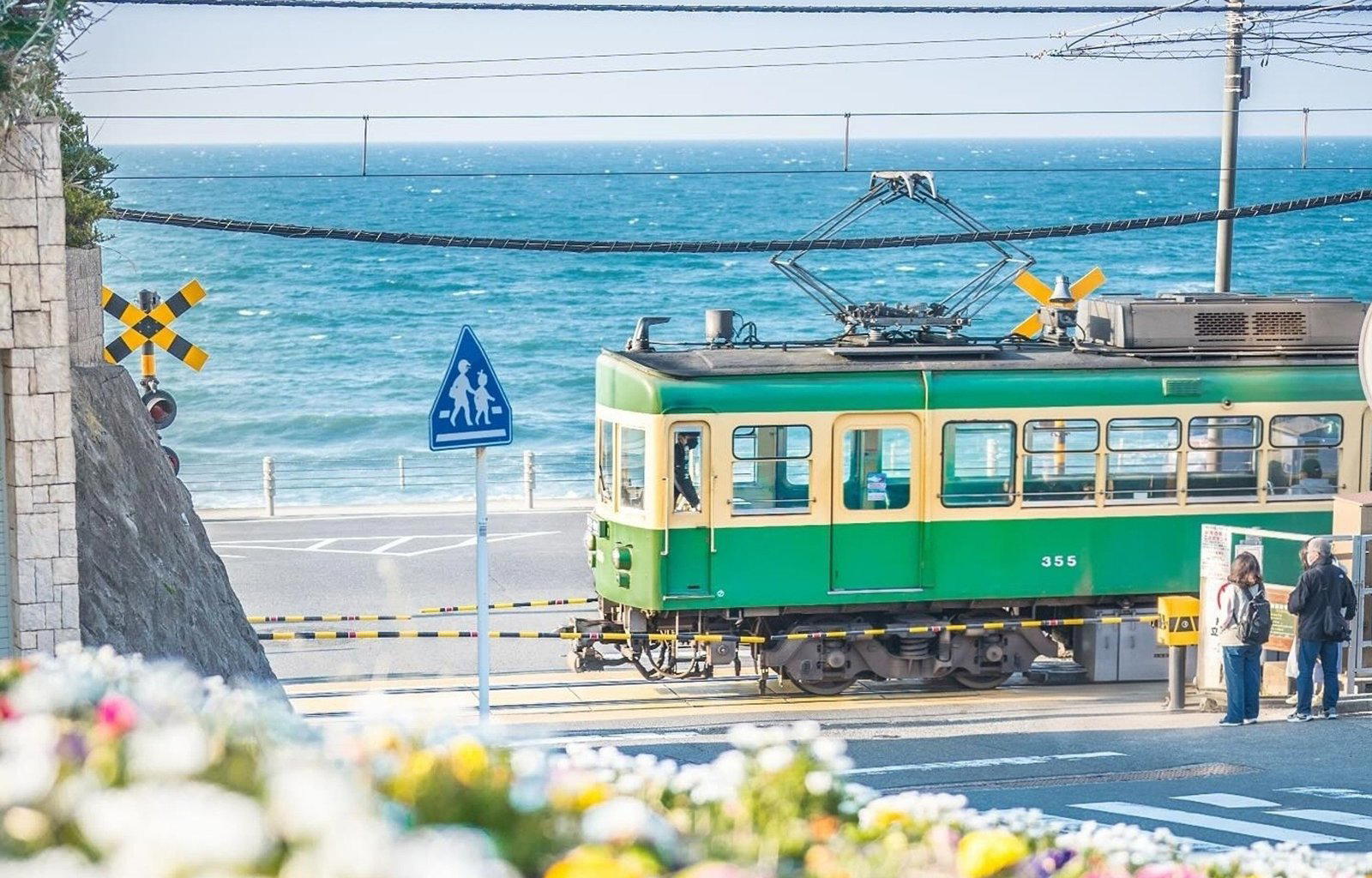
Enoshima’s approach is built on movement: the bridge crossing, the slope into the island, shopfronts turning foot traffic into quick purchases, and the smell of grilled or toasted snacks drifting through narrow commercial streets. In that setting, senbei makes sense. Rice crackers are portable, direct, and tied to the older Japanese habit of buying local sweets and savoury snacks as omiyage, not sitting down for a long meal. Asahi Honten fits that rhythm: takeaway only, low-spend, and focused on a category that rewards freshness, texture, and the handling of rice rather than ceremony.
Fujisawa’s dining map is unusually split. Around Enoshima, the strongest identity comes from day-trip food: seafood, sweets, ice cream, crackers, and casual counters that serve people between station, shrine, beach, and ferry views. Elsewhere in the city, formats broaden into destination restaurants such as clarita da marittima, Sichuan-leaning rooms like fu-fu shisen, and local grill cooking at COOKER'S GRILL. The useful distinction is not casual versus serious. It is whether the meal is built for lingering or for carrying away. Senbei sits firmly in the second camp, and the discipline is narrower than it first appears.
Senbei, sourcing, and the logic of Enoshima takeaway food
Japanese rice crackers are often treated by visitors as a simple snack, but the category depends on ingredient judgment: the rice base, seasoning, heat, and timing all have to land cleanly because there is little to hide behind. In a coastal day-trip district, that matters. Food is exposed to crowds, weather, and fast turnover; the shops that last tend to do one thing with enough consistency that customers can read the product quickly. The appeal is not a tasting-menu narrative. It is the older Japanese retail grammar of a specialist counter, a wrapped purchase, and a flavour profile that can travel.
The 2023 Tabelog 100 selection for Japanese traditional sweets and sweets cafes in East Japan gives this address a stronger signal than the usual tourist-street sweet shop. Tabelog’s Hyakumeiten lists are category-specific, which is useful here: senbei is being judged against wagashi and sweets-cafe peers, not against sushi counters or kaiseki rooms. That distinction matters for Fujisawa, where visitors often compress the city into a beach-and-island itinerary. A selected sweets specialist says something more precise: Enoshima’s food culture is not only scenic eating, but also small-format craft with enough recognition to register beyond local footfall.
Among Fujisawa peers, the pricing tier also tells a story. Asahi Honten shares the sub-¥1,000 snack bracket with places such as The Market SE1 and Hilo Homemade Ice Cream, while comparison restaurants such as clarita da marittima sit in a much higher dining tier and Uzu to Kaminari occupies a low-to-mid casual bracket. That spread is useful for planning a day in the area: the rice-cracker stop is not competing with a full lunch. It is the thing that makes sense before or after the seated meal, especially when the itinerary is built around Enoshima rather than a single restaurant reservation.
Recognition without restaurant theatre
Asahi Honten is better understood as a food-craft stop than as a conventional restaurant. The format is takeaway, reservations are unavailable, private rooms are not part of the proposition, and the experience is closer to a specialist shop than a dining room. That is not a limitation in this category. In Japanese sweets and snack culture, the absence of table service often sharpens the point: the product has to communicate through queue rhythm, packaging, and repeatable execution.
The lack of chef-led public narrative also suits the genre. Many premium dining rooms now sell authorship as much as flavour, but senbei belongs to a different tradition. The craft is collective, procedural, and ingredient-led. Rice, seasoning, heat, and timing do the work. That makes the Tabelog recognition a more relevant trust signal than a personality-driven biography would be. For readers used to chasing names, this is a reminder that Japanese food excellence often lives in shop formats where the maker’s identity is quieter than the product category.
There is also a practical cultural reason to take these shops seriously. Omiyage culture rewards foods that can be carried, shared, and understood outside the place of purchase. Enoshima receives a steady stream of domestic visitors, and snack specialists exist partly because people want something that marks the trip without requiring a table. In that sense, senbei is not an accessory to the visit. It is part of how the destination circulates after people leave.
How to place it within a Fujisawa food day
The strongest way to use the restaurant is as a punctuation mark in an Enoshima itinerary, not as the anchor meal. Its position near the island’s pedestrian flow makes it compatible with a casual day built around walking, shrines, sea views, and small purchases. Readers looking for a full restaurant plan should treat it as a supplement to broader Fujisawa dining rather than a substitute for lunch or dinner. For citywide planning, start with Our full Fujisawa restaurants guide, then widen the trip with Our full Fujisawa hotels guide, Our full Fujisawa bars guide, Our full Fujisawa wineries guide, and Our full Fujisawa experiences guide.
For comparison across Kanagawa and nearby food itineraries, Fujisawa’s range runs from Chinese Shunsai Chaamaen to elarte, while Kamakura’s dining circuit includes -Grilled beef Sukiyaki- KAMAKURA TANUKIAN 鎌倉 たぬき庵 in Kamakura. Broader Japan planning can branch toward. 鮪と炭火焼き うお炭 秋葉原店 in Tokyo.cafe in Osaka.know in Kumamoto, (Shoku) Vietnam in Kawasaki, and [Curry Senmon Ten] Maruyama Kyoju. in Sapporo. For readers tracking Japanese food culture abroad, Jōdo Saké Bar in Los Angeles and Onigiri Time in Pasadena show how portable, ingredient-specific formats travel beyond Japan.
At-a-Glance Comparison
Comparable venues by cuisine and price in the same metro.
| Venue | Cuisine | Price | Notes |
|---|---|---|---|
| Asahi HontenThis venue — the venue you are viewing | Japanese Senbei & Octopus Crackers | $ | Not listed |
| Madame Rouge | Bakery | $ | Asahi-cho, Fujisawa |
| Sengyo Toridashi Men Sawamura | Japanese Ramen | $ | Fujisawa |
| Uzu to Kaminari | Modern Ramen | $$ | Hon-Kugenuma |
| Ramen Jiro Shounan fujisawa ten | Ramen Jiro-style ramen & abura-soba | $ | Fujisawa |
| Hilo Homemade Ice Cream | Hawaiian-style Ice Cream Shop | $ | Kugenumakaigan |
Recognition history
Dated appearances from independent guides and award organizations, with the underlying list record or original source where available.
Tabelog 100 #74 · No. 74
Tabelog · Tabelog 100 - Japanese traditional sweets / Japanese sweets cafe - EAST - 2023








At a Glance
- Lively
- Cozy
- Solo
- Family
- Casual Hangout
- After Work
- Standalone
- Design Destination
- Local Sourcing
- Street Scene
Current opening hours
- Monday
- 9 AM–6 PM
- Tuesday
- 9 AM–6 PM
- Wednesday
- 9 AM–6 PM
- Thursday
- Closed
- Friday
- 9 AM–6 PM
- Saturday
- 9 AM–6 PM
- Sunday
- 9 AM–6 PM
Hours can change for holidays and private events. Last verified .
A bustling takeaway senbei shop on Enoshima’s Nakamise street, with staff pressing whole octopus into large crackers right at the front, bright daylight from the street, and a casual, festival-like atmosphere as visitors queue, watch the presses, and snack while walking.