
Uwo Toku places Edomae sushi inside an older Sumida register: small room, house-restaurant setting, counter focus, and a price band below Ginza’s trophy omakase tier. Its Tabelog Sushi TOKYO 100 selection in 2025 and earlier Tabelog Bronze awards make it a serious address for diners interested in Tokyo sushi beyond the central luxury circuit.
Pearl is the En Primeur Club membership app — saves, bookings, and concierge access live there. Same editors, same standards.
- Address
- 4 Chome-24-26 Higashimukojima, Sumida City, Tokyo 131-0032, Japan
- Phone
- +81 50-5487-2063
- Website
- uwotoku.sakura.ne.jp
 Saves & bookings on Pearl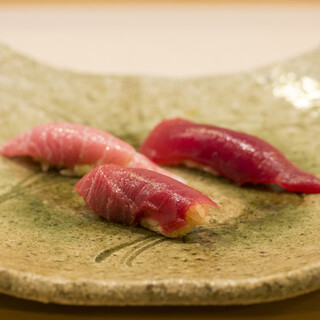
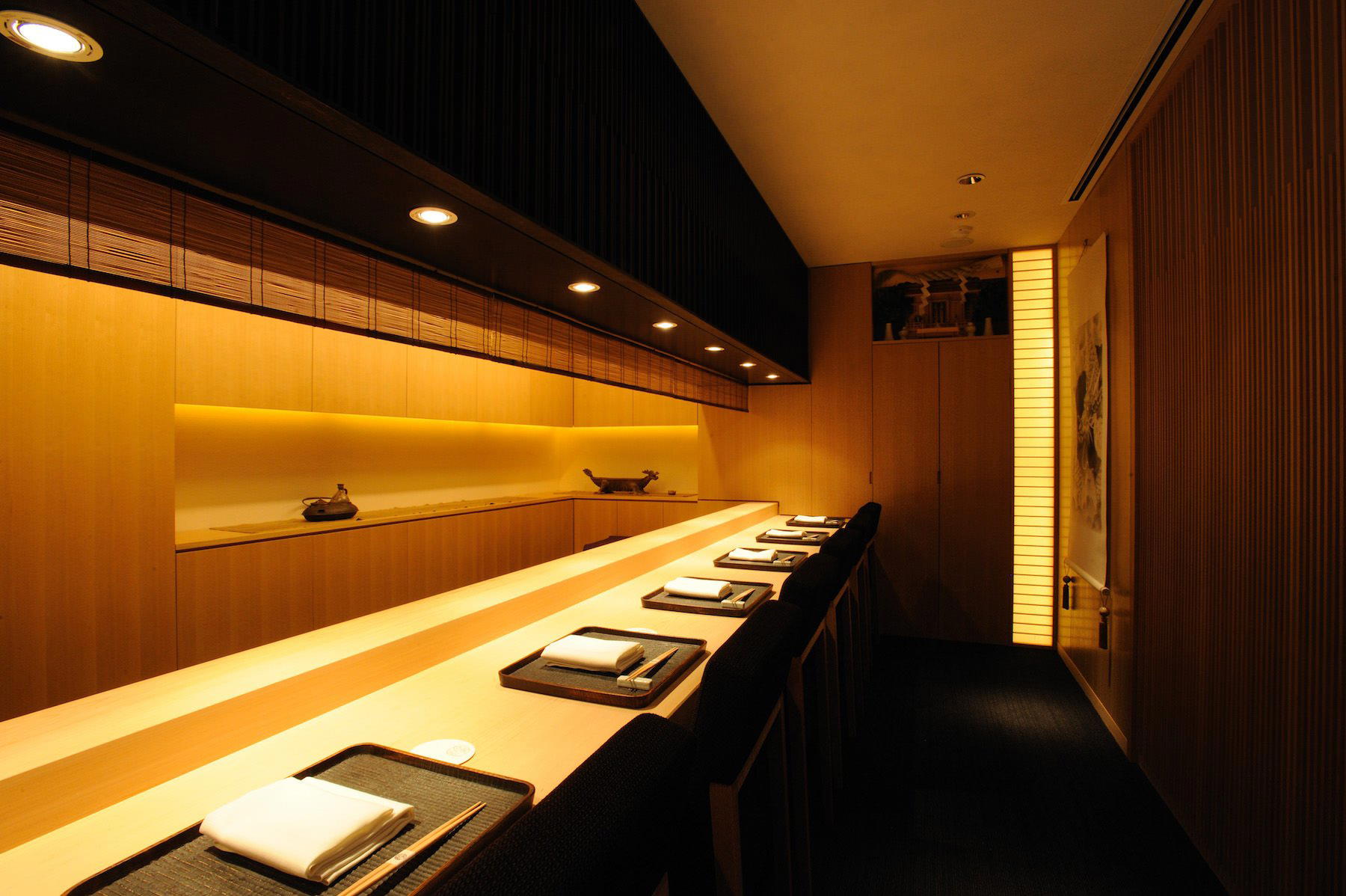
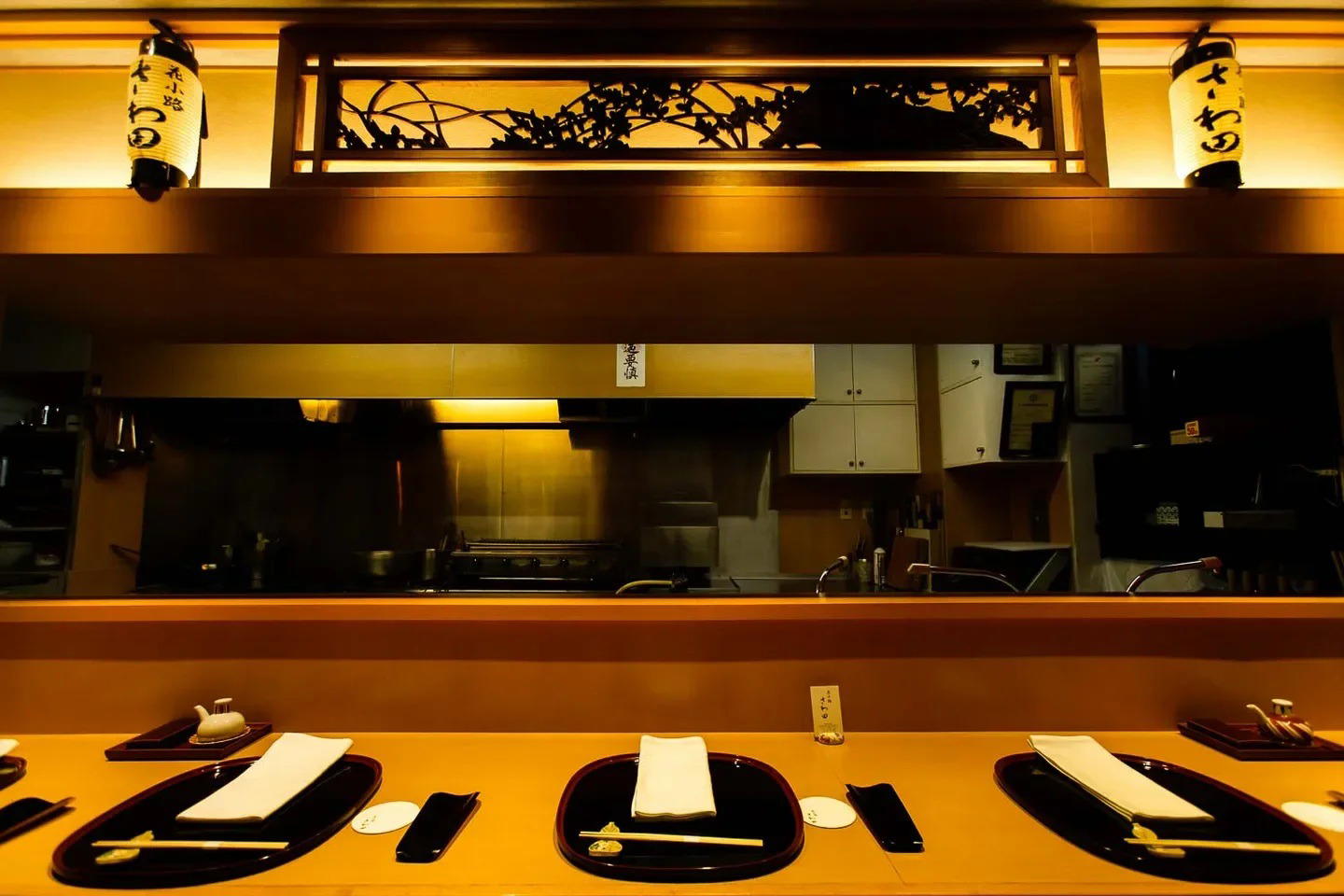
Higashimukojima opens differently from Ginza: residential, softer in pace, and Uwo Toku is built for ten seats, not turnover, six at a sunken kotatsu counter and four at tables. In Tokyo sushi, that scale matters. It turns the meal from spectacle into concentration, and in eastern Tokyo points to a local dining culture where sushi can keep omakase formality without hotel-dining or luxury-retail codes.
Tokyo’s sushi map is often mistaken for a single hierarchy, with central counters at the summit and everything else as satellite. Sumida complicates that. The old shitamachi east has long supported specialist restaurants serving regulars, families, and destination diners together. Opened in 1964, Uwo Toku belongs to that older model: a house restaurant, non-smoking, with counter seating, private use available, and drinks including sake, shochu, and wine. Its defining idea is not one named dish but the meeting of Edomae sushi with Kyoto-style sake dishes, letting fish, rice, and cooked seasonal accompaniments share the table without becoming long-form kaiseki.
Edomae sushi with a Kyoto inflection, away from the central trophy circuit
Edomae sushi began as urban Tokyo food shaped by preservation, seasoning, and speed: vinegar rice, soy, curing, simmering, and close attention to fish moving through Edo Bay and its markets. Modern high-end sushi often turns that tradition into a luxury counter ritual, but the grammar stays practical: fish is chosen and handled with purpose, rice is never neutral, and drinking belongs to the cadence. Uwo Toku’s public description points exactly there, pairing Edomae sushi with Kyoto-style sake dishes and an explicit focus on fish.
The awards record gives the address weight without inflation. The restaurant was selected for Tabelog Sushi TOKYO 100 in 2025, after selections in 2022 and 2021, and received Tabelog Award Bronze recognition from 2017 through 2022. In a crowded, competitive sushi city, that sequence signals durable local approval rather than a one-season spike. Its Tabelog score is 3.97, useful in Japan because the platform’s scoring culture is severe; restaurants near the high threes usually have real traction among committed diners.
Price places it in a clear lane. Listed lunch and dinner budgets are JPY 15,000 to JPY 19,999, with review-based spending higher at JPY 20,000 to JPY 29,999. This is not casual sushi, but it sits below many central Tokyo counters where omakase pricing has moved into another bracket. The point is category, not bargain hunting: a small, serious Sumida sushi room with awards recognition, rather than a Ginza or Roppongi address priced partly by district expectation.
What Sumida changes about the meal
Higashimukojima is a part of Tokyo where restaurants can feel tied to daily life even when the cooking is specialized. Nearby references underline it: Jiman Kusamochi at the inexpensive sweets end, while Restaurant Katayama Higashimukoujima honten and Spice Bar Nekoroku show local dining spanning meat, spice, and everyday budgets before reaching a higher sushi register. The restaurant reads less like an isolated destination than the formal end of a working neighborhood’s dining range.
The room reinforces that point. Six counter seats keep the sushi close to the hands preparing it; four table seats allow a less rigid meal. Children are welcomed at Sunday lunch, and private use can allow children as well. That is rare enough in serious Tokyo sushi to matter, shifting the experience away from the adult-only hush of many central omakase rooms and toward a family-compatible restaurant tradition without lowering the cooking’s ambition.
The format has practical consequences. Reservations are available, Monday is closed, and the weekly schedule favors dinner with a narrow Sunday lunch window. The address is a short walk from Higashi Mukojima Station, with Keisei Hikifune farther away and a bus stop close by. Parking is unavailable, so rail or taxi suits the meal better than driving. Payment is more flexible than at many older counters: major credit cards are accepted, PayPay is listed, and electronic money is not. BYO is allowed with corkage, useful for diners bringing sake or wine, though in-house drinks already cover sake, shochu, and wine.
How to place it in a Tokyo dining itinerary
The restaurant suits diners who want Tokyo sushi with historical grounding and neighborhood context, not another central counter chosen because it photographs like a status marker. It makes particular sense for travelers exploring eastern Tokyo, or repeat visitors who have done the Ginza circuit and want to see how sushi works outside the city’s luxury corridors. The 1964 opening date matters: longevity in a residential district is earned through repeat custom, not destination traffic alone.
It also fits a broader Tokyo plan contrasting old and new registers. For another fish-led but more casual Tokyo reference, see . 鮪と炭火焼き うお炭 秋葉原店. For contemporary city contrasts, 12/10 Shinjuku ten, 124. KAGURAZAKA (Yakitori), 2D Cafe, and 3 Chome no Curry Ya San map different sides of the city’s appetite. Wider planning sits in Our full Tokyo restaurants guide, with hotels, bars, wineries, and experiences covered through Our full Tokyo hotels guide, Our full Tokyo bars guide, Our full Tokyo wineries guide, and Our full Tokyo experiences guide.
For a Japan-wide food route, the useful comparison is not only sushi against sushi. Regional meals such as -Grilled beef Sukiyaki- KAMAKURA TANUKIAN 鎌倉 たぬき庵 in Kamakura.cafe in Osaka.know in Kumamoto, (Shoku) Vietnam in Kawasaki, [Curry Senmon Ten] Maruyama Kyoju. in Sapporo, and [ki:] in Kyoto show how location changes a meal’s rules. Japanese food culture abroad can be read through Jōdo Saké Bar in Los Angeles and Onigiri Time in Pasadena, but the restaurant’s point is specifically Tokyo: a small Sumida counter where Edomae technique, sake dishes, and neighborhood longevity remain tightly connected.
Where It Fits
Comparable venues by cuisine and price in the same metro.
| Venue | Cuisine | Price | Notes |
|---|---|---|---|
| Uwo TokuThis venue — the venue you are viewing | Traditional Kyoto Cuisine & Edomae Sushi Omakase | $$$ | Not listed |
| Arakawa (Kyoto) | Traditional Kyoto yakiniku (Japanese BBQ) | $$$ | Nakagyo Ward / Kawaramachi |
| Toritanaka | Yakitori Sake Tavern | $$$ | Sumida |
| Hon to Saya | Traditional Charcoal Yakiniku | $$$ | Taitō |
| Sadaya | Steak kaiseki counter dining | $$$ | Taitō |
| Shōtai-en | Japanese Yakiniku | $$$ | Arakawa |
Recognition history
Dated appearances from independent guides and award organizations, with the underlying list record or original source where available.
Tabelog 100 #99 · No. 99
Tabelog · Tabelog 100 - Sushi - TOKYO - 2025




At a Glance
- Classic
- Cozy
- Intimate
- Date Night
- Solo
- Special Occasion
- Business Dinner
- Family
- Chefs Counter
- Standalone
- Design Destination
- Historic Building
- Sake Program
- Sustainable Seafood
- Local Sourcing
Current opening hours
- Monday
- Closed
- Tuesday
- 6–9 PM
- Wednesday
- 5:30–10 PM
- Thursday
- 5:30–10 PM
- Friday
- 5:30–10 PM
- Saturday
- 1–9 PM
- Sunday
- 12–8 PM
Hours can change for holidays and private events. Last verified .
The atmosphere is described as a peaceful, pure Japanese space with a cypress counter, classic Showa-era feel, and an intimate, quiet room where guests watch the chef work up close; lighting and decor are simple and traditional rather than flashy, emphasizing calm and concentration on the food.