
Ushiko Honten sits in Shinkawa’s quieter business quarter, where sukiyaki, shabu shabu, and teppanyaki read less as spectacle than as controlled heat, beef, and conversation. Its selection for Tabelog 100 - Hot Pot - 2024 places it in a serious Tokyo category, with private rooms and a 45-seat format giving the experience a more composed register than counter-driven dining.
Pearl is the En Primeur Club membership app — saves, bookings, and concierge access live there. Same editors, same standards.
- Address
- Japan, 〒104-0033 Tokyo, Chuo City, Shinkawa, 1 Chome−9−8 藤和新川一丁目ビル
- Phone
- +81 3-3551-8980
- Website
- ushikou-honten.com
 Saves & bookings on Pearl
Shinkawa has a different temperature from Ginza or Shinjuku. The streets east of Kayabacho feel workaday after dark: office lights, narrow building entrances, the quieter rhythm of Chuo before the city gives itself over to late-night drinking. In that setting, hot pot dining makes sense. Sukiyaki and shabu shabu are not built around theatrical plating; they are built around heat, timing, beef, shared pace, and the way a room changes once steam begins to collect above the table.
Tokyo’s luxury dining conversation often tilts toward sushi counters, French tasting menus, and chef-led kappo rooms, but beef hot pot occupies its own older lane. It is social without being casual, formal without requiring silence. Ushiko Honten belongs to that category rather than the omakase economy, and that distinction matters. The meal is less about surrendering to a chef’s sequence and more about entering a Japanese dining format where broth, sweet soy, meat, vegetables, and pacing do the editorial work.
Tokyo hot pot, without the Ginza performance economy
Sukiyaki and shabu shabu carry different forms of pleasure. Sukiyaki leans into sweetness, soy, and reduction; shabu shabu is cleaner, more about brief contact with heat and the texture of sliced beef. Teppanyaki adds another register: surface heat, sound, and a more direct relationship between cooking and table. A restaurant working across those three categories is not chasing novelty. It is operating inside a recognisable Japanese beef tradition where control matters more than surprise.
The Tabelog 100 - Hot Pot - 2024 selection is the useful trust signal here. Tokyo has hundreds of restaurants serving beef, nabe, and seasonal hot pot formats; inclusion on a dedicated hot pot list places this address inside a more selective conversation than a general neighbourhood recommendation. That does not make it a trophy dinner in the Michelin sense. It makes it a focused choice for diners who care about Japanese hot pot as a category, not merely as a winter fallback.
The comparison with casual Tokyo dining is instructive. A curry stop such as 3 Chome no Curry Ya San or the lower-priced lane represented by Japanese Supaisu Curry Karisshu sits in a different register: quick comfort, narrow spend, and little ceremony. Tsutsui, by contrast, points toward an older Western-influenced Tokyo dining mode. Ushiko Honten is neither. It is a table-centred beef house, better read beside other composed Japanese formats such as yakitori at 124. KAGURAZAKA (Yakitori) or grilled seafood at . 鮪と炭火焼き うお炭 秋葉原店, where the appeal lies in heat discipline rather than decorative luxury.
The room favours conversation, steam, and controlled pace
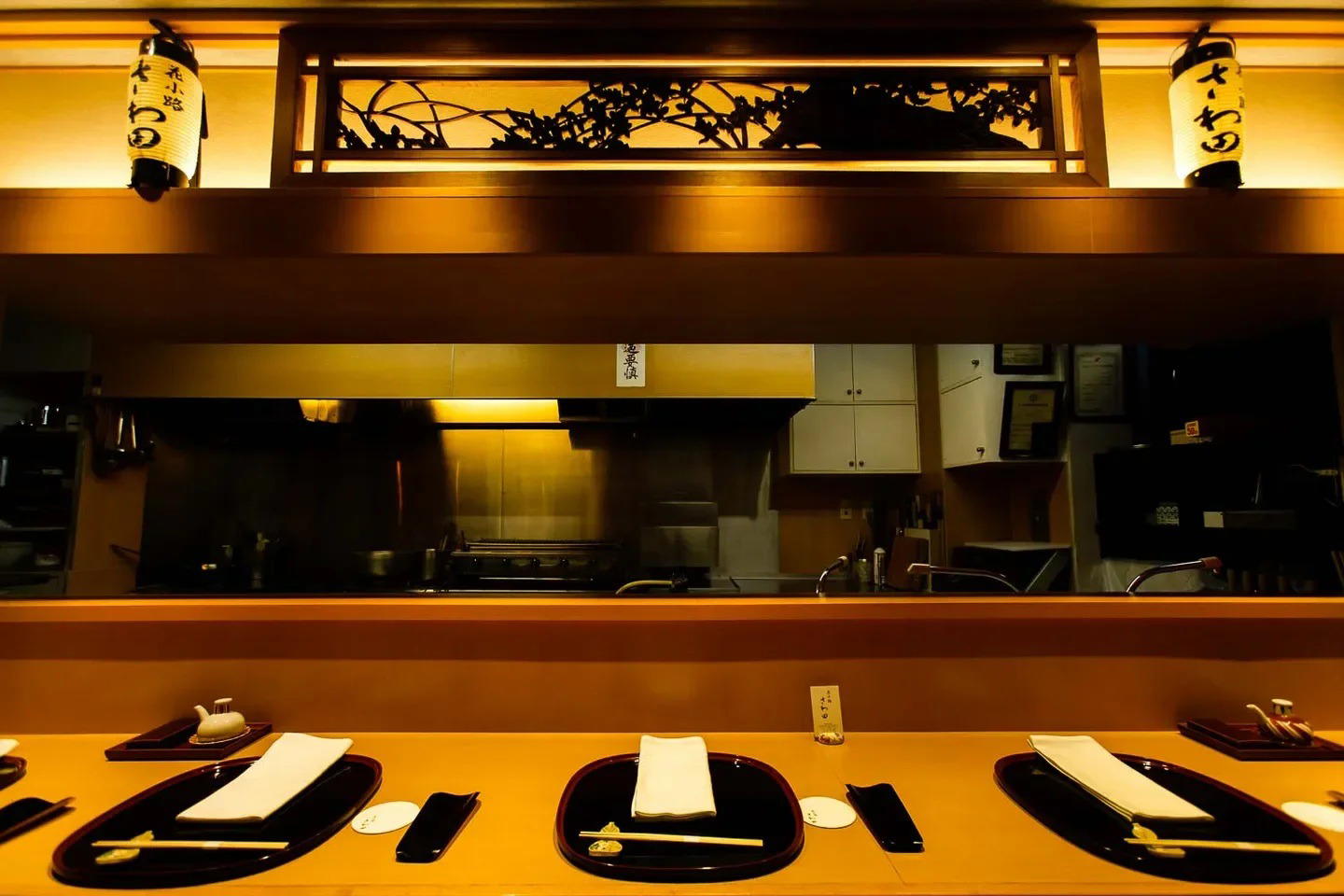
Format tells the reader what kind of evening to expect. Forty-five seats and private rooms for groups of six, eight, and larger parties put this in the social-dining tier of Tokyo, not the hushed counter tier. Tatami-room elements and spacious seating point toward meals where business dinners, friends, and small celebrations can happen without the intensity of an eight-seat chef’s counter. The no-smoking policy also sharpens the room’s character; in beef hot pot, aroma is part of the structure, and smoke would compete with the cooking.
Drinks follow a pragmatic Japanese range: sake, shochu, and wine. That trio suits the spread of the menu better than a narrow pairing concept. Sake can sit with the sweetness of sukiyaki, shochu handles richer beef and grilled preparations, and wine gives the meal a more international register. The point is not a grand cellar narrative. It is compatibility with a table that may move between simmered, swished, and grilled beef.
For travellers building a Tokyo food itinerary, this is the kind of booking that balances the city’s more compressed dining experiences. Sushi Dai represents a completely different urgency around fish and queue culture; 12/10 Shinjuku ten pulls the itinerary west into Shinjuku’s denser nightlife zone; 2D Cafe is visual novelty rather than dining tradition. A Shinkawa hot pot dinner works better as a measured evening, especially for a party that wants Tokyo specificity without turning the meal into a performance of exclusivity.
There is also a useful geographic lesson here. Kayabacho and Hatchobori sit close to the financial and river-edge parts of central Tokyo, which gives the area a more local business-dining profile than the hotel-heavy corridors around Marunouchi or the tourist pressure points of Asakusa. For broader planning, Our full Tokyo restaurants guide maps the dining spread across the city, while Our full Tokyo hotels guide, Our full Tokyo bars guide, Our full Tokyo wineries guide, and Our full Tokyo experiences guide help place dinner within the rest of the trip.
How to read it against Japan's wider dining map
Tokyo rewards diners who do not treat every meal as a race toward the same status symbols. Beef hot pot belongs to a quieter hierarchy, one where the room, the group, and the cooking medium shape the night. A Kamakura comparison such as -Grilled beef Sukiyaki- KAMAKURA TANUKIAN 鎌倉 たぬき庵 in Kamakura shows how sukiyaki can travel outside the capital’s business districts, while restaurants as different as [ki:] in Kyoto.cafe in Osaka.know in Kumamoto, (Shoku) Vietnam in Kawasaki, and [Curry Senmon Ten] Maruyama Kyoju. in Sapporo underline how regional context changes the terms of a meal.
Seen internationally, the appeal is not the same as Japanese-inspired dining abroad. Jōdo Saké Bar in Los Angeles and Onigiri Time in Pasadena show how Japanese formats become translated in California; Shinkawa keeps the logic domestic. Ushiko Honten is strongest for diners who want a central Tokyo beef dinner with awards recognition, private-room usefulness, and a format grounded in sukiyaki and shabu shabu rather than chef biography or imported luxury cues.
Cost and Credentials
Comparable venues by cuisine and price in the same metro.
| Venue | Cuisine | Price | Notes |
|---|---|---|---|
| Ushiko HontenThis venue — the venue you are viewing | Chūō, Japanese Hotpot | $$$ | Not listed |
| 焼鳥 髙はし | Chūō, Michelin-Starred Yakitori | $$$ | Not listed |
| Nihonbashi Iseju | Not listed | $$$ | Chūō, Traditional Sukiyaki with A5 Wagyu |
| Ginza Maru | Chūō, Modern Japanese Kappō & Kaiseki | $$$ | Not listed |
| Tori Aroma | Chiyoda, Hinai Jidori Yakitori Omakase | $$$ | Not listed |
| Akasaka Misuji | Not listed | $$$ | Minato, Modern Yakiniku (Japanese BBQ) by Yoroniku |
Recognition history
Dated appearances from independent guides and award organizations, with the underlying list record or original source where available.
Tabelog 100 #42 · No. 42
Tabelog · Tabelog 100 - Hot Pot - 2024








At a Glance
- Classic
- Elegant
- Cozy
- Intimate
- Group Dining
- Date Night
- Business Dinner
- Special Occasion
- Standalone
Current opening hours
- Monday
- 11:30 AM–1:30 PM, 5–10:30 PM
- Tuesday
- 11:30 AM–1:30 PM, 5–10:30 PM
- Wednesday
- 11:30 AM–1:30 PM, 5–10:30 PM
- Thursday
- 11:30 AM–1:30 PM, 5–10:30 PM
- Friday
- 11:30 AM–1:30 PM, 5–10:30 PM
- Saturday
- 5–10:30 PM
- Sunday
- Closed
Hours can change for holidays and private events. Last verified .
Traditional, slightly upscale hotpot restaurant atmosphere; likely intimate and classic rather than casual or trendy.