Urban House
Urban House occupies a ground-floor address on Laurinská, one of Bratislava's more considered pedestrian streets in the Old Town. The venue sits within a dining scene that has shifted decisively toward mid-format restaurants with broad menus and accessible pricing, placing it alongside a comparable set that rewards walk-ins and repeat visits over destination bookings.
Pearl is the En Primeur Club membership app — saves, bookings, and concierge access live there. Same editors, same standards.
- Address
- Laurinská 213/14, ground floor, 811 01 Bratislava, Slovakia
- Phone
- +421911755205
- Website
- urbanhouse.sk
- Directions
- Get directions
 Saves & bookings on Pearl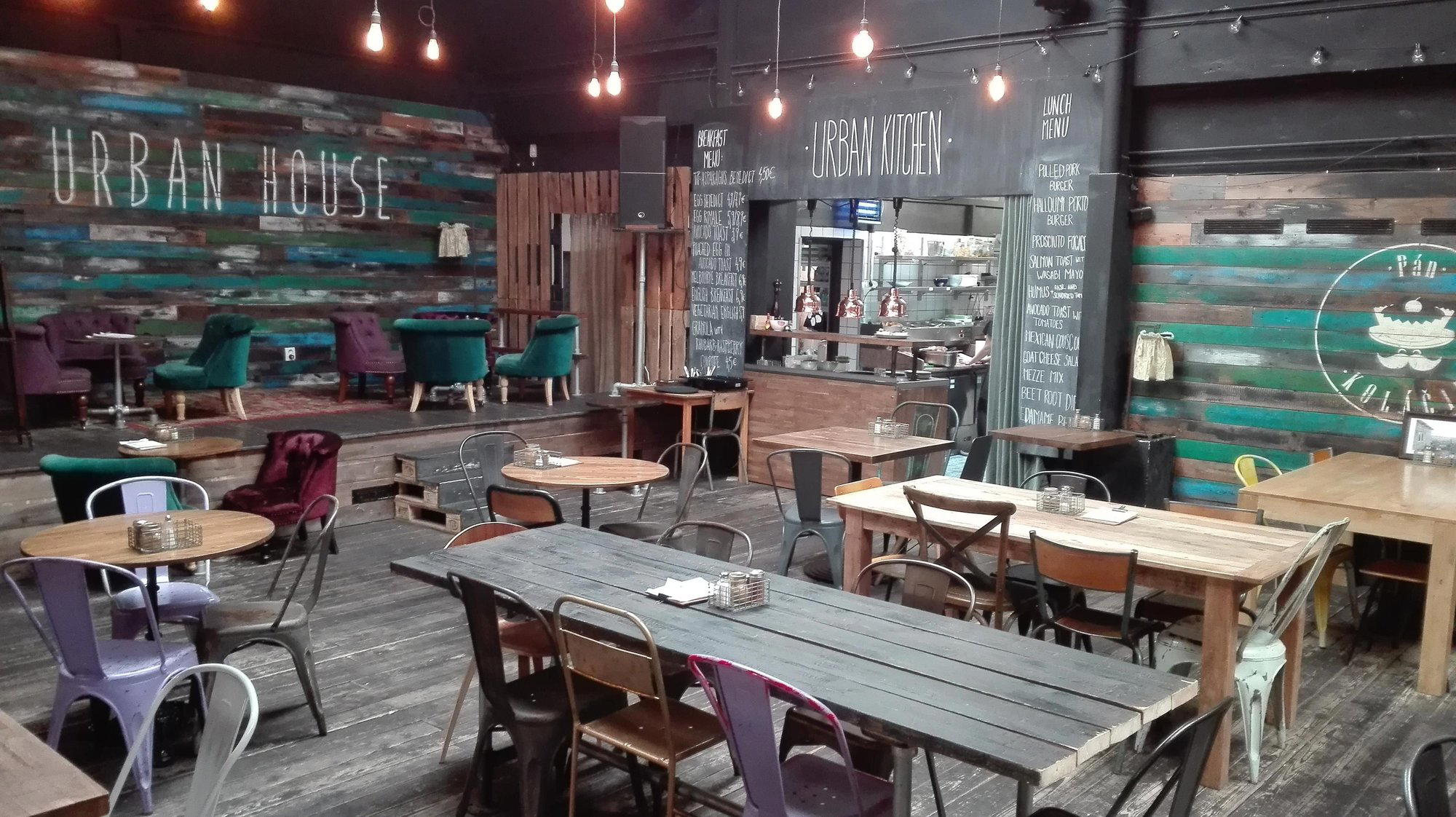
A Street That Sets the Tone
Laurinská runs through Bratislava's Old Town with the kind of unhurried confidence that belongs to streets which have survived multiple civic reinventions. The ground-floor position at number 14 puts Urban House in direct conversation with the foot traffic that moves between the main square and the quieter residential edges of the first district. In a city where dining rooms still tend to cluster around tourist-facing plazas or retreat into cellar spaces, a street-level address on Laurinská signals something different: a place built for the neighbourhood as much as for visitors passing through.
Bratislava's Old Town dining scene has stratified over the past decade into roughly three operating tiers. At the leading sit a handful of tasting-menu formats and Slovak modern rooms, including Albrecht Restaurant and APOLKA Restaurant, which price against a European fine-dining comparable set. Below that, a middle tier of trattoria-style and central-European brasseries, represented by places like Antica Toscana and Al Faro, handles the bulk of leisure dining. Urban House, from what can be read into its address and format, positions itself within this middle band, where consistency and approachability carry more weight than theatrical sequencing.
The Arc of a Meal Here
The tasting progression at most mid-format Bratislava restaurants follows a recognisable logic: something cold and sharp to open, a protein-led middle section that leans on Slovak larder staples, and a dessert course that tends toward the straightforwardly sweet rather than the technically ambitious. That arc is less about culinary theatre and more about a Central European hospitality tradition in which generosity of portion and directness of flavour are the primary measures of a kitchen's competence.
In this context, the opening courses carry editorial weight. A cold starter, whether dressed vegetables, cured fish, or a charcuterie arrangement, tells you immediately whether the kitchen is sourcing with care or working from a central supplier's default list. The restaurants in Bratislava's middle tier that have built repeat custom, places like Ako doma with its domestic-register cooking, tend to get this right not through technical flourish but through ingredient selection that reflects the season and the Slovak region. Urban House sits on the same street-level plane as those decisions.
The main course in Central European formats remains the clearest signal of kitchen ambition. Duck, pork, and freshwater fish dominate menus across Bratislava's historic centre, and the distinction between a competent execution and a memorable one usually comes down to sourcing provenance and resting time rather than technique. The city's more progressive rooms have begun integrating influences from further afield, a trend visible at the tasting-menu end of the market, but the middle tier generally holds to familiar protein-forward structures with modest vegetable work alongside.
Dessert in Bratislava's dining rooms tends to be the least differentiated course, with crème brûlée, chocolate preparations, and fruit-based plates cycling through most menus regardless of the kitchen's broader ambitions. The restaurants that manage to make a distinct impression at this stage either lean into Slovak pastry tradition, drawing on poppy seed, walnut, and plum preparations, or they keep the course brief and let the preceding dishes carry the narrative. Either approach represents a more considered choice than the default European dessert rotation.
Bratislava's Dining Moment
The Slovak capital has been quietly recalibrating its restaurant culture since the mid-2010s. For much of the post-communist period, the city's dining identity was pulled between German-influenced brasserie formats and the tourist-facing Slovak folklore kitchens that still line parts of the old town. The more interesting shift has been in the middle: a generation of operators opening rooms that treat Slovak ingredients and Central European cooking technique as a starting point for something more personal rather than as a heritage brand to be packaged.
That movement has produced restaurants that are harder to categorise by cuisine label. The comparison venues in Bratislava's current scene suggest the range: Slovak modern formats experimenting with local produce at fine-dining price points, Italian imports using Slovak suppliers, and street-food formats that have professionalised into full-service restaurants. The restaurant enters this scene on Laurinská, a street that has attracted a mix of café culture, retail, and dining, and the ground-floor position suggests a format designed for access rather than exclusivity.
For context on how this fits into a broader Slovak picture, the regional dining scene extends well beyond the capital. Places like Koliba Patria in Strbske Pleso, Fatrabeef in Lubochna, and Focus Restaurant in Zilina reflect different regional identities within Slovak cooking, from mountain koliba traditions to urban brasserie formats in second-tier cities. Bratislava's position as the capital concentrates one internationally influenced iteration of this scene, and the restaurant's central address puts it at one accessible point within that concentration.
Planning Your Visit
The restaurant sits at Laurinská 213/14 on the ground floor, within walking distance of the main square and the pedestrian corridor that connects the Old Town's core. For visitors based outside Bratislava, the venue is reachable from central accommodation in under fifteen minutes on foot. The Slovak dining calendar shifts toward heavier, warming preparations through autumn and winter, with lighter menus more common in the warmer months when terrace and window seating becomes viable across the Old Town. Booking practice in Bratislava's mid-format restaurants varies: some hold capacity for walk-ins through the week while tightening for Friday and Saturday evenings.
Hotel and Restaurant Gino Park Palace in Povazska Bystrica, Klára v GOYA vitality hotel in Voderady, KOLIBA na Vršku in Bytca, Holotéch víška in Kosariska, Kaštieľ Čičmany in Cicmany, Afrodita in Cerenany, and Bulli Kebab in Kosice. For a reference point at the other end of the global dining spectrum, the tasting-progression format finds its most rigorous expression at places like Atomix in New York City or Le Bernardin in New York City, where the arc of a multi-course meal is the primary product.
Reputation First
Comparable venues nearby, for context on price, style, and recognition.
| Venue | Cuisine | Price | Notes |
|---|---|---|---|
| Urban HouseThis venue — the venue you are viewing | Modern European All-Day Dining | $$ | Not listed |
| BERG restaurant | International and Central European | $$ | Petržalka |
| Bistronomy | Modern Slovak Bistro | $$$ | Staré Mesto |
| Savage Garden | Modern European Grill | $$ | Staré Mesto |
| Restaurant Inside | International European | $$ | Ružinov |
| WERK | Modern Cosmopolitan Mediterranean | $$ | Staré Mesto |
Continue exploring
More in Bratislava
Restaurants in Bratislava
Browse all →
Bars in Bratislava
Browse all →
Hotels in Bratislava
Browse all →
At a Glance
- Lively
- Modern
- Trendy
- Industrial
- Brunch
- Casual Hangout
- After Work
- Open Kitchen
- Live Music
- Craft Cocktails
- Beer Program
Current opening hours
- Monday
- 9 AM–12 AM
- Tuesday
- 9 AM–12 AM
- Wednesday
- 9 AM–12 AM
- Thursday
- 9 AM–12 AM
- Friday
- 9 AM–2 AM
- Saturday
- 9 AM–2 AM
- Sunday
- 9 AM–11 PM
Hours can change for holidays and private events. Last verified .
Industrial-chic space with eclectic seating, hanging plants, mood lighting, transitioning from breezy daytime cafe to lively evening bar with DJs.