On Kent Avenue in Williamsburg, Ume occupies a corner of Brooklyn's dining scene where Japanese technique meets the borough's appetite for ingredient-driven cooking. The address places it at the intersection of two overlapping trends: the city's sustained appetite for Japanese-inflected menus and a neighbourhood that has consistently rewarded kitchens willing to work at the edge of a category rather than inside it.
Pearl is the En Primeur Club membership app — saves, bookings, and concierge access live there. Same editors, same standards.
- Address
- 237 Kent Ave, Brooklyn, NY 11249
- Phone
- +19294203253
- Website
- umenewyork.com
- Directions
- Get directions
 Saves & bookings on Pearl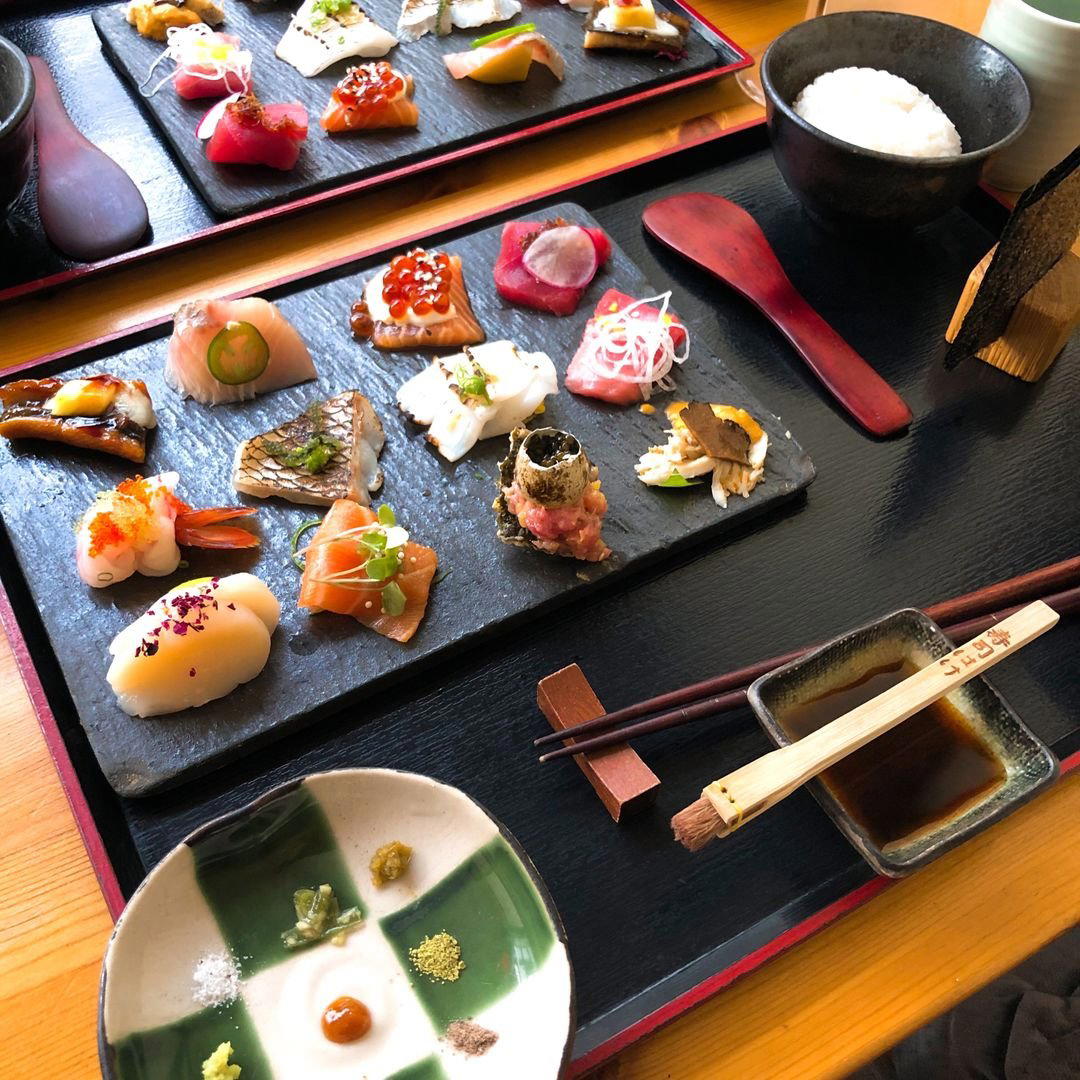
Kent Avenue runs along the Williamsburg waterfront with the kind of industrial restraint that Brooklyn has spent two decades converting into dining currency. The blocks here are not the saturated restaurant corridors of the Lower East Side or the West Village; they carry a quieter residential weight, which makes the presence of a focused Japanese-leaning address like Ume feel more deliberate than accidental. In a borough that has produced serious dining rooms alongside casual neighbourhood staples, a restaurant operating under a Japanese conceptual framework on this stretch is making a specific argument about where ambitious cooking can live outside Manhattan.
The name itself, referencing the Japanese ume plum, signals an orientation toward precision and restraint before a single dish arrives. Ume is a modern Japanese sushi omakase restaurant at 237 Kent Ave in Brooklyn, with. That orientation places Ume in a broader category of New York restaurants that use Japanese culinary logic, the discipline of minimalism, the respect for ingredient integrity, the resistance to over-manipulation, as an organising principle rather than as a strict genre designation. It is a mode that has become genuinely influential across the city's mid-to-upper tier, and one that connects Williamsburg to conversations happening at counters from Midtown to the Upper West Side.
Japanese Technique Across the River
New York's relationship with Japanese culinary influence runs deeper than its sushi counters. The city's most technically serious kitchens, across multiple categories, have absorbed Japanese ideas about product sourcing, knife discipline, temperature control, and the editorial restraint that keeps a plate from overstating its case. At the upper end of the market, venues like Masa have defined what omakase means at the highest price tier, while the broader influence of Japanese technique has spread into hybrid formats that resist easy categorisation.
The tension between imported method and local product is one of the more productive creative pressures in contemporary American dining. When a kitchen applies Japanese precision to ingredients sourced from the Hudson Valley or the Northeast Atlantic, it is doing something different from both a traditional Japanese restaurant and a direct farm-to-table American one. That intersection, what the editorial angle here calls local ingredients meeting global technique, is where interesting work tends to happen. It is also where Ume positions itself, on Kent Avenue, in a neighbourhood that has shown consistent appetite for that kind of cooking.
For comparison, the Korean-inflected progressive dining at Atomix and Jungsik New York operates on a related but distinct logic: Asian culinary frameworks applied with European fine-dining structure. Ume's Japanese orientation connects it to those conversations about technique and cross-cultural translation, even as the specific cuisine types and price tiers may differ. The broader pattern across all these addresses is that New York's most credible dining rooms are increasingly defined by the rigour of their technical lineage, not by national cuisine boundaries.
What Williamsburg Expects from Its Dining Rooms
Williamsburg has moved considerably since its reputation as a destination for cheap eats and creative energy. The neighbourhood now supports multiple price tiers and format types, from casual counter service to reservation-required dining rooms, and the waterfront corridor in particular has attracted projects that treat the address as a feature rather than a fallback. A restaurant on Kent Avenue is not hiding; it is making a claim about what this part of Brooklyn can support at the level of serious cooking.
That context matters for understanding where Ume sits in the city's geography of ambition. The assumption that Japanese-influenced or technique-forward dining requires a Manhattan address has been quietly eroding for years, with Brooklyn and Queens kitchens demonstrating repeatedly that the borough audience will follow quality across the bridge. Venues in this tier compete not just locally but citywide, drawing from the same pool of informed diners who might otherwise be booking at Le Bernardin or Per Se on a different night.
The national frame is relevant too. The intersection of local sourcing and international technique that defines Ume's apparent orientation is a pattern visible at Single Thread Farm in Healdsburg, Blue Hill at Stone Barns in Tarrytown, and in a different register at Lazy Bear in San Francisco. Each of those kitchens has built a reputation on the argument that rigorous sourcing and equally rigorous technique are not in tension, that they reinforce each other. Ume operates within that same broader conversation, translated to Williamsburg's specific context.
Format and Register
The dining experience at Ume reads as considered rather than casual. What the address and neighbourhood context do support is a reading of the venue as occupying a considered rather than casual register, the kind of kitchen that treats ingredient sourcing and technique as equal priorities, and where the dining room reflects that seriousness without necessarily requiring black-tie formality.
Brooklyn's better dining rooms have generally resolved the tension between ambition and approachability in favour of the latter's form with the former's content: serious food in rooms that do not demand ceremonial behaviour from their guests. That model, visible at addresses across the borough and echoed nationally at places like Alinea in Chicago and Providence in Los Angeles in their own registers, allows a kitchen to pursue technical depth without the social friction that sometimes accompanies ultra-formal service. If Ume follows that pattern, and the address and conceptual framing suggest it does, the experience would reward diners who bring attention without requiring deference.
Reading the comparable set
Positioning Ume against the city's established Japanese and technique-driven addresses requires some care. What can be said is that the Japanese-inflected category in New York spans a wider range than it did a decade ago. The counter-omakase model represented by Masa sits at one extreme of price and formality; neighbourhood Japanese restaurants occupy the other. Between those poles, a growing number of kitchens have staked out middle positions that use Japanese technique as a lens rather than a cage, applying it to local seafood, seasonal produce, and fermentation traditions that have no direct Japanese precedent.
That middle position is where original work is happening, and it is a position that Ume's framing appears to occupy. Internationally, the logic connects to what kitchens like 8 1/2 Otto e Mezzo Bombana in Hong Kong and Alain Ducasse at Louis XV in Monte Carlo have demonstrated in European and Asian contexts: that technique with a clear lineage, applied to ingredients with a clear provenance, produces cooking with a clarity that menus built on novelty rarely achieve.
Know Before You Go
- Address: 237 Kent Ave, Brooklyn, NY 11249
- Neighbourhood: Williamsburg, Brooklyn
- Getting There: The L train to Bedford Avenue is the standard approach from Manhattan; the waterfront location is approximately a 10-minute walk from the station. Rideshare drop-off on Kent Avenue is direct.
- Booking: Reservations are recommended.
- Price Range: About $78 per person.
- Hours: Mon: Closed; Tue-Sun: 1-4 PM, 5-10 PM.
- Dress Code: Smart casual.
Questions About Ume
- Does Ume work for a family meal?
- It depends on the age range and expectations. If the family group is comfortable with a focused, technique-led format and the price tier that typically accompanies Japanese-inflected dining in Brooklyn, Ume is a reasonable choice. For families with younger children or those looking for a more casual format, the Williamsburg neighbourhood has a wide range of alternatives at lower price points. The Kent Avenue address and the apparent conceptual seriousness of the kitchen suggest a room that rewards attention rather than one designed for distracted dining.
- Is Ume better for a quiet night or a lively one?
- The waterfront Williamsburg setting and the Japanese-influenced framing both point toward the quieter end of the spectrum. Kitchens that organise themselves around ingredient discipline and technical restraint tend to produce dining rooms where the conversation competes with the food rather than the room's energy competing with both. For a genuinely high-energy Brooklyn night, the neighbourhood has plenty of alternatives; for a deliberate, focused meal, Ume's orientation suggests it fits that register more naturally.
- What do people recommend at Ume?
- What the venue's framing suggests is that the kitchen applies Japanese technique to locally sourced ingredients, a combination that, when executed well, produces dishes where the quality of the product is the primary statement. In that model, the seasonal items and those with clear provenance tend to be particularly rewarding choices. For current dish-level recommendations, recent reviews on dining platforms will be more reliable than any fixed menu description.
- How hard is it to get a table at Ume?
- In Brooklyn's competitive dining environment, kitchens that operate at a serious technical level and hold a distinct identity tend to book out faster than the neighbourhood's casual options, particularly on weekends. The Kent Avenue location, while not especially obvious destination address, serves a neighbourhood with high dining engagement. Booking at least two to three weeks ahead for weekend sittings is a reasonable precaution for any Williamsburg restaurant operating at this tier, pending confirmation of Ume's specific demand level.
- What's the signature at Ume?
- The Japanese culinary framing and the apparent emphasis on ingredient integrity suggest a kitchen where particularly revealing plates are those built around a single central product treated with technical precision, the kind of cooking where a signature is defined by restraint and sourcing rather than by elaborate construction. For current menu information, the venue's own channels or recent editorial coverage will provide one accurate picture.
- Is Ume connected to any other Japanese restaurants or dining groups in New York?
- In a city where Japanese-influenced dining has produced several multi-venue groups and well-documented chef trajectories, lineage often acts as a reliable signal of a kitchen's technical orientation. Until that information is publicly confirmed, it is worth treating Ume on the evidence of its own cooking rather than assumed association. New York's broader Japanese dining scene, from the counter-format addresses to hybrid technique kitchens, provides enough context to understand where a kitchen with this address and apparent orientation is likely to sit.
Comparable Venues
Comparable venues nearby, for context on price, style, and recognition.
| Venue | Cuisine | Price | Notes |
|---|---|---|---|
| UmeThis venue — the venue you are viewing | Modern Japanese Sushi Omakase | $$$$ | Not listed |
| Brushstroke | Kaiseki Japanese | $$$$ | Tribeca |
| Japanese fine-dining restaurant at One Bryant Park | Modern Japanese Fine Dining with Kaiseki & Omakase | $$$$ | Midtown |
| Sugiyama | Traditional Japanese Kaiseki | $$$$ | Midtown West |
| Morimoto | Contemporary Japanese | $$$$ | Chelsea-Hudson Yards |
| Koi | Upscale Japanese Fusion | $$$$ | Midtown-Times Square |
Continue exploring
More in New York City
Restaurants in New York City
Browse all →


Bars in New York City
Browse all →
Hotels in New York City
Browse all →








At a Glance
- Minimalist
- Intimate
- Modern
- Trendy
- Date Night
- Solo
- Special Occasion
- Garden
- Garden
Current opening hours
- Monday
- Closed
- Tuesday
- 1–4 PM, 5–10 PM
- Wednesday
- 1–4 PM, 5–10 PM
- Thursday
- 1–4 PM, 5–10 PM
- Friday
- 1–4 PM, 5–10 PM
- Saturday
- 1–4 PM, 5–10 PM
- Sunday
- 1–4 PM, 5–10 PM
Hours can change for holidays and private events. Last verified .
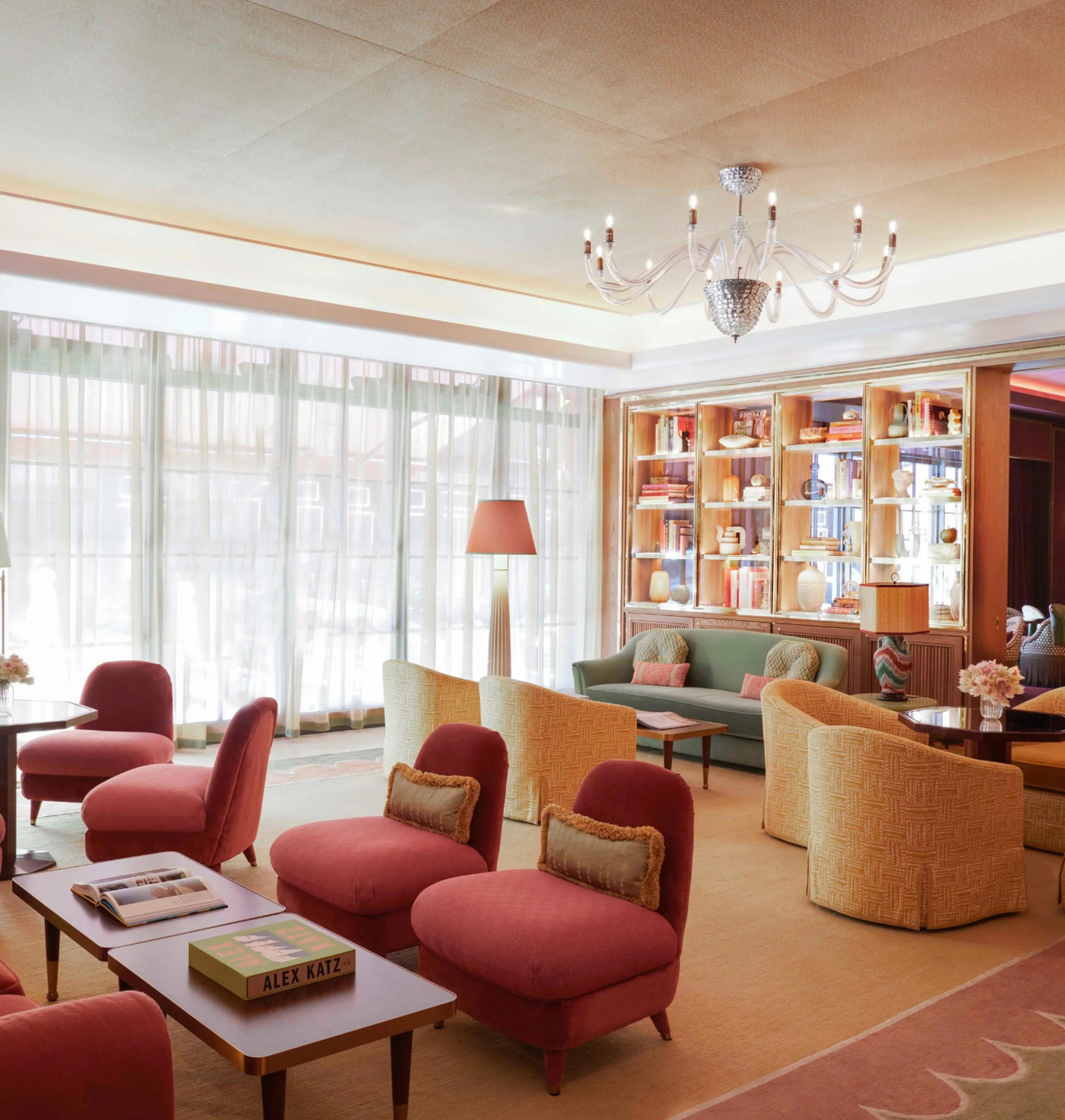
Quiet, minimalist space resembling a little cottage with intimate seating on cushions or floor, featuring a back garden.