Our verdict
Rue Henri Maus places Umamido Bourse in one of Brussels' most architecturally loaded corridors, within walking distance of the Bourse building and the dense café culture of the city centre. The format reads as a considered response to that neighbourhood energy: a ramen-adjacent concept that takes its cues from Japanese umami traditions rather than Belgian brasserie convention. For visitors plotting a route through the city's mid-range dining options, it sits in a distinct niche.

Pearl is the En Primeur Club membership app — saves, bookings, and concierge access live there. Same editors, same standards.
- Address
- Rue Henri Maus 37, 1000 Bruxelles, Belgium
- Phone
- +32 2 540 21 47
- Hours
- Mon–Thu 12–10 PMFri–Sat 12–10:30 PMSun 12–10 PM
- Website
- restaurants.umamido.be
- Directions
- Get directions
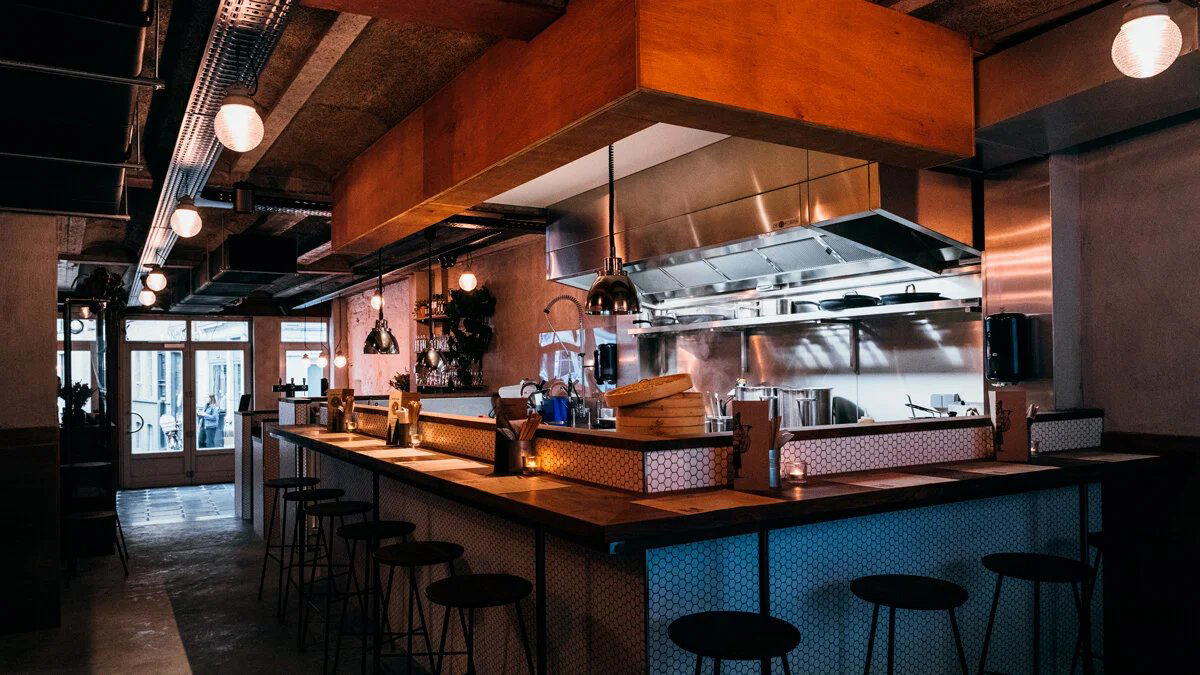
A Street-Level Response to the Bourse Quarter
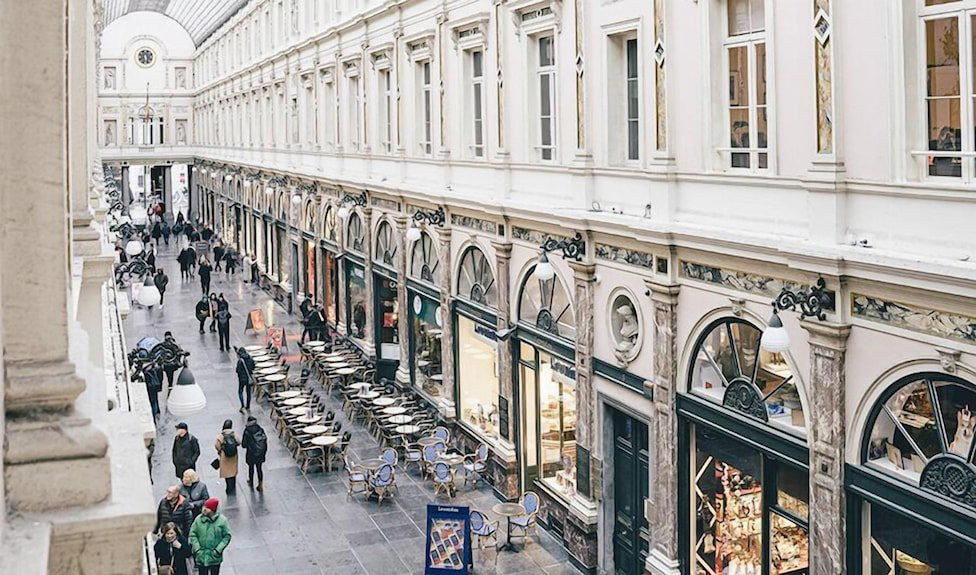
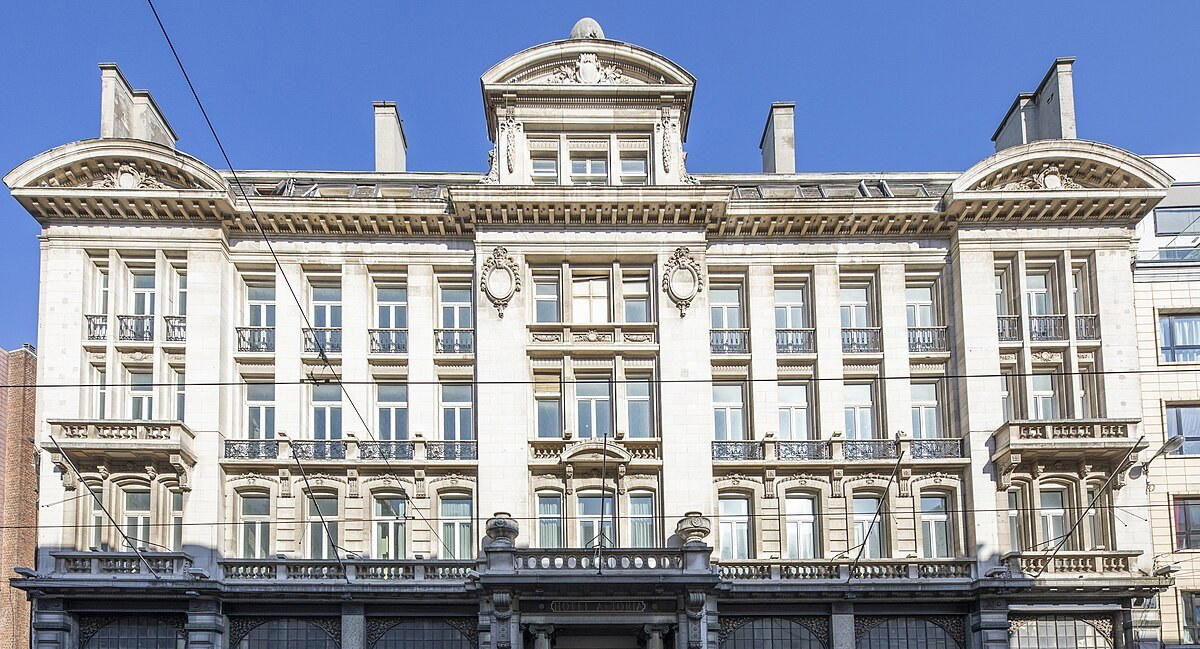
The stretch of Rue Henri Maus that runs toward the old Bourse building in central Brussels carries a particular kind of architectural weight. The neighbourhood is dense with grand façades, the kind of street infrastructure that makes pedestrians slow down, and a café culture that has operated at roughly the same tempo for over a century. It is into this environment that Umamido Bourse inserts itself — a Japanese-inflected concept in a city whose dining identity has historically orbited French-Belgian technique and the brasserie format. That positioning alone makes it worth understanding on its own terms.
Brussels' central dining scene has long been anchored by establishments like Comme chez Soi, whose French-Belgian classicism and €€€€ pricing represent one pole of the city's restaurant culture, and La Villa Lorraine by Yves Mattagne, which occupies a similarly formal register in the modern cuisine category. Umamido Bourse operates in a different register entirely, one that has been growing across European capitals as Japanese comfort formats — ramen, donburi, izakaya-adjacent menus, have established themselves as credible mid-week alternatives to both fast-casual and formal dining.
The Physical Container Matters Here
In a city where the dominant dining architecture tends toward exposed brick, mirrored panels, and the aesthetic shorthand of the Belgian brasserie, a venue that draws from Japanese spatial vocabulary occupies a different visual frequency. The address on Rue Henri Maus places Umamido Bourse in a compact urban footprint, the kind of space that in Japanese dining culture functions as a signal in itself. Smaller rooms, counter seating where applicable, and stripped-back material choices are not a budget compromise in the Japanese tradition, they are the format. The bowl arrives; the room does not compete with it.
This approach to the physical container has become one of the more interesting tensions in European Japanese dining. Where Parisian ramen rooms have increasingly leaned into minimalist design to signal authenticity, Brussels is still at an earlier stage of that conversation. Umamido Bourse, positioned in one of the city's highest-footfall central corridors, is navigating that tension in real time. The location draws passing trade; the format asks that trade to slow down.
Where It Sits in Brussels' Broader Dining Picture
The city's restaurant scene has developed several distinct layers in recent years. At the leading end, establishments like Bozar Restaurant and Eliane operate in the creative fine dining register, while Barge has carved out a specific position in the organic and sustainability-led tier. Below the white-tablecloth ceiling, the city's mid-range options have historically skewed toward brasseries and European formats. The arrival and persistence of Japanese comfort concepts in that mid-range tier represents a structural shift, not a trend.
Across Belgium more broadly, the fine dining conversation has been dominated by venues outside Brussels. Hof van Cleve in Kruishoutem, Boury in Roeselare, and Zilte in Antwerp represent the Belgian fine dining circuit that serious food travellers plot routes around. What Brussels offers that those venues do not is density and accessibility, the ability to eat well at multiple price points within a small geographical radius. Umamido Bourse is part of that urban density argument.
For visitors who have made the trip to Belgium specifically for food and find themselves in Brussels between regional excursions, the capital's mid-range options matter more than they might elsewhere. Venues like Willem Hiele in Oudenburg, Bartholomeus in Heist, and Castor in Beveren require day trips or overnight stays. A well-executed bowl at a Bourse-adjacent address does not.
The Japanese Comfort Format in a European Context
Umami, as a taste category, has moved from specialist knowledge to general culinary literacy over the past decade. That shift has done something concrete for Japanese comfort restaurants in Europe: it has given their menus a vocabulary that non-specialist diners now have some purchase on. Diners who would not have known what dashi meant in 2010 now at least understand what it does in a bowl. That cultural shift is the context in which a concept like Umamido Bourse operates.
The ramen format, in particular, has undergone significant codification in European cities. London's ramen scene stratified early, with a clear tier separation between fast-casual operations and more considered single-origin broth concepts. Paris followed a similar arc. Brussels is working through its own version of that stratification now, and addresses in high-footfall central locations are where the early differentiation tends to happen. A concept that can hold a discerning dinner crowd in the Bourse quarter is making a different argument than one that operates purely on lunchtime passing trade.
For comparison points at the high end of Japanese technique in international contexts, Atomix in New York City and the sustained critical attention around venues like Le Bernardin illustrate how Asian-influenced formats can hold serious critical standing when execution matches ambition. Umamido Bourse operates in a different category and price register, but the broader pattern holds: European diners have calibrated expectations for Japanese-adjacent formats in ways that make credibility easier to establish and easier to lose.
Planning a Visit
Rue Henri Maus 37 sits in central Brussels, within direct walking distance of both the Grand-Place and the Bourse metro station, making it one of the easier central addresses to reach without a taxi. For visitors building a multi-day food itinerary through Belgium, it pairs logically with a Flemish excursion to venues like De Jonkman in Sint-Kruis or La Durée in Izegem, and with Wallonian options such as L'air du temps in Liernu or d'Eugénie à Emilie in Baudour. For a broader picture of the city's restaurant options across all price points and formats, our full Brussels restaurants guide maps the scene in more detail.
Frequently asked questions
What part of town is Umamido Bourse in?
Umamido Bourse is located at Rue Henri Maus 37, 1000 Bruxelles, Belgium, Brussels.
How does Umamido Bourse fit into Brussels' Japanese dining scene?
Brussels has a small but developing Japanese restaurant tier, concentrated largely in the upper-market and sushi-counter formats. Umamido at Rue Henri Maus 37 occupies the everyday end of that spectrum, focusing on umami-centred comfort eating rather than formal omakase or kaiseki. That positions it closer to the daily-use category than the special-occasion bracket, which is a less contested space in the Belgian capital.
What dish is Umamido Bourse famous for?
Umamido's name signals the kitchen's orientation clearly: umami-driven Japanese comfort formats, the kind built around broths, seasoned bowls, and layered savoury depth. The venue sits at Rue Henri Maus 37 in central Brussels, a location that draws a mixed crowd of office workers and visitors from the nearby Grand-Place.
Is Umamido Bourse reservation-only?
Given its position on Rue Henri Maus in one of Brussels' busiest pedestrian corridors, walk-in demand at peak hours is plausible.
What makes Umamido Bourse worth seeking out?
Brussels' central dining strip around the Bourse has historically skewed toward Belgian brasserie formats; a Japanese comfort kitchen at this address fills a gap that the neighbourhood's foot traffic clearly supports. The Rue Henri Maus 37 location puts it within walking range of both the Grand-Place and the Bourse metro station, which matters for a city where venue access shapes how often you actually go. It operates in a register that Brussels' higher-end Japanese restaurants do not occupy, which gives it a distinct place in the city's dining picture.
Cuisine-First Comparison
Comparable venues nearby, for context on price, style, and recognition.
| Venue | Cuisine | Price | Awards | Notes |
|---|---|---|---|---|
| Umamido BourseThis venue — the venue you are viewing | Authentic Japanese Ramen & Sushi | $20–30 | Not listed | Not listed |
| Samouraï Ramen | Traditional Japanese Ramen | Not listed | Not listed | Centre-Ville / Ixelles |
| Foxes & Grapes Wine Bar | Seasonal Small Plates | Not listed | Star Wine List | Grand' Place |
| Tokidoki | Japanese Home Cooking | $30–50 | We're Smart World 2 Radishes | Saint-Gilles |
| Nightshop | Modern European Small Plates | $30–50 | Not listed | Dansaert |
| Bouillon | Traditional Belgian Brasserie | $30–50 | Not listed | Pl. de Brouckere |