La Paix






2 Michelin Stars · La Liste Top Restaurants · Les Grandes Tables du Monde Member
Our verdict
Chef David Martin's French-Japanese kitchen holds 88.5 points on La Liste 2025 and recognition from Les Grandes Tables du Monde.

Pearl is the En Primeur Club membership app — saves, bookings, and concierge access live there. Same editors, same standards.
- Address
- Rue Ropsy Chaudron 49, 1070 Anderlecht, Belgium
- Phone
- +32 2 523 09 58
- Hours
- Mon ClosedTue–Wed 7–8 PMThu–Fri 12–1 PM, 7–8 PMSat–Sun Closed
- Website
- lapaix.eu
- Directions
- Get directions
- Booking
- Book on TheFork
The Supply Chain as Creative Framework
The ingredient-first kitchen that has emerged across European fine dining over the past decade takes different forms depending on how seriously a restaurant actually commits to proximity sourcing. At La Paix, the commitment is structural rather than decorative. The restaurant sits adjacent to Ferme Abattoir, a 4,000-square-metre urban vegetable garden — reputedly the largest of its kind in Europe, where tomatoes, herbs, and aromatics are cultivated through aquaponics on the roof of the FoodMet building. Fish from those aquaponic systems loop back into the growing cycle, producing a closed agricultural model that few urban restaurants can claim as a literal neighbour. These are not interchangeable suppliers that could be swapped without consequence. The geography of the sourcing, slaughterhouse district soil, cellar microclimates, rooftop aquaponics, creates a specific material palette that differs from what a kitchen drawing on, say, a Provençal market network or a Flemish coastal supplier would produce. The seasonality here is urban and hyper-local, constrained and enriched by what this particular corner of Brussels can yield.
That ingredient discipline shapes why the French-Japanese classification attached to David Martin's kitchen carries real meaning rather than functioning as a loosely applied trend label. Japanese culinary tradition places exceptional weight on the integrity of raw materials, the dashi logic, where a single ingredient's clean extraction forms the base of everything else, and that philosophy aligns with a kitchen that begins from what is growing 50 metres away. The influence is not aesthetic borrowing. It is a shared epistemology about what the primary ingredient is owed. Internationally, parallels might be drawn to the French-Japanese positioning of Le Bernardin in New York, where technical French structure houses a sensitivity to ingredient purity, or to the way Atomix deploys Korean ingredient primacy inside a tasting-menu format.
Recognition and Where It Places La Paix
The credential stack at La Paix is extensive for a restaurant outside a major city centre. Two Michelin stars have been held for at least two consecutive years (2024 and 2025). La Liste has scored the restaurant at 88.5 points in 2025 and 78 points in 2026, the latter reflecting La Liste's recalibrated scoring methodology rather than any significant change in positioning. Les Grandes Tables du Monde recognition in 2025 places La Paix in a network of independent high-table restaurants that tends to emphasise the chef-driven, non-chain end of serious dining.
Appearing on Opinionated About Dining's Japan ranking, at position 466 in 2024 and 467 in 2025, is a detail worth pausing on. OAD's Japan list is based on diner survey data, and a Belgian restaurant appearing on it reflects the degree to which David Martin's kitchen has attracted Japanese and Japan-literate diners who evaluate it within that reference frame. This is not a Belgian restaurant doing surface-level Japanese aesthetics. It has been identified by a specialist audience as speaking the same culinary language with enough fluency to be tracked against Tokyo and Osaka peers.
Google's is a secondary signal that roughly confirms a high satisfaction rate at this price tier, though the sample is modest relative to central Brussels operations with greater visitor throughput. Belgium's broader two-star field, which includes Zilte in Antwerp and Bartholomeus in Heist represents a similar ingredient-driven, location-specific approach in a very different geography. d'Eugénie à Emilie in Baudour and Bozar Restaurant in Brussels provide additional metropolitan and peri-urban reference points.
How to Plan a Visit
La Paix operates on a compressed schedule that reflects the nature of high-labour, ingredient-precise tasting-menu kitchens. Service runs Tuesday and Wednesday evenings only (7–8 pm arrival window), Thursday and Friday for both lunch (12–1 pm) and dinner (7–8 pm), with the restaurant closed Saturday, Sunday, and Monday. The narrow arrival windows suggest a single sitting per service, which is typical of two-star operations running tight sequences. Booking well in advance is advisable; at this price tier and recognition level, the capacity constraint is real.enprimeurclub.
The price tier sits at €€€€, placing it at the upper end of what Belgian dining commands. It is not a casual drop-in, and the operating hours make that clear.
Frequently asked questions
Is La Paix a family-friendly restaurant?
La Paix is not configured for families with young children. At €€€€ pricing, a tasting-menu format, and service windows that run just one hour on weekday evenings, the rhythm of the kitchen demands full attention from the table. It is, however, well-suited to older teenagers with a genuine interest in serious cooking.
Is La Paix formal or casual?
Belgium's two-star restaurants rarely adopt the stiff formality of comparable French addresses, and La Paix is no exception. The Anderlecht location — beside a working slaughterhouse district and adjacent to an urban farm — sets a tone that is purposeful rather than ceremonial. Dress with intent; the two Michelin stars and Les Grandes Tables du Monde membership signal that this is not a neighbourhood bistro.
Does La Paix have a Michelin star or similar recognition?
La Paix has received recognition including: La Liste Top Restaurants (2026): 78pts; Restaurant La Paix of David Martin is still a neighbour of the slaughterhouse of Anderlecht, but is now also of 'Ferme Abattoir', a brand new urban vegetable garden of 4000m2, the largest in Europe, w….
What should I eat at La Paix?
Take the full tasting menu. David Martin's kitchen is built around a specific supply chain — the 4,000m² Ferme Abattoir aquaponics garden on the FoodMet roof, the Pomona gardens, and mushroom growers in the Cureghem cellars across the street — and the menu is constructed to reflect what those sources are producing. Ordering à la carte, where available, would miss the logic of the kitchen entirely.
Compact Comparison
| Venue | Cuisine | Price | Awards | Notes |
|---|---|---|---|---|
| La PaixThis venue — the venue you are viewing | Modern French Fine Dining with Asian Influences | $200–300 | 2 Michelin Stars · La Liste Top Restaurants | Not listed |
| Appel Thaï | Traditional Thai | $20–30 | Michelin Bib Gourmand | Thai |
| La Brouette | French-Belgian Fine Dining | $50–100 | Michelin Plate | French |
| René | Traditional Belgian Bistro | Not listed | Michelin Plate | Belgian |
| Cinq | Modern French-Belgian Fine Dining | $50–100 | Michelin Plate · We're Smart World 1 Radish | Modern French |
Recognition history
Dated appearances from independent guides and award organizations, with the underlying list record or original source where available.
Michelin 2 Stars
Michelin
La Liste Top Restaurants
La Liste
Les Grandes Tables du Monde Member
Les Grandes Tables du Monde
Opinionated About Dining Top Restaurants in Japan Recommended
Opinionated About Dining
The Best Chef One Knife
The Best Chef
Full recognition history (11 entries)
La Liste Top Restaurants
La Liste
Michelin 2 Stars
Michelin
Opinionated About Dining Top Restaurants in Japan Ranked #466
Opinionated About Dining
We're Smart World 2 Radishes
We're Smart World
Michelin 2 Stars
Michelin
Opinionated About Dining Top Restaurants in Japan Ranked #467
Opinionated About Dining
Continue exploring
More in Anderlecht
Restaurants in Anderlecht
Browse all →
Bars in Anderlecht
Browse all →
Hotels in Anderlecht
Browse all →
Wineries in Anderlecht
Browse all →
Details
- Elegant
- Cozy
- Intimate
- Sophisticated
- Special Occasion
- Date Night
- Open Kitchen
- Historic Building
- Extensive Wine List
- Tasting Menu
- Allergy Accommodating
Current opening hours
- Monday
- Closed
- Tuesday
- 7–8 PM
- Wednesday
- 7–8 PM
- Thursday
- 12–1 PM, 7–8 PM
- Friday
- 12–1 PM, 7–8 PM
- Saturday
- Closed
- Sunday
- Closed
Hours can change for holidays and private events. Last verified .
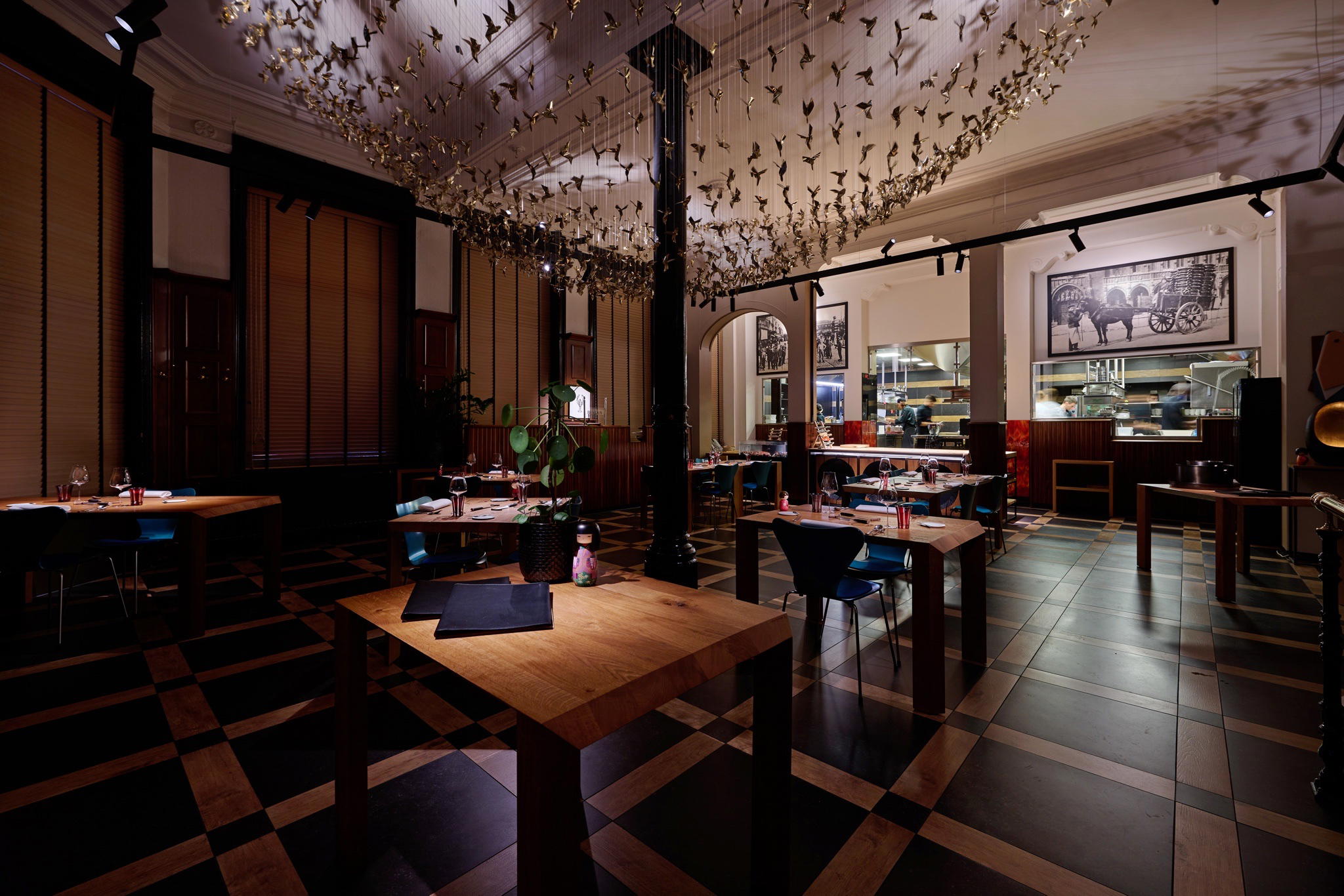
Beautiful, calm, refined, and upscale dining room blending historic charm with modern touches and warm welcoming atmosphere.