Our verdict
Bouillon sits on Rue des Dominicains in central Brussels, operating within a city that has long treated the brasserie format as a serious culinary register rather than a fallback option. The menu reflects the Walloon and Flemish strands of Belgian cooking, read through a contemporary lens. For visitors mapping Brussels beyond its handful of headline fine-dining addresses, this is a reference point worth understanding.

Pearl is the En Primeur Club membership app — saves, bookings, and concierge access live there. Same editors, same standards.
- Address
- Rue des Dominicains 7/9, 1000 Bruxelles, Belgium
- Phone
- +3225122084
- Hours
- Mon 6–10:30 PMTue–Thu 12–2 PM, 6–10:30 PMFri–Sat 12–3 PM, 6–11 PMSun 12–3 PM, 6–10 PM
- Website
- bouillonbruxelles.com
- Directions
- Get directions
- Booking
- Book on the venue's website
The menu
What to order
- Shrimp Croquettes
- Mussels
- Vol-au-Vent
The Room Before the Menu
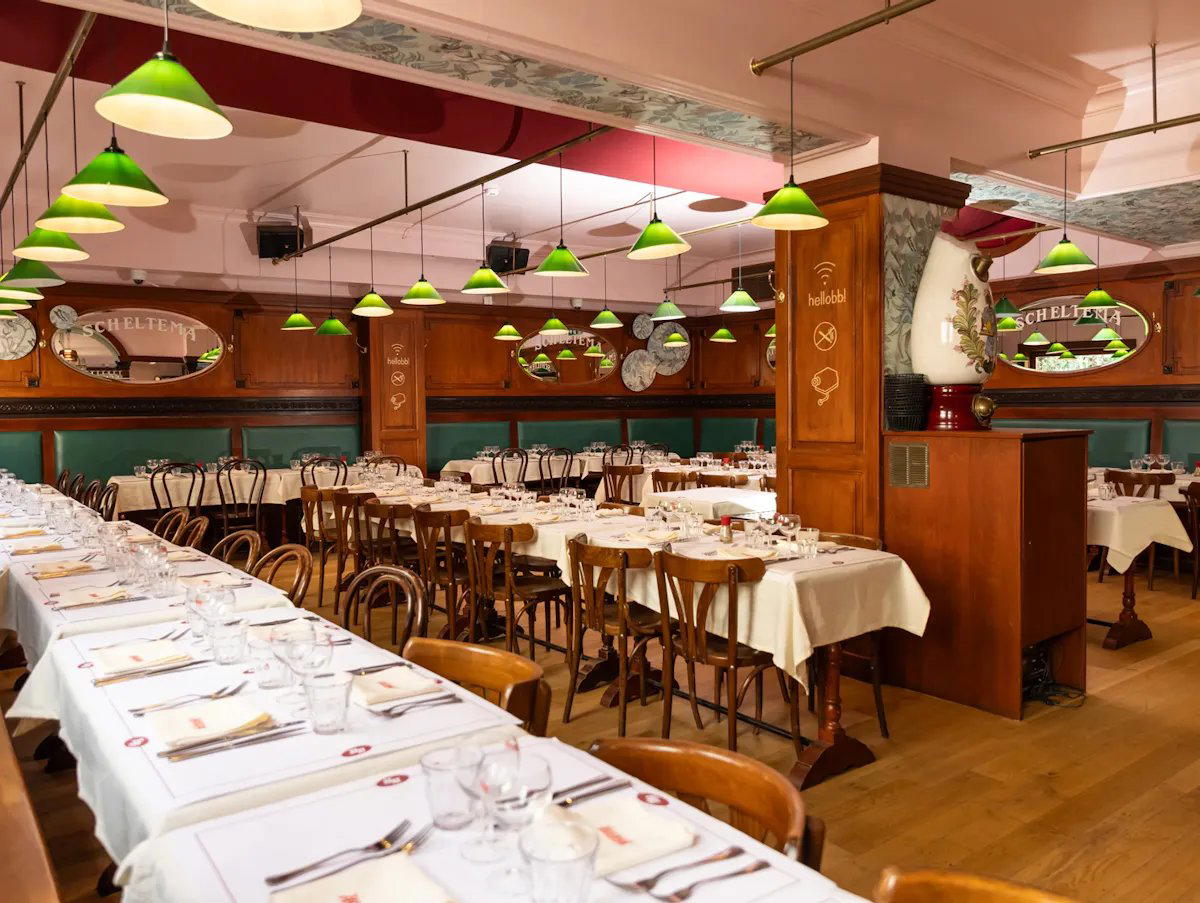
Rue des Dominicains runs through the dense commercial heart of central Brussels, a short walk from the Grand Place but removed from its tourist coefficient. The street has the compression typical of the old city grid: narrow frontages, stone-dressed facades, the kind of address that rewards knowing where you are going rather than stumbling upon it. Arriving at Bouillon, the physical register is immediately readable as brasserie rather than haute cuisine: a dining room scaled for volume, for conversation, for the particular rhythm of Belgian eating that sits somewhere between French bistro discipline and a more generous Flemish sense of portion and occasion.
That physical context matters because it conditions everything that follows on the menu. Brussels has historically sustained two parallel dining cultures. The first runs through addresses like Comme chez Soi and La Villa Lorraine by Yves Mattagne, where classical French-Belgian technique is applied with the seriousness of a Michelin audit. The second runs through the brasserie and bouillon format, where the ambition is calibrated differently: consistency, value relativity, and an honest account of what Belgian cooking actually looks like at table. Bouillon operates in that second register, which is neither lesser nor default. It is a distinct discipline.
What the Menu Architecture Reveals
The word bouillon is itself a structural statement. Historically, the bouillon was a Parisian institution designed to serve working-class diners at speed and low cost, built around clear broths, offal, and affordable cuts executed without pretension. The format crossed into Belgian dining culture and evolved, absorbing the country's own preoccupations: mussels, endive, carbonnade, grey shrimp, waterzooi. A restaurant that takes the name is implicitly aligning itself with that tradition of accessible seriousness.
Menu architecture in this format typically resists the tasting-menu logic that dominates Belgian fine dining at addresses like Bozar Restaurant or Eliane. Instead of a single authored progression, the à la carte structure places the decision with the diner. Starters, mains, and desserts function as independent choices rather than movements in a composed sequence. This is a different editorial stance toward food: the kitchen is not narrating a journey; it is maintaining a repertoire. The distinction has real consequences for how you read the menu. Each dish needs to stand without the scaffolding of a surrounding tasting format, which demands a different kind of technical honesty.
Belgian cooking at this register tends to organize itself around a small number of foundational preparations executed repeatedly across seasons: the treatment of root vegetables in winter, shellfish across the colder months, game in autumn, fresh herbs and bitter leaves in spring. A menu that respects this calendar will shift meaningfully across the year, even if the categories stay constant. For visitors arriving between October and March, the cold-weather profile of Belgian brasserie cooking is at its most coherent: dishes that use long-cooked stocks, reduced sauces, and cuts that benefit from braising belong to this period more naturally than to summer service.
Brussels at This Price and Format
The mid-range brasserie tier in Brussels is more competitive than its equivalent in Paris or London, partly because the city's relationship with everyday eating remains genuinely serious, and partly because the density of dining options in the centre forces a kind of quality floor. At the lower end of the Brussels brasserie market, addresses like Aux Armes de Bruxelles operate on volume and tourist adjacency. The more considered tier, where Bouillon positions itself, requires something more: a kitchen that can maintain a wide repertoire without the luxury of a tasting-menu format's narrow focus.
For comparison, the €€€€ bracket in Brussels, occupied by Comme chez Soi and La Villa Lorraine, commits a diner to a single authored experience, typically multi-course, typically requiring advance booking weeks or months ahead. The brasserie format offers something different: the ability to build your own frame, to eat lightly or substantially, and to bring the kind of mixed group, from visiting colleagues to family members with divergent appetites, that tasting menus structurally exclude.
That flexibility has genuine value in Brussels, where the dining culture is often group-oriented and where the Belgian habit of long table conversation sits more naturally in a brasserie format than in the focused, near-silent rooms of the city's leading fine-dining addresses. Readers with broader Belgian itineraries should note that the country's most decorated addresses extend well beyond the capital: Hof van Cleve in Kruishoutem, Zilte in Antwerp, and Boury in Roeselare represent the country's upper tier if a longer trip is being planned.
Planning a Visit
Bouillon's address on Rue des Dominicains places it within walking distance of the Grand Place and the main central Brussels metro connections, making it logistically easy to fold into a day in the city centre. For comparison, more destination-oriented Brussels addresses like Barge or Le Chalet de la Forêt in Uccle require more deliberate routing. The brasserie format generally accommodates both walk-in and reserved tables, though the more considered approach for a dinner visit, particularly on Thursday through Saturday evenings when central Brussels dining pressure increases, is to book ahead.
Diners whose Belgian reference points are primarily international, drawn from addresses like Le Bernardin in New York or Lazy Bear in San Francisco, will find Bouillon operating in a register that prioritises accessibility and repertoire breadth over a singular authored vision. That is not a criticism of the format; it is its defining characteristic, and for many visitors, the more useful one. Our full Brussels restaurants guide maps the city's dining options across formats and price points for readers building a wider itinerary. Additional Belgian references worth considering include Vrijmoed in Gent, Willem Hiele in Oudenburg, d'Eugénie à Emilie in Baudour, La Durée in Izegem, Cuchara in Lommel, and Ralf Berendsen in Neerharen.
Frequently asked questions
What's Bouillon's location?
Bouillon is located at Rue des Dominicains 7/9, 1000 Bruxelles, Belgium, Brussels.
How does Bouillon Brussels differ from a standard Brussels brasserie?
The bouillon concept is a distinct historical category, not simply a brasserie with a French name. Where a conventional Brussels brasserie typically operates à la carte with mid-to-high margins, the bouillon model prioritises turnover, abbreviated menus, and price points accessible to everyday diners — a format that traces back to 19th-century Paris and remains rare in Belgium. The Rue des Dominicains address places Bouillon in central Brussels, making it one of the few venues in the city explicitly working within that tradition.
What dish is Bouillon famous for?
The name itself points to the direction: the bouillon format historically centred on broths, slow-cooked proteins, and simple prepared dishes served quickly at accessible prices. At a venue operating under this name in Brussels, expect the menu architecture to follow that tradition, prioritising French-Belgian brasserie staples over elaborate plating. Specific current dishes are best confirmed directly via the restaurant.
Should I book Bouillon in advance?
The bouillon model was built for volume, and Brussels addresses on busy central corridors like Rue des Dominicains draw steady foot traffic from both locals and visitors approaching from the Grand Place. That accessibility cuts both ways: walk-ins may be possible at off-peak hours, but for a Friday or Saturday dinner, a reservation removes the guesswork. check the venue's official channels to confirm their current booking process.
What's the signature at Bouillon?
The format is the signature. The bouillon concept, revived in Paris by institutions like Bouillon Chartier, centres on a tight, rotating menu of French-Belgian classics served efficiently in a high-ceilinged room at prices that undercut comparable brasseries. At Bouillon Brussels on Rue des Dominicains, that structural commitment to accessibility and speed defines the experience more than any single dish.
Can Bouillon handle vegetarian requests?
Traditional bouillon menus lean heavily on meat-based broths and protein-forward plates, which is consistent with the format's working-class French origins. Vegetarian coverage varies by kitchen, and the Brussels location has not published a detailed menu through available channels. Check directly with the restaurant before visiting if plant-based options are a priority.
Is Bouillon worth the price?
The bouillon format was engineered around value: the original Parisian houses competed precisely on the proposition that a full, well-cooked meal should not require a high spend. In Brussels, where the mid-range brasserie tier is already more competitive than in Paris or London, a venue operating on that model sits in a field where price-to-plate ratio is the primary measure. Specific current pricing is best verified with the restaurant at Rue des Dominicains 7/9, Brussels.
Where the Accolades Land
Comparable venues nearby, for context on price, style, and recognition.
| Venue | Cuisine | Price | Awards | Notes |
|---|---|---|---|---|
| BouillonThis venue — the venue you are viewing | Traditional Belgian Brasserie | $30–50 | Not listed | Not listed |
| Laurent Gerbaud | Artisanal Belgian Chocolatier | $10–20 | Not listed | Pl. de Brouckere |
| Ploegmans | Traditional Belgian Brasserie | $20–30 | Michelin Plate | Grand' Place |
| Centho | Belgian Artisan Chocolates | Not listed | Not listed | Tervuren |
| Bistro Nazionale | Authentic Italian Bistro | $30–50 | Not listed | Ixelles |
| Kitsune Burgers | Asian Fusion Vegan Burgers | $10–20 | Not listed | Pl. de Brouckere |
Continue exploring
More in Brussels
Restaurants in Brussels
Browse all →
Bars in Brussels
Browse all →
Hotels in Brussels
Browse all →
Wineries in Brussels
Browse all →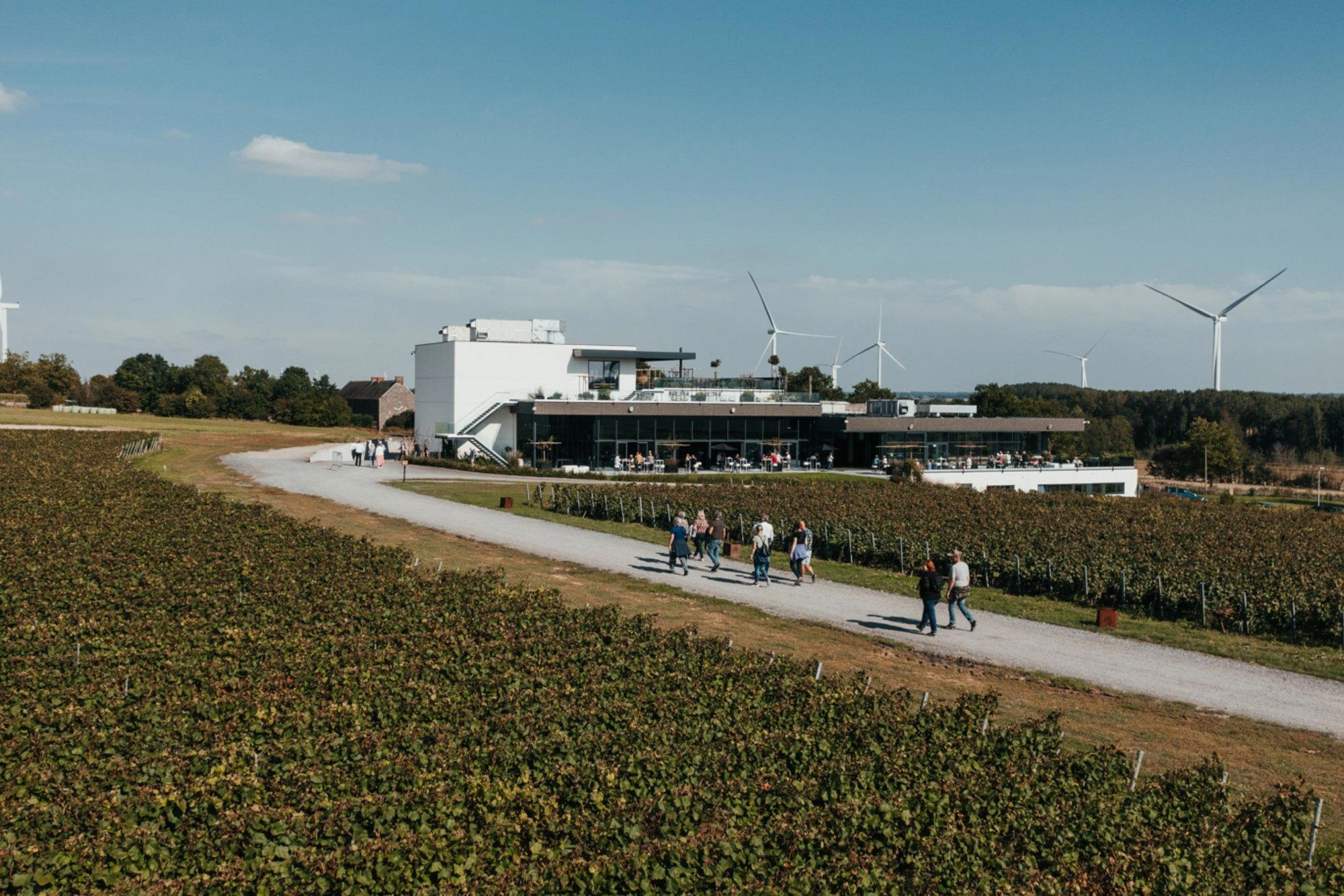
Details
- Lively
- Classic
- Cozy
- Casual Hangout
- Group Dining
- Family
- Historic Building
- A La Carte
- Vegetarian Friendly
Current opening hours
- Monday
- 6–10:30 PM
- Tuesday
- 12–2 PM, 6–10:30 PM
- Wednesday
- 12–2 PM, 6–10:30 PM
- Thursday
- 12–2 PM, 6–10:30 PM
- Friday
- 12–3 PM, 6–11 PM
- Saturday
- 12–3 PM, 6–11 PM
- Sunday
- 12–3 PM, 6–10 PM
Hours can change for holidays and private events. Last verified .
Warm and welcoming with a lively, convivial atmosphere blending historic charm and bustling energy.