


Juliana Hotel Brussels occupies a restored neoclassical building on the Place des Martyrs, one of Brussels' most architecturally composed squares. With 37 rooms and six suites across three floors, the property operates at boutique scale, pairing serious design credentials, Philippe Starck, Le Corbusier-inspired murals, a private art collection, with an Italian restaurant and a spa anchored by a tiled indoor pool.
Pearl is the En Primeur Club membership app — saves, bookings, and concierge access live there. Same editors, same standards.
- Address
- Pl. des Martyrs 1/4, 1000 Bruxelles
- Phone
- +32 2 214 08 00
- Website
- juliana-brussels.com
- Directions
- Get directions
 Saves & bookings on Pearl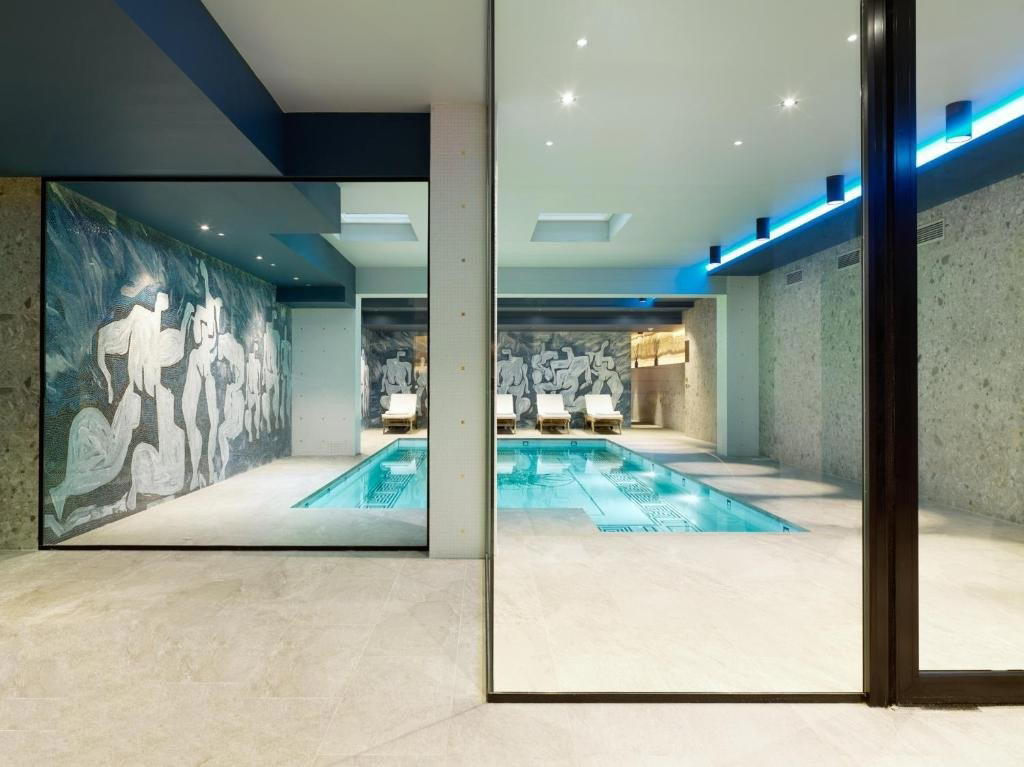
A Square That Sets the Tone
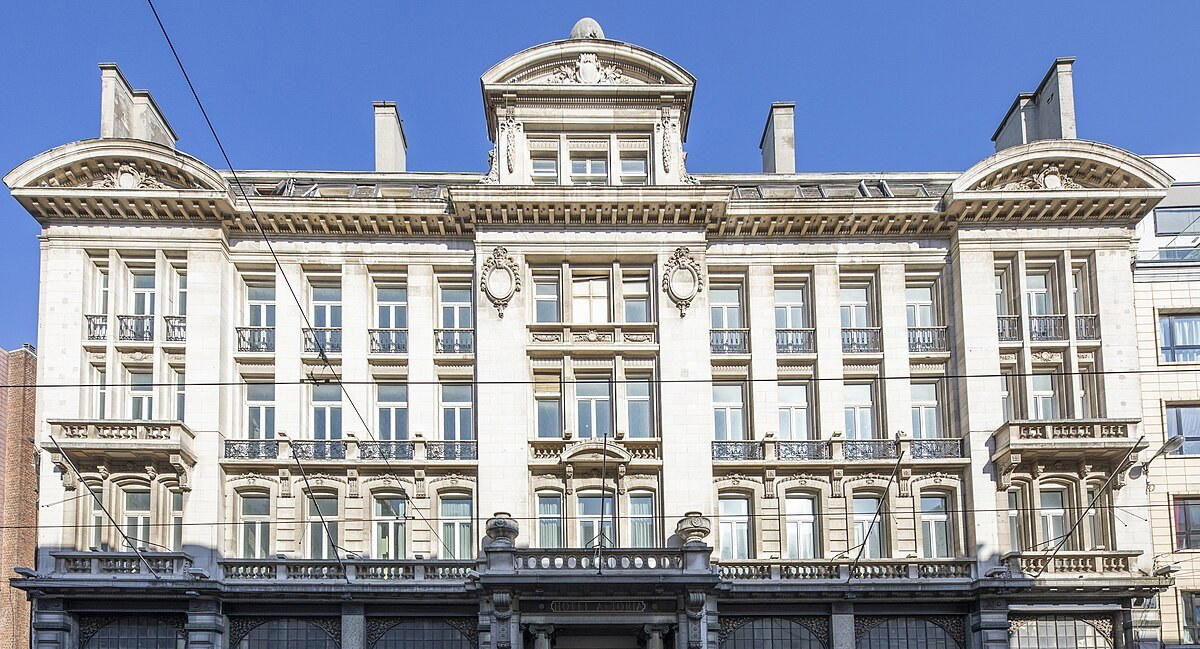
Place des Martyrs is not Grand-Place. It draws fewer crowds, earns fewer photographs, and appears on fewer itineraries, which is precisely what gives it its character. The square's colonnaded neoclassical facades form one of Brussels' most architecturally coherent public spaces, and arriving at the Juliana Hotel means approaching through that composition rather than past it. The hotel's luminous white facade reads as a continuation of the square's civic grandeur, not a departure from it. That relationship between building and setting matters: it frames what the Juliana does well, which is offer a boutique experience at a scale that larger Brussels addresses cannot replicate.
Brussels' central hotel market splits, broadly, between large-footprint internationals and smaller design-led independents. The Juliana sits firmly in the latter category, with 43 rooms, a count that keeps the property residential in atmosphere even as its amenities reach well into the luxury tier. For a comparison point, the Corinthia Grand Hotel Astoria Brussels and Steigenberger Wiltcher's operate at a scale that prioritises ceremony; the Juliana prioritises discretion.
Design as a Considered Position
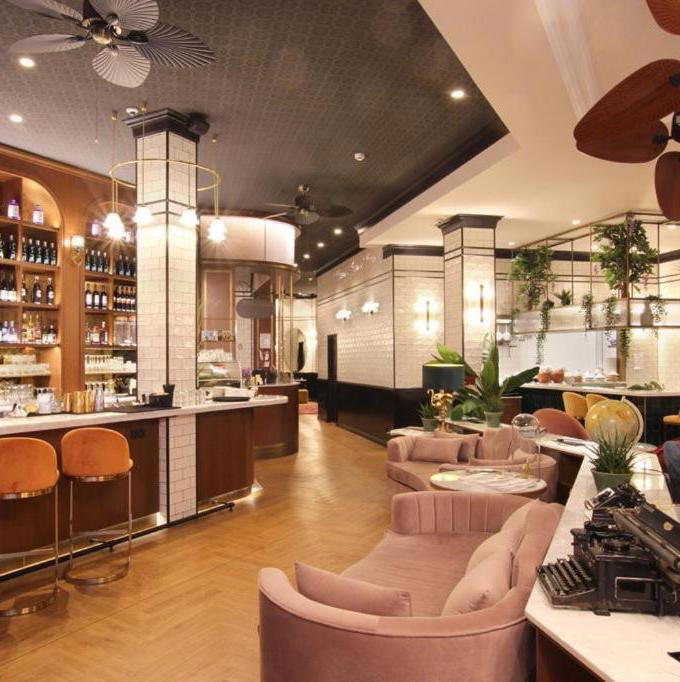
Luxury boutique hotels in European capitals increasingly use art and design as a point of differentiation, and the Juliana takes that approach seriously enough that the curation functions more like a private collection than a decorative afterthought. A Philippe Starck mirror appears in the public spaces; a corridor takes its visual cues from Hermès; the stairwell carries a 1930s-style iron railing that holds its own against the neoclassical bones of the building. The bar's mural, by father-and-son artists Kelvin and Philip Lavergne, occupies the same space as a bronze and copper-toned interior where gold velvet couches and a statue of Theseus and the minotaur share the room without competing. The spa pool, faced in intricate tilework and ringed by murals drawn from the vocabulary of Le Corbusier, is the kind of space that warrants the detour on its own terms.
The six room types, from Prestige Rooms to the Signature and Juliana Suites, each carry a distinct palette and architectural identity. The Signature Suite reads around original dark wooden beams set against golden hardwood and pale walls, with a marble bathroom that includes a soaking tub lit from above by a skylight. The Juliana Suite takes a softer register: seafoam walls, cool gray sofas, and an infrared sauna alongside the deep bathtub and rain shower in an all-marble bathroom. No two rooms present the same shape or art program, which is a meaningful commitment in a property of this size. Molton Brown bath products and a Nespresso coffee maker appear across all categories, the kind of baseline that signals a consistent position on comfort rather than leaving it to room tier.
Service at This Scale
The guest experience at a 43-room hotel is fundamentally different from what larger Brussels properties can deliver. The Hotel Amigo, a Rocco Forte Hotel, and the Sofitel Brussels Europe carry the service infrastructure of their respective groups, which has its own logic. At the Juliana, the boutique count means that staff-to-guest ratios remain high without requiring the formal protocol structures of a larger operation. The hotel's design-led identity also shapes how service reads: the spaces invite engagement, whether at the bar, in the spa, or at Fisco, the in-house restaurant, rather than routing guests through standardised sequences. That distinction tends to matter most for travellers who find large-lobby hotel culture inert, and least for those who want the assurance of a recognised international brand.
Fisco: Italian Cooking in a Brussels Context
In a city whose restaurant culture tends toward French-Belgian formality at the upper end, an in-house Italian restaurant operated by a named chef represents a considered programming decision. Fisco serves dinner daily under chef Rosa Caldarola, with a menu that rotates every few months and daily specials built around local and seasonal produce. Dishes on record include millefoglie di polenta, pumpkin crème brûlée with mushrooms, parmesan croquettes, and monkfish ballotine with saffron cream, a range that sits between Italian technique and Belgian seasonal logic rather than defaulting to either tradition wholesale. The bar, with its craft cocktails, champagne, and small bites, operates as a distinct venue within the property, worth visiting independently of a dinner booking.
Wellness and the Indoor Pool
The spa operates as a full-service offering: massages, facials, sauna, steam room, and gym access, in addition to the tiled indoor pool. For a central Brussels hotel at this room count, that amenity depth is substantial. The pool's Le Corbusier-referencing murals make it one of the more architecturally composed wellness spaces in the city's boutique tier, a claim that holds up against comparable properties including The Dominican and La Plaza Brussels.
Location and Planning
Place des Martyrs sits in the lower town, within walking distance of the Grand-Place, the Galeries Royales Saint-Hubert, and the city's main commercial axis. The square itself is quieter than the surrounding streets, which contributes to the sense of seclusion that the hotel's 43-room scale reinforces. For travellers arriving by train, Brussels-Central is especially proximate station. The hotel's address at Pl. des Martyrs 1/4, 1000 Brussels, places it within the first postal district, meaning it is accessible on foot from most central arrival points.
Those looking at alternatives in the immediate area include Radisson Collection Hotel, Grand Place Brussels and Hotel Agora Brussels Grand Place in Pl De Brouckere, both of which operate at larger scale closer to the Grand-Place.
Where It Fits
Comparable venues nearby, for context on price, style, and recognition.
| Venue | Cuisine | Price | Awards | Notes |
|---|---|---|---|---|
| Juliana Hotel BrusselsThis venue — the venue you are viewing | Contemporary luxury with neo-classical art in city center | $$$$ | Michelin 2 Key | Not listed |
| Corinthia Grand Hotel Astoria Brussels | Belle Époque palace hotel blending historical heritage with contemporary luxury and avant-garde design. | $$$$ | Michelin 1 Key | Historic Center (near La Grand Place) |
| Hotel Amigo, a Rocco Forte Hotel | Historic luxury hotel with contemporary design elements reflecting Belgian heritage and European sophistication. | $$$$ | Michelin 1 Key | Pl. de Brouckere |
| La Plaza Brussels | Historic luxury with Art Deco heritage | $$$ | 5-Star | Pl. de Brouckere |
| Steigenberger Wiltcher's | Classic luxury heritage property with modern comforts | $$$$ | 5-Star | Avenue Louise |
| The Dominican | Timeless deluxe design hotel poised as a destination for elegance in Brussels city centre. | $$$$ | 4-Star | Pl. de Brouckere |
Recognition history
Dated appearances from independent guides and award organizations, with the underlying list record or original source where available.
Forbes Recommended
Forbes
Forbes Recommended
Forbes
Michelin 2 Keys
Michelin
Small Luxury Hotels of the World Member
Small Luxury Hotels of the World
Continue exploring
More in Brussels
Hotels in Brussels
Browse all →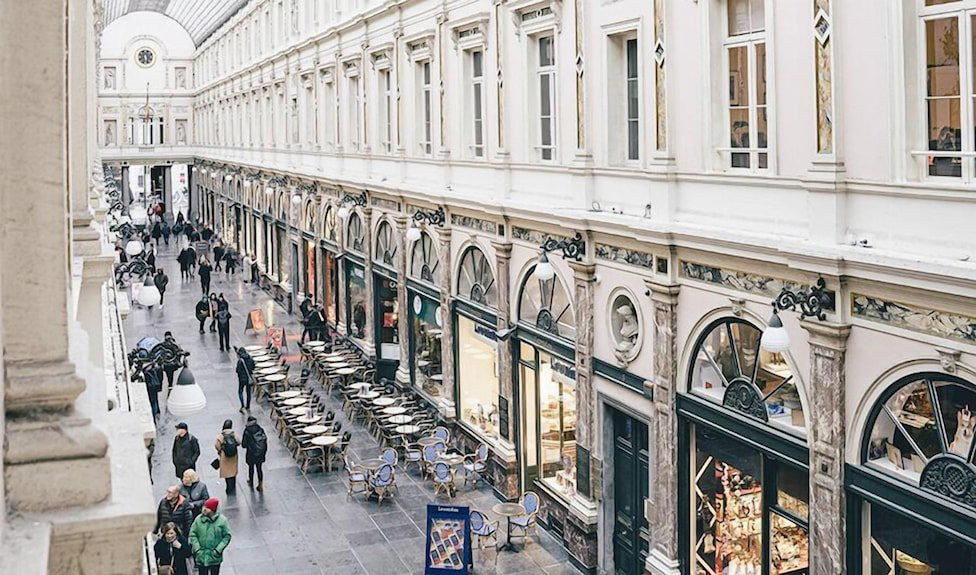
Bars in Brussels
Browse all →
Restaurants in Brussels
Browse all →
Wineries in Brussels
Browse all →
At a Glance
- Elegant
- Sophisticated
- Modern
- Romantic Getaway
- Business Trip
- Wellness Retreat
- Historic Building
- Wi Fi
- Pool
- Spa
- Fitness Center
- Room Service
- Concierge
- Restaurant
- Valet Parking
- EV Charging
- Wi Fi
- Pool
- Spa
- Fitness Center
- Room Service
- Concierge
- Restaurant
- Valet Parking
- EV Charging
Art-inspired decor with neo-classical touches, elegant lighting, and a cozy, intimate atmosphere praised for its quiet luxury.