
Tsukumo places Yamagata’s tempura and soba culture in a sharper regional frame: mountain vegetables, buckwheat traditions, and a dining style built around lunch rather than late-night ceremony. Its Tabelog Tempura 100 selection in 2025, plus earlier selections in 2022 and 2023, puts it in a serious national conversation while keeping the room grounded in counter and tatami-room informality.
Pearl is the En Primeur Club membership app — saves, bookings, and concierge access live there. Same editors, same standards.
- Address
- 1 Chome-1-23 Narisawanishi, Yamagata, 990-2339, Japan
- Phone
- +81 23-688-5583
- Website
- tabelog.com
 Saves & bookings on Pearl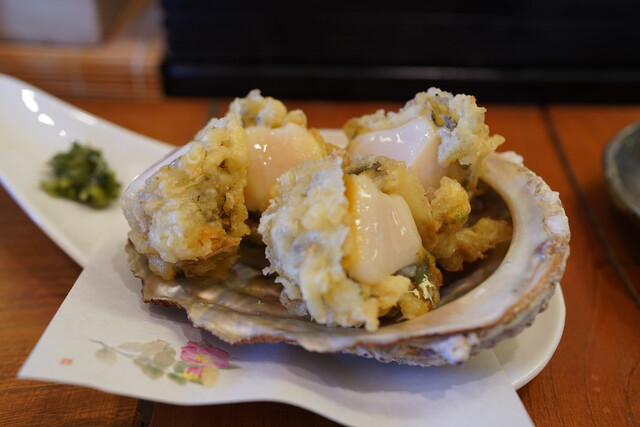
Approaching Narisawanishi, Yamagata’s food culture feels less like destination dining rooms than working addresses tied to fields, mountains, and roads toward Zao. That context matters for tempura. In Tokyo, the form often reads as luxury theatre: counter seats, chef-led pacing, seafood through metropolitan markets. In inland Yamagata, the grammar changes. Buckwheat, mountain vegetables, river fish, and seasonal produce carry more weight; the meal is about timing, heat, and restraint more than spectacle.
Tsukumo belongs to that second lineage. Listed for tempura and soba, it fits Yamagata, where soba culture is a regional staple, not an add-on. Its selection for Tabelog Tempura 100 in 2025, with previous selections in 2022 and 2023, is the trust signal: national tempura recognition for a restaurant outside the major dining capitals. That does not make it a glossy urban counter transplanted north. It makes it more interesting, because the format sits closer to local eating habits than the capital-city tasting-menu race.
Tempura in Yamagata reads differently when soba is part of the frame
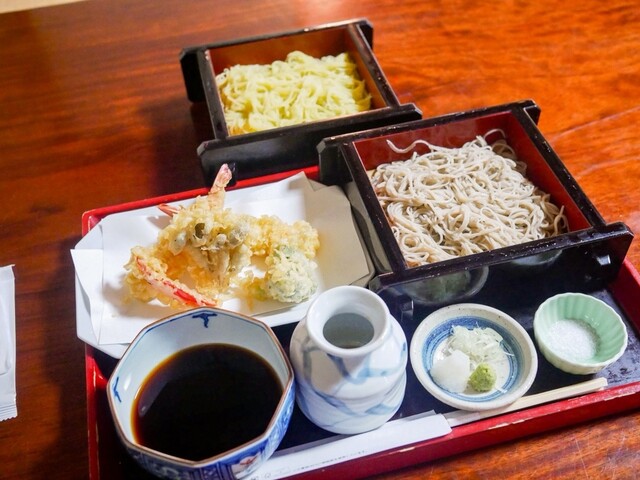
Tempura’s reputation can be distorted by high-end city versions, where talk turns to batter translucency, oil management, and reservation hierarchy. Those details matter, but they are not the whole tradition. In the Tohoku interior, tempura often shares the table with soba, shifting the center of gravity toward grain, season, and appetite. Buckwheat noodles bring a cooler, earthier counterpoint to fried ingredients; tempura adds texture and warmth without turning the meal into a prolonged ceremony.
That pairing is why Tsukumo’s category listing matters. A restaurant identified with both tempura and soba speaks to a regional pattern rather than chasing single-discipline prestige. For travelers building a Yamagata itinerary, it also clarifies expectations: this is not a late dinner izakaya or casual noodle shop. It occupies a narrower lane, with national recognition for tempura and a local logic shaped by soba culture and daytime dining.
The ingredient-sourcing angle is especially relevant in Yamagata, known across Japan for agricultural depth: cherries, pears, rice, mushrooms, wild plants, and mountain produce all form part of its identity. A tempura kitchen here has a different pantry conversation from one built entirely around coastal luxury. The appeal is not only what is fried, but where the raw material sits within the local calendar. Structurally, tempura in Yamagata rewards seasonality because the surrounding food culture already thinks in harvests.
Within the local field, price tier also signals intent. Teuchi Soba Umesoba and Tachinomi En sit in a lower-cost bracket, while Izakaya Denshichi occupies a similar spending range but in a different social format. Soneta Yakitoriya points toward skewers and evening drinking rather than the tempura-soba axis. Tsukumo therefore reads as a focused specialist, not a general Yamagata meal stop. That distinction helps when choosing between a quick soba lunch, a drinking-led evening, and a more deliberate tempura meal.
Counter seats and tatami rooms keep the experience closer to local dining than ceremony
The room format tells its own story. Counter seating suits tempura because it keeps cooking close, while tatami seating broadens the audience beyond solo diners and couples. That mix places the restaurant between specialist craft and everyday hospitality, a combination common in regional Japan and less common in metropolitan luxury dining, where the counter can become an exclusionary stage.
Yamagata’s restaurant culture is also less frictionless for travelers than Tokyo’s. Some stronger addresses require patience, cash awareness, and comfort with limited service windows. Tsukumo fits that pattern. It is non-smoking, children are welcome, and the setting is marked family friendly and solo-dining friendly, giving it a wider practical range than many high-recognition counters. Parking also matters in this part of the city, where car travel can be more natural than relying entirely on rail.
The critical case rests on alignment: region, format, and recognition point in the same direction. Tabelog Tempura 100 recognition gives national visibility; the soba-tempura category keeps it rooted in Yamagata; the counter-and-tatami setup avoids a sealed luxury ritual. For travelers, that combination is stronger than chef mythology or invented signature dishes. It says the meal belongs to its place.
Planning a broader Yamagata food itinerary should account for contrast. Chuka Soba Dokoro Konpiraso points toward the ramen side of the prefecture’s everyday eating, while Eigyoku Do, Goryouriya Ito, Izakaya Denshichi, and JAY show how varied the city’s dining map becomes beyond a single noodle narrative. For a wider scan, use Our full Yamagata restaurants guide alongside Our full Yamagata hotels guide, Our full Yamagata bars guide, Our full Yamagata wineries guide, and Our full Yamagata experiences guide.
How to place it in a Japan dining itinerary
Tsukumo makes sense for travelers not treating Japan as a sequence of trophy counters. Its value lies in how a nationally noted tempura address behaves like a regional restaurant: grounded, lunch-oriented, and connected to soba rather than isolated from it. That makes it a useful counterweight to coastal sushi planning, Kyoto kaiseki formality, or Tokyo cocktail itineraries.
For comparison across Japan and beyond, different formats answer different questions. -Grilled beef Sukiyaki- KAMAKURA TANUKIAN 鎌倉 たぬき庵 in Kamakura centers beef and hot-pot tradition;. 鮪と炭火焼き うお炭 秋葉原店 in Tokyo points toward tuna and charcoal in a capital-city setting;.cafe in Osaka,.know in Kumamoto, (Shoku) Vietnam in Kawasaki, and [Curry Senmon Ten] Maruyama Kyoju. in Sapporo each sit in different culinary lanes. Outside Japan, Jōdo Saké Bar in Los Angeles and Onigiri Time in Pasadena show how Japanese forms translate abroad, often with a different relationship to season and locality.
The editorial read is simple: prioritize this Yamagata restaurant when tempura, soba, and regional sourcing matter more than late-night energy or chef-driven theatre. Recognition supplies credibility, but the deeper reason to care is how the format reflects its surroundings. In a prefecture where agriculture and mountain foodways shape the table, tempura becomes less about luxury signaling and more about reading the season through a disciplined, familiar form.
Fast Comparison
Comparable venues by cuisine and price in the same metro.
| Venue | Cuisine | Price | Awards | Notes |
|---|---|---|---|---|
| TsukumoThis venue — the venue you are viewing | Tempura and soba | $$$ | , | |
| Kawashima | Chicken-focused Japanese set-menu dining | $$$ | , | Nanukamachi |
| Kanazawa Ya Gyuniku Ten | Traditional Yamagata beef sukiyaki & shabu-shabu | $$$ | , | Nanokamachi |
| Yakiniku Meisho Yamagyu Yamagata ten | Yamagata Beef Yakiniku | $$ | , | Hatagomachi |
| Tachinomi En | Japanese tachinomi standing bar | $ | , | / |
| Soneta Yakitoriya | Traditional Yakitori | $$ | , | Kasumicho |
Continue exploring
More in Yamagata
Restaurants in Yamagata
Browse all →

Hotels in Yamagata
Browse all →
Wineries in Yamagata
Browse all →
At a Glance
- Quiet
- Cozy
- Hidden Gem
- Classic
- Family
- Solo
- Group Dining
- Casual Hangout
- Standalone
Simple counter and tatami-seat interior with a calm, non-smoking atmosphere, oriented to relaxed lunches for families, solo diners, and friends rather than trend-driven dining.