
Tabelog 100 #57
Our verdict
Eigyoku Do places Yamagata’s wagashi culture in a modest, practical format: Japanese sweets, cafe service, dorayaki, and take-out rather than formal dining. Its Tabelog 100 selection for Japanese traditional sweets and sweets cafes in EAST 2023 gives it a clear credential within a category often overlooked by travelers chasing ramen, beef, or kaiseki.

Pearl is the En Primeur Club membership app, where members save venues, book tables and use the concierge.
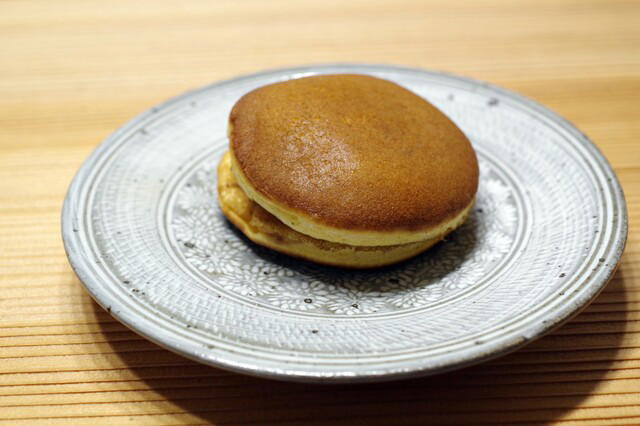
The menu
What to order
- Dorayaki with Hokkaido Tokachi azuki
- Japanese traditional sweets
Yamagata has the calm civic rhythm of a regional city: errands, daytime food culture, and small stops that reward attention before dinner. Here, wagashi is not a decorative add-on to tea-ceremony nostalgia, but an everyday craft with rules of texture, sweetness, packaging, and timing. Eigyoku Do fits that practical tradition: a Japanese sweets cafe where dorayaki sits within the wider language of local confectionery, not as a tourist prop.
Yamagata dining is often read through soba, fruit, beef, mountain vegetables, and sake, but sweets tell a quieter story about seasonality and gift culture. Wagashi shops run on a different clock from restaurants: the decisive meal may be a mid-morning purchase, an afternoon pause, or a box carried to someone else’s table. That makes the category useful for travelers who want the city beyond dinner reservations. For broader planning, Our full Yamagata restaurants guide gives the wider dining frame, while Our full Yamagata hotels guide, Our full Yamagata bars guide, Our full Yamagata wineries guide, and Our full Yamagata experiences guide map the rest of the itinerary.
Wagashi as a daytime lens on Yamagata
Japanese sweets cafes are easy to underestimate because spend is low and the format informal. The discipline is not. Balance matters: bean paste, pancake-like dorayaki batter, rice-based textures, and tea-compatible sweetness need restraint because portions are small and flaws have nowhere to hide. In regional cities, these shops also carry social weight, supplying family visits, office gifts, solo breaks, and small celebrations, so the audience is broader than the restaurant crowd.
The Tabelog Hyakumeiten selection for 2023 is the clearest external signal provided for Eigyoku Do. It places the shop in a curated context rather than the more visible restaurant-award economy, with a listed score of 3.62. That distinction matters. A sweets cafe is not competing with Yamagata dinner addresses such as Yakiniku Meisho Yamagyu Yamagata ten or Kawashima, where budgets and occasions sit in a different tier. It is closer in daily-use logic to modest local staples, with Yamada Ya another useful Yamagata reference point, though the category focus differs.
That range is part of the appeal. Yamagata can support higher-spend dining and modest local counters in one trip without forcing every meal into prestige. Other Yamagata dining rooms point to ramen culture, composed meals, drinking-table traditions, casual international cooking, and beef, while JAY offers one allowed point of comparison for the city’s broader casual range. Wagashi fills a separate slot: not breakfast, not dessert in the Western restaurant sense, but a compact cultural stop between larger meals.
Dorayaki and the value of small formats
The listed categories name the experience plainly: cafe featuring Japanese sweets, Japanese traditional sweets, and dorayaki. That last word gives travelers a route in. Dorayaki is familiar enough to be accessible, yet demanding enough to show proportion. The pancake shell, filling, and serving temperature can shift the impression, though specific items change by shop and should be approached from the day’s selection rather than a fixed tasting-menu mindset.
The format reinforces this. A sweets-focused cafe keeps the visit small without turning it into ceremony. The shop works for different travel patterns: a brief pause if available, a purchase carried back to a hotel, or a short stop before moving through Yamagata. The appeal is practical as much as aesthetic, especially for travelers seeking a local sweet rather than another full restaurant booking.
Price also changes the reading. With spending references listed at - JPY 999 - JPY 999, and budget lines for both dinner and lunch shown as - JPY 999, this is not a luxury stop by cost; it is a quality signal inside an everyday category. That is where Yamagata’s food culture is often strongest. A serious trip should not only chase premium beef or formal dining. It should also leave room for small, low-cost formats residents use repeatedly. Eigyoku Do is less a detour than a correction to travel habits that overvalue dinner and undervalue daytime craft.
How to fit it into a serious Yamagata food day
The practical play is simple: treat wagashi as its own stop, not an afterthought after a large meal. The shop is in Yamagata, and the format pairs easily with errands, sightseeing, or a slow afternoon rather than a destination-only plan. Because sweets shops can run on rhythms different from restaurants, travelers should confirm current opening details directly before building the day around a visit.
The format does not need to read like a hard-reservation restaurant. Expect flexibility: pause if the room works, keep the stop brief if the day is moving, and avoid treating a sweets cafe like a long lunch. For practical confirmation, the provided phone number is +81-23-622-2134, useful for checking details that can change more quickly than guide pages.
For travelers building a Japan itinerary around regional food rather than only Tokyo and Kyoto, this address recalibrates expectations. A strong route can compare Yamagata’s everyday sweets culture with other specialist formats elsewhere in Japan without forcing direct equivalence. Other cities may express Japanese food through beef counters, seafood grills, cafes, curry specialists, sake bars, or onigiri shops, but Yamagata’s version here is quieter, more domestic, and more useful for understanding sweets inside daily Japanese hospitality.
Frequently asked questions
Is Eigyoku Do suitable for children?
Eigyoku Do is a Japanese sweets cafe in Yamagata. For family-specific details, check the venue's official channels for the latest information.
What's the vibe at Eigyoku Do?
It reads as a daytime wagashi stop rather than a formal dining room: a cafe featuring Japanese sweets, Japanese traditional sweets, and dorayaki. Its Tabelog Hyakumeiten recognition in 2023 places it in a serious local sweet-shop tier.
Is Eigyoku Do expensive?
Pricing at Eigyoku Do is listed as - JPY 999 - JPY 999 View spending breakdown.
What are the operating hours at Eigyoku Do?
Current operating hours are not included in the provided venue facts. Confirm directly with Eigyoku Do before visiting.
Budget Reality Check
Nearby venues at a similar price tier for orientation.
| Venue | Cuisine | Price | Awards | Notes |
|---|---|---|---|---|
| Eigyoku DoThis venue (the venue you are viewing) | Traditional Japanese wagashi & dorayaki cafe | Not listed | Tabelog 100 #57 | Not listed |
| Yamada Ya | Japanese traditional sweets | $1–10 | Tabelog 100 #33 | Honcho, Japanese traditional sweets |
| Tachinomi En | Japanese tachinomi standing bar | Not listed | Tabelog 100 #86 | /, Japanese tachinomi standing bar |
| Soneta Yakitoriya | Traditional Yakitori | $20–30 | Tabelog 100 #71 | Kasumicho, Traditional Yakitori |
| Chuka Soba Dokoro Konpiraso | Traditional Japanese ramen (chuka soba) | $1–10 | Tabelog 100 #12 | Sanze, Yamagata Chuka Soba |
| Yakiniku Meisho Yamagyu Yamagata ten | Yamagata Beef Yakiniku | $30–50 | Tabelog 100 #22 | Hatagomachi, Yamagata Beef Yakiniku |
Recognition history
Dated appearances from independent guides and award organizations, with the underlying list record or original source where available.
Tabelog 100 #57 · No. 57
Tabelog · Tabelog 100 - Japanese traditional sweets / Japanese sweets cafe - EAST - 2023
Continue exploring
More in Yamagata
Restaurants in Yamagata
All restaurants in Yamagata →
Hotels in Yamagata
Browse all →

Wineries in Yamagata
Browse all →
Details
- Cozy
- Elegant
- Classic
- Quiet
- Solo
- Family
- Casual Hangout
- After Work
- Standalone
- Historic Building
- Local Sourcing
- A La Carte
- Tea
- Coffee
Current opening hours
- Monday
- Closed
- Tuesday
- Closed
- Wednesday
- 9 AM–6 PM
- Thursday
- 9 AM–6 PM
- Friday
- 9 AM–6 PM
- Saturday
- 9 AM–6 PM
- Sunday
- 9 AM–6 PM
Hours can change for holidays and private events. Hours as of .
A quiet, cozy Japanese sweets cafe with a beautiful and elegant interior and a relaxed, comfortable seating area suited to taking a peaceful break.