
Michelin Plate
Our verdict
A Michelin Plate-recognised Japanese restaurant in Taipei's Zhongshan District, Tsuki Yo Iwa sits within the city's tightening tier of high-format Japanese dining. it draws comparison with the more established omakase counters that have redefined what Japanese cooking means in Taiwan over the past decade.

Pearl is the En Primeur Club membership app, where members save venues, book tables and use the concierge.
The menu
What to order
- Full-Crab Set Menu
- Grilled Crab Butter
- Steam Crab Rice
Japanese Dining in Taipei: Where Tsuki Yo Iwa Sits
Taipei's Japanese restaurant scene has undergone a quiet but significant restructuring over the past ten years. What began as a cluster of mid-range sushi bars and izakayas serving Japanese expatriates has stratified into something more considered: at the leading end, a tier of high-format Japanese restaurants that price against omakase counters in Tokyo's outer wards rather than anything local. Tsuki Yo Iwa, on a lane off Shuangcheng Street in Zhongshan District, occupies that upper bracket. Its 2024 Michelin Plate recognition places it in the inspectors' field of vision without yet carrying a star, which in practice means it sits in the most competitive segment of Taipei's Japanese dining market, noticed enough to be tracked, priced at the point where the comparison set includes Ken Anhe, Yu Kapo, and AJIMI.
Zhongshan District has become the natural home for this category. The neighbourhood sits north of the old commercial centre, characterised by low-rise residential lanes that shelter restaurants requiring intimacy over footfall. Shuangcheng Street's side lanes, in particular, have accumulated a concentration of high-ticket Japanese formats that benefit from the area's mix of residential density and corporate proximity. Finding Tsuki Yo Iwa requires attention, Lane 25 is not signposted prominently, which is consistent with the operating logic of restaurants at this tier, where the assumption is that guests arrive by reservation rather than by accident.
What the Menu Architecture Says
In Japanese high-format dining, menu structure is rarely neutral. The choice between omakase, kaiseki, and à la carte is a statement about where a restaurant positions itself philosophically and commercially. Kaiseki sequences encode seasonal discipline and a fixed editorial voice; omakase counters contract the experience around a single chef's judgment; à la carte formats, rarer at this price point, signal confidence that individual dishes can carry a premium without the scaffolding of a set progression.
The broader shift in Taipei's Japanese fine dining has been away from pure replication of Tokyo or Kyoto formats and toward something more locally inflected. Restaurants like Dasuke and Kiku each navigate this question differently, but the underlying tension is consistent: how much of the Japanese template do you preserve, and where do Taiwanese ingredients or preferences exert pressure on the structure? A Michelin Plate recognition in 2024 suggests that Tsuki Yo Iwa's answer to that question has been coherent enough to satisfy inspectors who apply both Japanese culinary standards and an understanding of the local context.
At the $$$$ price tier, guests are not paying for volume or variety as such. They are paying for editorial rigour: the judgment about what arrives, in what order, at what temperature, and with what level of restraint.
The Zhongshan Address and What It Signals
Location within Zhongshan is not incidental at this price tier. The district functions differently from Da'an's more visible restaurant corridor or Xinyi's corporate dining concentration. Zhongshan's high-end Japanese contingent tends to cluster on side streets and within residential lanes, operating on the assumption that guests are committed enough to seek them out. This geography reinforces the experience: arriving on foot through a quiet lane recalibrates expectations before the meal begins.
The physical address, ground floor, Lane 25, Shuangcheng Street, is a format common to the area's better Japanese restaurants. Ground-floor access, a discreet frontage, and a neighbourhood that doesn't generate passing trade are all consistent signals of a restaurant designed for repeat guests and reservation-led discovery rather than walk-in volume. For visitors to Taipei approaching the city's Japanese dining tier for the first time, the full Taipei restaurants guide provides useful orientation across cuisine categories and price points.
Taipei's Japanese Tier in Regional Context
Taiwan's relationship with Japanese cuisine runs deeper than most Southeast and East Asian markets. Decades of Japanese colonial administration, followed by sustained cultural and commercial ties, mean that Taiwanese diners often have fine-grained expectations of Japanese food that visitors from other markets may underestimate. A restaurant operating at the $$$$ tier in Taipei is not pitching to novelty-seekers; it is pitching to guests who have likely eaten at comparable counters in Tokyo and will notice the difference if standards slip.
This context helps explain why the Michelin Plate recognition carries weight. Taiwan's Michelin Guide applies the same inspection methodology used in Japan, and the plate designation, awarded to restaurants the inspectors consider worth knowing about, below star level, functions as a quality floor rather than a ceiling. For reference, the approach taken by Japanese restaurants elsewhere in the region varies considerably: in Tokyo, counters like Myojaku and Azabu Kadowaki operate in an environment where the Michelin framework is densely calibrated; in Kyoto, Isshisoden Nakamura reflects a kaiseki tradition with centuries of local specificity. Tsuki Yo Iwa operates in a market with its own distinct demands, and the 2024 plate suggests it is meeting them.
For those building a wider itinerary around Taiwan's serious dining scene, it is worth noting that the Michelin framework now covers multiple cities. JL Studio in Taichung and GEN in Kaohsiung each represent the guide's reach beyond Taipei, while destinations like A Cun Beef Soup in Tainan and Akame in Wutai Township reflect how Michelin is documenting a much broader range of Taiwanese culinary formats. Those planning extended stays should also consult our Taipei hotels guide, bars guide, wineries guide, and experiences guide for full city coverage. If heading further afield, Volando Urai Spring Spa and Resort in Wulai District pairs well with a day outside the city.
Know Before You Go
- Address: No. 9, Lane 25, Shuangcheng Street, Zhongshan District, Taipei City 10461, Taiwan
- Awards: Michelin Plate (2024)
- Price range: $$$$
- Cuisine: Japanese
- Booking: Reservation recommended; walk-in unlikely at this format and price tier
- Phone / Website: Not publicly listed, seek current booking details via local restaurant platforms or hotel concierge
Frequently asked questions
What is the vibe at Tsuki Yo Iwa?
Tsuki Yo Iwa sits at the quieter, more considered end of Taipei's Japanese dining spectrum. The Zhongshan location, on a residential side lane rather than a main thoroughfare, sets a tone of deliberate remove from the city's busier dining corridors. At the $$$$ price point, with Michelin Plate recognition confirming inspector attention, the atmosphere is calibrated toward focused dining rather than social scene. For guests accustomed to high-format Japanese restaurants in Tokyo or Kyoto, the register will feel familiar; for those new to this tier in Taipei, it sits meaningfully above the mid-range Japanese options the city also does well.
What should I eat at Tsuki Yo Iwa?
What can be said with confidence is that the restaurant's Michelin Plate recognition in 2024, in the context of Taipei's competitive Japanese dining tier, implies a coherent and well-executed approach to Japanese cuisine. At the $$$$ price point, the expectation is a structured dining experience where the kitchen makes the editorial choices. Guests should follow the format as offered rather than approaching it selectively, the value at this tier is in the sequencing and the overall arc, not in isolated dishes chosen from a conventional menu.
Recognition Snapshot
Comparable venues nearby, for context on price, style, and recognition.
| Venue | Cuisine | Price | Awards | Notes |
|---|---|---|---|---|
| Tsuki Yo IwaThis venue (the venue you are viewing) | Japanese Crab Kaiseki | $300–500 | Michelin Plate | Not listed |
| AJIMI | Kappo Omakase | $150–200 | Michelin Plate | De'an |
| The Ukai | Japanese Kappou and Teppanyaki | $200–300 | Michelin Plate | Xicun |
| Sushi Nomura | Edomae Sushi Omakase | $200–300 | Michelin Plate | Dunhuang |
| Yuu | Modern Japanese Nikukappo with Wagyu Focus | Not listed | Michelin Plate | Checeng |
| Fumée Yakitori | Modern Yakitori Kappo | $50–100 | Michelin Plate | Kangle |
Recognition history
Dated appearances from independent guides and award organizations, with the underlying list record or original source where available.
Michelin Plate
Michelin
Full recognition history (2 entries)
Michelin Plate
Michelin
Continue exploring
More in Taipei
Restaurants in Taipei
All restaurants in Taipei →
Bars in Taipei
All bars in Taipei →
Hotels in Taipei
All hotels in Taipei →
Wineries in Taipei
Browse all →
Details
- Elegant
- Intimate
- Sophisticated
- Cozy
- Special Occasion
- Date Night
- Celebration
- Private Dining
- Open Kitchen
- Sake Program
- Tasting Menu
Current opening hours
- Monday
- 11:30 AM–2 PM, 6–10 PM
- Tuesday
- 11:30 AM–2 PM, 6–10 PM
- Wednesday
- 11:30 AM–2 PM, 6–10 PM
- Thursday
- 11:30 AM–2 PM, 6–10 PM
- Friday
- 11:30 AM–2 PM, 6–10 PM
- Saturday
- 11:30 AM–2 PM, 6–10 PM
- Sunday
- Closed
Hours can change for holidays and private events. Hours as of .
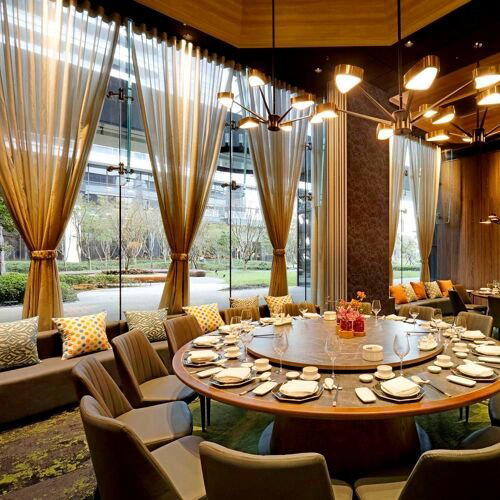
Tranquil Japanese garden-inspired private rooms with serene, elegant atmosphere and warm lighting.