Our verdict
On Rue Roture in Liège's Outremeuse quarter, TRIBE occupies a street that reads as a shorthand for the city's broader dining energy: independent, neighbourhood-rooted, and resistant to formula. The address places it inside a cluster of creative restaurants that have quietly repositioned Liège as one of Belgium's more interesting secondary dining cities. Specific menus and formats are best confirmed directly with the venue before visiting.

Pearl is the En Primeur Club membership app — saves, bookings, and concierge access live there. Same editors, same standards.
- Address
- Rue Roture 80, 4020 Liège, Belgium
- Phone
- +32472816306
- Hours
- Mon–Tue ClosedWed–Sat 6 PM–12 AMSun Closed
- Website
- triberoture.com
- Directions
- Get directions
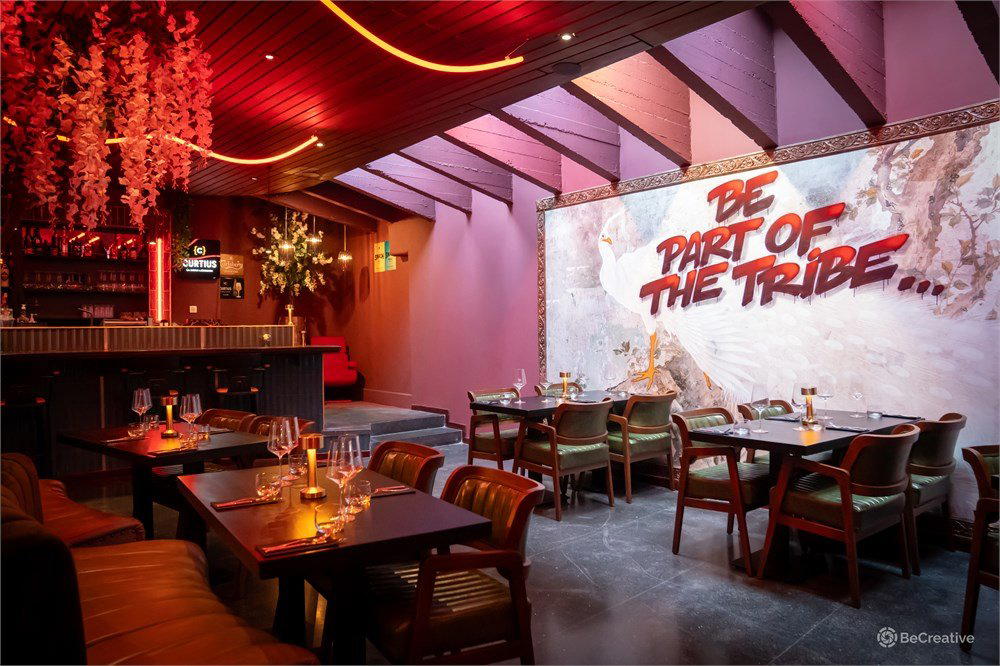
Outremeuse and the Architecture of Liège's Independent Restaurant Scene
Rue Roture runs through Outremeuse, the island district on the right bank of the Meuse that locals have long treated as Liège's most self-contained neighbourhood. The street has accumulated a concentration of independent restaurants over the past decade that sits at odds with the city's reputation as a purely industrial or transit destination. This is not a curated dining quarter in the Brussels sense, where investment follows a deliberate hospitality strategy. The density here arrived more organically, driven by lower rents, a local population with genuine appetite for neighbourhood eating, and a sequence of operators who chose the area for reasons of community as much as commercial logic.
TRIBE, at number 80 on that street, sits inside this pattern. The address alone signals something about positioning: Outremeuse is not where you open if you are targeting expense-account dinners or convention-centre proximity. The clientele tends to arrive on foot or by tram from across the city, which filters for a certain kind of committed diner. Liège's dining culture has historically been shaped more by bistro tradition and Walloon cooking than by the kind of fine-dining infrastructure that defines Antwerp or Brussels, and venues in Outremeuse tend to reflect that bias toward accessibility and regularity of visit over occasion dining.
Where Liège Sits in the Belgian Dining Hierarchy
Belgium's restaurant recognition has concentrated heavily in Flanders and the Brussels metro area. Properties like Hof van Cleve in Kruishoutem, Boury in Roeselare, and Zilte in Antwerp hold the Michelin and 50 Best citations that international visitors use as navigational anchors. In Wallonia, the picture is thinner at the leading end, though not without points of distinction: L'air du Temps in Liernu and d'Eugénie à Emilie in Baudour represent a strand of ambitious cooking that operates well outside the capital. Liège itself sits below that tier in terms of formal recognition, but the city's independent restaurant density has grown enough that comparisons to other Belgian secondary cities now look more favourable than they did five years ago.
Within Liège, the more creatively oriented restaurants tend to cluster in Outremeuse or the areas immediately adjacent to it. Héliport Brasserie and ¡Toma! represent the creative end of the city's current offer, with the Italian-leaning addresses, including Al Piccolo Mondo, Altro Maccheroni, and Antipasti di Sophie, filling a consistent neighbourhood dining function across a slightly different price bracket.
The Cultural Weight of Walloon Eating
Any restaurant operating in Liège is working within a food culture that has deep roots in French-speaking Belgian tradition. Walloon cooking is not a defined culinary style in the way that, say, Basque or Burgundian cooking carries internationally legible markers, but it does carry certain structural assumptions: comfort over spectacle, seasonal produce tied to regional agriculture, and a preference for cooking that rewards return visits rather than single occasions. The city's proximity to the Ardennes means game, charcuterie, and river fish carry cultural weight that they might not in a coastal or urban-industrial context.
This tradition creates both an opportunity and a constraint for contemporary operators in Liège. The appetite for cooking that references local materials and methods is genuine, but the market for high-ticket experimentation is narrower than in Brussels or Antwerp. Restaurants that have built durable presences in Outremeuse tend to be those that found a register between neighbourhood reliability and enough culinary ambition to give diners a reason to choose them over the bistro on the next block. Whether TRIBE aligns more closely with the tradition-anchored or the creatively oriented end of that spectrum is a question the venue data does not resolve, and the answer matters for how you frame an evening around it.
Liège as a Dining Destination: The Practical Context
Liège-Guillemins station, designed by Santiago Calatrava and opened in 2009, handles Thalys and Intercity connections that place Liège within roughly an hour of Brussels, around ninety minutes of Paris by high-speed rail, and in close range of Aachen and Maastricht. The station is several kilometres from Outremeuse, which is leading reached by tram or taxi from the centre. The Rue Roture area is walkable from the city's compact historic core once you cross into the island district, though the geography of Outremeuse means it functions more as a local neighbourhood than a tourist-facing precinct.
Diners coming from outside Liège who have structured a trip around Belgian fine dining more broadly would find this city a different register from the experience at Bartholomeus in Heist, Willem Hiele in Oudenburg, or De Jonkman in Sint-Kruis. Those addresses carry formal recognition and attract destination diners. Liège's draw is more diffuse: a city with its own eating culture, a neighbourhood in Outremeuse that rewards exploration, and a growing set of independent operators that reflect local rather than international appetite. For context on the full range of what the city offers, the EP Club Liège restaurants guide maps the current scene across price points and neighbourhood.
International comparisons can help calibrate expectations. A venue like Le Bernardin in New York City or Atomix operates inside a dense ecosystem of formal recognition and global food media attention. Bozar Restaurant in Brussels sits closer to the institutional end of Belgian dining. TRIBE on Rue Roture is operating in a different register entirely, one where the neighbourhood itself is part of the proposition and where the absence of a formal awards profile does not necessarily signal anything about quality. Castor in Beveren offers a useful parallel: a Belgian address that built a following through consistency and cooking conviction rather than citation accumulation.
Planning a Visit
The Rue Roture address is publicly recorded. Given that Outremeuse venues at this level of neighbourhood embedding often operate without significant digital presence, a direct approach, whether by telephone or in person, is likely to yield more reliable planning information than third-party booking platforms. Timing your visit around midweek or shoulder periods is a general principle for neighbourhood restaurants in Liège, where weekend covers at popular addresses tend to fill faster than the city's low profile might suggest.
Frequently asked questions
Where is TRIBE located?
TRIBE is located at Rue Roture 80, 4020 Liège, Belgium, Liège.
Is TRIBE in Liège easy to reach by train?
Liège-Guillemins station, the Santiago Calatrava-designed hub opened in 2009, connects the city to Brussels, Paris, and Amsterdam via Thalys and Intercity services. From Guillemins, Outremeuse and Rue Roture 80 are reachable by tram or a short taxi ride across the Meuse, making TRIBE a workable stop on a rail-based itinerary through Wallonia.
What should I eat at TRIBE?
The specific menu at TRIBE on Rue Roture 80 has not been confirmed in available data, so arriving with an open brief is the practical approach. Outremeuse restaurants of this type typically anchor their offer in Walloon-influenced cooking, but contacting TRIBE directly before visiting will give you the current format and any seasonal focus.
How far ahead should I plan for TRIBE?
Given that Outremeuse draws a loyal local following, reaching out to the restaurant directly at Rue Roture 80, Liège, is the only reliable way to check availability before travelling.
What's the signature at TRIBE?
What is clear is its address in Outremeuse, the island district that functions as Liège's most self-contained independent dining quarter, which itself shapes the kind of locally oriented, neighbourhood-scale cooking that characterises the area.
How does TRIBE handle allergies?
The standard practice in Belgian restaurants of this scale is to flag requirements at the time of booking or on arrival; contacting TRIBE at Rue Roture 80, Liège, before your visit is the only way to confirm their specific approach.
How It Stacks Up
Comparable venues nearby, for context on price, style, and recognition.
| Venue | Cuisine | Price | Awards | Notes |
|---|---|---|---|---|
| TRIBEThis venue — the venue you are viewing | Belgian Bistro | Not listed | Not listed | Not listed |
| Cabale | Georgian-Belgian Fusion Neo-Bistro | $50–100 | Not listed | Historic Centre (near Marché de la Batte) |
| La Cantina | Authentic Italian Trattoria | $20–30 | Not listed | Quartier Centre |
| Le Shanghai | Refined Cantonese Chinese | $30–50 | Not listed | Place Cathedrale |
| Como en Casa | Seasonal Vegetarian Fusion | $30–50 | We're Smart World 2 Radishes | City Center |
| Merry | Modern French Seasonal | $50–100 | We're Smart World 1 Radish | Liège city center |