Our verdict
Tri lučke sits at Sremič 23 in Krško, a small Slovenian town in the Posavje region where the Sava river defines the agricultural character of the surrounding countryside. With minimal digital presence and no listed awards or price tier, it occupies the informal, community-rooted tier of Slovenian gostilna dining that underpins the country's food culture far more than its Michelin-recognised peers.

Pearl is the En Primeur Club membership app, where members save venues, book tables and use the concierge.

Krško and the Gostilna Tradition It Keeps Alive
Slovenia's most-discussed restaurants in 2024 sit at the higher end of the country's dining register: Hiša Franko in Kobarid and Milka in Kranjska Gora carry the creative and fine-dining flags internationally, while Gostilna Pri Lojzetu in Vipava and Hiša Denk in Zgornja Kungota hold Michelin recognition in their respective corners of the country. These are the addresses that draw food-focused visitors from abroad. But the day-to-day eating life of provincial Slovenia operates on a different register entirely, one built around the gostilna: a format that combines tavern, canteen, and neighbourhood restaurant into a single social institution with deep roots in the country's Habsburg and Yugoslav past.
Krško, a modest industrial town in the Posavje region along the Sava river, has not developed the kind of dining profile that attracts wider editorial attention. Unlike Piran, which draws visitors to addresses like Gostišče Neptun, or Ljubljana, where Restavracija Strelec operates with capital-city visibility, Krško's restaurant scene functions for its own residents first. Tri lučke, located at Sremič 23 on the edge of this compact city, belongs to that local-first tier. It carries no listed awards, no verified price tier, and no digital presence in the standard booking channels, all of which, in the Slovenian context, is a reliable signal of where it sits culturally rather than commercially.
What the Posavje Region Puts on the Table
The Posavje region, running along the lower Sava valley from Radeče through Krško to Brežice, is agricultural in character, with river-valley flatlands giving way to forested hills. The food traditions here are firmly rooted in central European farmhouse cooking: cured meats, freshwater fish from the Sava and its tributaries, pork-based preparations, and the kind of carbohydrate-heavy side dishes (buckwheat, polenta, egg-enriched noodles) that reflect both Austro-Hungarian influence and the subsistence agriculture that shaped the region for centuries. This is not a cuisine built around finesse or minimalism. It is built around sufficiency, seasonality as a practical constraint rather than a philosophical choice, and the communal rhythm of a farming calendar.
The gostilna format that Tri lučke appears to represent is the primary vehicle through which these traditions are transmitted in small Slovenian towns. Unlike the farm-to-table narrative that venues like Grič in Šentjošt nad Horjulom have consciously constructed around regional sourcing, or the modernist reinterpretation that defines Dam in Nova Gorica, the traditional gostilna transmits regional cuisine through habit and expectation rather than curation. The menu in this format typically reflects what is seasonal because the supply chain in smaller Slovenian towns has never fully disconnected from local production, not because of a sourcing philosophy, but because the infrastructure simply works that way.
Reading an Informal Venue in the Slovenian Context
Absence of a verified cuisine type, price range, star rating, or awards for Tri lučke is notable in a specific way. Slovenian restaurant data is reasonably well-documented at the upper tiers, venues with Michelin recognition or strong urban profiles appear consistently across platforms. At the informal, community-embedded level, documentation drops sharply. This is the tier where venues operate primarily through local word of mouth, repeat custom, and physical presence in the neighbourhood rather than through any form of external recognition or digital reach.
For context: a reviewed venue in Krško like Gostilna Kunst sits within the same local ecosystem and provides a useful peer reference for understanding the category, both address the same community and the same culinary tradition. Similarly, Pavus in Lasko represents the kind of formal-leaning regional venue in a nearby Posavje town that draws a broader geographic catchment. Tri lučke, based on its address at Sremič 23 and the complete absence of formal positioning data, sits closer to the community end of that range than the destination end.
Visitors approaching from Ljubljana (roughly 90 kilometres to the northwest) or from Celje (around 45 kilometres to the north, home to Gostilna Oštirka) should calibrate expectations accordingly. This is not a destination restaurant in any conventional sense. It is an address that serves a local function in a provincial Slovenian town, and its value to the visitor lies precisely in that function rather than in any form of gastronomic credentialism.
Slovenia's Broader Dining Conversation
Understanding where Tri lučke sits requires some familiarity with how Slovenia's restaurant culture is structured. At the upper end, venues like Hiša Linhart in Radovljica, Gostilna Mlinar in Idrija, and Turistična Kmetija Breg in Brda represent how regional Slovenian producers and culinary traditions are being recontextualised for a wider, more food-literate audience. These are the venues through which Slovenia competes in a European fine-dining conversation alongside addresses as distant as Le Bernardin in New York City or Atomix in New York City in terms of the seriousness with which they approach their craft.
Below that tier, and representing a much larger share of actual meals eaten in Slovenia, sits the gostilna tradition. It is this tradition that sustains the culinary culture at the everyday level: the lunch trade for local workers, the Sunday family table, the informal dinner that does not require a reservation made weeks in advance. Gostišče Karavla 297 in Trzic represents another data point in this category, as does the broader pattern visible when looking at our full Krško restaurants guide.
Planning a Visit
Tri lučke is located at Sremič 23, 8270 Krško. No phone number, website, or booking channel is currently verified for this address, which suggests walk-in is the operating model, consistent with the informal gostilna format common in smaller Slovenian towns. Krško is served by rail connections on the Ljubljana-Zagreb line, making it reachable without a car from either capital, though the address at Sremič 23 sits outside the immediate town centre and may require a short taxi or local transport connection. Given the absence of verified hours, confirming opening times locally before visiting is advisable for any traveller making a specific trip.
Frequently asked questions
Does Tri lučke work for a family meal?
The gostilna format that defines addresses like Sremič 23 in provincial Slovenian towns is built around communal, unpretentious eating, the format is generally inclusive across ages. No pricing tier is verified for Tri lučke, but gostilne in the Krško area typically operate well below the cost levels of Slovenia's award-holding destination restaurants. Walk-in appears to be the practical access route given the absence of any listed booking channel.
How would you describe the vibe at Tri lučke?
Tri lučke sits in Krško, a working provincial town in the Posavje region, and the address at Sremič 23 is consistent with the kind of neighbourhood gostilna that serves a local rather than tourist clientele. Arrive without expectations shaped by Slovenia's fine-dining circuit.
Is Tri lučke suitable for travellers passing through Krško who want a quick, no-reservation stop?
That aligns with the gostilna tradition in smaller Slovenian towns, where tables are generally filled by locals on a drop-in basis rather than advance reservation. Travellers routing through the Posavje region between Radeče and Brežice should factor in the possibility of limited or variable hours, as none are publicly verified for this address.
What dish is Tri lučke famous for?
The Posavje region's culinary identity leans on river-valley staples, freshwater fish from the Sava, štruklji, and hearty meat-based mains, and a gostilna in Krško would plausibly draw from that register, but any specific claim about what Tri lučke serves would be speculation rather than fact.
Where exactly is Tri lučke?
Tri lučke is located at Sremič 23, 8270 Krško, Slovenia, Krsko.
Price and Recognition
| Venue | Cuisine | Price | Awards | Notes |
|---|---|---|---|---|
| Tri lučkeThis venue (the venue you are viewing) | Modern Regional Cuisine | $30–50 | Not listed | Not listed |
| Dam | Modern Mediterranean with Slovenian-Italian Influences | $50–100 | 1 Michelin Star · La Liste Top Restaurants | Mediterranean, Modern Cuisine |
| Hiša Franko | Modern Slovenian Fine Dining | $300–500 | 3 Michelin Stars · World's 50 Best #60 | Modern European, Creative |
| Milka | Modern Alpine Fine Dining | $200–300 | 2 Michelin Stars · La Liste Top Restaurants | Creative |
| Gostilna Pri Lojzetu | Modern Slovenian Fine Dining | $50–100 | 1 Michelin Star · La Liste Top Restaurants | Modern Cuisine |
| Grič | Modern Slovenian Farm-to-Table | $100–150 | 1 Michelin Star · La Liste Top Restaurants | Farm to table |
Continue exploring
More in Krsko
Restaurants in Krsko
All restaurants in Krsko →


Details
- Scenic
- Cozy
- Elegant
- Rustic
- Business Dinner
- Group Dining
- Celebration
- Special Occasion
- Terrace
- Hotel Restaurant
- Standalone
- Panoramic View
- Extensive Wine List
- Local Sourcing
- Vineyard
- Tasting Menu
- A La Carte
- Wine
- Vegetarian Friendly
- Vegan Options
- Gluten Free Options
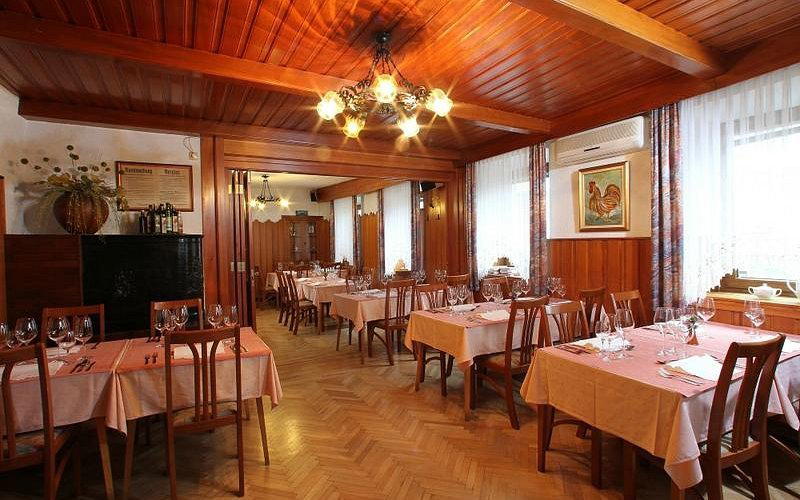
Beautiful and welcoming, with a modern/design feel and exposed wooden beams, plus a scenic vineyard setting.