Trattoria Venezia
A neighbourhood trattoria on Viale Venezia in the historic market town of Portogruaro, Trattoria Venezia draws on the agricultural and lagoon traditions of the Veneto-Friuli borderlands. The cooking here reflects a region where river fish, polenta, and seasonal field vegetables have defined the table for centuries, placing it firmly within the trattoria tradition that still anchors everyday Italian dining culture.
Pearl is the En Primeur Club membership app — saves, bookings, and concierge access live there. Same editors, same standards.
- Address
- Viale Venezia, 10, 30026 Portogruaro VE, Italy
- Phone
- +39421635858
- Website
- facebook.com
- Directions
- Get directions
 Saves & bookings on Pearl
Where the Veneto Meets the Friulian Plain
Portogruaro sits at an old crossing point between the Veneto and Friuli Venezia Giulia, a town of arcaded streets, a working millrace, and a market culture that has shaped what people eat here for generations. The drive along Viale Venezia into town gives you the measure of the place quickly: flat agricultural land, market gardens pressing up to the road edge, and the occasional canal threading through. This is not a destination organised around tourism. It is a regional town with its own food logic, and Trattoria Venezia, positioned on that same arterial street, reads as part of that logic rather than an interruption of it.
In the broader arc of Italian trattoria culture, places like this occupy a specific and undervalued position. They are not the tasting-menu operations that draw international attention, the way Osteria Francescana in Modena or Le Calandre in Rubano define Italian fine dining abroad. Nor are they the coastal seafood institutions along the Adriatic that Italians drive hours to reach, like Uliassi in Senigallia or Quattro Passi in Marina del Cantone. The neighbourhood trattoria operates on a different contract with its customer: daily cooking, local produce, familiar plates, and a price point that assumes regulars rather than pilgrims.
The Sourcing Logic of the Veneto-Friuli Borderlands
The ingredient story of this part of northeastern Italy is largely determined by geography. The Tagliamento and Livenza rivers drain into the upper Adriatic nearby, making freshwater fish a consistent presence on local tables. Eel, trout, and tench have appeared in this corridor's cooking for centuries, prepared in ways that vary subtly from village to village. The flatlands between the Dolomite foothills and the lagoon produce some of the more consequential vegetables in Italian regional cuisine: white asparagus from Cimadolmo, radicchio from Treviso, and the small bitter chicories that the Veneto treats with a seriousness rarely matched elsewhere.
Polenta is the structural carbohydrate of the region, not as garnish but as a primary ingredient, sometimes white, made from the older biancoperla maize varieties that growers in the area have worked to revive. The local meat tradition leans on pork and poultry rather than beef, with cured products from the Friulian side of the border, where San Daniele prosciutto has a recognised production zone, adding another dimension to what a kitchen here can draw from without looking far. A trattoria rooted in this supply context is not working from a limited pantry. The borderland between Veneto and Friuli offers one of the more varied and seasonal ingredient sets in northern Italy.
Compared to the sourcing frameworks at the highest level of the Italian scene, where places like Dal Pescatore in Runate or Piazza Duomo in Alba build explicit relationships with named producers, the neighbourhood trattoria typically works through established market and wholesale channels. The sourcing is proximate and seasonal by habit rather than by formal programme, but in a region this agriculturally dense, proximity alone tends to produce good raw material.
The Trattoria Format and What It Asks of the Kitchen
The trattoria format disciplines a kitchen differently from a restaurant operating at tasting-menu scale. The menu is shorter, the turnover higher, and the cooking more repetitive in the productive sense: dishes executed daily until the technique becomes automatic. This is where the trattoria earns its reputation or loses it, in the consistency of a pasta dough, the timing on a braise, the quality of a risotto on a Tuesday versus a Saturday. Italian diners, particularly in the northeast where food culture is deeply embedded in domestic life, apply a calibrated critical standard to this format. A trattoria that survives in a regional town for any length of time does so because it meets that standard reliably.
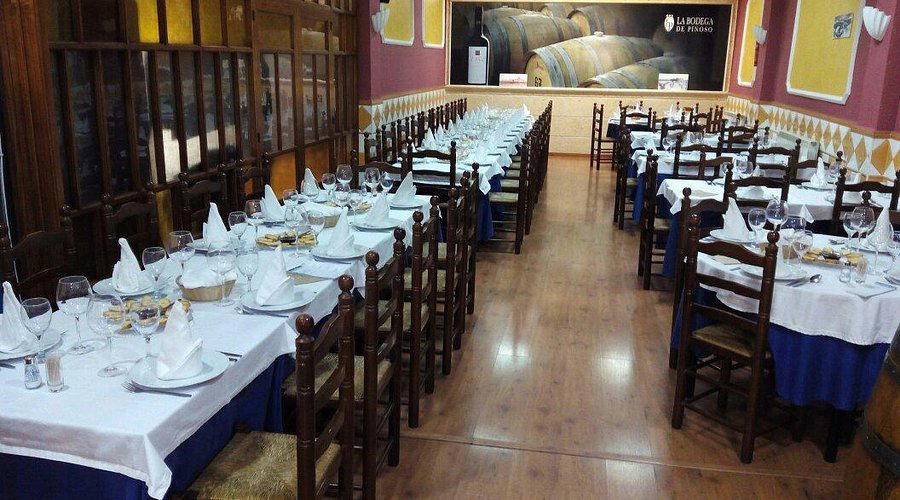
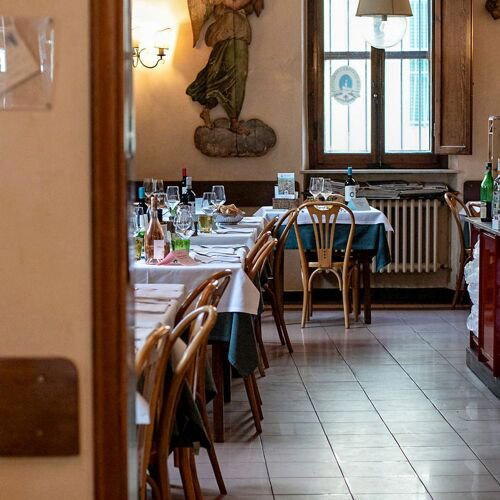
The format also puts the room itself in focus. In towns like Portogruaro, a trattoria dining room tends toward the functional rather than the theatrical, tiled floors, plain-set tables, a wine list weighted toward the local and the unpretentious. The eating is the point. For anyone arriving from the spectacular room architecture of a place like Villa Crespi in Orta San Giulio or the grand cellar theatrics of Enoteca Pinchiorri in Florence, the register is deliberately lower. That calibration is intentional, not a deficit.
Portogruaro as a Dining Stop
For travellers moving between Venice and Trieste along the A4, or those routing north toward the Friulian wine zones of Collio and Friuli Colli Orientali, Portogruaro functions as a logical lunch stop rather than a destination in itself. The town is on the Venezia-Trieste rail line, making it accessible without a car, and the centre is compact enough to cover on foot in an hour. The market square and the Gothic town hall give the place a dignity that distinguishes it from the more generic towns of the Veneto plain.
That position, between two regions with strong food identities, means the town catches a cross-current of culinary influence that a trattoria here can work with. The wine context shifts noticeably this far east: local pours tend toward Friulian whites, Ribolla Gialla, Friulano, and Pinot Grigio of the mineral northeastern type, rather than the Soave and Valpolicella that dominate tables further west in the Veneto. For a broader picture of what to eat across the town, our full Portogruaro restaurants guide covers the options in detail.
Italy's fine dining circuit produces some of the world's most technically accomplished cooking. Enrico Bartolini in Milan, La Pergola in Rome, Reale in Castel di Sangro, Da Vittorio in Brusaporto, and Casa Perbellini 12 Apostoli in Verona represent one version of what Italian restaurants can be. But the trattoria tradition is not a lesser version of that ambition. It is a parallel one, with different values and a different relationship to the people it feeds. Internationally, the contrast finds parallels in the gap between a place like Le Bernardin in New York City and a neighbourhood fish counter, or Atomix in New York City and a family Korean restaurant. The formats are not in competition. They answer different questions. Equally, the mountain-rooted sourcing philosophy visible at Atelier Moessmer Norbert Niederkofler in Brunico or the coastal focus at Gambero Rosso in Marina di Gioiosa Ionica each reflect regional ingredient logic at a different scale of ambition, but the same underlying principle: cook what is close, cook it well, cook it consistently.
Planning Your Visit
Trattoria Venezia is located at Viale Venezia 10, 30026 Portogruaro, in the Veneto province.
Comparison Snapshot
Comparable venues nearby, for context on price, style, and recognition.
| Venue | Cuisine | Price | Notes |
|---|---|---|---|
| Trattoria VeneziaThis venue — the venue you are viewing | Traditional Veneto-Friuli Seafood Trattoria | $$ | Not listed |
| La Taverna | Traditional Italian Trattoria with Seafood and Pizza | $$ | Cortellazzo |
| Croce del Sud | Neapolitan Pizza and Seafood | $$ | Lignano Sabbiadoro |
| Alla Risata | Traditional Italian Lagoon Seafood Trattoria | $$ | Carlino |
| Magazzino delle scope | Italian Chicheteria - Venetian Tapas | $$ | Lido di Jesolo |
| Busa alla Torre | Traditional Venetian Seafood Trattoria | $$ | Murano |
Continue exploring
More in Portogruaro
Restaurants in Portogruaro
Browse all →
Bars in Portogruaro
Browse all →
Hotels in Portogruaro
Browse all →
At a Glance
- Classic
- Rustic
- Cozy
- Casual Hangout
- Group Dining
- Family
- Standalone
- Beer Program
- Local Sourcing
- Sustainable Seafood
Current opening hours
- Monday
- 7 AM–7:30 PM
- Tuesday
- 7 AM–7:30 PM
- Wednesday
- 7 AM–7:30 PM
- Thursday
- 7 AM–7:30 PM
- Friday
- 7 AM–10 PM
- Saturday
- 7 AM–10 PM
- Sunday
- Closed
Hours can change for holidays and private events. Last verified .
Traditional family-style Italian trattoria with emphasis on regional Veneto-Friuli cuisine and warm hospitality.