On the Danforth, Toronto's longstanding Italian corridor, Trattoria Di Parma occupies a position that speaks to how neighbourhood Italian has evolved in the city: less red-sauce nostalgia, more regional fidelity. The address at 785 Danforth Ave places it within a stretch of the avenue where trattoria-format dining has deep roots, and where the competition for a credible Italian table has only sharpened over the past decade.
Pearl is the En Primeur Club membership app — saves, bookings, and concierge access live there. Same editors, same standards.
- Address
- 785 Danforth Ave, Toronto, ON M4J 1L2, Canada
- Phone
- +14164661112
- Website
- diparma.ca
- Directions
- Get directions
 Saves & bookings on Pearl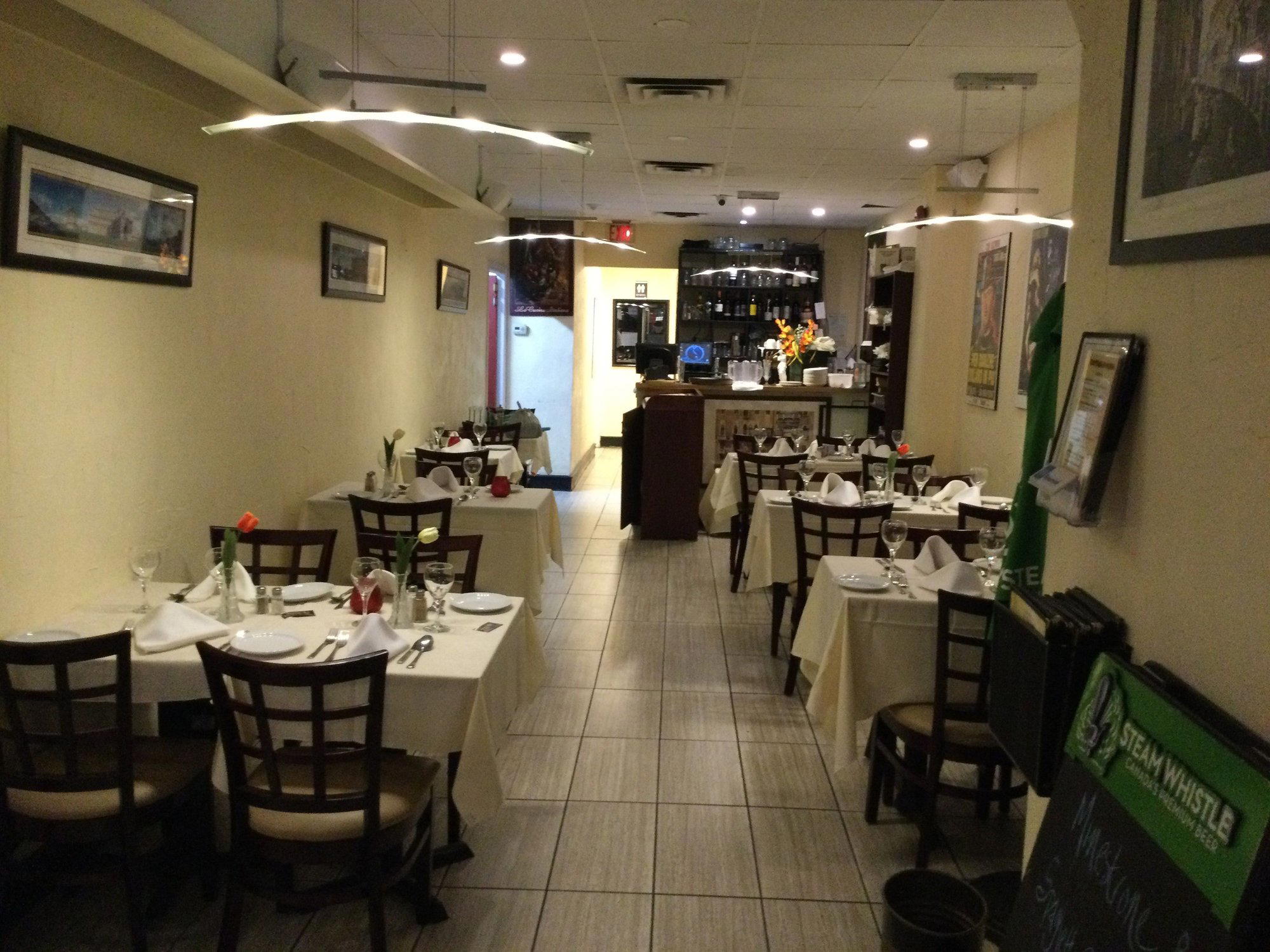
The Danforth as a Stage for Italian Dining
The stretch between Broadview and Pape has carried that identity for generations, absorbing waves of immigration from the Italian peninsula and, later, the children and grandchildren of those arrivals who kept the cooking traditions alive even as the demographic composition of the street shifted. Trattoria Di Parma, at 785 Danforth Ave, is part of that continuum. Its name alone signals a regional specificity that separates it from the broader category of Italian dining in Toronto, where Parma-rooted cooking means something precise: cured meats with protected designation, egg-rich pasta, a Northern Italian restraint that has little in common with the tomato-forward register that dominated North American Italian restaurants for most of the twentieth century.
The trattoria format itself carries editorial weight here. Across Italian cities, a trattoria occupies a defined tier: less formal than a ristorante, more kitchen-serious than an osteria, with a menu architecture that typically reflects what is available and what is traditional rather than what is fashionable. That structure, when applied faithfully in Toronto, puts a venue at a meaningful remove from the tasting-menu Italian houses that now populate the city's upper tier. For comparison, Don Alfonso 1890 and DaNico operate in a contemporary Italian register, where the Italian reference is filtered through modern technique and composed plating. The trattoria model is a different proposition: the menu is shorter, the portions are more generous, and the frame of reference is the cooking of a specific Italian region rather than a chef's interpretation of Italian cuisine at large.
What Menu Architecture Reveals
The name Parma is a menu declaration before a single dish is ordered. Emilia-Romagna, the region that claims Parma as its culinary capital, is responsible for particularly codified preparations in Italian gastronomy. Parmigiano-Reggiano, Prosciutto di Parma, and fresh pasta made with '00' flour and egg yolk are not stylistic choices in this context; they are the baseline. A restaurant that anchors itself to this geography is, in effect, committing to a menu architecture built around restraint and quality of raw material rather than complexity of technique. The signal is meaningful in a city where Italian restaurants often drift toward a pan-Italian eclecticism that serves the broadest possible audience.
In practice, Parma-style cooking in a trattoria format tends to organise around antipasto of cured and aged products, first courses of hand-rolled pasta, and secondi that lean on slow-cooked cuts and regional tradition. That sequence, when it holds, is a menu that teaches the guest about a place rather than performing Italian-ness in a general sense. The contrast is worth noting in the context of Toronto's Italian dining tier: DaNico and Don Alfonso 1890 both represent the contemporary Italian high end, where seasonal menus and chef authorship are the organising logic. The trattoria model at Trattoria Di Parma is the counter-argument: that regional fidelity and consistent execution carry more value for certain diners than seasonal reinvention.
Toronto's Italian Dining Corridor in Context
The Danforth has long occupied a distinct position relative to Toronto's other Italian dining concentrations. Little Italy on College Street developed as a more tourist-legible destination, while the Corso Italia neighbourhood on St. Clair West built its identity around Italian commercial life as much as restaurants. The Danforth's Italian character has historically been more residential and more workaday, which shaped the kinds of establishments that succeeded there. Trattorias and family-run restaurants with consistent neighbourhood clientele have fared better on this stretch than high-concept openings, which tend to migrate toward King West or Yorkville where the dining-as-event market is thicker.
That context matters for how a venue like Trattoria Di Parma is positioned and how it should be read. It is not competing against Alo, which operates in a different category of both format and ambition, nor against Sushi Masaki Saito or Aburi Hana, which belong to an entirely separate Japanese fine-dining tier. Its comparable set is the neighbourhood Italian table with genuine regional commitment: places where the cooking serves the recipe rather than the chef's resume, and where repeat visits are built on consistency rather than novelty.
And for those extending a Canadian itinerary, reference points like Tanière³ in Quebec City, AnnaLena in Vancouver, and Jérôme Ferrer - Europea in Montreal illustrate how differently the premium dining conversation develops across Canadian cities. Ontario's own regional dining options extend beyond Toronto: Restaurant Pearl Morissette in Lincoln, The Pine in Creemore, and Eigensinn Farm in Singhampton each represent a different logic of destination dining at the provincial scale. Further afield, Narval in Rimouski and Aux Anciens Canadiens in Quebec anchor French-Canadian culinary tradition in ways that have no direct parallel in Toronto's Italian trattoria model. For international comparison points on what committed regional cooking looks like at the highest tier, Le Bernardin in New York City and Atomix in New York City demonstrate how deep regional or cultural specificity can define a restaurant's identity across price tiers. Closer to Toronto, Barra Fion in Burlington and Bearspaw Golf Club in Calgary round out a picture of how hospitality and dining intersect differently across Canadian markets.
Planning Your Visit
The restaurant is located at Address: 785 Danforth Ave, Toronto, ON M4J 1L2, on the eastern stretch of the Danforth, accessible via the Pape or Donlands TTC subway stations. Dress: No formal dress code is typical for trattoria-format dining at this tier; smart casual is appropriate. Budget: Pricing is about US$45 per person.
Peers in This Market
Comparable venues nearby, for context on price, style, and recognition.
| Venue | Cuisine | Price | Notes |
|---|---|---|---|
| Trattoria Di ParmaThis venue — the venue you are viewing | Authentic Italian Trattoria | $$ | Not listed |
| Amano Italian Kitchen | Modern Italian | $$ | Financial District |
| Carolina | Neapolitan Pizzeria | $$ | Little Italy |
| 7 Numbers DANFORTH | Authentic Southern Italian Family-Style | $$ | Playter Estates |
| Cantina Mercatto | Modern Italian with Pizza and Pasta | $$ | Church-Yonge Corridor |
| Gusto 101 | Modern Southern Italian | $$ | Fashion District |
Continue exploring
More in Toronto
Restaurants in Toronto
Browse all →
Bars in Toronto
Browse all →
Hotels in Toronto
Browse all →

At a Glance
- Cozy
- Intimate
- Rustic
- Date Night
- Family
- Special Occasion
- Standalone
Current opening hours
- Monday
- 5–8 PM
- Tuesday
- 5–9 PM
- Wednesday
- 5–9 PM
- Thursday
- 5–9 PM
- Friday
- 5–9 PM
- Saturday
- 5–9 PM
- Sunday
- 5–9 PM
Hours can change for holidays and private events. Last verified .
Cozy and pleasant with lovely fireplace, warm lighting creating an intimate romantic atmosphere.