Cantina Mercatto occupies a ground-floor address on Wellington Street East, at the edge of Toronto's Financial District where the lunch crowd thins and the dinner reservation becomes a more considered act. The room sits within a broader Italian casual-dining tier that has grown more competitive as the city's appetite for regional Italian cooking has deepened. It holds its own against that pressure by anchoring its offer in familiar Italian formats delivered with consistency.
Pearl is the En Primeur Club membership app — saves, bookings, and concierge access live there. Same editors, same standards.
- Address
- 20 Wellington St E #1, Toronto, ON M5E 1C5, Canada
- Phone
- +14163040781
- Website
- mercatto.ca
- Directions
- Get directions
 Saves & bookings on Pearl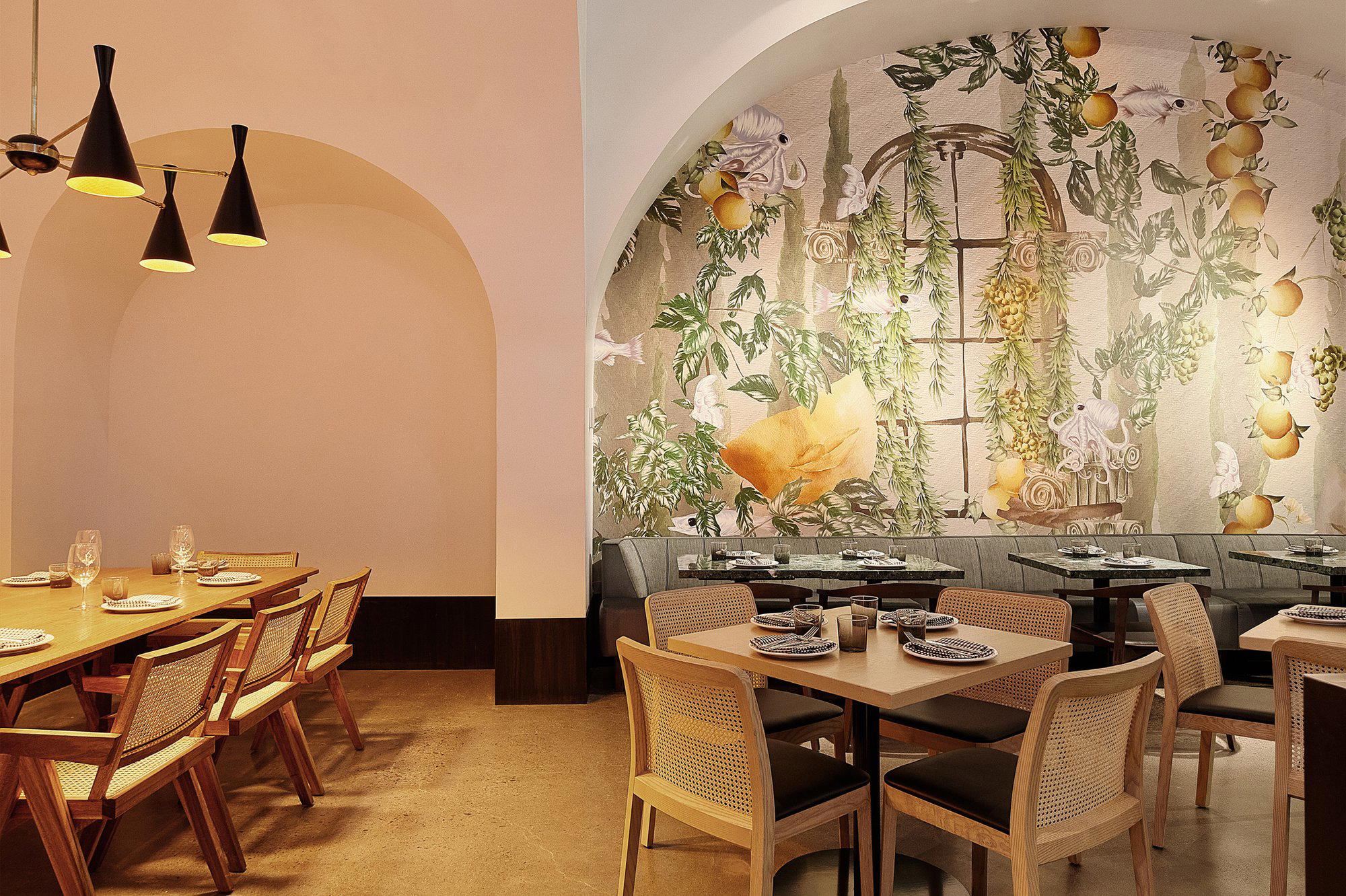
Wellington Street and the Italian Casual Tier
Toronto's Financial District has always been an awkward dining neighbourhood. By day it feeds office towers; by night it competes against King West and the waterfront for a dinner crowd that has real options. The Italian casual category sits at the centre of that tension, caught between the white-tablecloth ambition of places like Don Alfonso 1890 and the volume-driven pasta houses that treat the neighbourhood as a captive audience. Cantina Mercatto, at 20 Wellington Street East, occupies neither extreme.
The address itself matters. Wellington East runs through a corridor that connects the old financial core to St. Lawrence Market, a neighbourhood whose food culture has shaped Toronto's Italian retail and wholesale supply chains for generations. That proximity is not incidental to what the kitchen does. The Italian-Canadian relationship with the St. Lawrence area dates back well over a century, and casual trattorias that draw on that lineage operate in a different register than concept-driven Italian restaurants opening in newer parts of the city.
Where Italian Casual Sits in Toronto's Dining Picture
To understand Cantina Mercatto's position, it helps to map the broader Italian dining spectrum in Toronto, which has expanded significantly over the past decade. At the leading, Contemporary Italian with fine-dining ambitions competes at the DaNico level, where Italian techniques meet Canadian-sourced ingredients and the tasting menu format carries the evening. Below that sits a crowded middle tier of neighbourhood trattorias and enotecas. Cantina Mercatto targets the latter space: informal, accessible, wine-forward in the way that Italian restaurants trained on regional DOC and DOCG labels tend to be.
That wine-forwardness is where the cultural context becomes most legible. The cantina format, as it evolved in northern Italy, was never primarily about the food. It was a place built around the barrel and the glass, where food existed to accompany wine rather than the other way around. That hierarchy persists in the name and, presumably, in how the room is meant to be used. Sitting at a cantina-style restaurant and ordering a single glass with a plate of pasta is not a half-measure; it is the point.
For Toronto diners who have eaten in the Veneto, Lombardy, or Emilia-Romagna, this format reads as familiar rather than novel. For those who have not, it offers a reliable introduction to how Italian drinking culture organises a meal differently from the French or the North American models. Compare this to how Canadian restaurants that blend European traditions are evolving elsewhere: Tanière³ in Quebec City or Restaurant Pearl Morissette in Lincoln both treat the beverage program as integral to the dining proposition, not supplementary to it.
The Financial District Dinner Question
One of the recurring debates among Toronto regulars is whether the Financial District can support serious dinner restaurants or whether it is structurally a lunch and early-dinner neighbourhood. The Financial District empties after 7pm. Venues that survive there tend to do so by serving a specific function, whether that is a business dinner format, a pre-theatre meal, or a reliable neighbourhood option for the condo density that has grown along the waterfront.
Cantina Mercatto's Wellington East location positions it to serve more than one of those functions. The proximity to Berczy Park and the St. Lawrence neighbourhood means it draws from a residential catchment as well as the office population, which gives it more scheduling flexibility than a mid-block Financial District address would allow. This matters for how you plan a visit: arriving at 6pm on a Tuesday will produce a different room energy than arriving at the same time on a Friday, when the Financial District loosens up and the early-evening crowd lingers longer.
Italian Roots and the Question of Authenticity
The question of authenticity in Italian-Canadian restaurants is complicated by the fact that Italian-Canadian cooking is itself a distinct and historically rooted tradition, not simply a diluted version of what exists in Italy. Toronto's Italian community, concentrated historically in the College Street corridor and the inner suburbs, developed its own culinary vocabulary over several generations. The cantina format as it appears in a Canadian city will differ from its Italian referent, and that is not a failure of execution. It is what happens when a food culture travels and takes root.
Don Alfonso 1890, for instance, carries a direct lineage to a named Michelin-starred original in Sant'Agata sui Due Golfi. The restaurant makes no equivalent claim. Its frame of reference is the working cantina rather than the prestige table, and that is a legitimate and distinct position.
Across Canada, the tension between imported prestige and locally rooted informality shows up in different forms. AnnaLena in Vancouver and Jérôme Ferrer - Europea in Montreal both navigate that tension in their respective cities. In Toronto, the Italian casual format is where that negotiation happens most visibly, partly because the Italian-Canadian population is large enough to have strong opinions about what counts.
Planning Your Visit
The restaurant sits at 20 Wellington Street East, in the ground-level retail space of a commercial building at the eastern edge of the Financial District. The location is walkable from Union Station and accessible from King and Queen subway stops. Reservations: Given the neighbourhood's lunch-heavy traffic pattern, weekday lunch seatings fill earlier than you might expect; evening reservations on weekdays are generally more available than weekends, when the residential St. Lawrence crowd supplements the office population. Budget: The cantina format in Toronto's Italian casual tier typically runs in the mid-range for food, with wine selection driving the final bill upward depending on how you approach the list. Timing: If the goal is the room at its most functional, a mid-week dinner or a weekend lunch will give you the least friction and the attentive service.
If the Italian format specifically interests you, the contrast with higher-end options like Don Alfonso 1890 or DaNico is instructive. For context on what Toronto's non-Italian fine dining looks like at its most ambitious, Alo and Sushi Masaki Saito represent the city's upper tier. Aburi Hana operates in a different register again. Further afield, Eigensinn Farm in Singhampton and Fogo Island Inn Dining Room represent the far end of the Canadian destination-dining spectrum, while The Pine in Creemore, Busters Barbeque in Kenora, and Cafe Brio in Victoria illustrate how regional formats persist outside major urban centres. Internationally, Le Bernardin in New York City and Lazy Bear in San Francisco offer useful points of comparison for understanding what the top end of the North American dining spectrum looks like. And Narval in Rimouski is a reminder that strong regional cooking exists well outside the headline cities.
Compact Comparison
Comparable venues nearby, for context on price, style, and recognition.
| Venue | Cuisine | Price | Notes |
|---|---|---|---|
| Cantina MercattoThis venue — the venue you are viewing | Not listed | $$ | Not listed |
| Trio Ristorante Pizzeria | Not listed | $$ | Lawrence Park North, Authentic Italian Pizza & Pasta |
| Queen Margherita Pizza | Runnymede, Neapolitan Pizza | $$ | Not listed |
| La Bettola Di Terroni | Not listed | $$ | Garden District, Traditional Southern Italian Osteria |
| Maker Pizza Cameron | Chinatown, Modern Pizza | $$ | Not listed |
| La Piazza | Not listed | $$ | Yorkville, Casual Italian Pizza & Shareables |
Continue exploring
More in Toronto
Restaurants in Toronto
Browse all →
Bars in Toronto
Browse all →
Hotels in Toronto
Browse all →

At a Glance
- Lively
- Modern
- Trendy
- Date Night
- Group Dining
- Brunch
- Open Kitchen
- Extensive Wine List
- Craft Cocktails
- Beer Program
- Local Sourcing
Current opening hours
- Monday
- 11:30 AM–11 PM
- Tuesday
- 11:30 AM–11 PM
- Wednesday
- 11:30 AM–11 PM
- Thursday
- 11:30 AM–11 PM
- Friday
- 11:30 AM–11 PM
- Saturday
- 11:30 AM–11 PM
- Sunday
- 11:30 AM–10 PM
Hours can change for holidays and private events. Last verified .
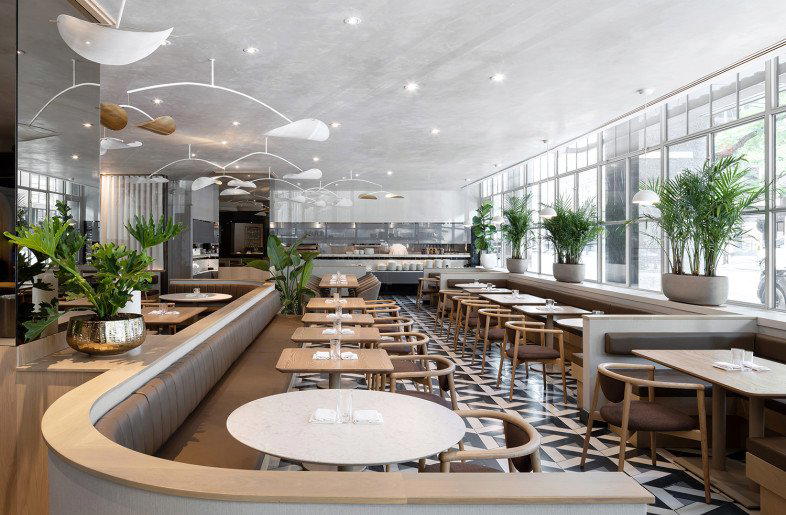
Bright and airy with a welcoming, lively atmosphere evoking St. Lawrence Market.