
Our verdict
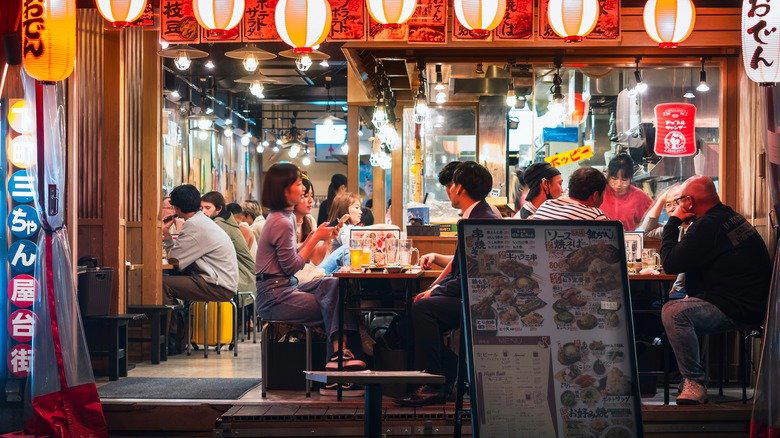
In Shinagawa's Koyama neighbourhood, Toriki has built a sustained record in Tokyo's serious yakitori tier, earning consecutive Opinionated About Dining recognition from 2023 through 2025 under chef Kunio Aihara. The format follows yakitori's counter-led tradition, skewers over binchōtan, ordered at the chef's pace, while the location places it outside the tourist circuits that dominate central Tokyo's dining conversation.

Pearl is the En Primeur Club membership app, where members save venues, book tables and use the concierge.
The menu
What to order
- Sabiyaki (rare chicken breast with wasabi)
- Tebasaki (chicken wing)
- Motsu (chicken liver)
- Hatsu (chicken heart)
- Kotamanegi (petit onion)
Yakitori Beyond the Centre: Why Shinagawa's Counter Culture Deserves Attention
Tokyo's yakitori scene divides roughly into two tiers. The first is the high-visibility belt running through Shibuya, Shinjuku, and the Ginza-adjacent streets, where well-documented names attract queues and press coverage in proportion to their address. The second tier is quieter and, for the more determined diner, often more instructive: neighbourhood counters operating in residential or semi-commercial pockets, accumulating recognition through sustained cooking rather than location advantage. Toriki, in Koyama, Shinagawa, belongs to the second group.
The address, 4 Chome-4-10 Koyama, puts Toriki south of central Tokyo, in a district that functions as a working residential area rather than a dining destination. That positioning is part of what makes the restaurant's upward trajectory on Opinionated About Dining's Japan rankings legible as a signal of quality rather than visibility: the restaurant moved from a Highly Recommended citation in 2023 to a ranked position at #184 in 2024, then shifted to #252 in 2025 as the list's scope expanded and competition around it intensified. The trajectory is meaningful, consistent presence on a credentialed list over three consecutive years points to something durable in the kitchen, not a single strong season.
What Yakitori at This Level Actually Means
To understand where Toriki sits, it helps to understand how Tokyo's yakitori tradition has developed. The format is, on its surface, direct: chicken, portioned into specific cuts, skewered and cooked over binchōtan charcoal, seasoned with tare or salt. What separates an ordinary yakitori counter from one earning sustained critical recognition is the execution of that simplicity, sourcing quality of the bird, control of the charcoal, the sequencing of cuts, and the discipline to let the ingredient do the work rather than obscure it with heavy flavouring.
At the more serious counters, the omakase or semi-omakase format prevails: the chef sequences the skewers in a logic that builds across the meal, moving from lighter preparations toward richer cuts, managing fat and char and seasoning as a composed progression rather than an à la carte selection. This is the tradition that names like Yakitori Omino and Asagaya BIRD LAND operate within. Toriki, under Kunio Aihara, competes in that same critical conversation, even if its Shinagawa address keeps it below the tourist radar of more central venues.
The Evolution of Recognition
The shift in Toriki's OAD ranking between 2024 and 2025 is worth examining as context rather than concern. Opinionated About Dining recalibrates its Japan list annually, and movement within the ranked tier often reflects changes in the wider pool of restaurants being assessed as much as changes in the restaurant itself. A drop from #184 to #252 in a single year, while remaining on a list of Japan's most critically attended restaurants, is not a sign of decline. It is a sign of a list that has grown more competitive at the leading, and of a restaurant that has held its position within that competition across three years of evaluation.
What the consecutive appearances do confirm is that Aihara's kitchen has not peaked and faded. The 2023 Highly Recommended, the 2024 ranked entry, and the 2025 continuation represent a more durable arc than single-year appearances that many respected counters achieve and fail to sustain. In a category where reputation is built on incremental trust, that consistency carries weight.
How Toriki Fits Tokyo's Broader Dining Picture
Tokyo runs a deep bench of yakitori talent. Visitors focused on the OAD or Michelin universe often prioritise kaiseki counters like 124. KAGURAZAKA or Aria di Takubo, or the sushi tier represented by names like Harutaka, and miss the depth of the yakitori conversation entirely. That omission is worth correcting. Yakitori at the serious level is not a cheaper or lesser substitute for omakase dining, it is a different discipline, one that demands as much technical precision from the cook and as much attention from the diner.
Toriki occupies a position in that discipline that is hard to replicate from a hotel concierge list. It is not in a neighbourhood where tourists arrive by accident. Getting there from central Tokyo, Shinagawa Station is among the major shinkansen hubs, and Koyama is accessible from there, requires a deliberate choice, which is itself part of what makes the experience coherent. The restaurant is open Monday through Saturday from 5:30 pm (5 pm on Saturdays), with last entry accommodating the late Tokyo dinner hour up to midnight; it is closed Sundays. Booking in advance is advisable for any OAD-ranked counter in this city, and Toriki is not an exception to that rule.
For travellers building a Tokyo itinerary that reaches beyond the predictable, pairing a yakitori counter in this tier with a visit to a cutting-edge counter like Aramaki produces a more honest picture of how the city actually eats at a serious level. The full range of what Tokyo offers across restaurant formats is mapped in our full Tokyo restaurants guide.
Yakitori as a Broader Japan Conversation
Yakitori's critical recognition extends beyond Tokyo. In Osaka, Ichimatsu operates within a related tradition, and in Kyoto, Torisaki represents the form within a city better known for kaiseki. Dining itineraries that follow the Tokaido corridor, Tokyo to Osaka, with stops including Kyoto and Nara, benefit from treating yakitori as a thread running through multiple cities rather than a single destination category. Other notable restaurants along that route include HAJIME in Osaka, Gion Sasaki in Kyoto, and akordu in Nara.
For those extending further, Goh in Fukuoka, 1000 in Yokohama, and 6 in Okinawa offer anchors in cities where the dining culture shifts meaningfully from Tokyo's register.
Planning beyond restaurants: our full Tokyo hotels guide, bars guide, wineries guide, and experiences guide cover the rest of the city's premium offer.
Frequently asked questions
What should I eat at Toriki?
Cuisine Lens
| Venue | Cuisine | Price | Awards | Notes |
|---|---|---|---|---|
| TorikiThis venue (the venue you are viewing) | Michelin-Starred Yakitori Omakase | $50–100 | Not listed | Not listed |
| Harutaka | Edo-Style Omakase Sushi | $200–300 | 3 Michelin Stars · World's 50 Best #76 | Sushi |
| RyuGin | Modern Kaiseki | $500+ | 3 Michelin Stars · World's 50 Best #41 | Kaiseki, Japanese |
| L'Effervescence | Modern French with Japanese Influences | $200–300 | 3 Michelin Stars · World's 50 Best #69 | French |
| HOMMAGE | Modern French with Japanese Influences | $150–200 | 2 Michelin Stars · World's 50 Best #78 | Innovtive French, French |
| MAZ | Innovative Peruvian-Japanese Fusion | $150–200 | 2 Michelin Stars · World's 50 Best #28 | Innovative |
Recognition history
Dated appearances from independent guides and award organizations, with the underlying list record or original source where available.
Opinionated About Dining Top Restaurants in Japan Recommended
Opinionated About Dining
Full recognition history (4 entries)
Opinionated About Dining Top Restaurants in Japan Ranked #252
Opinionated About Dining
Opinionated About Dining Top Restaurants in Japan Ranked #184
Opinionated About Dining
Opinionated About Dining Top Restaurants in Japan Highly Recommended
Opinionated About Dining
Continue exploring
More in Tokyo
Restaurants in Tokyo
All restaurants in Tokyo →



Bars in Tokyo
All bars in Tokyo →



Details
- Intimate
- Classic
- Well Known
- Special Occasion
- Date Night
- Celebration
- Chefs Counter
- Open Kitchen
- Local Sourcing
- Omakase
- Set Menu
- A La Carte
- Sake
- Allergy Accommodating
Current opening hours
- Monday
- 2–4 PM
- Tuesday
- 2–4 PM
- Wednesday
- 2–4 PM
- Thursday
- 2–4 PM
- Friday
- 2–4 PM
- Saturday
- 2–4 PM
- Sunday
- 2–4 PM
Hours can change for holidays and private events. Hours as of .
Intimate counter-style setting with an open kitchen where diners watch the chef work the charcoal grill with a hand fan; warm, family-owned atmosphere with authentic Japanese simplicity and positive energy.