
Tonkatsu 16 brings Hiroshima’s pork-cutlet culture into a compact counter format, with six seats and recognition on the Tabelog 100 Tonkatsu list for 2026. The appeal is not ceremony for its own sake, but focus: a narrow category, a small room, and pricing that sits above casual okonomiyaki but below the city’s fuller tasting-menu tier.
Pearl is the En Primeur Club membership app — saves, bookings, and concierge access live there. Same editors, same standards.
- Address
- Japan, 〒730-0028 Hiroshima, Naka Ward, Nagarekawacho, 5−19 カサブランカビル 1F
- Phone
- +81 50-3700-2252
- Website
- instagram.com
 Saves & bookings on Pearl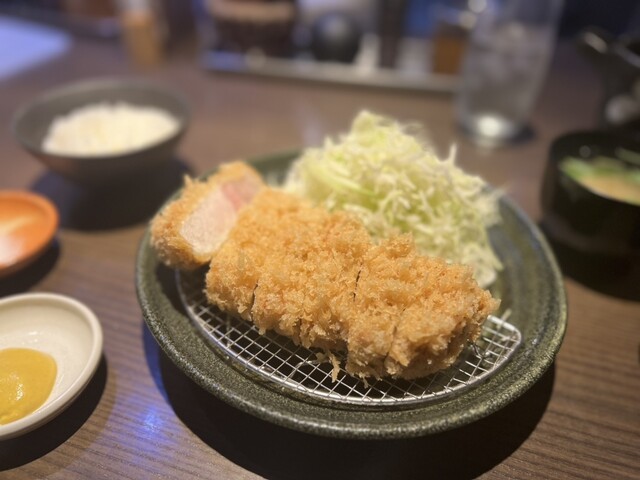
Nagarekawacho is not a quiet stage set for dinner. The district works at street level: stacked signs above doorways, compact rooms behind ground-floor glass, and restaurants suited to decisions made close to mealtime. In that setting, tonkatsu has clarity. It is not a long tasting menu or a display of regional breadth; it tests sourcing, frying discipline, rice, cabbage, sauce, and timing. Tonkatsu 16 belongs to that exacting category, where a pork cutlet succeeds or fails in minutes, not courses.
Hiroshima’s visitor dining map is often pulled toward okonomiyaki, oysters, and set-piece meals around the Peace Memorial Park corridor. Tonkatsu stays in a more local register, less symbolic but highly revealing. A cutlet counter asks a different question from the city’s griddle houses: how much precision can go into a dish that looks simple from across the room? The answer depends on pork selection, thickness, resting, oil management, and crust that protects rather than smothers the meat. That is why a focused tonkatsu address can matter as much as a broader Japanese restaurant when reading the city’s everyday dining culture.
A six-seat counter turns pork sourcing into the main event
The format is the point. Six counter seats make tonkatsu feel less like a default lunch than a single-subject craft. In Japan, the category has moved far beyond the old image of a quick fried cutlet set; stronger operators now compete on pork breed, fat quality, breading texture, and control of residual heat after frying. Tonkatsu 16’s selection for Tabelog 100 Tonkatsu in 2026 places it in that national conversation, not just Hiroshima’s casual dining circuit.
Ingredient sourcing matters because tonkatsu has little room to hide. Sushi can lean on sequence, tempura on a changing basket of vegetables and seafood, kaiseki on progression. Pork cutlet is more exposed. Meat quality, pre-fryer handling, and the balance between lean and fat decide whether the dish reads heavy or clean. The compact counter-only setup supports that focus by limiting throughput and attention to a small number of plates, not a broad menu engineered for volume.
Price defines the editorial position. Lunch sits in the JPY 2,000 to JPY 2,999 bracket, while dinner is JPY 3,000 to JPY 3,999. That puts the restaurant above Hiroshima’s famous okonomiyaki counters such as Okonomiyaki Koshida Honten and Yagenbori Hassho, both in a lower casual range, but well below more elaborate dinner addresses such as Bishu Bikou Hamai. For travelers, this is a specialist spend, not a splurge meal, and its value depends on treating pork cutlet as craft rather than convenience.
Where it fits in Hiroshima's dining map
Hiroshima rewards diners who separate regional obligation from actual appetite. Okonomiyaki carries civic identity, oysters dominate coastal shorthand, and bakeries and sweets have loyal circuits, from ANDERSEN to Butter Cake no Nagasaki Do. Tonkatsu occupies a quieter lane: familiar across Japan, but highly dependent on individual execution. That makes Tonkatsu 16 a useful counterweight to the obvious Hiroshima meal plan.
The city’s higher-end dining stretches in several directions. Akai (Creative Cuisine) offers a contemporary, chef-led reading of Hiroshima ingredients, while CHILAN and other small-format restaurants give the city a more intimate register than its tourist reputation suggests. Against that field, a tonkatsu counter is narrower but not lesser. Its discipline is reduction: one cuisine type, counter seating, no private rooms, and service suited to solo diners as much as pairs.
The Tabelog score of 3.67 is a useful signal, especially in a category where national recognition is harder to earn outside Tokyo and Osaka’s denser restaurant ecosystems. The 2026 Tabelog 100 Tonkatsu listing does not make the meal a luxury event; it validates the restaurant’s place among Japanese specialists in a category built on repetition and small differences. For travelers using our full Hiroshima restaurants guide, this address rounds out an itinerary with craft depth rather than another regional headline.
How to read the meal before committing a slot
Decision is mainly about format. A six-seat counter creates intimacy but limits flexibility. Reservations are available, and the compact room makes planning wiser than wandering, especially around museum visits, hotel check-in, or an evening in Nagarekawacho. The restaurant is non-smoking, parking is unavailable, and payment skews local: credit cards and electronic money are not accepted, while PayPay is accepted. Take-out is listed, though the stronger case is the counter experience, where frying and serving rhythm are part of the value.
There is no need to force this meal into a grand itinerary. It works as a precise insertion: focused lunch before a more expansive dinner, or restrained dinner after a longer course menu the previous night. Pairing it with the city is easy. Travelers can keep the restaurant as the food anchor, then use our full Hiroshima hotels guide, our full Hiroshima bars guide, our full Hiroshima wineries guide, and our full Hiroshima experiences guide to shape the rest of the stay.
For readers comparing Japanese specialists beyond Hiroshima, the parallel is not cuisine similarity but commitment to a narrow lane. A focused beef format such as -Grilled beef Sukiyaki- KAMAKURA TANUKIAN 鎌倉 たぬき庵 in Kamakura, a tuna-and-charcoal address like. 鮪と炭火焼き うお炭 秋葉原店 in Tokyo, or a tightly framed casual shop such as Onigiri Time in Pasadena show the same editorial lesson: the smaller the promise, the more execution matters. The same applies across.cafe in Osaka.know in Kumamoto, (Shoku) Vietnam in Kawasaki, [Curry Senmon Ten] Maruyama Kyoju. in Sapporo, and Jōdo Saké Bar in Los Angeles. The restaurant deserves attention because it gives Hiroshima travelers a compact, pork-led reading of Japanese dining craft, with enough recognition and format discipline to justify making room for it.
Side-by-Side Snapshot
Nearby venues at a similar price tier for orientation.
| Venue | Cuisine | Price | Notes |
|---|---|---|---|
| Tonkatsu 16This venue — the venue you are viewing | Tonkatsu | $$ | Not listed |
| Tsukunejima | Traditional Japanese Tempura | $$ | Naka |
| Denko Sekka | Hiroshima-Style Okonomiyaki | $$ | Minami-ku |
| Non Non | Hiroshima Okonomiyaki | $$ | Minami |
| Bishu Bikou Hamai | Traditional Japanese Izakaya | $$ | Naka |
| Shintenchi Micchan | Hiroshima-style okonomiyaki | $ | Naka |
Recognition history
Dated appearances from independent guides and award organizations, with the underlying list record or original source where available.
Tabelog 100 #70 · No. 70
Tabelog · Tabelog 100 - Tonkatsu - 2026
Continue exploring
More in Hiroshima
Restaurants in Hiroshima
Browse all →
Bars in Hiroshima
Browse all →
At a Glance
- Cozy
- Classic
- Solo
- Casual Hangout
- Standalone
- Beer Program
Current opening hours
- Monday
- Closed
- Tuesday
- Closed
- Wednesday
- 11:30 AM–2 PM, 5:30–8 PM
- Thursday
- 11:30 AM–2 PM, 5:30–8 PM
- Friday
- 11:30 AM–2 PM, 5:30–8 PM
- Saturday
- 11:30 AM–2 PM, 5:30–8 PM
- Sunday
- 11:30 AM–2 PM, 5:30–8 PM
Hours can change for holidays and private events. Last verified .
Small, focused, and low-key counter dining atmosphere with a quiet, intimate feel.