
Non Non sits in Hiroshima’s okonomiyaki tradition rather than the city’s fine-dining lane: compact, griddle-led, and recognised in Tabelog 100 - Okonomiyaki - 2025. Expect a modest local price tier, counter and tatami seating, and a format that makes sense for solo diners, families, or small groups interested in Hiroshima’s defining everyday dish.
Pearl is the En Primeur Club membership app — saves, bookings, and concierge access live there. Same editors, same standards.
- Address
- Japan, 〒732-0814 Hiroshima, Minami Ward, Danbaraminami, 2 Chome−12−5 のんのん
- Phone
- +81 82-909-9330
- Website
- s.tabelog.com
 Saves & bookings on Pearl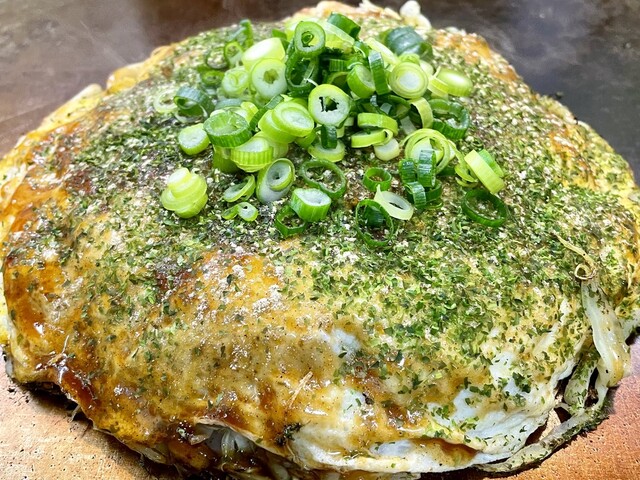
Approaching a Hiroshima okonomiyaki shop, the first signal is usually not décor but rhythm: metal spatulas working against the hotplate, cabbage collapsing under heat, noodles folded into the city’s layered style. Non Non belongs to that register. It is not trying to translate Hiroshima food culture into tasting-menu language; it sits inside the local grammar of griddle, counter, tatami room, and regulars who understand that okonomiyaki here is not a snack but a civic food form.
Hiroshima’s version carries a different logic from the mixed-batter style associated with Osaka. The structure matters: batter, cabbage, pork, noodles, egg, and sauce are built in layers, so the cook’s control of heat and compression determines the result. That makes the counter more than a seat; it is the working theatre of the dish. In a city where okonomiyaki can be quick lunch, family dinner, late-weekend habit, and tourist rite, the better shops are judged less by luxury cues than by repetition, balance, and how confidently they handle volume without losing the architecture of the pancake.
Hiroshima okonomiyaki, judged by repetition rather than ceremony
The useful way to read Non Non is through the category it has entered: Tabelog 100 - Okonomiyaki - 2025, with previous selections listed for 2024, 2023, 2022, and 2018. For a casual Hiroshima okonomiyaki address, that is a more relevant signal than imported fine-dining markers. It places the shop within a national conversation about a narrow specialty, where the benchmarks are consistency, local attachment, and execution of a dish that many visitors underestimate because it looks familiar before it is understood.
The room’s format reinforces that point. A 20-seat layout, split between counter seating and a tatami area, keeps the experience close to the grill while leaving space for families and small groups. That duality is typical of Hiroshima’s okonomiyaki culture: technically focused enough to reward watching the cook, informal enough to remain part of ordinary neighborhood life. The shop also works across okonomiyaki and teppanyaki, a pairing that makes sense in Hiroshima, where the hotplate is both tool and social surface.
Within Hiroshima’s casual dining spectrum, Non Non occupies a value-driven lane rather than a premium-night-out bracket. Comparison helps: Teppanyaki to Okonomiyaki Mishimaya and Horumon Ryori Senmonjo Toneya sit in a similar modest spend band, Soba Kiri Gin points to another everyday craft tradition, while Hatsu Chan signals how quickly a griddle-led or meat-focused evening can move into a higher dinner bracket. Okonomiyaki Hirano, at an even lower listed spend level, shows the opposite end of the city’s democratic scale. The point is not hierarchy; it is that Hiroshima’s serious casual food culture can be inexpensive without being careless.
The griddle as Hiroshima's everyday counterculture
Okonomiyaki in Hiroshima does not need theatrical reinvention. Its cultural weight comes from being repeatable, affordable, and specific to place. The city’s better shops tend to express that through small operational choices rather than grand narratives: counter seats for solo diners, tatami space for groups, take-out for regulars, and a drinks list that can stretch from sake and shochu to wine and cocktails without changing the fundamental role of the meal. The restaurant’s stated use of domestic pork and vegetables, and its avoidance of scientific seasonings, gives the cooking a clear ingredient position without turning the room into a manifesto.
That restraint is part of why Hiroshima dining rewards travelers who leave room between destination meals. A day might move from creative cuisine at Akai (Creative Cuisine) to old-city café and bakery culture at ANDERSEN, then into sake-led dining at Bishu Bikou Hamai or sweets at Butter Cake no Nagasaki Do. CHILAN shows another contemporary strand. Okonomiyaki adds the city’s essential middle register: food with technique, but no need for ceremony.
For broader planning, Our full Hiroshima restaurants guide is the natural starting point, especially if the itinerary is balancing local specialties with higher-format dining. The city also benefits from cross-category planning: Our full Hiroshima hotels guide, Our full Hiroshima bars guide, Our full Hiroshima wineries guide, and Our full Hiroshima experiences guide help place dinner within the wider trip rather than treating each meal as an isolated reservation.
How to position it in a Japan dining itinerary
For travelers moving through Japan, the restaurant belongs with regional specialists rather than destination dining rooms. That distinction matters. A Hiroshima okonomiyaki stop teaches something different from grilled beef sukiyaki at -Grilled beef Sukiyaki- KAMAKURA TANUKIAN 鎌倉 たぬき庵 in Kamakura, tuna and charcoal cooking at. 鮪と炭火焼き うお炭 秋葉原店 in Tokyo, café culture at.cafe in Osaka, or contemporary dining at.know in Kumamoto. It is closer in spirit to the kind of specific, place-bound eating that makes a route through Japan coherent.
That route can stretch beyond Japanese cooking as well: (Shoku) Vietnam in Kawasaki and [Curry Senmon Ten] Maruyama Kyoju. in Sapporo show how regional dining lists are often strongest when they include narrow specialists. Across the Pacific, Jōdo Saké Bar in Los Angeles and Onigiri Time in Pasadena underline the same lesson in diaspora form: the format is part of the meaning. In Hiroshima, the hotplate is the format. The restaurant is worth reading through that lens, as a compact expression of the city’s everyday food identity rather than a venue chasing a luxury script.
Booking and Cost Snapshot
Nearby venues at a similar price tier for orientation.
| Venue | Cuisine | Price | Notes |
|---|---|---|---|
| Non NonThis venue — the venue you are viewing | Minami, Hiroshima Okonomiyaki | $$ | Not listed |
| Denko Sekka | Minami-ku, Hiroshima-Style Okonomiyaki | $$ | Not listed |
| Denko Sekka (電光石火) | Not listed | $$ | Hiroshima Station area, Hiroshima-style Okonomiyaki |
| Tonkatsu 16 | Naka, Tonkatsu | $$ | Not listed |
| Okonomiyaki Hirano | Minami, Hiroshima-style okonomiyaki | $ | Not listed |
| Okonomiyaki Koshida Honten | Not listed | $ | Naka, Hiroshima-style okonomiyaki & teppanyaki |
Recognition history
Dated appearances from independent guides and award organizations, with the underlying list record or original source where available.
Tabelog 100 #5 · No. 5
Tabelog · Tabelog 100 - Okonomiyaki - 2025
Continue exploring
More in Hiroshima
Restaurants in Hiroshima
Browse all →
Bars in Hiroshima
Browse all →
At a Glance
- Cozy
- Classic
- Family
- Group Dining
- Solo
- Casual Hangout
- Standalone
- Beer Program
- Sake Program
Current opening hours
- Monday
- Closed
- Tuesday
- 11 AM–2 PM
- Wednesday
- 11 AM–2 PM
- Thursday
- 11 AM–2 PM
- Friday
- 11 AM–2 PM
- Saturday
- 11 AM–2 PM, 5–10 PM
- Sunday
- 11 AM–2 PM, 5–10 PM
Hours can change for holidays and private events. Last verified .
A local, family-friendly teppan okonomiyaki shop with a homey, traditional feel and seating that works well for both solo diners and groups.