
Shintenchi Micchan belongs to Hiroshima’s essential okonomiyaki conversation: a compact teppan house in Shintenchi with Tabelog Okonomiyaki 100 recognition in 2025 and repeat selections across recent years. The draw is cultural as much as culinary, placing the city’s postwar layered-pancake tradition in a room built for counter heat, casual groups, and quick-moving local appetite.
Pearl is the En Primeur Club membership app — saves, bookings, and concierge access live there. Same editors, same standards.
- Address
- 広島県広島市中区新天地6-12
- Phone
- +81822435935
- Website
- mitchan.co.jp
 Saves & bookings on Pearl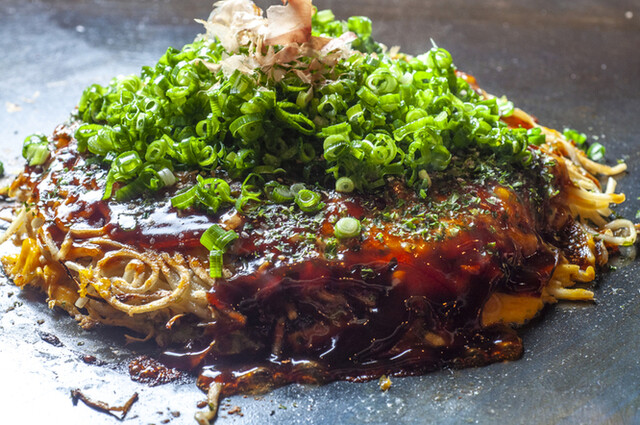
Shintenchi is the kind of central Hiroshima district where dinner announces itself before a menu does: griddles at work, sauce in the air, small groups moving between neon, department stores, and late-evening drinking streets. In that setting, okonomiyaki is not a snack category or a tourist checkbox. It is Hiroshima’s everyday civic dish, built from batter, cabbage, noodles, egg, and the discipline of a hot iron plate. Shintenchi Micchan sits inside that tradition rather than above it, which is precisely why it matters.
Hiroshima-style okonomiyaki carries a different logic from the Osaka version many travellers meet first. Osaka mixes ingredients into the batter; Hiroshima layers them, turning the griddle into a staging ground where texture and sequence matter. The city’s version emerged from the cheap, filling postwar food culture around ichisen-yoshoku, then grew into a local grammar of noodles, cabbage, sauce, and teppan timing. A good counter does not need ceremony to make the point. It needs heat, rhythm, and enough turnover for the room to feel tied to the neighbourhood rather than insulated from it.
Hiroshima okonomiyaki, treated as civic food rather than novelty
The serious end of Hiroshima dining is often discussed through tasting menus, sake-led counters, and polished hotel restaurants, but okonomiyaki explains the city with fewer words. It compresses postwar recovery, blue-collar appetite, family eating, student meals, and drinking food into one format. Recognition from Tabelog’s Okonomiyaki 100 in 2025, with earlier selections in 2024, 2023, 2022, 2019, and 2018, places Shintenchi Micchan in a documented group of specialist shops rather than in the broader pool of casual teppan addresses.
That distinction matters because okonomiyaki is a crowded field in Hiroshima. The city has low-cost counters, multi-floor okonomiyaki halls, station-area operations, and more polished teppanyaki rooms. Teppan Ryori Kaeru, for example, operates in a much higher spending bracket, while Shunrai and Bishu Bikou Hamai occupy different restaurant categories and price expectations. Shintenchi Micchan belongs to the lower-cost, high-recognition side of the map: closer to daily food culture than occasion dining, but with enough critical signal to justify planning around it.
The format is also part of the argument. Okonomiyaki and teppanyaki share the stage here, so the meal reads through the griddle rather than through a multi-course structure. Counter seating gives the clearest view of the work, while table seating suits the friend-and-family rhythm associated with the cuisine. This is not the kind of Hiroshima meal that asks for hushed attention. It rewards diners who understand that the city’s food identity is often loudest in compact rooms built around iron, repetition, and local habit.
The Shintenchi setting keeps the meal in the city's mainstream
Location changes how okonomiyaki is read. In Shintenchi, close to central shopping, tram movement, and nightlife, the dish feels less like a destination detour and more like part of the city’s working circulation. The address places it within the commercial core rather than in a quiet residential pocket, which suits the cuisine’s role: quick enough for lunch, substantial enough for dinner, and informal enough for mixed-generation tables.
The room’s scale reinforces that reading. With 25 seats, including 8 at the counter, the experience is materially different from a large-format hall. Smaller okonomiyaki rooms tend to sharpen the relationship between cook, griddle, and diner; the performance is not theatrical, but it is visible. For travellers trying to understand Hiroshima through food, that visibility is useful. It shows why the city’s version is constructed rather than mixed, and why timing can be as important as ingredients.
There is a practical editorial point here: not every acclaimed regional dish needs luxury framing. Hiroshima’s dining range includes creative cuisine at Akai, long-running European-influenced bakery culture at ANDERSEN, and sake-aware local dining at Bishu Bikou Hamai. Okonomiyaki sits beside those categories as a different kind of authority: less formal, more communal, and harder to separate from the city’s postwar memory.
For a broader Hiroshima itinerary, pair this kind of meal with a survey of the city rather than treating it as an isolated stop. Our full Hiroshima restaurants guide maps the local dining spread, while our full Hiroshima hotels guide, our full Hiroshima bars guide, our full Hiroshima wineries guide, and our full Hiroshima experiences guide place the meal within a wider travel plan.
How to read it against Japan's casual-specialist dining culture
Japan is full of narrow specialists whose seriousness is easy to miss if the room looks casual. Curry counters, onigiri shops, sake bars, butter-cake stores, and okonomiyaki houses can all operate with a tighter sense of purpose than broader restaurants. Hiroshima has its own examples across categories, from Butter Cake no Nagasaki Do to CHILAN. The relevant question is not whether the setting feels grand; it is whether the format has focus, demand, and repeat recognition.
That same specialist logic appears across Japan and beyond: [Curry Senmon Ten] Maruyama Kyoju. in Sapporo narrows the lens to curry, (Shoku) Vietnam in Kawasaki builds around a defined regional category, and.cafe in Osaka shows how modest formats can become destination-specific. Abroad, Jōdo Saké Bar in Los Angeles and Onigiri Time in Pasadena translate Japanese focus into a different urban context. Even Tokyo and Kamakura entries such as. 鮪と炭火焼き うお炭 秋葉原店 in Tokyo.know in Kumamoto, and -Grilled beef Sukiyaki- KAMAKURA TANUKIAN 鎌倉 たぬき庵 in Kamakura point to the same lesson: specificity often beats breadth.
The editorial verdict is clear without turning the venue into a shrine. The restaurant is valuable because it gives Hiroshima okonomiyaki the seriousness of a specialist craft while keeping the meal in its native register: affordable, social, griddle-led, and central to the city’s food identity. For travellers who want one Hiroshima meal that explains more than it costs, this is the right category to prioritize.
Price Lens
Side-by-side context: comparable cuisine and price.
| Venue | Cuisine | Price | Notes |
|---|---|---|---|
| Shintenchi MicchanThis venue — the venue you are viewing | Naka, Hiroshima-style okonomiyaki | $ | Not listed |
| Itsukaichi Hassho | Saeki, Hiroshima-style Okonomiyaki | $ | Not listed |
| Okonomiyaki Junior | Not listed | $ | Naka, Hiroshima-style okonomiyaki & teppanyaki counter |
| Soba Kiri Gin | Minami, Traditional Japanese Soba | $ | Not listed |
| Fumi Chan Nagarekawa ten | Not listed | $ | Naka, Hiroshima-style Okonomiyaki & Teppanyaki |
| Teppanyaki to Okonomiyaki Mishimaya | Not listed | $ | Minami, Hiroshima Okonomiyaki & Teppanyaki |
Recognition history
Dated appearances from independent guides and award organizations, with the underlying list record or original source where available.
Tabelog 100 #41 · No. 41
Tabelog · Tabelog 100 - Okonomiyaki - 2025
Continue exploring
More in Hiroshima
Restaurants in Hiroshima
Browse all →
Bars in Hiroshima
Browse all →
At a Glance
- Lively
- Classic
- Well Known
- Solo
- Family
- Group Dining
- Casual Hangout
- Late Night
- Chefs Counter
- Open Kitchen
- Standalone
Busy and casual okonomiyaki shop with counter seats around a hot teppan, bright lighting, and a chatty, energetic atmosphere typical of traditional Hiroshima okonomiyaki joints.