Our verdict
Located in Naka Ward at the heart of Hiroshima's dining district, Tsukunejima sits within a city that punches well above its size in serious Japanese cuisine. The address at 3-6 Komachi places it among a tight cluster of destination restaurants where the wine program and culinary ambition align more closely with Kyoto or Osaka than a regional city. For travellers working through western Honshu, it belongs on any considered itinerary.

Pearl is the En Primeur Club membership app — saves, bookings, and concierge access live there. Same editors, same standards.
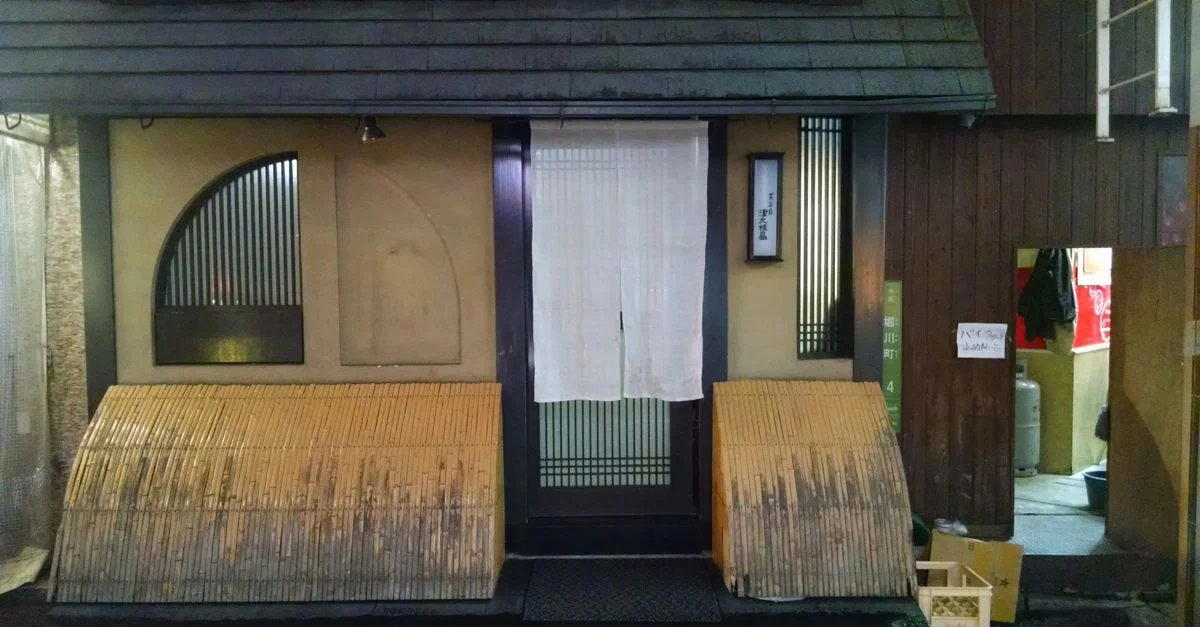
Hiroshima's Quiet Confidence at the Table
Naka Ward after dark has a particular quality that separates Hiroshima from Japan's more tourist-saturated dining cities. The streets around Komachi are narrow and lit with the kind of restrained signage that signals a serious restaurant district rather than a nightlife strip. Approaching 3-6 Komachi, where Tsukunejima occupies its address, you are already in the company of some of the most considered dining in western Honshu. This is not a neighbourhood that competes for foot traffic. It draws the kind of guest who has already decided before they arrive.
Hiroshima sits at an interesting position in Japan's culinary geography. It lacks the institutional weight of Kyoto's kaiseki tradition or the sheer density of Tokyo's Michelin concentration, yet it has produced a tier of destination restaurants that hold their own against peer venues in larger cities. The Nakashima kaiseki counter is one reference point. Chiso Sottakuito is another. Tsukunejima operates in the same upper bracket, where the competitive set is defined less by geography than by ambition and format discipline. For the broader picture of what Hiroshima's restaurant scene looks like at this level, our full Hiroshima restaurants guide maps the tier clearly.
The Wine Dimension in a Japanese Dining Context
Japan's relationship with wine at the serious restaurant level has matured considerably over the past two decades. The question is no longer whether a destination restaurant in a city like Hiroshima will carry French Burgundy or aged Bordeaux. The question is how the cellar is curated, how the sommelier reads the table, and whether the wine program has a point of view that coheres with the food rather than simply shadowing international prestige lists.
In western Japan specifically, the approach to wine at high-end restaurants has tended toward restraint and precision over volume. The same sensibility that produces a 12-course kaiseki menu built around seasonal produce from the Seto Inland Sea tends to produce a wine list that values texture and provenance over label recognition. Venues in this register typically carry producers whose work rewards the kind of attention a multi-course meal demands — wines that shift across a long evening rather than dominating it from the first pour.
Tsukunejima, at its Komachi address, sits in a city where this philosophy has real local grounding. Hiroshima Prefecture produces its own wine, and the Seto Inland Sea corridor has increasingly attracted attention from sommeliers building regionally inflected lists. Whether a given list skews toward domestic producers, French classics, or a deliberate mix is the kind of editorial detail that requires direct confirmation with the venue, but the structural tendency in Hiroshima's upper-tier dining is toward curation with a rationale rather than volume for its own sake.
This is standard protocol at this level of Japanese dining, where staff preparation for a table is often as detailed as the kitchen's mise en place.
Positioning Within the Western Honshu Circuit
Travellers building an itinerary across the Kansai-Chugoku corridor increasingly treat Hiroshima as a mandatory stop rather than an optional extension. The city's geographic logic is sound: it sits between Osaka and the western tip of Honshu, with Miyajima accessible within thirty minutes, and a bullet-train connection that makes same-day movement from Kyoto or Fukuoka feasible. At the restaurant level, this means Tsukunejima competes for the same travelling guest who might book Gion Sasaki in Kyoto or Goh in Fukuoka on the same trip.
The comparison matters because it sets expectations correctly. Hiroshima at this level is not a consolation prize for guests who couldn't secure a table in Kyoto. The ingredient supply is different — Hiroshima oysters, carp from the Ota River delta, seafood from the Inland Sea, and the culinary tradition, while drawing on the same foundations as broader Japanese cuisine, has its own local character. Restaurants in the Naka Ward cluster, including neighbours like Eizan and NAKADO, collectively constitute a dining district worth treating as a destination in its own right rather than a waypoint.
For context across Japan's wider fine dining circuit, venues like Harutaka in Tokyo, HAJIME in Osaka, and akordu in Nara each represent how regional cities are developing distinctive culinary identities rather than simply replicating the capital's template. Hiroshima follows the same logic. Internationally, the structural comparison extends to venues like Le Bernardin in New York City and Atomix in New York City, where the wine program functions as a fully integrated element of the dining format rather than an afterthought, and where the sommelier's depth of knowledge shapes the evening as materially as the kitchen's output.
Planning a Visit
The Komachi address in Naka Ward is accessible on foot from central Hiroshima, placing it within the broader dining and entertainment corridor that also contains the city's major bars and hotels. For guests combining dinner with broader exploration, our guides to Hiroshima bars, Hiroshima hotels, Hiroshima wineries, and Hiroshima experiences provide the full picture of what the city offers at the premium tier.
At serious Japanese restaurants in this district, advance reservation is the expectation rather than the exception. Same-week availability at the top end of Hiroshima's restaurant scene is rare, particularly for visitors during the spring cherry blossom window or autumn foliage season, both of which drive significant inbound travel to the Chugoku region. A Chinese dining alternative at a comparable price point in Hiroshima is MASUKI, which operates in the JPY 20,000-29,999 range and represents a different register of the city's serious dining offer.
Current hours, pricing, and booking method for Tsukunejima are best confirmed directly with the venue.
Frequently asked questions
What's the address for Tsukunejima?
Tsukunejima is located at 3-6 Komachi, Naka Ward, Hiroshima, 730-0041, Japan, Hiroshima.
How does Tsukunejima fit into a Hiroshima dining itinerary for visitors travelling the Kansai-Chugoku corridor?
Tsukunejima's location at 3-6 Komachi in Naka Ward places it within walking distance of Hiroshima's central transport links, making it a practical anchor for an evening on the Western Honshu circuit. Travellers routing through the Kansai-Chugoku corridor increasingly schedule a dedicated Hiroshima dinner stop rather than treating the city as a day-trip, and the Komachi strip supports that approach with a concentration of focused restaurants. The specific cuisine format at Tsukunejima is worth confirming in advance to sequence it correctly alongside other regional stops.
What's the must-try dish at Tsukunejima?
Given the Komachi address in Hiroshima's Naka Ward, the kitchen sits within a neighbourhood that draws from the city's strong seafood and regional produce traditions. Confirming the current menu directly with the restaurant before visiting is advisable.
Should I book Tsukunejima in advance?
For any focused dining room in Hiroshima's Naka Ward corridor, advance booking is the practical standard rather than the exception. Tsukunejima's Komachi address places it within a concentrated stretch where tables at serious restaurants fill well ahead of the weekend. check the venue's official channels to confirm current availability and reservation policy.
What's the defining dish or idea at Tsukunejima?
Without confirmed menu documentation, pinning a single signature dish would be speculative. What the Komachi, Naka Ward address does signal is proximity to Hiroshima's most active culinary corridor, where kitchens tend to anchor their identity in local catch and regional produce. The venue's specific concept is best clarified on enquiry.
Is Tsukunejima good for vegetarians?
Japanese restaurant kitchens vary considerably in how they approach plant-based or vegetarian requests, from full accommodation to limited options. Reaching out to the Komachi address in Naka Ward directly before visiting will give a clear answer on dietary flexibility.
Fast Comparison
Comparable venues nearby, for context on price, style, and recognition.
| Venue | Cuisine | Price | Awards | Notes |
|---|---|---|---|---|
| TsukunejimaThis venue (the venue you are viewing) | Traditional Japanese Tempura | $30–50 | Not listed | Not listed |
| Soraya | Japanese Standing Bar | $10–20 | Tabelog 100 #28 | Naka |
| Nukazuke Kobo nipote Misasa honten | Nukazuke-focused Yoshoku (Japanese-style Western) | $30–50 | Tabelog 100 #59 | Nishi |
| Bishu Bikou Hamai | Traditional Japanese Izakaya | $30–50 | Tabelog 100 #31 | Naka |
| Okonomiyaki Junior | Hiroshima-style okonomiyaki & teppanyaki counter | $10–20 | Tabelog 100 #100 | Naka |
| Shunrai | Teppanyaki Steak & Seafood | $50–100 | Tabelog 100 #53 | Naka |
Continue exploring
More in Hiroshima
Restaurants in Hiroshima
All restaurants in Hiroshima →
Bars in Hiroshima
All bars in Hiroshima →
Details
- Intimate
- Cozy
- Date Night
- Casual Hangout
- Open Kitchen
- Sake Program
- Local Sourcing
- Set Menu
Current opening hours
- Monday
- 6–11 PM
- Tuesday
- 6–11 PM
- Wednesday
- 6–11 PM
- Thursday
- 6–11 PM
- Friday
- 6–11 PM
- Saturday
- 6–11 PM
- Sunday
- Closed
Hours can change for holidays and private events. Last verified .
Cozy and intimate counter seating with a friendly, interactive atmosphere as guests watch the chef prepare each course.