Michelin Bib Gourmand
Our verdict
The address, 6 Jia Yu Fang, places it inside Suzhou's historic core, where the tradition of su-style noodles has held for generations. For visitors tracking the city's bowl-for-bowl noodle culture, this is a credentialled entry point.

Pearl is the En Primeur Club membership app, where members save venues, book tables and use the concierge.
The menu
What to order
- Fengzhen pork noodles
- Shrimp noodles
- Braised pork noodles
The Lane, the Bowl, the Ritual
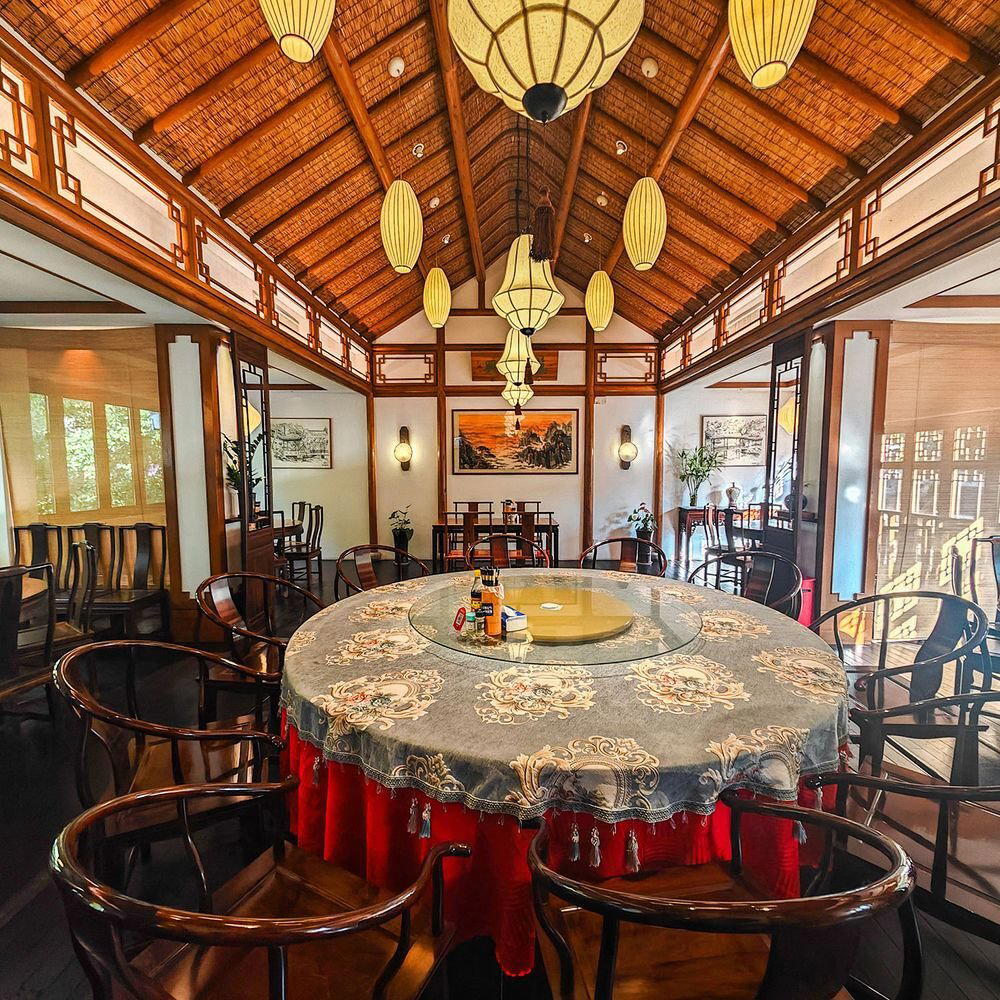
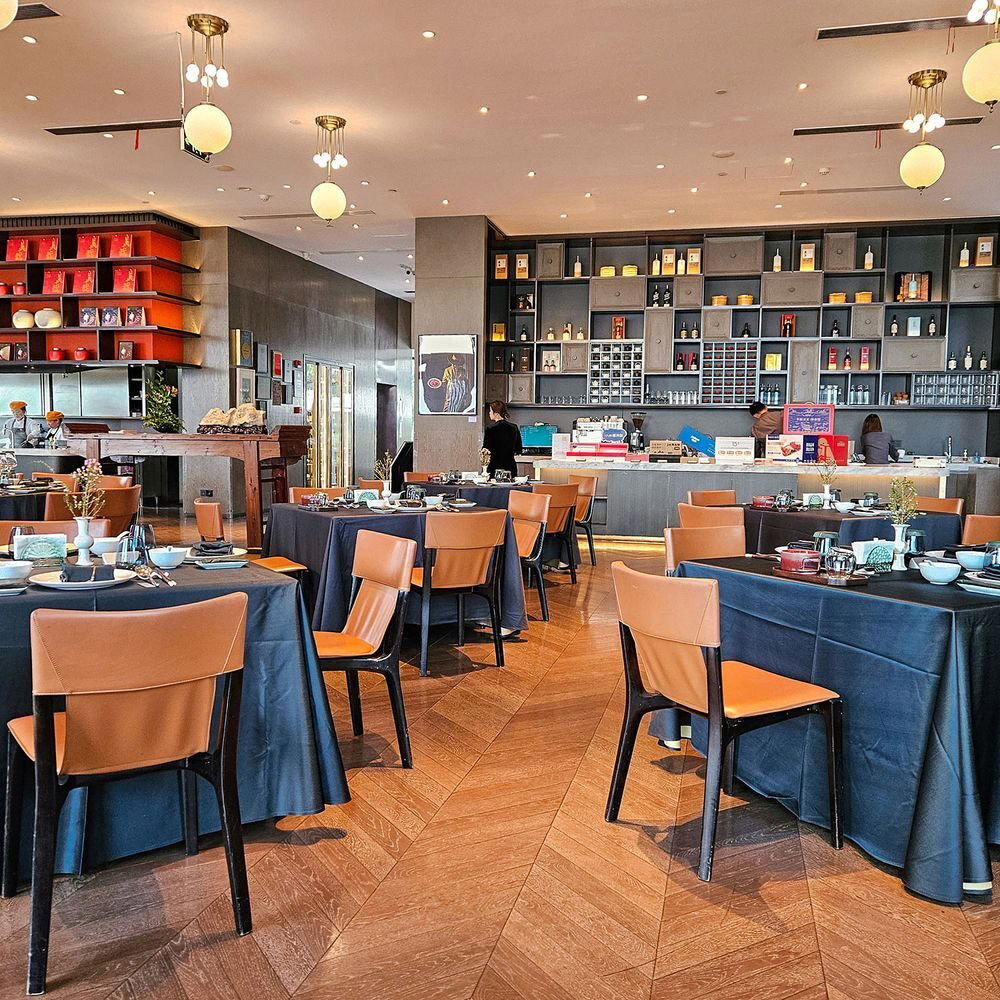
Jia Yu Fang is a short lane tucked within Suzhou's Gu Su district, the kind of address that registers on a city map as a footnote but carries real weight among locals who have been eating here across decades. The approach is unhurried, stone-paved, lined with the low residential and commercial architecture that defines Suzhou's older quarters. Before you reach the door of Tong De Xing, the smell arrives first: the faintly sweet, savoury undercurrent of simmering broth that characterises the su-style noodle tradition, a scent that is less aggressive than Sichuan-spiked broths further west and more layered than a plain bone stock. The acoustics are domestic in scale, the scrape of wooden stools, the clatter of ceramic bowls, conversation at close quarters. This is not a dining environment engineered for mood; it is one that has accumulated character through use.
That distinction matters when assessing Suzhou's noodle culture broadly. The city's noodle shops occupy a specific register within Chinese regional food: the emphasis falls on the quality of the broth base (traditionally a long-cooked pork-and-seafood stock), the texture of hand-cut wheat noodles, and the selection of toppings, braised pork belly, river shrimp, eel, rather than on spice complexity or theatrical presentation. Suzhou noodles are morning food, often consumed before 9am, and the ritual of the early queue is part of the experience in a way that evening dining rarely replicates.
Where Tong De Xing Sits in the Suzhou Noodle Tier
Suzhou has a dense cluster of noodle addresses that compete for local loyalty and increasingly for visitor attention. Within that cluster, Michelin's Bib Gourmand recognition in 2025 functions as a useful sorting signal: it identifies shops delivering what the guide considers strong quality at prices accessible to a broad audience, without the formality or price floor of a starred restaurant.
The price tier here is the lowest available in Suzhou dining, marked at a single ¥ band. That positions it alongside Yu Mian Tang and peers in the budget noodle category, well below the ¥¥¥ and ¥¥¥¥ ranges where Jiangsu cuisine restaurants like Pingjiangsong operate. The gap is not simply about cost; it reflects a different set of expectations on both sides of the counter. At Tong De Xing, the transaction is fast, the environment is functional, and the quality signal comes from the Bib Gourmand credential and local repeat custom rather than from service design or room ambiance.
Other named noodle addresses in the city worth tracking alongside this one include Gu Su Qiao (Diyi Tianmen), Su Mian Fang, Wan Tai Xing, and Wei Ji Ao Mian Guan (East Baita Road). Each holds a distinct neighbourhood position, and comparing them is part of how serious visitors build a picture of what Suzhou's noodle culture actually looks like across different kitchens and streets.
The Sensory Architecture of a Suzhou Noodle Shop
What is broadly true of Suzhou's best-regarded noodle shops at this price tier: the rooms are small, seating is communal or close-packed, and natural light varies by the hour and the lane orientation. The bowl itself is the centrepiece, not the décor, not the table setting. In the su-style tradition, the broth is poured separately or added at the table in some formats, allowing the noodle texture to hold before it loosens in liquid. The topping is chosen at the counter or from a short written menu, and the decision made in thirty seconds has more bearing on the experience than anything else in the room.
The sounds of a Suzhou noodle shop at peak morning hours carry a particular density: multiple conversations, the rhythmic sound of noodles being lifted and set back, the hiss of the kitchen behind a low partition. This is not silence, and it is not curated noise. It is the ordinary sound of a neighbourhood food institution doing what it has done for years without adjustment for visitor comfort, which, in its own way, is its most reliable quality signal.
The Broader Context: Noodles Across East China
Suzhou's noodle tradition sits within a broader East China noodle culture that runs from Shanghai through Jiangsu and into Zhejiang. Across that geography, the defining characteristics shift: Shanghai's scallion oil noodles lean dry and aromatic; Hangzhou's noodle shops, including A Bing Bao Shan Mian, carry their own regional inflections; and Taiwan's noodle culture, represented by addresses like A Kun Mian in Taichung, draws from mainland traditions while developing its own register over decades. Suzhou's version is distinguished by the prominence of river seafood toppings and the sweetness of the broth base, a reflection of the region's historical access to lake and river produce.
For visitors building a broader picture of serious Chinese regional dining in this corridor, the full spectrum runs from noodle shops at the ¥ tier up through mid-range restaurants to fine dining addresses. The EP Club guides for the wider region cover that range: Xin Rong Ji (Xinyuan South Road) in Beijing, 102 House in Shanghai, Ru Yuan in Hangzhou, Xin Rong Ji in Chengdu, Chef Tam's Seasons in Macau, and Imperial Treasure Fine Chinese Cuisine in Guangzhou each represent different points on the quality and price spectrum across the region.
Planning a Visit
Tong De Xing (Jiayu Fang) is located at 6 Jia Yu Fang, Gu Su district, Suzhou. The address falls within the historic core of the city, making it accessible on foot from the main canal areas. The ¥ price tier means the cost of a bowl represents a negligible fraction of a day's travel budget. The Bib Gourmand recognition, awarded in 2025, provides a credentialled reason to prioritise this address over the many unsigned alternatives in the immediate area.
For a complete picture of eating and drinking in Suzhou across price tiers and cuisines, see our full Suzhou restaurants guide. The city's other travel categories are covered in our Suzhou hotels guide, bars guide, wineries guide, and experiences guide.
Frequently asked questions
How would you describe the cuisine at Tong De Xing (Jiayu Fang)?
What price level is Tong De Xing (Jiayu Fang)?
Pricing at Tong De Xing (Jiayu Fang) is listed as ¥.
What distinctions does Tong De Xing (Jiayu Fang) have?
Tong De Xing (Jiayu Fang) has received recognition including: Michelin Bib Gourmand (2025).
What dish is Tong De Xing (Jiayu Fang) famous for?
Tong De Xing is a noodle specialist, and Suzhou-style noodles are the foundation of everything on the menu. The Michelin Bib Gourmand recognition in 2025 points to quality at an accessible price point, which in Suzhou's noodle culture typically means a focused, repeatable bowl rather than a rotating tasting format.
Cost and Credentials
Comparable venues nearby, for context on price, style, and recognition.
| Venue | Cuisine | Price | Awards | Notes |
|---|---|---|---|---|
| Tong De Xing (Jiayu Fang)This venue (the venue you are viewing) | Traditional Suzhou Noodles | $1–10 | Michelin Bib Gourmand | Not listed |
| Su Cheng Jia Yan (Ligongdi Road) | Modern Suzhou Cuisine | $20–30 | Michelin Bib Gourmand | Suzhou Industrial Park, Modern Suzhou Cuisine |
| Bai Sheng Ren Jia (Wuzhong) | Authentic Suzhou (Jiangsu) Cuisine | Not listed | Michelin Bib Gourmand | Wuzhong, Authentic Suzhou (Jiangsu) Cuisine |
| Wan Tai Xing | Traditional Suzhou Noodles | $10–20 | Michelin Bib Gourmand | Gusu, Traditional Suzhou Noodles |
| Lao Chen Jia | Traditional Jiangsu Cuisine | $20–30 | Michelin Bib Gourmand | Gusu, Traditional Jiangsu Cuisine |
| Ya Ba Sheng Jian (Wenjia An) | Suzhou Shengjian Bao / Dim Sum | Not listed | Michelin Bib Gourmand | Dining |
Recognition history
Dated appearances from independent guides and award organizations, with the underlying list record or original source where available.
Michelin Bib Gourmand
Michelin