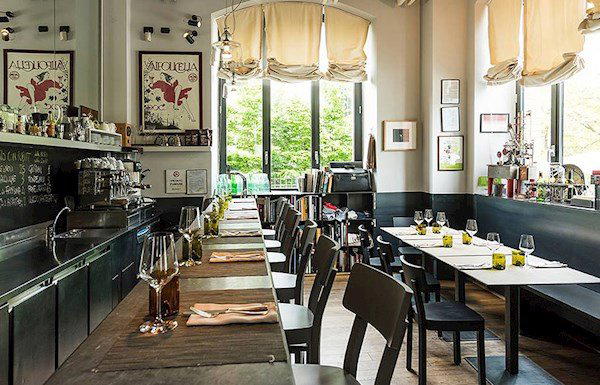
TOG Bistrot sits on Via Livigno in Milan's Zona Sempione, a neighbourhood where the city's appetite for neighbourhood-rooted dining has quietly outpaced its appetite for spectacle. The bistrot format here draws on a tradition of approachable Italian cooking that exists well outside the €€€€ tasting-menu tier dominating central Milan. For readers tracking the city's mid-register dining scene, it represents a reference point worth understanding in context.
Pearl is the En Primeur Club membership app — saves, bookings, and concierge access live there. Same editors, same standards.
- Address
- Via Livigno, 1, 20158 Milano MI, Italy
- Phone
- +39289696272
- Website
- togbistrot.it
- Directions
- Get directions
 Saves & bookings on Pearl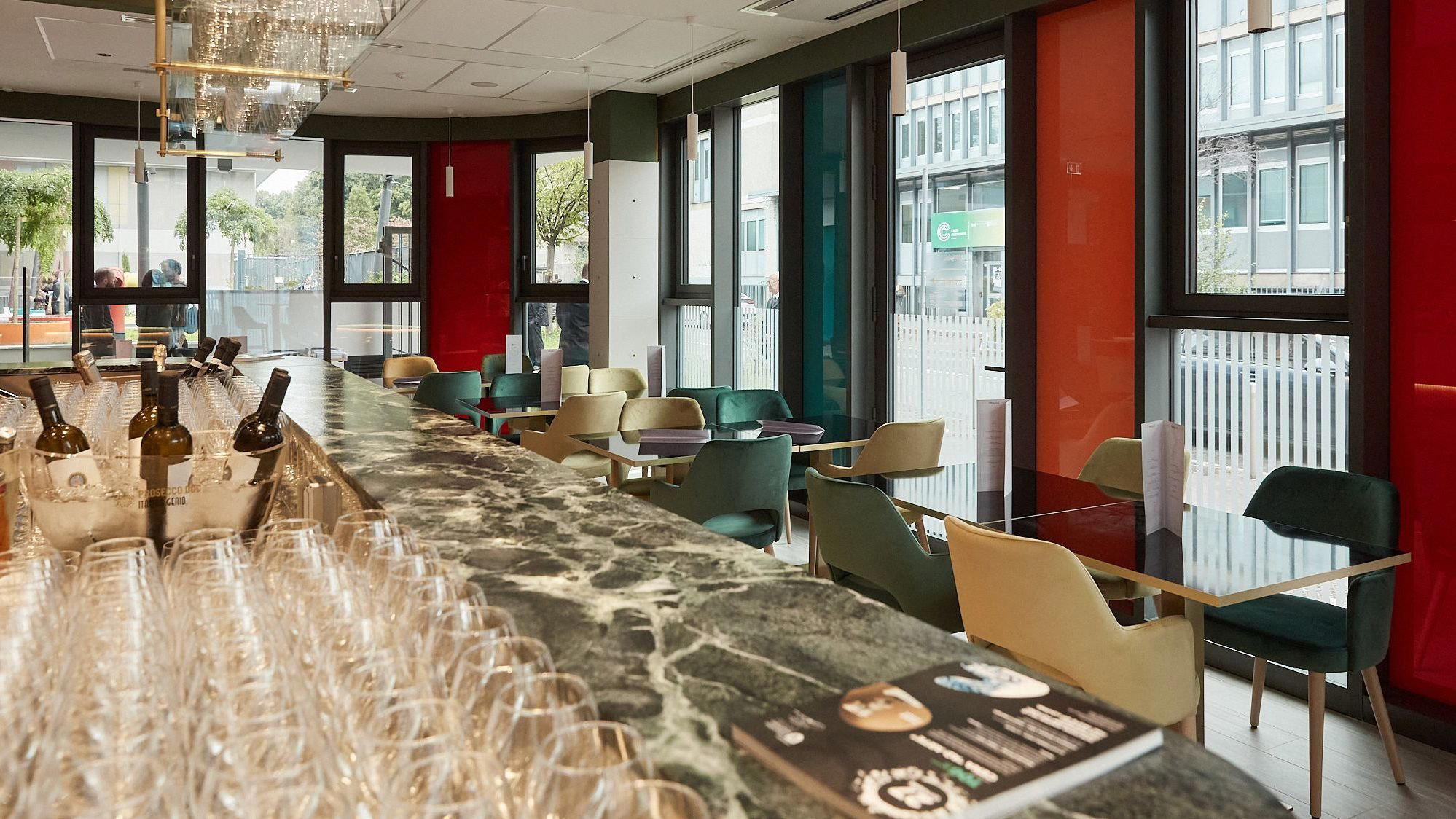
Milan's Bistrot Register: Where Neighbourhood Cooking Holds Its Ground
Milan's dining conversation tends to orbit its high-end tasting-menu circuit: the multi-Michelin counters of the centre, the creative Italian programs at addresses like Enrico Bartolini and Cracco in Galleria, or the modern Italian precision of Andrea Aprea and Seta. That conversation is legitimate but incomplete. Beneath the Michelin tier, and largely invisible to international food media, Milan sustains a dense layer of bistrot-format restaurants where Italian cooking traditions are reproduced without ceremony and without the pricing architecture of a destination meal. TOG Bistrot on Via Livigno operates inside that layer.
The address itself tells part of the story. Via Livigno falls within the Zona Sempione district, north of the Castello Sforzesco and well clear of the Brera and Porta Venezia postcodes that attract most visiting diners. Zona Sempione is a mixed residential and light-commercial neighbourhood whose restaurants serve a local clientele first and curious outsiders second. That ordering matters: it shapes menus, pricing assumptions, and the general register of a meal. Dining here is not a performance directed at tourists or expense accounts. It is, in the Italian sense, simply eating.
The Cultural Logic of the Italian Bistrot
The bistrot label is worth examining in Italian context, because it does not map cleanly onto its French equivalent. In Milan, a bistrot typically signals a format somewhere between a traditional trattoria and a more contemporary casual restaurant: the trattoria's commitment to recognisable regional dishes, combined with a slightly looser, more edited approach to presentation and sourcing. It is a format that became more common across northern Italian cities during the 2010s, as a generation of cooks trained in professional kitchens chose to open smaller, less formal spaces rather than compete directly with the established fine-dining tier.
That context is important for understanding where TOG Bistrot sits relative to the broader Italian dining canon. Italy's highest-recognition restaurants, addresses like Osteria Francescana in Modena, Le Calandre in Rubano, or Piazza Duomo in Alba, operate at a level of conceptual and technical ambition that requires significant investment from both kitchen and guest. The bistrot format explicitly rejects that contract. It asks for less of the diner's time, money, and attention, and returns something different: familiarity, directness, and cooking that connects to daily Italian eating rather than to the international fine-dining circuit.
This is not a lesser version of fine dining. It is a different tradition with different criteria for success. A well-run bistrot is judged by the consistency of its pasta, the quality of its sourced ingredients, the coherence of a short wine list, and whether the room feels like somewhere a regular would return to on a Tuesday without occasion. Those criteria are harder to game than they appear.
Positioning Within Milan's Mid-Register
Milan's mid-register dining scene has expanded considerably over the past decade, partly as a reaction to the city's growing reputation as a destination for high-end eating. Addresses in the €€ to €€€ range now compete seriously for quality-conscious diners who want something more considered than a tourist-facing pizzeria but less structured than an omakase-style progression through courses. TOG Bistrot occupies this middle ground, on a street that sees more Milanese residents than international visitors.
For comparison, the city's formal creative tier, represented by spots like Verso Capitaneo, involves a different commitment of time and budget. The bistrot format at Via Livigno functions as a counterweight to that tier: faster, more repeatable, and anchored in the kind of Italian cooking that does not require a glossary to order. Whether that trade-off suits a given reader depends on what they are in Milan to do.
It is also worth noting how the restaurant's neighbourhood positioning compares to the international reference points that define the upper end of European restaurant culture. Tables like Le Bernardin in New York or Atomix operate inside a globally legible fine-dining language. Italy's strongest regional tradition works differently: it tends to resist that globalised grammar in favour of local specificity. The bistrot format is where that resistance is most visible, because it has no aspiration to participate in international award circuits and therefore no incentive to perform for them.
Italy's Regional Depth as Context
Understanding any Milan bistrot requires some awareness of what Italy's broader dining geography looks like at its most serious. The coastal precision of Uliassi in Senigallia, the pastoral continuity of Dal Pescatore in Runate, the mountain-rooted sourcing of Atelier Moessmer Norbert Niederkofler in Brunico, the Florentine cellar authority of Enoteca Pinchiorri, the technical Campanian work at Quattro Passi, the Abruzzese kitchen at Reale in Castel di Sangro, and the Veronese classicism of Casa Perbellini 12 Apostoli, all of these represent the high end of a national tradition that runs deep into ordinary restaurants and neighbourhood bistrots. The point is not that restaurant belongs in that company. It is that the cultural seriousness with which Italians approach cooking at every tier gives neighbourhood restaurants a floor of quality that is not guaranteed in other European cities.
Credentials Lens
Comparable venues nearby, for context on price, style, and recognition.
| Venue | Cuisine | Price | Notes |
|---|---|---|---|
| TOG BistrotThis venue — the venue you are viewing | Modern Italian Bistro | $$$$ | Not listed |
| Forte Garden | Modern Italian Seafood | $$$$ | Xxii Marzo |
| La Bullona | Luxury Italian Seafood | $$$$ | Sarpi |
| Ristorante Rodrigo | Traditional Bolognese with Seafood | $$$$ | Porta Genova |
| The Hall by "UNA cucina" | Italian & International Trattoria | $$$$ | Stazione Centrale - Ponte Seveso |
| Ristorante Vista Duomo | Modern Italian Fine Dining | $$$$ | Duomo |
Continue exploring
More in Milan
Restaurants in Milan
Browse all →
Bars in Milan
Browse all →
Hotels in Milan
Browse all →

At a Glance
- Cozy
- Elegant
- Modern
- Business Dinner
- Standalone
Current opening hours
- Monday
- 7:30 AM–6 PM
- Tuesday
- 7:30 AM–6 PM
- Wednesday
- 7:30 AM–6 PM, 7:30–11 PM
- Thursday
- 7:30 AM–6 PM, 7:30–11 PM
- Friday
- 7:30 AM–6 PM, 7:30–11 PM
- Saturday
- 7:30–11 PM
- Sunday
- Closed
Hours can change for holidays and private events. Last verified .
Welcoming and cozy atmosphere with attention to detail, clean and bright room, and a touch of freshness from young professional staff.