The Orangery
The Orangery at 81 New Oxford Street occupies a format that has become increasingly rare in central London: a venue that moves through the day from breakfast to afternoon tea to seasonal BBQs and guest chef residencies, without committing to a single culinary identity. That programming flexibility, combined with a Bloomsbury address on the edge of the West End, positions it as a daytime and early-evening destination distinct from the fixed tasting-menu tier that dominates London's fine dining conversation.
Pearl is the En Primeur Club membership app — saves, bookings, and concierge access live there. Same editors, same standards.
- Address
- 81 New Oxford St, London WC1A 1DG, United Kingdom
- Website
- orangerytcr.com
- Directions
- Get directions
 Saves & bookings on Pearl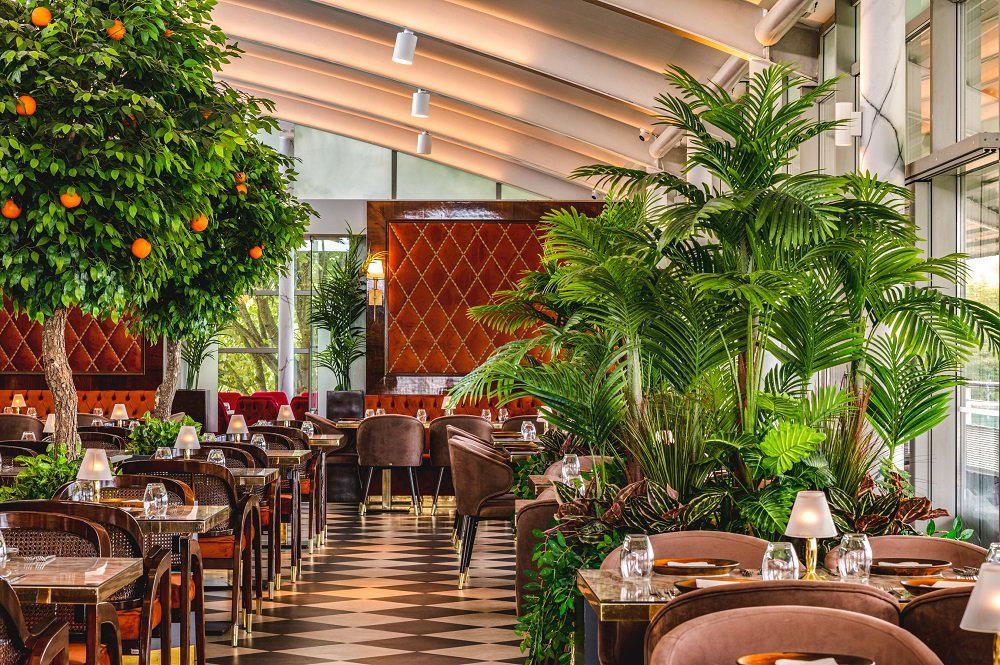
A Bloomsbury Address in a City of Fixed Formats
The Orangery is a restaurant in London, serving modern British farm-to-table cooking at 81 New Oxford St, London WC1A 1DG, United Kingdom. London's hospitality scene has polarised sharply over the past decade. At one end sits the tasting-menu bracket, where venues like CORE by Clare Smyth, Restaurant Gordon Ramsay, Sketch, The Lecture Room and Library, The Ledbury, and Dinner by Heston Blumenthal define themselves through singular culinary vision, long booking windows, and price points in the ££££ bracket. At the other end sits the all-day cafe format, which rarely commands serious editorial attention despite serving a more diverse cross-section of daily life. The Orangery, on New Oxford Street at the junction of Bloomsbury and the West End, operates in the space between these poles, running breakfast, signature afternoon tea, seasonal dishes, outdoor BBQs, and guest chef residencies from a single address.
That programming model is less common than it sounds. Most London venues either specialise tightly or sprawl without coherence. The Orangery's format, which builds a day around distinct but connected formats rather than a single meal type, reflects a broader movement in mid-market hospitality toward programming depth as a differentiator. Guest chef residencies in particular have shifted from novelty to signal: they suggest a kitchen with confidence in its own identity, willing to host outside voices without losing its character.
Ingredient Philosophy in a City That Has Learned to Ask
London's dining public now asks, with some regularity, where ingredients come from. That shift, visible across neighbourhood restaurants, farmers' market culture, and food media, has filtered into expectations even for casual daytime formats. Venues that anchor their seasonal dishes and BBQ programming to sourced, traceable produce occupy a more credible position in that conversation than those running generic supplier accounts.
The restaurant's seasonal menu structure implies a sourcing framework built around what is available rather than what is fixed. Seasonal BBQs, as a format, are particularly dependent on ingredient quality: smoke amplifies rather than masks, which means the underlying produce carries the dish. In the UK context, that conversation runs through suppliers in the Scottish Highlands, Welsh hill farms, and English market gardens, the same networks that feed kitchens from Corner Shop in Glasgow to Franc in Canterbury and The Highland Laddie in Leeds. The seasonal programming structure suggests a kitchen operating within that broader ethical and culinary moment.
Afternoon tea in London occupies a peculiar position: it is simultaneously one tourist-facing format and the one most scrutinised for authenticity. The city's signature afternoon tea services at major hotels can run to £80 or more per head and are booked weeks ahead. The restaurant's version, described as a signature offering, implies a house style with defined character rather than a generic tiered-stand format. What distinguishes a credible afternoon tea in this market is the quality of the patisserie and the sourcing of the tea programme itself, both of which track back to ingredient decisions made well before service.
The Guest Chef Residency as Editorial Signal
Across the global dining calendar, guest chef residency programmes have become a reliable indicator of a kitchen's peer relationships and ambition. At their weakest, residencies are marketing exercises with little culinary coherence. At their strongest, they bring a venue into contact with practitioners from different traditions, exposing both kitchen and audience to technique and sourcing approaches they would not otherwise encounter. Venues at the serious end of this format, from Lazy Bear in San Francisco to Atomix in New York City, have used residency programming to sharpen their own identity through contrast. In the European context, operations like Atelier Moessmer Norbert Niederkofler in Brunico and Reale in Castel di Sangro demonstrate how residency culture, handled with seriousness, connects local kitchens to international sourcing and technique conversations.
The restaurant's inclusion of guest chef residencies in its programming signals a venue that uses visiting chefs as part of its identity. For visitors, residency events represent a time-sensitive opportunity: a different menu, a different sourcing logic, and a different kitchen voice for a limited window.
New Oxford Street: The Address in Context
New Oxford Street is not a dining address in the conventional sense. The street connects the West End to Bloomsbury and carries the pedestrian overflow of Covent Garden, the British Museum, and Oxford Street itself. Serious restaurant criticism has largely passed it by in favour of Soho, Fitzrovia, and King's Cross. That makes the restaurant's positioning slightly counterintuitive, which is itself useful data: a venue choosing this address over a more obvious food neighbourhood is either responding to a specific catchment (office workers, museum visitors, passing trade) or betting on a gap in local provision.
For international visitors in particular, the WC1A postcode sits within easy reach of Bloomsbury's institutional and cultural infrastructure. The British Museum is a short walk north. The address works as a base for a morning or afternoon that moves between cultural and culinary programming, a practical consideration that venues in more restaurant-dense neighbourhoods cannot always claim.
Know Before You Go
Price and Positioning
Comparable venues nearby, for context on price, style, and recognition.
| Venue | Cuisine | Price | Notes |
|---|---|---|---|
| The OrangeryThis venue — the venue you are viewing | St Giles, Modern British Farm-to-Table | $$$ | Not listed |
| Formans | Not listed | $$$ | Hackney Wick, British Seafood with Smoked Salmon |
| Princess of Shoreditch | Shoreditch, Modern British Gastropub | $$$ | Not listed |
| Franklins | East Dulwich, Seasonal British Gastropub | $$$ | Not listed |
| The Stage at The Londoner | Not listed | $$$ | Leicester Square, Champagne Bar with British Small Plates |
| Admiral Codrington | Knightsbridge, British Gastropub | $$$ | Not listed |
Continue exploring
More in London
Restaurants in London
Browse all →
Bars in London
Browse all →
Hotels in London
Browse all →



At a Glance
- Elegant
- Modern
- Scenic
- Brunch
- Business Dinner
- Open Kitchen
- Farm To Table
- Local Sourcing
- Garden
Current opening hours
- Monday
- 7 AM–4:30 PM
- Tuesday
- 7 AM–4:30 PM
- Wednesday
- 7 AM–10 PM
- Thursday
- 7 AM–10 PM
- Friday
- 7 AM–10 PM
- Saturday
- 12–10 PM
- Sunday
- Closed
Hours can change for holidays and private events. Last verified .
Bright and modern atmosphere surrounded by a living vertical farm.