Ikoyi











2 Michelin Stars · World's 50 Best #15 · La Liste Top Restaurants
Our verdict
Ikoyi is London's serious argument for spice as structure rather than garnish. Jeremy Chan's cooking uses West African ingredients and British produce inside a tasting-menu format that has earned two Michelin stars and a No. 15 place on The World's 50 Best Restaurants 2025, placing it in the city's high-price, high-scrutiny creative dining tier.

Pearl is the En Primeur Club membership app, where members save venues, book tables and use the concierge.
Ikoyi is a high-end London restaurant led by Jeremy Chan. Its verified description is Global Cuisine and Creative, and the restaurant has described its cooking as “spice-based cuisine.” That phrase is useful as a broad starting point, but it should not be treated as a complete explanation of the restaurant's style.
Within London's premium dining landscape, Ikoyi is best understood as a creative restaurant with a strong point of view rather than as a venue that fits neatly into a single familiar category. Comparisons with 1890 by Gordon Ramsay, Kerridge's Bar & Grill, Ekstedt at The Yard, Kioku by Endo, or Mauro Colagreco at Raffles London at The OWO are useful mainly because they show how varied high-end London dining can be.
Spice is the grammar, not the accent
Ikoyi's own language around its food places spice at the centre of the experience. Beyond that, the verified public details are intentionally limited here: the cuisine is listed as Global Cuisine and Creative, and Jeremy Chan is the chef/owner associated with the restaurant.
That makes Ikoyi a restaurant to approach for its creative identity rather than for a narrowly defined regional label.
For diners comparing London's top-end restaurants, Ikoyi's distinction is its stated spice-based approach and creative classification. Other premium rooms may be easier to describe through more familiar culinary frames, while Ikoyi's appeal rests on a less easily reduced idea of contemporary cooking.
Price level and planning essentials
Ikoyi is listed at ££££, placing it firmly in the expensive bracket.
The verified schedule includes evening service on Monday and Tuesday, lunch and evening service from Wednesday to Friday, and closure on Saturday and Sunday. That limited pattern makes advance planning important, especially for travellers trying to fit Ikoyi into a short London itinerary.
The restaurant's smart casual dress code gives guests a practical cue without implying a rigid formal requirement. As with other high-end London restaurants, the safest approach is to dress neatly and confirm any booking-specific requirements directly with the venue.
Those details should not be assumed from the restaurant's price level or reputation.
Where it fits in a London dining itinerary
For visitors mapping London through restaurants, Ikoyi belongs at the high-commitment end because of its ££££ price level and limited operating hours. It is best planned deliberately around the verified service times.
It can sit alongside other premium London choices such as 1890 by Gordon Ramsay, Ekstedt at The Yard, Kerridge's Bar & Grill, Kioku by Endo, and Mauro Colagreco at Raffles London at The OWO. The comparison is not about identical cuisine, but about choosing among distinctive high-end dining experiences in the city.
Planning should start with the timetable: Monday 6–8 pm; Tuesday 6–8 pm; Wednesday 12–1:30 pm and 6–8 pm; Thursday 12–1:30 pm and 6–8 pm; Friday 12–1:30 pm and 6–8 pm; Saturday closed; Sunday closed. Lunch is therefore available only on the verified midweek-to-Friday schedule.
The editorial case for Ikoyi is direct: it is a London restaurant led by Jeremy Chan, listed as Global Cuisine and Creative, priced at ££££, and described around a spice-based idea of cooking.
Frequently asked questions
Is Ikoyi child-friendly?
No verified child policy is provided for Ikoyi. Guests planning to visit with children should confirm suitability directly with the restaurant before booking.
Is Ikoyi formal or casual?
Ikoyi lists a smart casual dress code.
What type of food is Ikoyi known for?
Ikoyi serves Global Cuisine, Creative cuisine, and has described its cooking as “spice-based cuisine.”
Is Ikoyi more mid-range or high-end?
Pricing at Ikoyi is listed as ££££.
What are the operating hours at Ikoyi?
Hours at Ikoyi: Monday 6–8 pm; Tuesday 6–8 pm; Wednesday 12–1:30 pm and 6–8 pm; Thursday 12–1:30 pm and 6–8 pm; Friday 12–1:30 pm and 6–8 pm; Saturday closed; Sunday closed.
How do I find Ikoyi?
Ikoyi is in London.
How It Stacks Up
Comparable venues by cuisine and price in the same metro.
| Venue | Cuisine | Price | Awards | Notes |
|---|---|---|---|---|
| IkoyiThis venue (the venue you are viewing) | Modern West African Fine Dining | $300–500 | 2 Michelin Stars · World's 50 Best #15 | Not listed |
| 1890 by Gordon Ramsay | Modern French Fine Dining | $200–300 | 1 Michelin Star · Star Wine List | French Contemporary |
| Kerridge's Bar & Grill | Modern British Grill | $50–100 | Michelin Plate · AA Rosettes 3 Rosettes | Modern British |
| Ekstedt at The Yard | Nordic Wood-Fire Cuisine | $100–150 | Michelin Plate · Star Wine List | Modern Cuisine |
| Kioku by Endo | Japanese Fusion Fine Dining | $200–300 | Michelin Plate · Harden's Top 100 UK Restaurants #50 | Japanese Contemporary |
| Mauro Colagreco at Raffles London at The OWO | Hyper-Seasonal Fine Dining | $150–200 | 1 Michelin Star · AA Rosettes 3 Rosettes | Modern Cuisine |
Recognition history
Dated appearances from independent guides and award organizations, with the underlying list record or original source where available.
Michelin 2 Stars
Michelin
World's 50 Best Restaurants #15
World's 50 Best
La Liste Top Restaurants
La Liste
Star Wine List
Star Wine List
AA Rosettes 3 Rosettes
AA Rosettes
Full recognition history (24 entries)
Falstaff Restaurant - 95 Falstaff Points
Falstaff
Food & Wine Global Tastemakers Top Restaurants #1
Food & Wine
Harden's Top 100 UK Restaurants #46
Harden's
National Restaurant Awards Top 100 #24 · No. 24
National Restaurant Awards · 2026 National Restaurant Awards Top 100
Opinionated About Dining Top Restaurants in Europe Ranked #55
Opinionated About Dining
La Liste Top Restaurants
La Liste
Michelin 2 Stars
Michelin
National Restaurant Awards Top 100 #16
National Restaurant Awards
Opinionated About Dining Top Restaurants in Europe Ranked #44
Opinionated About Dining
The Best Chef Two Knives
The Best Chef
The Good Food Guide GFG Very Good
The Good Food Guide
Michelin 2 Stars
Michelin
Opinionated About Dining Top Restaurants in Europe Ranked #52
Opinionated About Dining
Star Wine List
Star Wine List
World's 50 Best Restaurants #42
World's 50 Best
Opinionated About Dining Top New Restaurants in Europe Ranked #66
Opinionated About Dining
Star Wine List
Star Wine List
World's 50 Best Restaurants #35
World's 50 Best
World's 50 Best Restaurants #49
World's 50 Best
Continue exploring
More in London
Restaurants in London
All restaurants in London →
Bars in London
All bars in London →


Details
- Sophisticated
- Modern
- Elegant
- Minimalist
- Special Occasion
- Date Night
- Open Kitchen
- Extensive Wine List
- Organic
- Tasting Menu
Current opening hours
- Monday
- 6–8 PM
- Tuesday
- 6–8 PM
- Wednesday
- 12–1:30 PM, 6–8 PM
- Thursday
- 12–1:30 PM, 6–8 PM
- Friday
- 12–1:30 PM, 6–8 PM
- Saturday
- Closed
- Sunday
- Closed
Hours can change for holidays and private events. Hours as of .
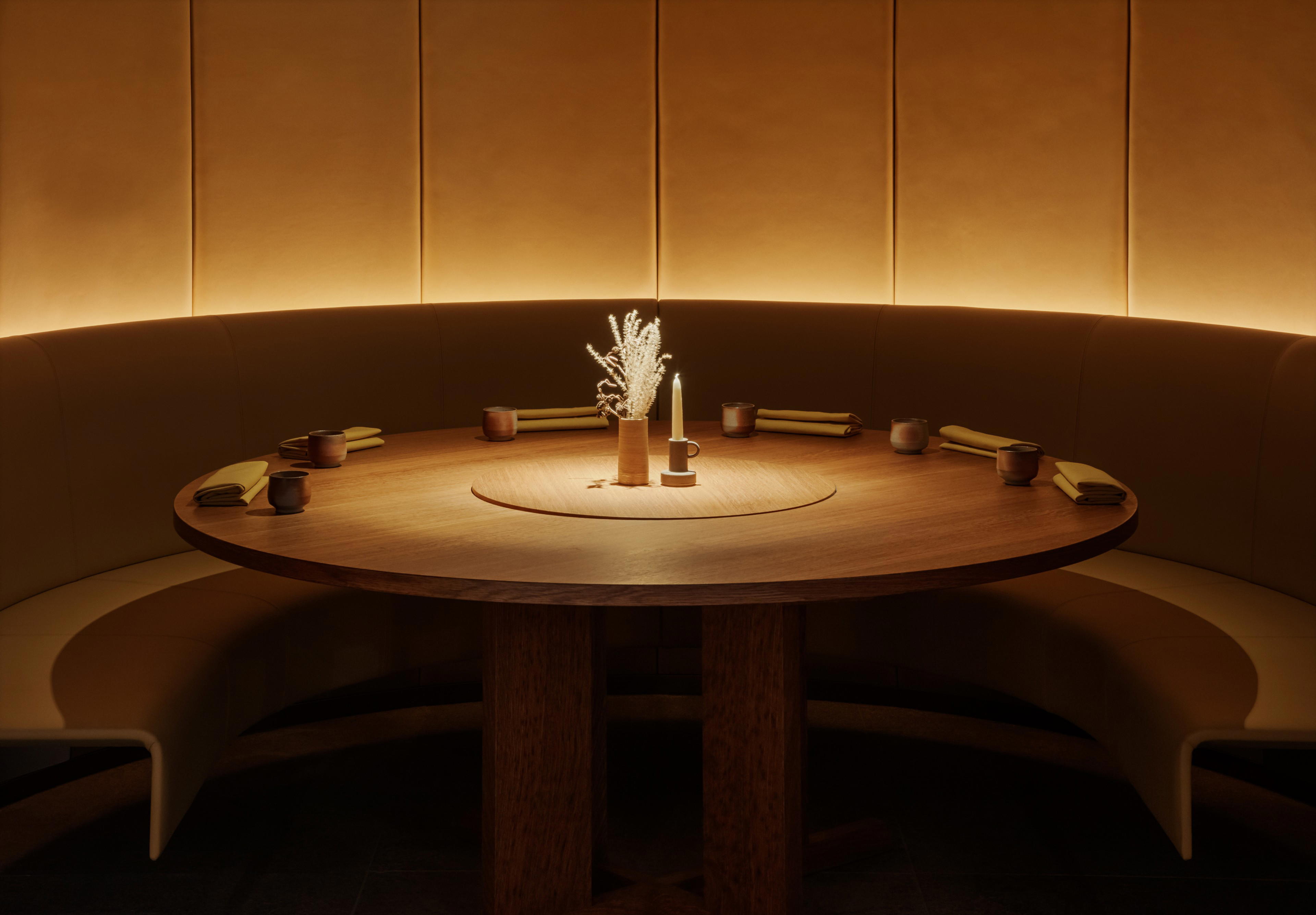
Discreet entrance with earthy colors, golden wood tables, ambient dusk lighting, and open kitchen dominating the minimalist space.