Frog by Adam Handling







1 Michelin Star · Star Wine List · AA Rosettes 3 Rosettes
Our verdict
Adam Handling's Covent Garden flagship operates on a ten-course tasting menu format built around seasonal British produce and a zero-waste philosophy, priced at £199 per person. The room is deliberately spare, the kitchen open, and the atmosphere closer to a charged dining room than a hushed fine-dining sanctuary. A Michelin star and a five-Radish rating from the Sustainable Restaurant Guide signal where it sits in London's competitive tasting-menu tier.

Pearl is the En Primeur Club membership app, where members save venues, book tables and use the concierge.
The menu
What to order
- Chicken skin butter
- Wagyu lobster
- Mushroom agnolotti
Covent Garden's Tasting Menu Tier: Where Frog Sits
London's upper tasting-menu bracket has grown crowded since the mid-2010s. At the £150-and-above level, diners are choosing between distinct philosophies: the classical rigour of CORE by Clare Smyth, the heritage French precision of Restaurant Gordon Ramsay, the grand theatrical production of Sketch, The Lecture Room and Library, and the ingredient-led European ambition of The Ledbury. Frog by Adam Handling, on Southampton Street since 2019, occupies its own corner of that map: British produce, zero-waste principles, and a room that reads deliberately casual despite pricing that sits firmly at the upper end of the Michelin one-star bracket.
That tension between the relaxed and the costly is precisely what generates the most animated debate about the restaurant. Critics who call it exceptional and critics who question its value are often describing the same meal, which tells you something about how Frog has positioned itself.
The Zero-Waste Argument, Made in Ten Courses
Sustainability in fine dining often stays at the level of rhetoric. At Frog, it structures the menu operationally. The kitchen's zero-waste agenda, which Handling has described publicly as a core organising principle rather than a side note, shapes how the ten-course tasting menu is built. Trimmings that would be discarded in most kitchens reappear as stocks, ferments, and fats in subsequent courses. The chicken skin butter served with the restaurant's well-documented signature bread is a precise example of that logic: a by-product repurposed into a course element rather than composted.
The menu itself reads as a map of Britain, with each ingredient annotated by its source region. That presentation is both an editorial statement and a practical supply-chain record. For the Sustainable Restaurant Guide, it was convincing enough to earn a five-Radish rating, upgraded after reviewers assessed the 100% plant-based menu option, which operates under the same local-British sourcing rules as the main menu. That rating places Frog alongside a relatively small group of London restaurants where sustainability has moved from a marketing term into a verifiable operational standard.
The broader pattern here is worth noting. British tasting-menu restaurants that have built sustainability frameworks into their core identity, rather than attaching them as an add-on, tend to perform better in the medium term on both the critical and commercial side. L'Enclume in Cartmel and Moor Hall in Aughton both work from similarly integrated sourcing philosophies, and both hold multiple Michelin stars. Frog, currently at one star, operates within that same tradition, though it sits at a different point in its critical trajectory.
The Room and the Format
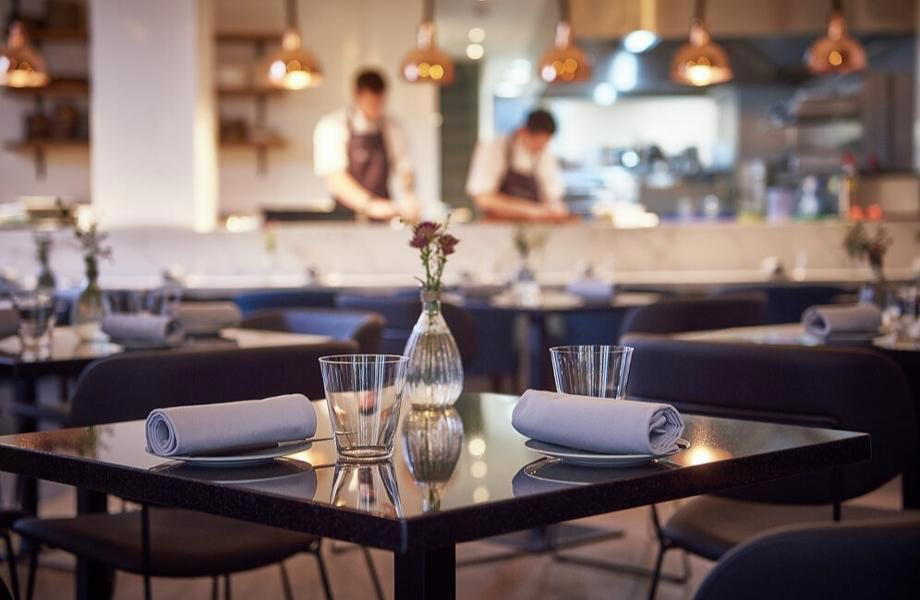
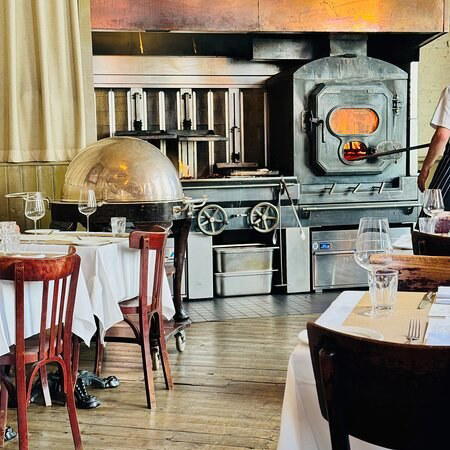
Physical space at Southampton Street is deliberately stripped back: bare tables, hard floors, counter seating alongside conventional dining positions, and an open kitchen that keeps the theatre of service visible throughout the meal. That design approach is worth understanding as a choice, not a limitation. High-end London rooms that lean into noise and energy, rather than hush and ceremony, are a specific format with a specific audience. Dinner by Heston Blumenthal manages a comparable feat at a larger scale. Frog does it at the smaller, more intimate end of that spectrum.
Ten-course format begins with a sequence of precision snacks before moving into the main progression of dishes. The wagyu beef course, arriving with English wasabi and a bordelaise-style sauce, has drawn consistent attention across multiple rounds of critical coverage. The palate-cleanser involves cherry tomatoes under a green tomato granita. Dessert has been described in coverage as technically accomplished pastrywork combining white chocolate and seasonal fruit elements.
Drinks list is organised into categories labeled 'quintessential', 'esoteric', and 'maverick', which gives some indication of how the restaurant thinks about wine selection: not as a conventional hierarchical list but as a series of editorial positions. Sake and cocktails also feature, which broadens the pairing options considerably for a room this size.
What the Critical Divide Tells You
Frog carries Michelin recognition at one star, and its guest reviews split in a way that is instructive. Advocates describe the experience in terms of consistent surprise and cumulative satisfaction across the full ten courses. One detailed guest account cited the lobster and wagyu as individual highlights while questioning whether the overall experience justified pricing at the upper end of what a one-star typically commands in London.
That critique is not unique to Frog. The pricing compression at the top of London's tasting-menu tier, where one-star, two-star, and three-star operations now occupy overlapping price bands, is an industry-wide condition. At £199 per person for ten courses, Frog prices above several two-star operations in other cities and within range of some in London itself. Whether that represents value depends entirely on how the reader weights atmosphere, sustainability credentials, and the particular style of cooking against comparable rooms.
For context, the price point is comparable with peers such as Heron in Leith and Upstairs by Tom Shepherd in Lichfield, both operating in the same modern British tasting-menu category, and both drawing similar assessments about the relationship between format ambition and star recognition. Frog occupies a parallel position in London's more competitive market.
Frog in the Wider UK Tasting-Menu Context
The benchmark restaurants in the British tasting-menu tradition, The Fat Duck in Bray, Gidleigh Park in Chagford, Hand and Flowers in Marlow, and Le Manoir aux Quat' Saisons in Great Milton, have all developed distinct identities over decades. What Frog represents is a younger generation of the format: urban, sustainability-structured, less reverent about ceremony, and more interested in sourcing transparency as a dining-room experience rather than a back-of-house operational matter.
The menu-as-map concept, where ingredient provenance is laid out for the diner as a literal visual reference, is a relatively recent development in how British fine-dining restaurants communicate sourcing. It treats sustainability as content rather than context, which is a meaningful distinction. The diner is meant to read the map, not just benefit from it.
Adam Handling, who trained in Scotland before establishing his London profile, operates Frog as his flagship alongside other London venues. That group context matters: the zero-waste philosophy that structures Frog is applied across the group's operations, which gives it more operational weight than a single-restaurant sustainability claim would carry.
Planning a Visit
Frog by Adam Handling operates Tuesday through Saturday from noon to 9:30 PM, with Monday service beginning at 5 PM and Sundays closed entirely. The restaurant sits at 34-35 Southampton Street in Covent Garden, WC2E 7HG, within easy walking distance of Covent Garden underground station. The tasting menu is priced at £199 per person. A plant-based menu operates alongside the main ten-course format. Booking well in advance is advisable given the room's profile and the limited seat count at a restaurant with an open kitchen and counter format. For a broader London itinerary, explore our full London experiences guide.
Frequently asked questions
What should I order at Frog by Adam Handling?
Frog operates exclusively on a tasting-menu format, so individual ordering is not part of the structure. The ten-course menu is set, though the kitchen accommodates dietary requirements including a fully plant-based menu option built on the same seasonal British sourcing principles as the main progression. The signature bread course with chicken skin butter and liver pâté is the one constant that persists across menu iterations and is the most frequently cited reference point in critical coverage. The wagyu beef course, served with English wasabi and a bordelaise-style sauce, and the caviar-finished oyster tartlet opening sequence have also drawn consistent attention across multiple published reviews. For the drinks pairing, the list's own categorisation into 'quintessential', 'esoteric', and 'maverick' sections offers a starting framework for conversation with the sommelier.
Recognition, Side-by-Side
Comparable venues nearby, for context on price, style, and recognition.
| Venue | Cuisine | Price | Awards | Notes |
|---|---|---|---|---|
| Frog by Adam HandlingThis venue (the venue you are viewing) | Modern British Fine Dining | $50–100 | 1 Michelin Star · Star Wine List | Not listed |
| HIDE | Modern British Fine Dining | $200–300 | 1 Michelin Star · Star Wine List | Mayfair |
| Evelyn's Table | Modern British Seasonal Tasting Menu | $200–300 | 1 Michelin Star · Star Wine List | Chinatown |
| Trinity | Modern British Fine Dining | $100–150 | 1 Michelin Star · Star Wine List | Clapham |
| Aulis London | Modern British Chef's Table | $150–200 | 1 Michelin Star · Star Wine List | Soho |
| Pied à Terre | Modern French Fine Dining | $150–200 | 1 Michelin Star · Star Wine List | Fitzrovia |
Recognition history
Dated appearances from independent guides and award organizations, with the underlying list record or original source where available.
Michelin 1 Star
Michelin
Star Wine List
Star Wine List
AA Rosettes 3 Rosettes
AA Rosettes
Harden's Top 100 UK Restaurants #52
Harden's
National Restaurant Awards Top 100 #59 · No. 59
National Restaurant Awards · 2026 National Restaurant Awards Top 100
Full recognition history (16 entries)
AA Rosettes 4 Rosettes
AA Rosettes
Michelin 1 Star
Michelin
National Restaurant Awards Top 100 #42
National Restaurant Awards
The Best Chef One Knife
The Best Chef
The Good Food Guide GFG Very Good
The Good Food Guide
We're Smart World 5 Radishes
We're Smart World
We're Smart World Top 100 #60
We're Smart World
World's Best Wine Lists Awards WBWL 3-Star
World's Best Wine Lists Awards
World's Best Wine Lists Awards WBWL Category Winner
World's Best Wine Lists Awards
World's Best Wine Lists Awards WBWL Category Winner
World's Best Wine Lists Awards
World's Best Wine Lists Awards WBWL 3-Star
World's Best Wine Lists Awards
Continue exploring
More in London
Restaurants in London
All restaurants in London →
Bars in London
All bars in London →
Hotels in London
All hotels in London →






Frog by Adam Handling
The wine
- Extensive wine list
- Sommelier-led
- Craft cocktails
Details
- Modern
- Elegant
- Sophisticated
- Intimate
- Date Night
- Special Occasion
- Celebration
- Open Kitchen
- Private Dining
- Extensive Wine List
- Craft Cocktails
- Sommelier Led
- Local Sourcing
- Zero Waste
- Tasting Menu
- A La Carte
- Vegetarian Friendly
- Vegan Options
Current opening hours
- Monday
- Closed
- Tuesday
- 12–1 PM, 5–9:30 PM
- Wednesday
- 12–1 PM, 5–9:30 PM
- Thursday
- 12–1 PM, 5–10 PM
- Friday
- 12–1 PM, 5–10 PM
- Saturday
- 12–1 PM, 5–10 PM
- Sunday
- Closed
Hours can change for holidays and private events. Hours as of .
Stripped-back stylish dining room with fresh clean look, open kitchen, bold artwork, and lively modern atmosphere.