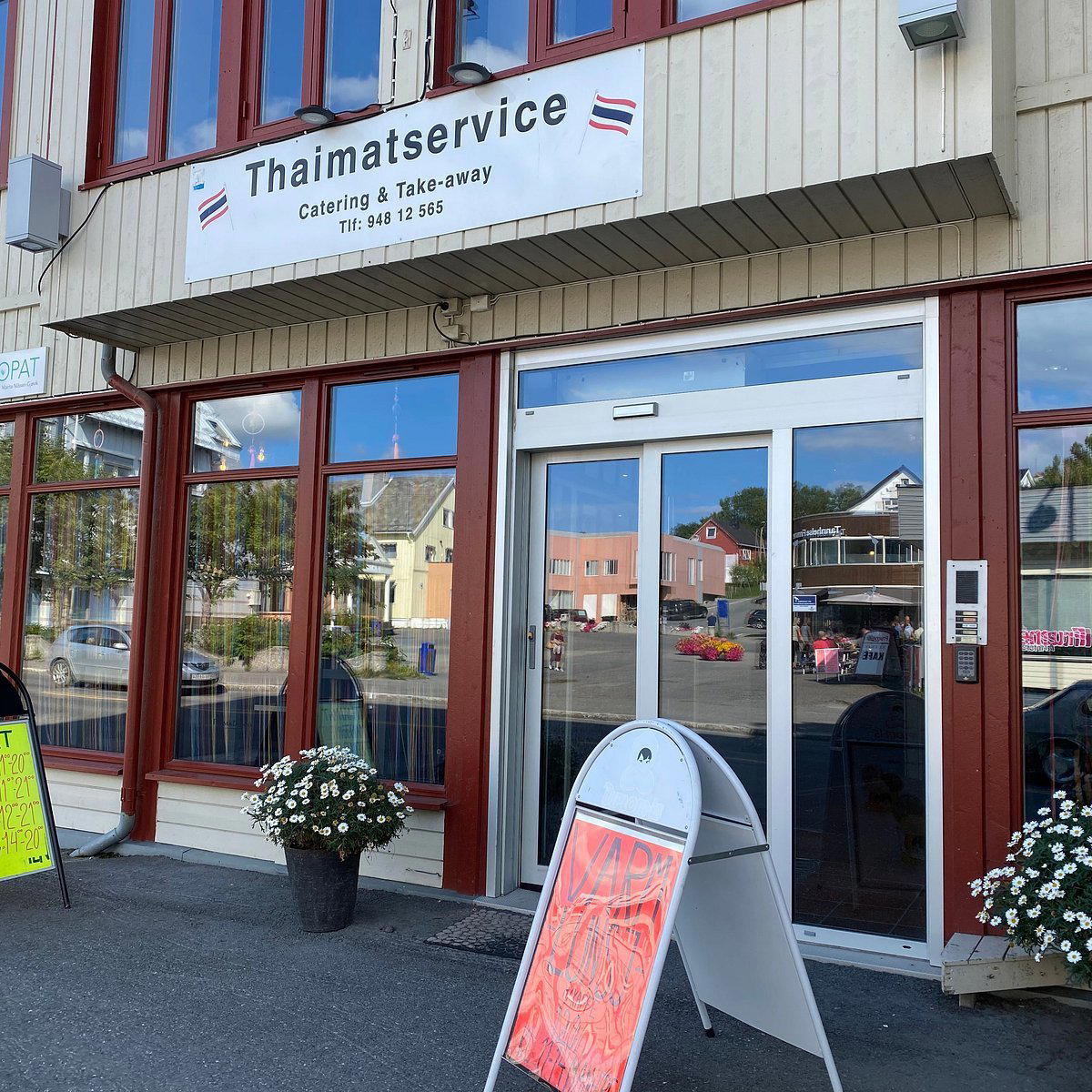
Thai food in Norway's far north is a more considered proposition than it might first appear. Thaimatservice operates in Finnsnes, a small coastal hub in Troms county where supply chains are long and ingredient decisions carry real weight. For travellers moving through northern Norway, it represents a strand of dining culture that has quietly taken root across the region's smaller towns.

Pearl is the En Primeur Club membership app — saves, bookings, and concierge access live there. Same editors, same standards.
Thai Cooking at the Edge of the Arctic Supply Chain
Finnsnes sits on the Senja island bridge in Troms county, roughly 80 kilometres south of Tromsø, and it functions as a practical transit and service town for the wider region. Dining options here do not follow the same logic as a city with competitive restaurant density. When a Thai kitchen operates in a town of this scale, the ingredient question becomes the central one: what arrives, how far it has travelled, and what gets substituted for what cannot.
That question is not distinctive to Thaimatservice. Across northern Norway's smaller settlements, from Harstad to Kirkenes, Southeast Asian restaurants have become a durable fixture, not as an exotic anomaly but as a reflection of demographic shifts in Norwegian communities over the past three decades. The cooking that results tends to occupy a specific register: pragmatic in sourcing, adapted to available produce, and serving a local clientele whose expectations are shaped by years of familiarity with the food. For a broader map of where this kind of dining sits relative to the region's fine-dining tier, see our full Finnsnes restaurants guide.
What Ingredient Sourcing Actually Means This Far North
Northern Norway's food geography is both an asset and a constraint. The asset is proximity to some of the country's most serious seafood: skrei cod from the Lofoten current, farmed salmon from fjord operations, and shellfish from cold-water fisheries that supply international markets. The constraint is everything else. Fresh aromatics, lemongrass, galangal, kaffir lime leaf, arrive through distribution chains that pass through Oslo or Tromsø before reaching Finnsnes, which adds days to transit and reduces the margin for freshness that makes the difference in Thai cooking.
How kitchens in this position respond to that constraint is instructive. Some rely heavily on pastes, preserves, and frozen components. Others build relationships with specific suppliers and time their menus around delivery schedules. The leading outcomes tend to come from cooks who understand which elements of the cuisine are non-negotiable (the structural flavour compounds in a curry base, for instance) and which can flex to local availability without losing the dish's coherence. This is a different kind of culinary discipline than the one exercised at Maaemo in Oslo or RE-NAA in Stavanger, but it is discipline nonetheless.
Thaimatservice is a Thai restaurant in Finnsnes, Troms county, about 80 kilometres south of Tromsø. What can be said is that any kitchen operating in Finnsnes is making daily choices about what the supply chain can deliver and what the menu must work around. That operational reality shapes the food more than any single ingredient sourcing philosophy would.
Thai Dining in Small-Town Norway: A Broader Pattern
The presence of Thai restaurants in Norway's smaller northern towns is part of a documented demographic pattern. From the 1980s onward, Thai immigration to Norway grew steadily, and many families settled in non-urban areas where service industry roles and small business opportunities were more accessible. The restaurants that followed were often family-run, community-facing, and built to serve a broad local audience rather than a travelling food press.
That model contrasts sharply with the fine-dining tier that Norway's food scene exports most visibly. FAGN in Trondheim and Gaptrast in Bergen operate on entirely different terms: tasting-menu formats, Michelin attention, and a New Nordic framing that positions local ingredients as the subject of the cooking rather than a practical constraint. The community Thai kitchen and the contemporary Nordic counter serve different social functions and different audiences. Both are legitimate expressions of how Norway eats.
Closer geographically, the dining scene along the northern coast and island chains offers a useful comparable set. Anita's Sjomat in Lofoten and Fiskekrogen in Henningsvær both demonstrate how northern Norway can produce serious, regionally grounded cooking at a non-metropolitan scale. Aurora Restobar in Kirkenes and Børsen Spiseri in Svolværr show the range of formats operating across the region. Thaimatservice occupies a different point on that map, serving a cuisine that is not defined by its northern Norwegian location but that must be executed within it.
Planning a Visit to Finnsnes
Finnsnes is accessible by road from Tromsø in under two hours in clear conditions, or by the Hurtigruten coastal route if you are moving through the region by sea. The town serves as a practical base for Senja, which has attracted significant attention as a hiking and landscape destination, particularly in summer and during the northern lights season in winter. Travellers spending time on Senja will pass through Finnsnes as a matter of logistics; understanding the local dining options is part of managing that itinerary practically.
Thaimatservice is walk-in friendly and sits in price tier 2, with an estimated spend of about $15 per person. Those moving along the Norwegian coast with broader appetite for the region's dining range will find relevant context at Underhuset Restaurant in Reine, Brasserie 8622 in Mo i Rana, and Karoline Restaurant in Ramberg. For those approaching from further south, Umami Harstad in Harstad provides a useful point of comparison for Asian-influenced cooking in the broader Troms region.
For a sense of how the rest of Norway's more formally recognised dining tier has developed, Under in Lindesnes, Hardanger House in Jondal, and Experience Restaurant in Steinkjer each represent different points on Norway's contemporary dining arc. The international frame of reference, if one is needed, runs through places like Le Bernardin in New York City and Atomix in New York City, where ingredient sourcing and supply chain decisions are also central editorial subjects, albeit at a different scale of ambition and resource.
A Quick Peer Check
Comparable venues nearby, for context on price, style, and recognition.
| Venue | Cuisine | Price | Notes |
|---|---|---|---|
| ThaimatserviceThis venue — the venue you are viewing | Thai | $$ | Not listed |
| Michaels | Mediterranean Brasserie | $$ | Briskeby |
| Skur 33 | Italian Seafood and Pizza | $$ | Aker Brygge |
| Thai City Wok | Asian Fusion Wok & Grill | $$ | Alesund |
| Vesuvio Café og Pizza | Authentic Neapolitan Pizza | $$ | Fredensborg |
| Spiseriet Stavanger | Modern Norwegian Seafood Bistro | $$ | Vågen |
At a Glance
- Rustic
- Casual Hangout
basic setting mainly focused on takeout with friendly service.