Tabelog 100 #49
Our verdict
Thai Miaomiao brings Tokyo’s Thai-izakaya crossover into a compact Hatagaya room, with Tabelog 100 Asian/Ethnic Tokyo 2024 recognition and pricing that keeps the value argument sharp. The draw is not ceremony; it is the combination of Thai, curry, drinks, family-friendly access, and a neighbourhood address close to Hatagaya Station.

Pearl is the En Primeur Club membership app, where members save venues, book tables and use the concierge.
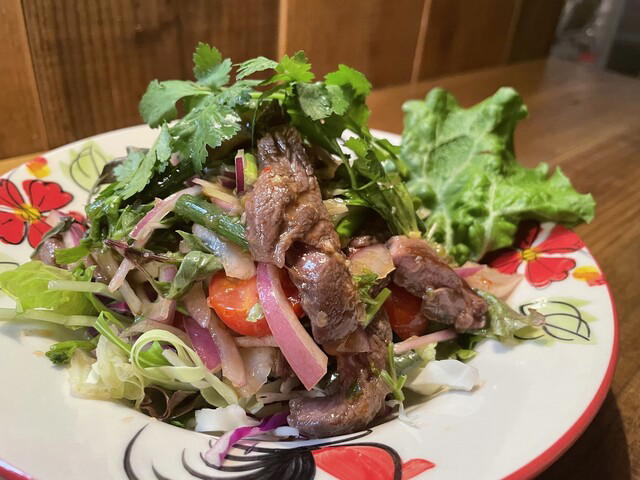
Tokyo’s smaller dining rooms often have a different rhythm from the city’s more formal corridors: practical, casual, and built for regular use before they become destination names. Thai Miaomiao fits that pattern. The venue reads as Thai restaurant crossed with izakaya rather than a formal tasting-menu address, with a format that feels flexible and suited to repeat visits.
That matters in Tokyo’s current Asian and ethnic dining scene. The city’s international-food category is no longer defined only by late-night canteens or expat-adjacent comfort cooking. Recognition lists now pull in everyday restaurants with narrow formats, drink-friendly appeal, and prices that sit far below the city’s luxury dining tier. Selection for Tabelog 100 - Asian cuisine / Ethnic cuisine - TOKYO - 2024 places Thai Miaomiao inside that more competitive bracket, where the signal is not luxury but repeatable satisfaction at everyday-to-occasion pricing.
Thai cooking through the izakaya lens, priced for repeat visits
The value proposition is clear: lunch sits in the JPY 1,000 - JPY 1,999 band, while dinner sits in the JPY 4,000 - JPY 4,999 band. In Tokyo terms, that creates two different use cases. Lunch can function as a low-commitment meal; dinner moves into the drink-and-shared-plates zone without entering the cost structure of counter sushi, kaiseki, or French tasting menus. The listed categories, Thai, izakaya, and curry, explain the hybrid appeal better than a single cuisine label would.
Tokyo has a long habit of absorbing foreign cuisines into local service grammar. Thai food here often splits between quick lunch formats, casual group meals, and more specialised kitchens. Thai Miaomiao occupies a useful middle lane: more restaurant than takeaway, more flexible than a fixed-course room, and easier to fold into an ordinary Tokyo evening than a high-ceremony booking.
The comparison set helps define the niche. Curry & Spice Aoi Tori offers another way into the city’s curry and spice conversation. Nihao sits in a different Chinese-leaning frame. UNE IMMERSION and Shigeyuki belong to more formal French and Japanese categories, where the spend and mood imply another kind of occasion. Against that spread, Thai Miaomiao’s argument is not that it competes with Tokyo’s luxury rooms; it offers a fuller dinner rhythm than a budget curry counter while keeping the bill within a relatively contained range.
Tokyo gives the meal its practical edge
Tokyo is useful for diners who want a meal that can sit inside a broader day rather than dominate it. Thai Miaomiao works best when treated as a practical restaurant choice, not as a trophy reservation built around ceremony. That Tokyo context also shapes the mood: the appeal is local, repeatable, and less performative than dining plans built around hotel dining rooms or department-store restaurant floors.
Scale is part of the calculation at casual Tokyo restaurants, so timing can matter, particularly for dinner. That detail matters because this is exactly the sort of place that can seem casual until a recognised listing compresses demand. With Tabelog recognition and a 3.62 score attached to the public record, Thai Miaomiao has more visibility than an anonymous Tokyo stop.
Accessibility of use is another reason the value equation works. The pricing makes it plausible for a wider audience: casual lunch diners, small groups at dinner, and solo diners looking for a relaxed table rather than a formal course. That breadth is important in Tokyo, where some acclaimed rooms can be narrow in both format and occasion.
The practical limits should be checked directly before planning. Tokyo restaurants can change hours, booking rules, payment methods, and seating arrangements, and those details matter more when a venue has public recognition. The safest read is to treat Thai Miaomiao as a casual-to-midrange Tokyo restaurant with recognised quality signals, then confirm current logistics through the venue’s official channels.
Where it sits in a Tokyo eating day
The sharper way to use Thai Miaomiao is as a Tokyo anchor rather than a destination around which an entire day is built. Pair it with other Tokyo plans, keep the meal casual, and let the price band do its work. For broader planning, Our full Tokyo restaurants guide maps the city’s wider dining range, while Our full Tokyo hotels guide, Our full Tokyo bars guide, Our full Tokyo wineries guide, and Our full Tokyo experiences guide cover the rest of a Tokyo itinerary.
Within the city’s casual-to-midrange field, the contrast is useful. Other Tokyo dining rooms show how varied the lower-ceremony end of the city can be, from curry-led meals to casual cafés, izakaya-style rooms, and compact specialist counters. The broader Japan and beyond file adds more reference points, but Thai Miaomiao is best judged on its own Tokyo terms: Thai, izakaya, and curry categories, recognised by Tabelog’s 2024 Asian and ethnic cuisine list, at a price point that stays approachable.
The verdict is disciplined: Thai Miaomiao is strongest for diners who value Tokyo practicality, recognised quality signals, and a bill that stays grounded. It is not the Tokyo choice for ceremony or chef-counter theatre. It is the smarter choice when Thai flavours, izakaya flexibility, curry appeal, and everyday usability need to sit in the same plan.
Frequently asked questions
Is Thai Miaomiao suitable for children?
Thai Miaomiao is in Tokyo. For child seating, stroller access, and other family-dining details, check the venue's official channels for the latest information.
What is the atmosphere like at Thai Miaomiao?
Thai Miaomiao is best understood as a casual Tokyo restaurant with Thai, izakaya, and curry categories. Its Tabelog 100 selection for Asian cuisine / ethnic cuisine in Tokyo gives it local credibility, while the izakaya framing keeps the read informal.
Is Thai Miaomiao more mid-range or high-end?
Pricing at Thai Miaomiao is listed as Dinner: JPY 4,000 - JPY 4,999; Lunch: JPY 1,000 - JPY 1,999.
What are the operating hours at Thai Miaomiao?
Current operating hours are not included in the provided public record. Check Thai Miaomiao’s official channels before visiting.
Peers in This Market
Nearby venues at a similar price tier for orientation.
| Venue | Cuisine | Price | Awards | Notes |
|---|---|---|---|---|
| Thai MiaomiaoThis venue (the venue you are viewing) | Thai Restaurant | Not listed | Tabelog 100 #49 | Not listed |
| Curry & Spice Aoi Tori | Creative Indian & Sri Lankan spice curry | $10–20 | Tabelog 100 #46 | JPY 1,000 - JPY 1,999 JPY 1,000 - JPY 1,999 |
| UNE IMMERSION | Modern French | $100–150 | Michelin Plate | French |
| Nihao | Chinese dumpling house (gyoza specialist) | $20–30 | Tabelog 100 #14 | JPY 2,000 - JPY 2,999 |
| パヴォーネ・インディアーノ | Italian-Indian Fusion | $20–30 | Not listed | Not listed |
| Shigeyuki | Seasonal Japanese Kaiseki | $200–300 | 1 Michelin Star · Tabelog 100 #7 | Japanese |
Recognition history
Dated appearances from independent guides and award organizations, with the underlying list record or original source where available.
Tabelog 100 #49 · No. 49
Tabelog · Tabelog 100 - Asian cuisine / Ethnic cuisine - TOKYO - 2024