Terramia
On Salem Street in Boston's North End, Terramia operates inside one of the neighbourhood's most established Italian dining rooms, where the progression of courses follows the kind of unhurried rhythm that defines the street's better trattorie. The room rewards those who let the kitchen set the pace rather than treat it as a quick stop between sights.
Pearl is the En Primeur Club membership app — saves, bookings, and concierge access live there. Same editors, same standards.
- Address
- 98 Salem St, Boston, MA 02113
- Phone
- +16175233112
- Website
- terramiaristorante.com
- Directions
- Get directions
 Saves & bookings on Pearl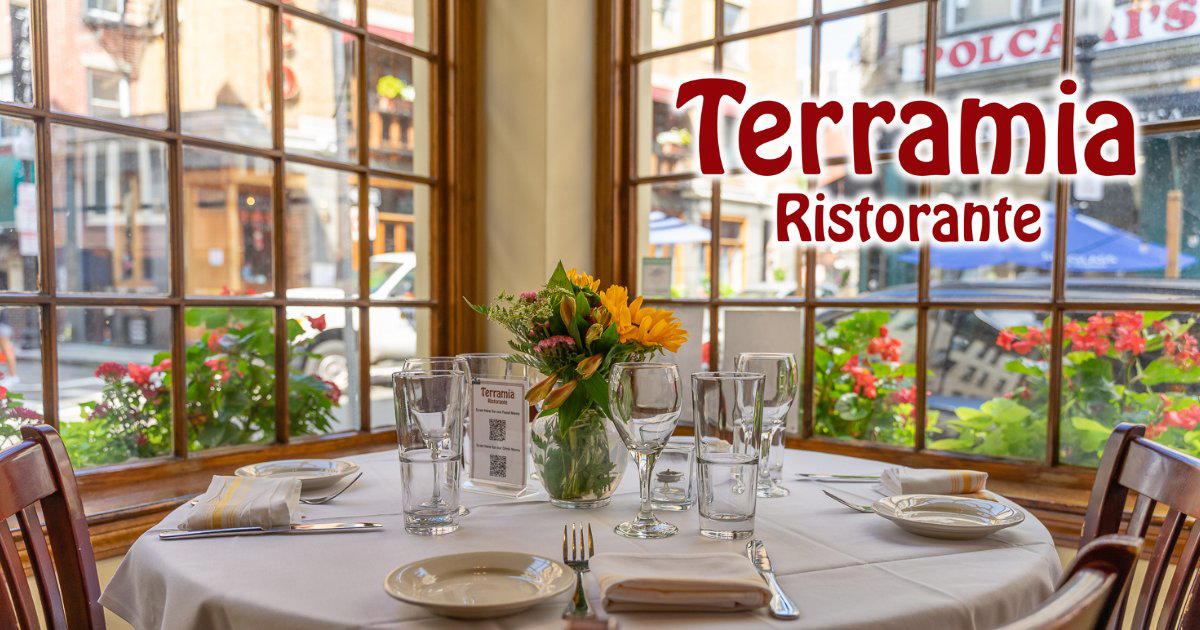
Salem Street and the North End's Italian Dining Tradition
Boston's North End is one of the few American urban neighbourhoods where Italian-American dining culture has not been diluted by trend cycles. Salem Street sits at its axis, a narrow corridor of red-sauce institutions and quieter trattorie that has served the same community logic for generations: simple rooms, direct cooking, and a shared assumption that the meal will last longer than an hour. It belongs to this continuum. It does not announce itself through exterior spectacle. The draw is interior and cumulative, built across the sequence of a full meal rather than a single dish or a designed moment.
The North End sits within walking distance of the Haymarket and Faneuil Hall area, which means foot traffic from tourists is constant. The restaurants that survive purely on that traffic tend to simplify their menus toward the centre. The ones that hold a neighbourhood following operate differently: they structure the experience around the full arc of a meal, from antipasti through secondo, rather than treating pasta as a destination in itself. Terramia falls into the latter category.
The Architecture of the Meal
Italian dining at its most coherent follows a structural logic that American restaurants frequently compress: antipasto to introduce the palate, primo to establish weight and texture, secondo to deliver the main event, and dolce to close. The trattoria tradition holds that each stage should feel distinct rather than redundant. In the North End, where portion generosity has long been part of the cultural contract, this progression can collapse into an undifferentiated accumulation of food. The better rooms resist that.
Terramia's approach to sequencing reflects the longer tradition. The pasta courses, which represent the kitchen's primary identity on Salem Street, function as a middle chapter rather than a finale. This matters because it changes how the meal reads: a proper primo invites the secondo, rather than concluding the appetite. For guests accustomed to ordering pasta as a main, the shift in rhythm is worth noting before you sit down. Allowing the kitchen to structure the evening across multiple stages produces a different experience than optimising for a single plate.
This is the dining grammar that comparable Italian rooms in cities like New York have largely abandoned in favour of accessibility and throughput. Boston's North End has retained it, partly because the neighbourhood's dining culture is conservative by national standards, and partly because the guest base that returns repeatedly knows the format. Terramia has held this position in the North End's mid-tier Italian category for long enough to reflect that continuity.
Where Terramia Sits in the North End's Competitive Range
The North End's Italian dining scene operates across several tiers. At the entry level, quick pasta and pizza rooms serve tourists at speed. At the other end, a small number of rooms have repositioned toward modern Italian with wine programs that would not embarrass a comparable room in New York or Chicago. Terramia occupies the substantive middle: traditional trattoria cooking with enough kitchen discipline to reward a full-length dinner, without the cover charge or booking complexity of the neighbourhood's more formal options.
For context on how this compares to Boston's broader restaurant range, Agosto (Portuguese-inspired fine dining, tasting-menu chef's counter) represents the city's contemporary tasting-menu tier, where a single evening is built around a choreographed sequence with a reservation lead time to match. 311 Omakase occupies an analogous position in the Japanese category. Terramia's value is that it delivers a structured, multi-course Italian experience without requiring those booking logistics. It is accessible in a way that Boston's upper-tier chef's counters are not.
Across the wider Boston dining picture, 1928 Rowes Wharf and 75 on Liberty Wharf operate in the waterfront dining bracket, where location is part of the premium. Terramia's location carries different logic: Salem Street's prestige is neighbourhood-specific, rooted in the density of Italian history on that block rather than any panoramic view or hotel affiliation. Abe and Louie's represents the steakhouse tier that competes for the same dinner-occasion spend, but with a different structural proposition.
Multi-Course Italian in a National Context
The trattoria format that Terramia represents sits at a different position in the national conversation than it did two decades ago. American fine dining has moved substantially toward tasting-menu formats, where the kitchen controls sequencing entirely. At the formal end of this spectrum, rooms like Alinea in Chicago, The French Laundry in Napa, and Le Bernardin in New York City use the multi-course format as a vehicle for technical expression. Blue Hill at Stone Barns in Tarrytown and Single Thread Farm in Healdsburg apply it to sourcing narratives. Lazy Bear in San Francisco, Addison in San Diego, Providence in Los Angeles, The Inn at Little Washington, Atomix in New York City, and Emeril's in New Orleans each anchor a regional version of the chef-driven progression format.
The trattoria model is structurally different: the guest still nominates each course from a printed menu, and the kitchen's role is execution rather than authorship of the entire sequence. What makes the format work at Terramia is that the room operates with enough seriousness to make self-directed progression feel coherent rather than arbitrary. The guest who orders only a primo and leaves has had a meal; the guest who works through antipasto, primo, secondo, and dolce has had an evening. Both are valid, but the room is built for the second version. For Italian dining at the equivalent level internationally, 8 1/2 Otto e Mezzo Bombana in Hong Kong shows how traditional Italian sequencing scales to a formal-dining context outside Italy.
Credentials Lens
Comparable venues nearby, for context on price, style, and recognition.
| Venue | Cuisine | Price | Notes |
|---|---|---|---|
| TerramiaThis venue — the venue you are viewing | Creative Italian Trattoria | $$ | Not listed |
| Si Cara South Boston | Canotto-Style Italian Pizzeria | $$ | South Boston |
| Quattro | Neapolitan Pizza & Italian Grill | $$ | North End |
| Limoncello | Traditional Italian | $$ | North End |
| Massimino's | Authentic Italian Trattoria | $$ | North End |
| The Salty Pig | Italian Charcuterie & Wood-Fired Pizza | $$ | Back Bay |
Continue exploring
More in Boston
Restaurants in Boston
Browse all →
Bars in Boston
Browse all →
Hotels in Boston
Browse all →
Wineries in Boston
Browse all →
At a Glance
- Cozy
- Intimate
- Rustic
- Elegant
- Romantic
- Date Night
- Group Dining
- Celebration
- Special Occasion
- Standalone
- Beer Program
Current opening hours
- Monday
- 4–10 PM
- Tuesday
- 4–10 PM
- Wednesday
- 4–10 PM
- Thursday
- 4–10 PM
- Friday
- 3:30–11 PM
- Saturday
- 3:30–11 PM
- Sunday
- 2:30–10 PM
Hours can change for holidays and private events. Last verified .
Soft lighting with stucco walls and beamed ceilings create a rustic yet cozy atmosphere; the small space becomes lively and lively during peak hours, especially weekends.