Quattro

50 Top Pizza USA #49
Our verdict
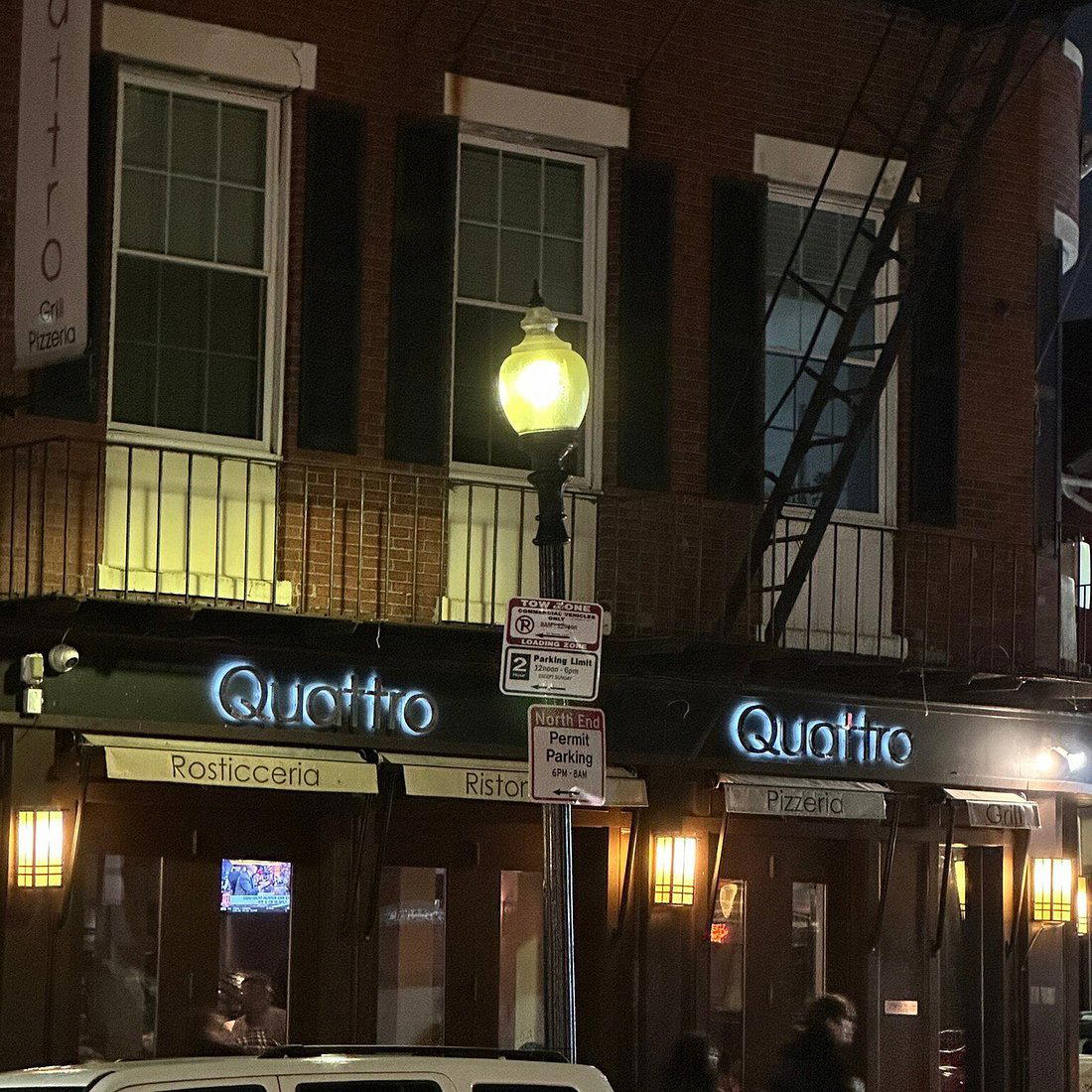
Quattro occupies a North End address on Hanover Street, positioning it inside Boston's most historically Italian dining corridor. The restaurant sits in a neighbourhood where red-sauce tradition and modern Italian ambition coexist, making it a useful reference point for understanding where Boston's Italian dining scene has moved and where it still holds its ground.

Pearl is the En Primeur Club membership app, where members save venues, book tables and use the concierge.
The menu
What to order
- Brick Oven Pizza
- Pizza Fritta
- Rotisserie Meats
- Handmade Pasta
Hanover Street and the Weight of the North End
Arriving on Hanover Street is to walk through one of the densest concentrations of Italian-American dining heritage in the United States. The pavement is narrow, the signage competes aggressively for attention, and the smell of garlic and espresso cuts through even January cold. Quattro sits at 264 Hanover St, which places it squarely inside this corridor, not on the periphery of the neighbourhood, not on a quieter side street, but on the main artery itself. That address is both an asset and a constraint. The foot traffic is real. So is the expectation that anything on this block must justify itself against decades of accumulated neighbourhood identity.
The North End has been Boston's Italian quarter since the late nineteenth century, and its restaurants have always operated under a particular kind of scrutiny. Locals measure new arrivals against memory. Visitors arrive with preconceptions shaped by travel writing that tends to romanticise the neighbourhood's Old World texture. What that means in practice is that a restaurant on Hanover Street cannot simply be competent, it has to position itself clearly in relation to what surrounds it.
Where Italian Dining in Boston Has Moved
Boston's Italian dining scene has fractured into at least three distinct tiers over the past decade. The first is the red-sauce traditionalist tier, which the North End has long anchored, where pasta, veal, and tiramisu perform a version of Italian-American comfort that tourists and long-time residents both seek out. The second is the modern Italian fine-dining tier, where chefs trained in Italy or in European-influenced American kitchens apply more restrained technique and shorter seasonal menus. The third, smaller and newer, is a sustainability-conscious Italian approach, where sourcing decisions are foregrounded, waste is treated as a design problem, and the supply chain gets as much attention as the plate.
For comparison points outside Boston, restaurants like Single Thread Farm in Healdsburg and Blue Hill at Stone Barns in Tarrytown have demonstrated that ethical sourcing can sit at the centre of a premium dining identity without becoming a lecture. Lazy Bear in San Francisco operates in a similarly values-driven format. These are not Italian restaurants, but they represent a template that Italian kitchens across the country are increasingly looking at when they think about how to differentiate in a crowded market. Whether any North End kitchen has fully committed to that model remains one of the more interesting open questions in Boston dining.
The Sustainability Frame in Italian Cooking
Italian cuisine has a structural advantage when it comes to sustainability: the tradition is already built around nose-to-tail animal use, seasonal produce calendars, and the kind of low-waste cooking that produces dishes like ribollita, cacio e pepe, and braised offal. What the modern sustainability movement adds to that foundation is supply chain transparency, naming farms, specifying fishing methods, and treating ingredient provenance as editorial content rather than back-of-house information.
The most credible version of this approach in American fine dining tends to involve long-term supplier relationships rather than seasonal menu rotations that chase whatever is briefly available at a farmers' market. The French Laundry in Napa has operated its own on-site garden for years, setting a benchmark for vertical integration at the high end. Providence in Los Angeles has built a reputation around sustainable seafood sourcing in a city with strong access to Pacific fisheries. In Boston, the conversation around sustainable seafood is equally active, the city's access to North Atlantic fish, shellfish, and lobster gives any restaurant serious use if it chooses to source responsibly and say so. Venues like 75 on Liberty Wharf have worked within that seafood-forward framework, and the broader Boston dining scene tracked by our full Boston restaurants guide reflects a city with growing seriousness about provenance across all categories.
Quattro in Its Neighbourhood Context
At 264 Hanover Street, Quattro operates in a block where the competitive set is almost entirely Italian and where differentiation has to come from something more specific than cuisine category alone. In a corridor that includes well-established names pulling strong repeat business from both locals and visitors, a restaurant's leading argument tends to be either a sharper kitchen identity or a more coherent sourcing story. The latter, in particular, is an area where the North End has historically underdeveloped its potential.
Boston's Italian dining conversation does not exist in isolation from the city's broader fine dining picture. Counterparts like Agosto, which operates as a Portuguese-inspired fine dining chef's counter, demonstrate how tasting-menu formats with strong sourcing narratives can find an audience in Boston even outside the dominant Italian tradition. Meanwhile, the raw bar tradition represented by venues like Neptune Oyster shows that the city's relationship with provenance is already well-developed in the seafood category, the question is whether Italian kitchens in the North End will extend that seriousness to their own supply chains with the same visibility.
For readers comparing Quattro to higher-profile American fine dining destinations, the reference set is worth understanding. Alinea in Chicago, Atomix in New York City, and Addison in San Diego all operate in a tier where sourcing philosophy is publicly documented and critically evaluated. Le Bernardin in New York City has made sustainable seafood sourcing a defining part of its identity. These are different categories and price points, but they establish what the credible end of an ethical sourcing claim looks like in American fine dining. The gap between aspiration and execution in this area tends to be visible to any reader who knows what to look for.
What to Know Before You Visit
Know Before You Go
- Address: 264 Hanover St, Boston, MA 02113
- Neighbourhood: North End, Boston's historically Italian quarter, walkable from Haymarket and Government Center T stops
- Cuisine: Italian, set within the North End's dominant dining tradition
- Phone / Website: Not confirmed at time of publication, verify via search before visiting
- Comparable Boston venues: 1928 Rowes Wharf, Abe & Louie's, 311 Omakase
Frequently asked questions
Where do I go for Quattro?
Quattro is located at 264 Hanover St, Boston, MA 02113, Boston.
How does Quattro compare to other Italian restaurants on Hanover Street in Boston?
Quattro operates at 264 Hanover Street within a block that is almost entirely Italian in its competitive set, meaning differentiation cannot rely on cuisine category alone. Boston's North End has seen a split emerge between red-sauce traditionalists and kitchens foregrounding sourcing rigour and regional Italian specificity, where Quattro sits within that division shapes the experience considerably. Visiting the venue directly or checking current editorial coverage will clarify its current kitchen positioning.
What's the signature dish at Quattro?
Quattro sits at 264 Hanover Street, where the surrounding competitive set runs heavily toward house-made pasta and slow-braised proteins, the dishes that have defined the North End's Italian identity for decades. Contacting the restaurant directly before your visit is the surest way to get current menu details.
Do they take walk-ins at Quattro?
Hanover Street operates at high foot-traffic volumes, particularly on weekends and during summer, when the North End draws visitors from across greater Boston and beyond. Calling ahead or checking the venue directly is advisable rather than assuming availability on arrival.
What makes Quattro worth seeking out?
The address alone positions Quattro inside one of the most historically dense Italian-American dining corridors in the United States. On a block where almost every competitor is also Italian, differentiation has to come from something specific, sourcing, technique, or a defined kitchen point of view, which gives the restaurant a pressure to be precise that less competitive settings don't impose. That competitive density is a quality filter in itself.
What if I have allergies at Quattro?
Italian kitchens in the North End typically work with gluten-heavy pasta formats and shared preparation environments, so assumptions about allergen separation should not be made without direct confirmation. Reach out to Quattro at their 264 Hanover Street address before booking if dietary restrictions apply.
Is a meal at Quattro worth the investment?
What is clear is that Hanover Street pricing reflects real-estate and ingredient costs in one of Boston's most in-demand dining neighbourhoods. Checking current menu pricing directly with the venue will give the clearest picture of what to budget.
Quick Comparison
Comparable venues nearby, for context on price, style, and recognition.
| Venue | Cuisine | Price | Awards | Notes |
|---|---|---|---|---|
| QuattroThis venue (the venue you are viewing) | Neapolitan Pizza & Italian Grill | $30–50 | 50 Top Pizza USA #49 | Not listed |
| Little Steve's Pizzeria | Italian & Greek Pizza | Not listed | Not listed | Symphony |
| Vinoteca di Monica | Rustic Regional Italian | Not listed | Not listed | North End |
| Joia | Modern Italian | $30–50 | Not listed | Downtown |
| Forcella | Modern Italian | $30–50 | Not listed | North End |
| Piccolo Nido | Authentic Southern Italian | Not listed | Not listed | North End |
Recognition history
Dated appearances from independent guides and award organizations, with the underlying list record or original source where available.
50 Top Pizza USA #49
50 Top Pizza
Continue exploring
More in Boston
Restaurants in Boston
All restaurants in Boston →
Bars in Boston
All bars in Boston →



Details
- Classic
- Rustic
- Lively
- Casual Hangout
- Group Dining
- Family
- Open Kitchen
- Beer Program
- Local Sourcing
- A La Carte
- Wine
- Beer
- Cocktails
- Vegetarian Friendly
- Vegan Options
- Gluten Free Options
Current opening hours
- Monday
- 11 AM–11 PM
- Tuesday
- 11 AM–11 PM
- Wednesday
- 11 AM–11 PM
- Thursday
- 11 AM–11 PM
- Friday
- 11 AM–12 AM
- Saturday
- 11 AM–12 AM
- Sunday
- 11 AM–11 PM
Hours can change for holidays and private events. Hours as of .
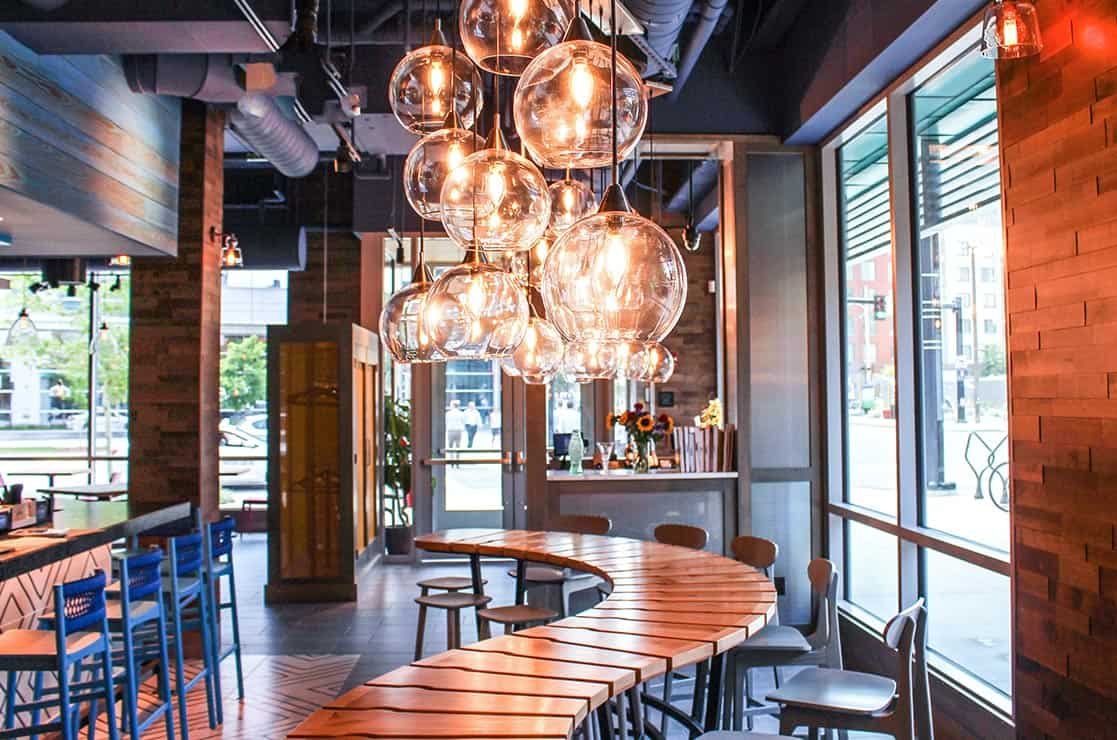
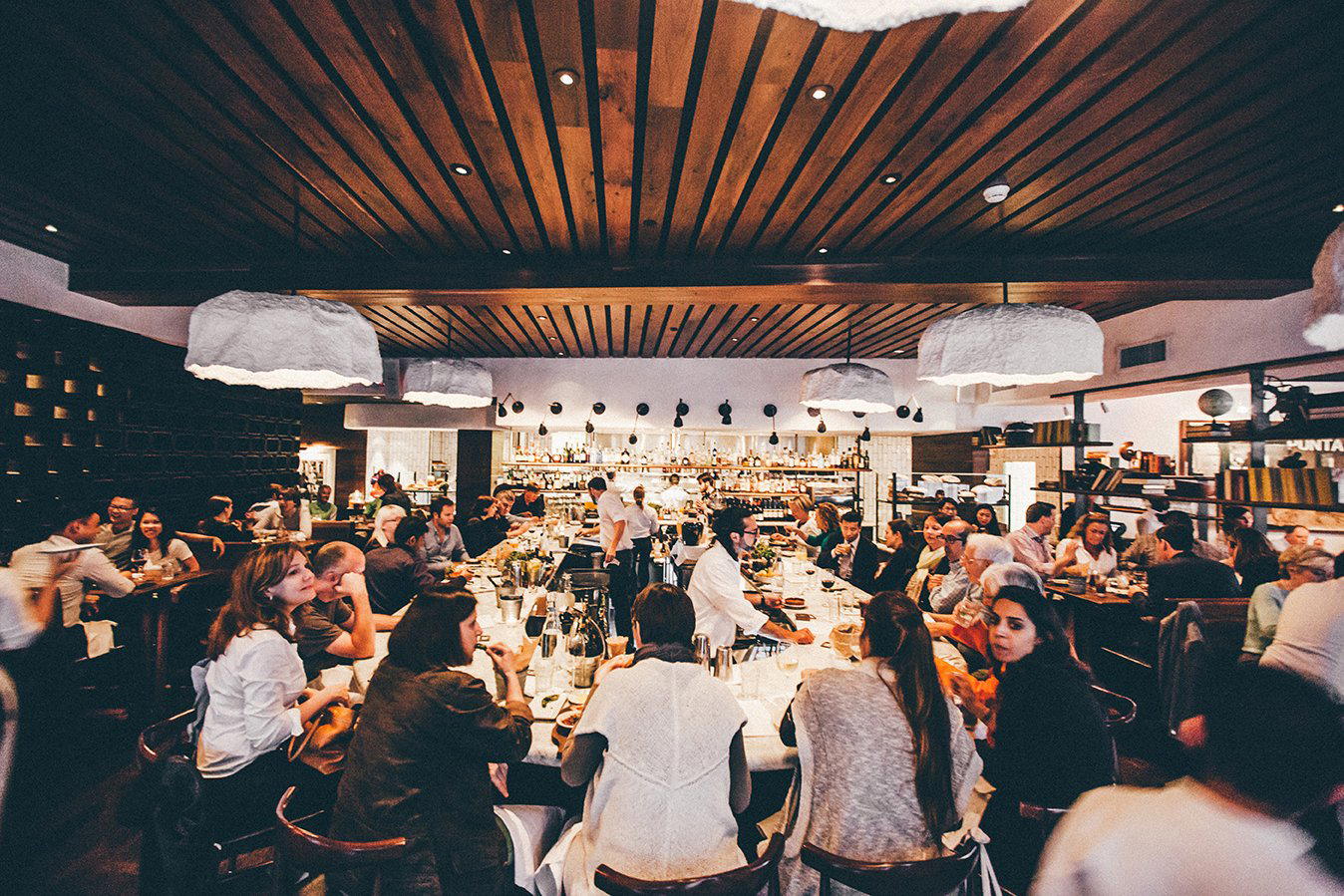
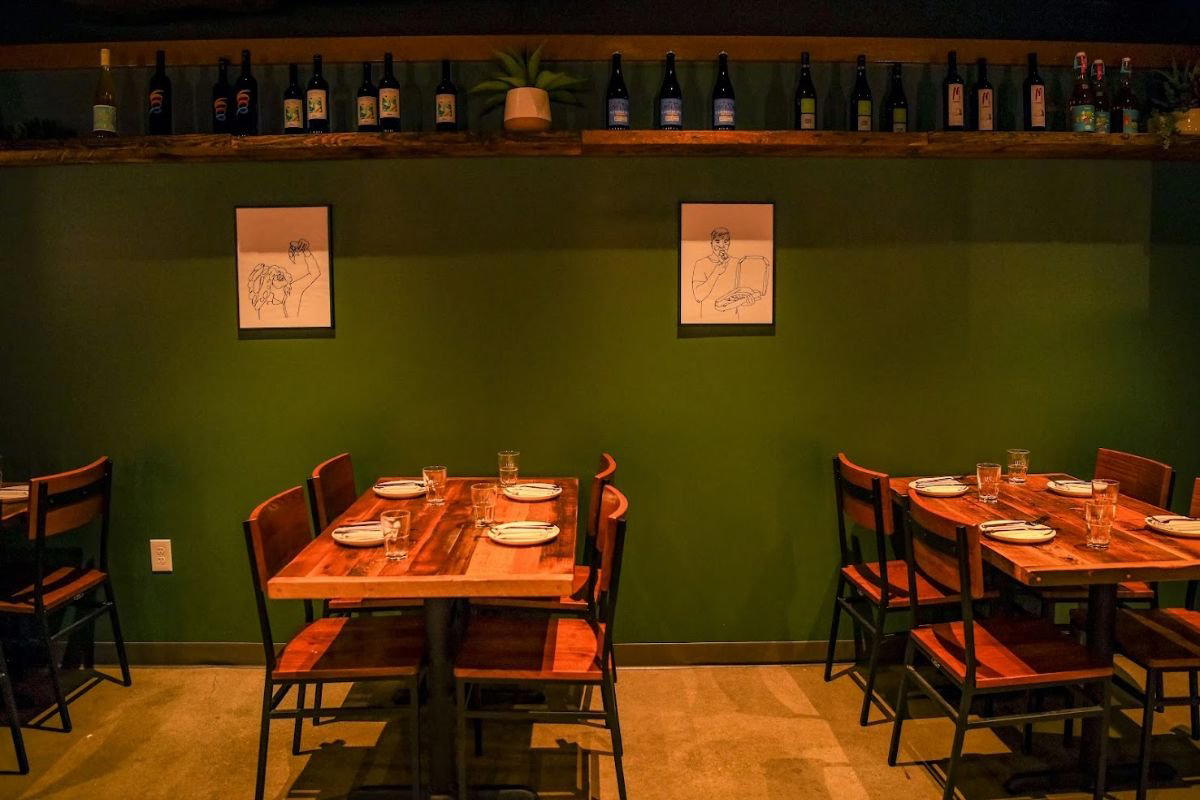
Contemporary casual dining with spotless, remodeled interior; visible rotisserie and brick oven create an open, energetic atmosphere.