Tartufo Osteria
Our verdict
Tartufo Osteria occupies a corner of the far West Side at 558 11th Ave, positioning itself within New York's broader Italian dining tradition at a moment when the osteria format is being reconsidered across the city. The name alone signals a culinary commitment: tartufo, the truffle, carries centuries of Italian regional pride and a clear statement of where the kitchen's ambitions are pointed.

Pearl is the En Primeur Club membership app, where members save venues, book tables and use the concierge.
The Osteria Format in New York: What It Actually Means
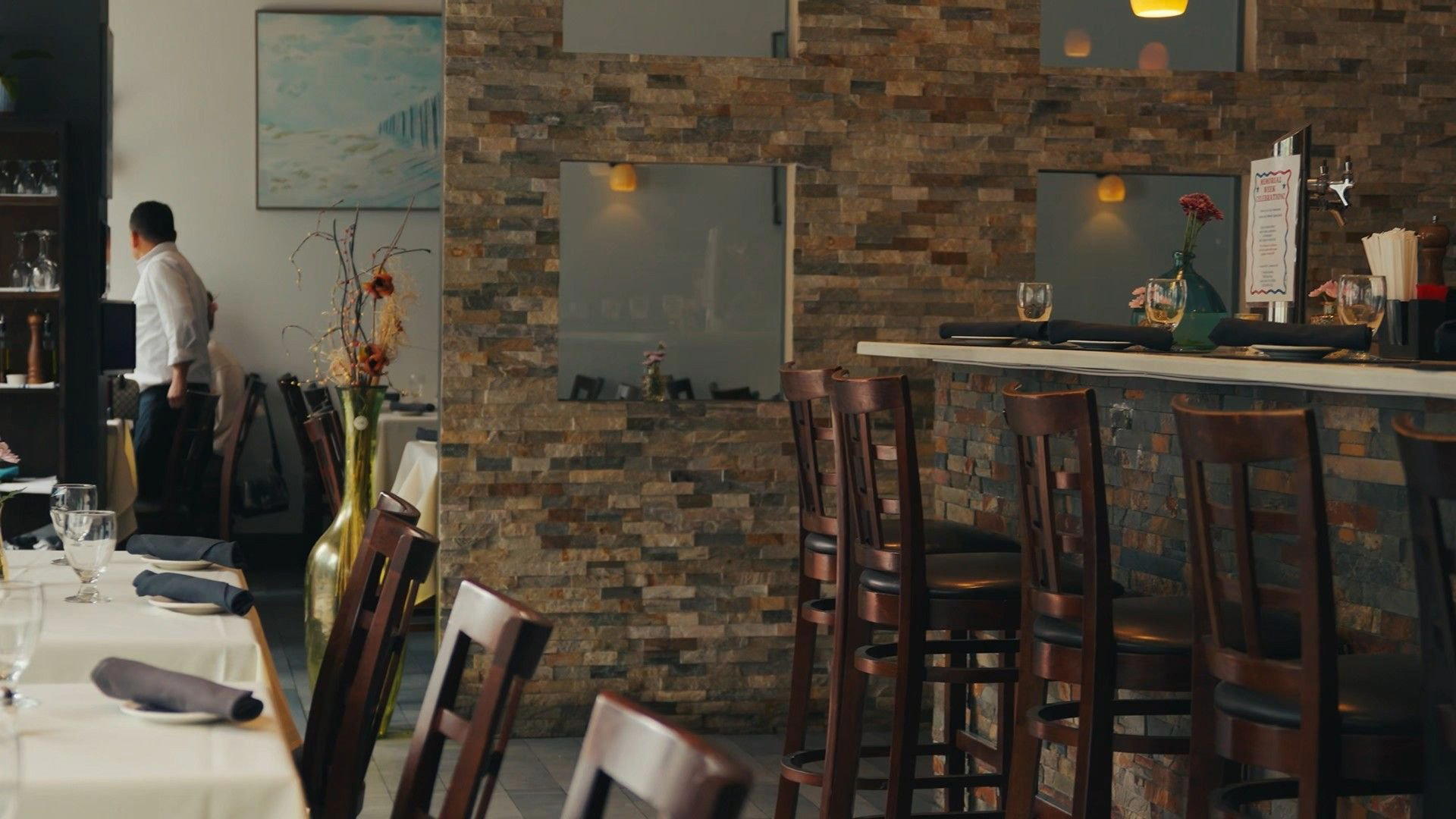
The word osteria carries specific weight in Italian dining culture. Historically, an osteria was a step below a trattoria: a place where wine was the primary business and food arrived as a supporting act, often simple, seasonal, and tied to what the region produced that week. Over the past two decades, the format has been reinterpreted by Italian restaurateurs across New York, sometimes genuinely, sometimes as branding shorthand for a casual price point. The more serious expressions share a common thread: a kitchen that treats the Italian canon as a living document rather than a set of crowd-pleasing templates, and a wine list that earns its placement at the center of the experience.
Tartufo Osteria, at 558 11th Ave in the far West Side of Manhattan, enters this conversation with a name that anchors it to one of Italy's most culturally loaded ingredients. Truffle, in the Italian tradition, is not a luxury add-on. In regions like Umbria, Marche, and Piedmont, it is a seasonal organizing principle around which entire menus are built, and its presence on a restaurant's signage implies a kitchen prepared to handle it with the seriousness the ingredient demands.
A Corner of Manhattan That Rewards the Committed Diner
The far West Side around 11th Avenue has never been the obvious address for Italian fine dining. That geography matters. Neighborhoods that sit outside the established dining corridors of the West Village, the Flatiron, or the Upper East Side tend to attract restaurants that are there for reasons other than foot traffic: operators who prioritize kitchen space, lower rents that allow tighter margins on ingredients, or a deliberate distance from the scene. The address at 558 11th Ave places Tartufo Osteria in that category, a spot where the diner arrives with intent rather than stumbling in from a gallery opening or a Hudson Yards stroll.
For context, the broader New York Italian dining map has grown more stratified over the past decade. At the leading end, restaurants drawing on Italian technique and seasonal sourcing now compete in the same tier as French and Japanese fine dining. Meanwhile, the middle register has expanded considerably, with neighborhood spots that take wine and pasta seriously without demanding a per-head spend that requires a corporate card. The osteria format, when executed with discipline, sits in a particular band of that range: ambitious enough to require attention, grounded enough to feel like a place rather than an occasion.
Truffle as Cultural Marker, Not Kitchen Gimmick
Across Italian cuisine, the truffle functions as a regional identity marker as much as an ingredient. White truffle from Alba commands a different kind of reverence than the black summer truffle of Norcia, and both sit apart from the truffle-infused oils that have flooded mid-range Italian menus for the past fifteen years. When a restaurant places truffle at the center of its identity, as Tartufo Osteria does through its name, the implicit promise is an understanding of that hierarchy and a sourcing approach that respects it.
The broader New York scene has seen a handful of Italian addresses treat truffle with this kind of seriousness, typically during the Alba white truffle season running from October through December and the black truffle season in winter and early spring. The restaurants that do it well tend to build around the ingredient rather than deploying it as a finishing flourish. That means pasta preparations where the truffle is the architecture, not the garnish, and a kitchen that understands how the ingredient's volatile aromatics respond to heat, fat, and timing.
This places Tartufo Osteria in an interesting position relative to New York's broader Italian dining conversation, and in a different competitive set from the city's high-wattage tasting-menu operations. For comparison, the highest-concentration fine dining addresses in the city, including Le Bernardin, Masa, and Per Se, operate in a register where format, price, and brand architecture are as carefully managed as the plate. An osteria that centers truffle is making a different kind of argument: that the ingredient itself, handled correctly, carries more than enough weight.
Italian Dining Across the EP Club Network
New York sits within a wider map of serious Italian and European-influenced dining that EP Club covers across the United States. Readers exploring the Italian-adjacent or European fine dining tradition beyond New York will find relevant reference points at Blue Hill at Stone Barns in Tarrytown, where the farm-to-table argument is made with European discipline, and at The French Laundry in Napa, which has shaped the American tasting-menu conversation for decades. On the global scale, Alain Ducasse at Louis XV in Monte Carlo and 8½ Otto e Mezzo Bombana in Hong Kong represent Italian-inspired cooking at its most formally rigorous.
Within New York specifically, the city's tasting-menu scene runs from Korean-inflected precision at Atomix and Jungsik New York to contemporary French at Per Se. The osteria format occupies a distinct lane: less ceremonial, more ingredient-focused, and often more wine-driven than the tasting-menu tier. For a fuller picture of where Tartufo Osteria sits in the city's dining geography, see our full New York City restaurants guide.
Readers planning a broader trip that includes dining at this level may also find value in comparing notes with destination restaurants elsewhere in the country, including Alinea in Chicago, Lazy Bear in San Francisco, Providence in Los Angeles, Single Thread Farm in Healdsburg, Addison in San Diego, Emeril's in New Orleans, Bacchanalia in Atlanta, and The Inn at Little Washington.
Planning Your Visit
Tartufo Osteria is located at 558 11th Ave, New York, NY 10036. Given the address on the far West Side, arriving by taxi or rideshare is the most practical approach; the nearest subway stops require a walk across several long crosstown blocks. Dress: Osteria settings in New York generally run toward smart casual; a step above everyday is appropriate without requiring formal attire. Budget: Timing: If truffle is a priority, the Italian truffle season peaks for white truffle between October and December, making autumn the strongest window for a truffle-focused visit.
Frequently asked questions
Where is Tartufo Osteria in New York City?
Tartufo Osteria is located at 558 11th Ave, New York, NY 10036, New York City.
Is Tartufo Osteria in New York City suitable for a business dinner?
The osteria format, historically more intimate and wine-centred than a formal ristorante, tends to create conditions that work well for smaller business meetings where conversation matters. Tartufo Osteria's address at 558 11th Ave places it within reasonable reach of the Hudson Yards corridor and Midtown West offices.
What should I eat at Tartufo Osteria?
The name signals the kitchen's focus: truffle is the through-line, and in serious Italian osteria cooking that means dishes built around the ingredient rather than deploying it as a garnish. Given the 11th Avenue address and the osteria format, traditionally wine-forward, ingredient-driven, expect preparations where truffle functions as a structural element.
Can I walk in to Tartufo Osteria?
Tartufo Osteria sits at 558 11th Ave, a stretch of the far West Side that sees less foot traffic than midtown restaurant rows, which can work in a walk-in diner's favour on quieter weeknights. Contacting the venue directly before arriving without a booking is advisable.
What's the signature at Tartufo Osteria?
The name itself is the clearest declaration of intent: tartufo, Italian for truffle, positions the ingredient as the kitchen's identity rather than a seasonal add-on. In the osteria tradition, that typically means the truffle appears across multiple courses in forms that reflect the regional Italian canon, pastas, risottos, and composed dishes where the funghi drives the flavour logic.
What if I have allergies at Tartufo Osteria?
Italian osteria cooking frequently relies on dairy, gluten, and egg in its core preparations, and a truffle-forward kitchen will almost certainly incorporate these across most dishes. The most reliable course is to call ahead or reach out before your visit to discuss specific requirements with the kitchen.
Should I splurge on Tartufo Osteria?
Truffle-forward restaurants carry pricing that reflects the ingredient's cost, particularly if the kitchen is working with white truffle from Alba or black truffle from Périgord at volume. The 11th Avenue location, outside the premium real-estate corridors of the Upper East Side or downtown, can sometimes translate into better value per plate than comparable cooking commands elsewhere in Manhattan.
The Quick Read
Comparable venues nearby, for context on price, style, and recognition.
| Venue | Cuisine | Price | Notes |
|---|---|---|---|
| Tartufo OsteriaThis venue (the venue you are viewing) | Contemporary Italian Trattoria | $30–50 | Not listed |
| Bar Rocco | Italian American Brasserie | $30–50 | Midtown-Times Square, Italian American Brasserie by Rocco DiSpirito |
| Ramerino | Italian Prime Steakhouse | $50–100 | Midtown-Times Square, Italian Prime Steakhouse |
| Il Pastaio | Housemade Italian Pasta Bar | $30–50 | Midtown South-Flatiron-Union Square, Housemade Italian Pasta Bar |
| Rossini's | Northern Italian Trattoria | $50–100 | Murray Hill-Kips Bay, Northern Italian Trattoria |
| Massara On Park | Not listed | Not listed | Midtown South-Flatiron-Union Square, Modern Campania Italian |