Rossini's
Rossini's serves Northern Italian Trattoria dishes in a historic standalone setting, with live music, a beer program, and a leisurely pace suited to dinner.
Pearl is the En Primeur Club membership app — saves, bookings, and concierge access live there. Same editors, same standards.
- Address
- 108 E 38th St, New York, NY 10016
- Phone
- +12126830135
- Website
- rossinisrestaurant.com
- Directions
- Get directions
 Saves & bookings on Pearl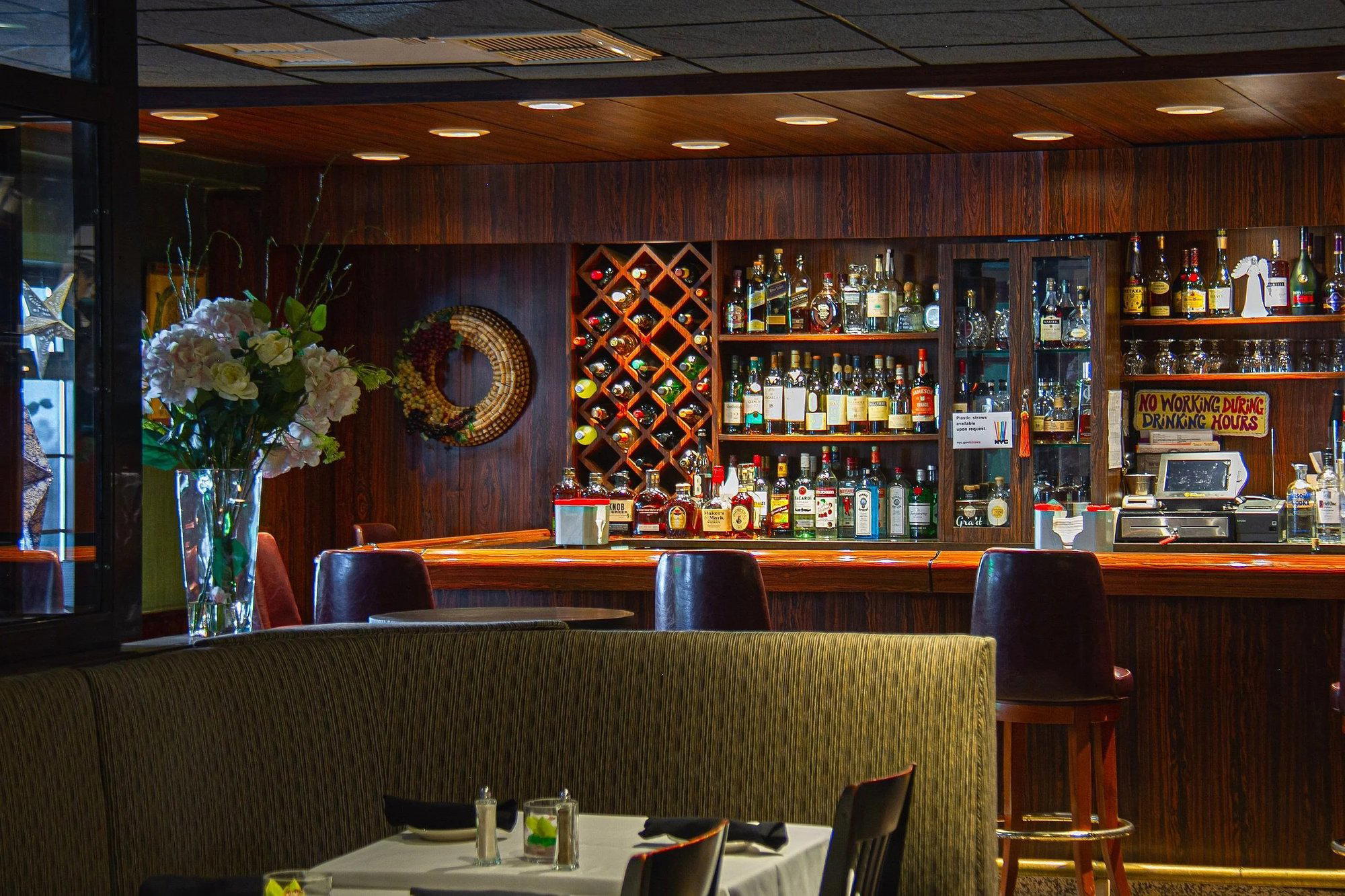
Murray Hill and the Midtown Italian Tradition
East 38th Street sits in a part of Midtown Manhattan that dining guides rarely linger over. Murray Hill has long operated as a residential pocket wedged between the Grand Central corridor and the Flatiron, its restaurant scene shaped more by neighbourhood loyalty than destination traffic. That context matters for understanding what a place like Rossini's represents: a dining room that draws from a tradition of white-tablecloth Italian hospitality that once defined New York's professional lunch culture and has since thinned considerably as the city's appetite for tasting-menu formats and chef-driven concepts has pulled attention elsewhere.
The Italian-American fine dining category in New York has split over the past two decades. One tier moved toward trattoria informality; another toward contemporary Italian with modernist technique. A smaller cohort held the line on classical service and multi-course formality, and it is in that cohort that an address like 108 E 38th St carries its meaning. For comparison, the upper end of Manhattan's dining market is now dominated by rooms like Le Bernardin and Per Se, where the tasting-menu structure is explicit and the price point reflects it. Classical Italian rooms occupy a different register, one where the sequencing of a meal is implied rather than engineered, and where the kitchen's authority is expressed through execution rather than concept.
The Arc of a Meal in a Classical Italian Room
In rooms operating within the Italian dining tradition, the progression of a meal follows a logic that predates the contemporary tasting menu entirely. It begins not with an amuse-bouche but with the decision between antipasto and something from the pasta section, and that early choice sets the pace for everything that follows. A well-run classical Italian kitchen reads the table's rhythm: whether the party is lingering or moving, whether a secondo is being ordered or whether the evening will end at pasta. This kind of hospitality intelligence is harder to maintain than a fixed-course format, and it is increasingly rare in New York's mid-to-upper tier.
The multi-course Italian meal, when executed properly, builds in a particular way. Antipasti are light in portion but not in flavour, designed to open appetite rather than satisfy it. Primi, the pasta or risotto course, carry the meal's structural weight: this is where the kitchen demonstrates technique, where seasoning decisions matter most, and where the difference between a serious Italian kitchen and a serviceable one becomes legible. Secondi shift the register toward protein and longer cooking. The sequence then closes through formaggi or dolci, a transition that good Italian rooms pace carefully rather than rushing.
At an address like Rossini's in Murray Hill, this progression is the organizing principle of the experience rather than an innovation layered over it. That represents a distinct position in the current New York market, where Atomix and Jungsik New York have built reputations around explicitly engineered tasting sequences, and where the implicit sequencing logic of a classical European room is a less common proposition.
Where Rossini's Sits in the New York Dining Conversation
The broader US fine dining market has seen significant consolidation around a handful of structural models. Destination restaurants such as Alinea in Chicago, The French Laundry in Napa, and Lazy Bear in San Francisco have anchored a format in which the menu is fixed, the experience is choreographed, and the restaurant functions as the primary destination for the evening. A different tradition, stronger on the East Coast and in cities with deep Italian-American communities, places the kitchen in service of the guest's choices rather than the reverse. Providence in Los Angeles, Blue Hill at Stone Barns in Tarrytown, and Single Thread Farm in Healdsburg each represent further variations on how American fine dining has adapted European sequencing traditions to local contexts.
Within New York specifically, the classical Italian room occupies a position that Masa does not compete for and that Le Bernardin approaches from a different tradition entirely. The comparable set for a room like Rossini's is smaller and less visible in award cycles, which tend to favour innovation-forward kitchens over those maintaining a tradition. That relative quiet in award culture does not diminish the category; it reflects how Michelin and the 50 Best structures weight novelty. Internationally, the classical European room model is better represented: 8 1/2 Otto e Mezzo Bombana in Hong Kong and Alain Ducasse at Louis XV in Monte Carlo demonstrate that classical European service at this register still commands significant critical and commercial standing when the execution is consistent.
Comparable hospitality traditions appear in other US cities: Emeril's in New Orleans, Bacchanalia in Atlanta, Addison in San Diego, and The Inn at Little Washington each sustain formal dining traditions that are recognisably in the same lineage as the classical Italian room, even where the cuisine differs.
Planning a Visit: What to Know Before You Go
The restaurant is located at 108 E 38th St in Murray Hill, walkable from Grand Central Terminal and accessible from multiple subway lines. The neighbourhood is quieter in the evenings than Midtown's core, which affects both pacing and the ease of arriving on time. For a classical multi-course dinner, arriving without rushing matters; the meal's rhythm depends on it.
Prospective diners should verify current hours, reservation availability, and menu details directly. Operational specifics are best confirmed at the time of booking.
Cuisine and Awards Snapshot
Comparable venues nearby, for context on price, style, and recognition.
| Venue | Cuisine | Price | Notes |
|---|---|---|---|
| Rossini'sThis venue — the venue you are viewing | Northern Italian Trattoria | $$$ | Not listed |
| Vallata | Roman-Inspired Trattoria | $$$ | Midtown South-Flatiron-Union Square |
| Sicily | Sicilian Osteria | $$$ | Hell's Kitchen |
| Morandi | Rustic Italian Trattoria | $$$ | West Village |
| Buco | Rustic Italian-Mediterranean | $$$ | Greenwich Village |
| Wayward Fare | Italian Trattoria with Mediterranean Influences | $$$ | Prospect Heights |
Continue exploring
More in New York City
Restaurants in New York City
Browse all →
Bars in New York City
Browse all →
Hotels in New York City
Browse all →





At a Glance
- Classic
- Elegant
- Romantic
- Cozy
- Date Night
- Business Dinner
- Group Dining
- Celebration
- Special Occasion
- Live Music
- Historic Building
- Standalone
- Beer Program
- Local Sourcing
Current opening hours
- Monday
- 11:30 AM–10 PM
- Tuesday
- 11:30 AM–10 PM
- Wednesday
- 11:30 AM–10 PM
- Thursday
- 11:30 AM–10 PM
- Friday
- 11:30 AM–10 PM
- Saturday
- 4:30–10 PM
- Sunday
- 3–8 PM
Hours can change for holidays and private events. Last verified .
Warm, inviting old-world atmosphere with white-clothed tables, murals and paintings on walls, soft live piano music, and well-dressed attentive service creating a nostalgic fine dining experience.