Our verdict
This listing is retired after a June 2026 status audit.
- Address
- C. del Alamillo, 8, Centro, 28005 Madrid, Spain
- Phone
- +34913642088
- Website
- taqueriadelalamillo.com
- Directions
- Get directions
The menu
What to order
- Mole poblano
- Quesadillas con huitlacoche
- Guacamole
- Molcajete
A Centro Street, a Mexican Format, a Madrid Context
La Latina is one of Madrid's most layered residential-and-eating districts. The streets radiating from Plaza de la Cebada carry tabernas that have been frying patatas bravas for decades alongside newer openings that reflect the city's expanding appetite for non-Spanish formats. Calle del Alamillo, a short residential cut in the 28005 postal code, sits inside that mix. When a taquería takes root in this kind of neighbourhood rather than in the more touristically obvious corridors of Malasaña or Lavapiés, it tends to draw a different crowd: residents, repeat visitors who know the area on foot, and the kind of diner who finds a place through recommendation rather than a destination search.
Madrid's relationship with Mexican food has matured considerably over the past decade. The city moved from generic Tex-Mex formats toward venues that treat masa, nixtamal, and regional Mexican cooking with more precision. That shift runs parallel to what happened across European capitals with Japanese, Korean, and Peruvian cuisines: a first wave of approximation followed by a tighter, more ingredient-literate second wave. Taquería del Alamillo occupies a city where that conversation is now at an intermediate point, more informed than it was but still developing relative to the depth you find in cities with larger Mexican diaspora communities.
How the Meal Tends to Move
Taquería formats, at their leading, have a natural sequencing logic that differs from tasting-menu restaurants or à la carte Spanish dining. The meal progresses through accumulation rather than formal courses: something to begin with while settling in, a run of tacos ordered in a considered sequence, and whatever rounds out the table toward the end. In Mexican street-food tradition, that opening gesture is often a salsa tasting, a bowl of consommé, or a plate of totopos with guacamole that sets the chile register for what follows.
The taco sequence itself rewards attention to ordering order. Starting with something cleaner, a taco built around fresh cheese or vegetable fillings, before moving to the richer, slower-cooked proteins, gives the palate room to track the progression rather than arriving at richness from the first bite. Carnitas, barbacoa, and al pastor all occupy different flavor registers: pork carnitas carry rendered fat and citrus, barbacoa brings the deeper, more mineral notes of slow-cooked lamb or beef, and al pastor involves achiote and pineapple acid in a way that reads almost as a palate reset mid-sequence. A table that orders thoughtfully across those categories gets something closer to a structured meal than a simple repeat of the same base with different fillings.
Finishing points in taco-format dining are rarely as formalized as in European restaurant traditions, but the logic still applies. Moving away from the heavier preparations toward something acidic or lighter, whether that's a final taco with pickled vegetables, a agua fresca, or simply the last of the table salsas with fresh tortilla, closes the meal with more coherence than simply stopping at satiation.
Where This Sits in Madrid's Dining Range
Madrid's highest-recognition restaurant tier is dominated by tasting-menu formats with significant price points. DiverXO, Coque, Deessa, DSTAgE, and Paco Roncero represent the creative end of Spanish fine dining, where menus run to multiple courses and evenings are measured in hours. That tier is well-documented and operates with booking windows, dress expectations, and price structures that place it in a separate decision-making category entirely from a neighbourhood taquería.
Taquería del Alamillo sits at the other end of that range, in the casual-format sector where the calculus is different: frequency of return matters more than occasion, and the bar for a successful visit is whether the food is honest and the experience is comfortable rather than whether it represents a technically ambitious statement. Both ends of that spectrum serve legitimate roles in a city's dining life. Spain's broader restaurant culture demonstrates this well: the same country that produces three-Michelin-star operations like El Celler de Can Roca in Girona, Arzak in San Sebastián, and Martín Berasategui in Lasarte-Oria also has a deep culture of everyday eating that runs through bodegas, mercados, and neighbourhood bars. Aponiente, Azurmendi, Quique Dacosta, Mugaritz, Ricard Camarena, Cocina Hermanos Torres, and Atrio in Cáceres each represent different regional expressions of serious Spanish cooking, but the daily eating culture that surrounds them is just as characterful. A taquería in La Latina participates in that everyday register.
For reference points outside Spain, the casual-but-considered taco format in European cities increasingly benchmarks against what serious operations in New York have demonstrated about elevating street-food traditions without losing their accessibility. The structural lessons from places like Le Bernardin and Atomix about sequencing and intention apply even at the informal end of the market, though the execution vocabulary is entirely different.
The La Latina Factor
Neighbourhood context shapes a casual restaurant more than it shapes a destination fine-dining venue. La Latina draws foot traffic on weekend afternoons around the Rastro market and on weekday evenings from residents who eat close to home. A taquería on Calle del Alamillo benefits from both patterns: market-day crowds looking for something to eat after browsing, and local regulars who return on weekday rotations. That dual audience tends to keep informal neighbourhood venues more honest than tourist-corridor restaurants, where turnover pressure can erode quality. See our full Madrid restaurants guide for a wider view of the city's eating by neighbourhood and category.
Planning a Visit
Calle del Alamillo 8 is a short walk from the La Latina metro station (Line 5), placing it within easy reach of the broader Centro district on foot. The street is residential in character, without the bar density of nearby Cava Baja, which means the venue doesn't have a natural pre-dinner or post-dinner circuit built around it in the way that some busier La Latina streets do. Arriving with a plan rather than wandering into the area is the more practical approach.
Verification directly with the venue before visiting is advisable, particularly on Sundays when La Latina's Rastro market drives unusually high foot traffic through the area and informal restaurants can fill without notice.
Quick reference: Taquería del Alamillo, C. del Alamillo 8, Centro, 28005 Madrid. Metro: La Latina (Line 5).
Cuisine and Credentials
Comparable venues nearby, for context on price, style, and recognition.
| Venue | Cuisine | Price | Awards | Notes |
|---|---|---|---|---|
| Taquería del AlamilloThis venue — the venue you are viewing | Authentic Mexican Taqueria | Not listed | Not listed | Not listed |
| Taquería La Lupita | Authentic Mexican Taqueria | $30–50 | Macarfi 6.4 Food Rating | Recoletos |
| Los Aguachiles Velázquez | Pacific Mexican Seafood | $30–50 | Macarfi 7.2 Food Rating | El Viso |
| Los Aguachiles Jorge Juan | Northern Mexican Seafood | $30–50 | Not listed | Recoletos |
| Restaurante Q' Padre | Mexican, Caribbean & Cuban | $20–30 | Not listed | Fuente del Berro |
| Maizal Madrid | Mexican with Spanish influences | Not listed | Not listed | El Viso |
Continue exploring
More in Madrid
Restaurants in Madrid
Browse all →
Bars in Madrid
Browse all →
Hotels in Madrid
Browse all →



Details
- Rustic
- Cozy
- Lively
- Casual Hangout
- Late Night
- Terrace
- Beer Program
- Street Scene
- A La Carte
- Small Plates
- Tequila
- Mexican Beers
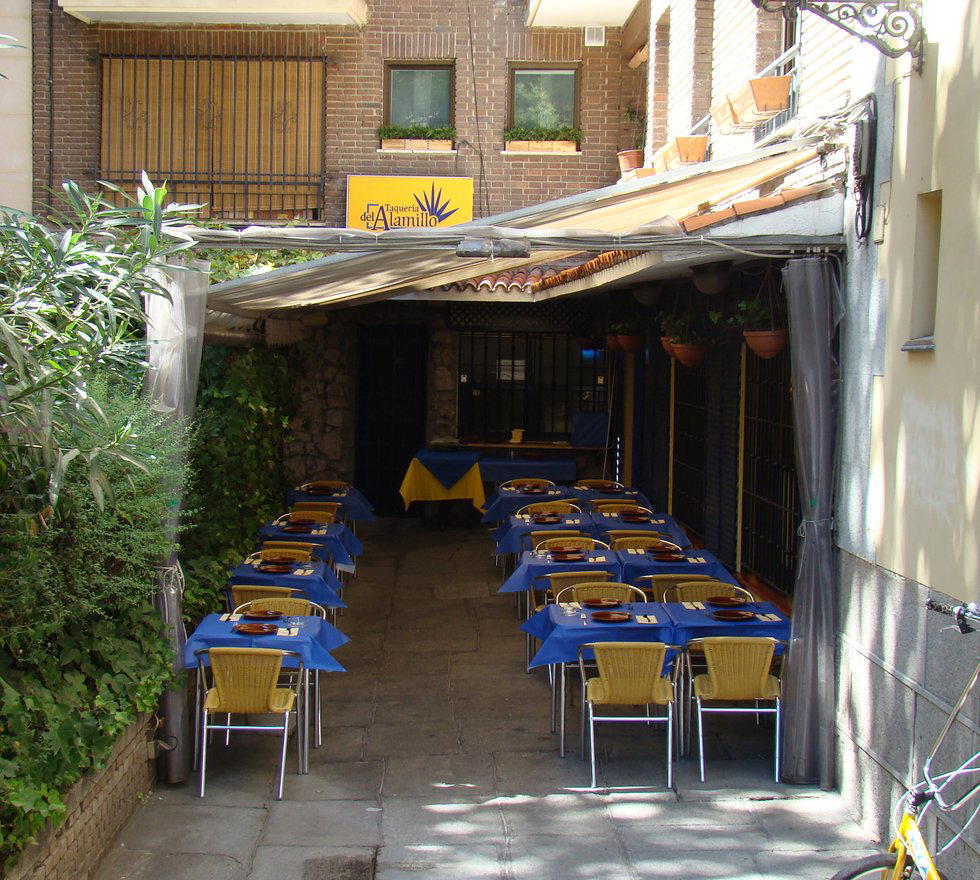
Cozy and charming with an exotic atmosphere and pleasant plant-filled terrace.