Our verdict
On Calle Velázquez in Madrid's Salamanca district, Maizal occupies a corner of the city where regulars return not for spectacle but for consistency — the kind of place that earns loyalty through accumulated evenings rather than a single showpiece meal. Set among the neighbourhood's moneyed residential blocks and embassy row, it represents a strand of Madrid dining that prizes familiarity over theatre.

Pearl is the En Primeur Club membership app — saves, bookings, and concierge access live there. Same editors, same standards.
- Address
- Calle Velázquez, 126, Salamanca, 28006 Madrid, Spain
- Phone
- +34915155442
- Website
- maizalgastronomia.com
- Directions
- Get directions
- Booking
- Book on OpenTable
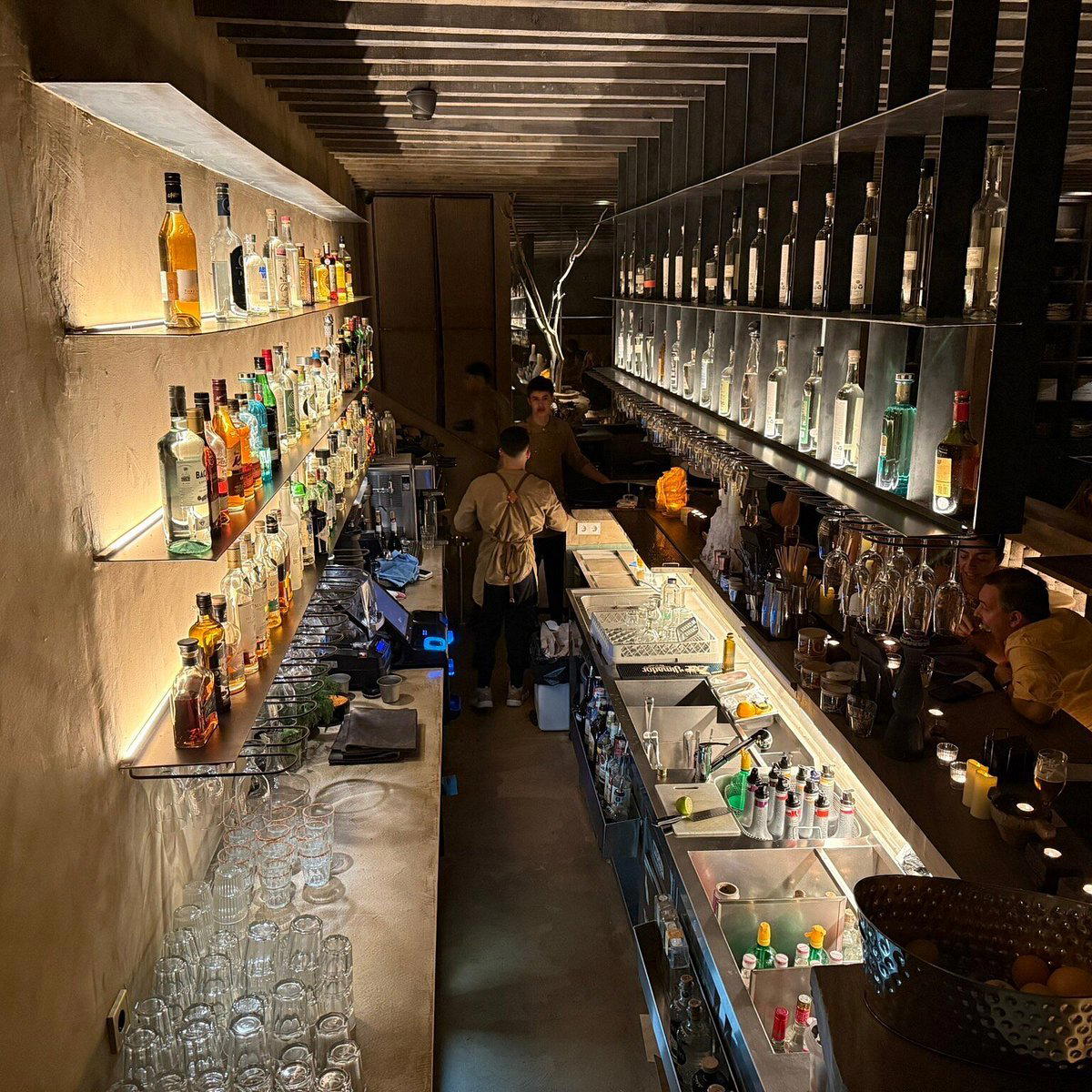
Where Salamanca Eats When It Isn't Performing
Madrid's Salamanca district has two dining registers. The first is the one visible from the street: polished brasseries with brass fittings and wine lists priced for expense accounts, the kind of rooms where lunch runs three hours and the conversation is louder than the food. The second is quieter, more residential, and built on repeat custom rather than first impressions. Maizal Madrid, on Calle Velázquez at the northern edge of the barrio, belongs to the second register.
Salamanca is not a neighbourhood that courts culinary novelty for its own sake. The streets between Serrano and Velázquez have housed the same mix of conservative wealth and international residents for decades, and the dining scene reflects that stability. Restaurants here don't need to chase the food press; they need to satisfy the same tables week after week. That context shapes everything about how a place like Maizal operates and what it means to the people who eat there regularly.
The Regulars and What They Know
In any neighbourhood-anchored restaurant, the repeat customer is the real critic. They arrive knowing which section of the room to request, which dishes hold up across seasons, and which items on the written menu have a better unlisted equivalent. Madrid dining culture, more than most European capitals, is built around this kind of accumulated knowledge — the mesa de siempre, the table that needs no introduction, the order that never changes.
In Salamanca specifically, this dynamic is amplified by the residential density and the relative scarcity of casual-but-serious options at the upper-middle tier. The neighbourhood's premium dining is anchored at the creative end by addresses like DiverXO and Deessa, which sit at a level of culinary ambition and price point that makes them occasions rather than habits. Below that register, and above the neighbourhood tapas bar, there is a tier of restaurants where serious cooking meets genuine regularity — and that is the tier Maizal occupies.
What keeps regulars returning is rarely a single dish or a headline technique. It is more often a combination of spatial comfort, staff who remember preferences, and a kitchen that executes its range with consistent accuracy. In Madrid, as in most cities where dining loyalty runs deep, the restaurant that survives on repeat custom tends to be technically more reliable than its flashier competitors, because it cannot afford a bad night with the same audience twice.
Salamanca's Place in the Madrid Dining Conversation
Madrid's restaurant conversation is frequently dominated by the creative vanguard. The three-Michelin-star ambition of DiverXO, the tasting-menu precision of Coque, and the boundary-testing formats of DSTAgE and Paco Roncero generate the most editorial attention. But Madrid's dining depth is not reducible to its avant-garde. The city's neighbourhoods contain a substantial layer of cooking that operates outside the awards circuit and is none the worse for it.
Salamanca, in particular, has historically supported a style of restaurant that prioritises product quality and kitchen discipline over conceptual novelty. This is consistent with the barrio's identity: it is one of the wealthiest residential areas in Spain, with a population that has strong opinions about ingredients and is unlikely to be impressed by presentation alone. A restaurant that survives here for any meaningful period does so on the strength of what arrives on the plate, not the story told around it.
Spain's broader fine dining geography provides useful context. The country's most awarded tables are distributed across its regions: El Celler de Can Roca in Girona, Arzak in San Sebastián, Azurmendi in the Basque Country, Aponiente in El Puerto de Santa María. Madrid functions as the country's financial and political capital, but its restaurant culture has always been more cosmopolitan and import-driven than product-terroir in the way that, say, Martín Berasategui's Basque heartland is. That cosmopolitanism suits a neighbourhood like Salamanca, where the clientele is as likely to have opinions about French technique as about Castilian roasting tradition.
The Address and What It Signals
Calle Velázquez itself is worth understanding as a locator. At its northern end, approaching the junction with Calle María de Molina, the street transitions from high-end retail into a more purely residential character. This is not the Velázquez of gallery tourists and terrace cafés; it is the Velázquez of embassy buildings, private schools, and apartment blocks with uniformed doormen. A restaurant at number 126 is pitching to a neighbourhood audience, not a tourist circuit, and that positioning carries implications for everything from service formality to kitchen tempo.
For visitors rather than residents, the address is a twenty-minute walk from the Retiro park entrance at Puerta de Alcalá, or a short taxi ride from the Paseo de Recoletos hotel corridor. The nearest metro stops on line 4 serve the area without requiring navigational effort. The practical point is that Maizal is not positioned as a destination in the way that Madrid's marquee tasting-menu addresses are, it does not require pilgrimage planning, but it also sits outside the tourist-frequented cluster around Gran Vía and the Barrio de las Letras. Coming here is a deliberate choice, which means most of the room, on most nights, consists of people who know why they are there.
For a broader orientation to Madrid's restaurant scene across price points and styles, the EP Club Madrid restaurants guide maps the full range. Those exploring Spain's creative dining tier more widely will also find reference points in Quique Dacosta in Dénia, Mugaritz in Errenteria, Ricard Camarena in València, Cocina Hermanos Torres in Barcelona, and Atrio in Cáceres. Internationally, the consistency-over-spectacle philosophy that characterises Salamanca's leading tables has parallels at Le Bernardin in New York and, in a more experimental register, Atomix.
Know Before You Go
- Address: Calle Velázquez, 126, Salamanca, 28006 Madrid, Spain
- District: Salamanca, northern end near Calle María de Molina
- Getting there: Line 4 metro serves the area; taxis from central Madrid are under ten minutes
- Booking: Specific reservation, contact the restaurant directly to verify availability and format
- Price range:, budget in line with upper-Salamanca neighbourhood standards
- Ideal time to visit: Madrid's restaurant culture peaks at lunch on weekdays for business tables, and Saturday dinner for local regulars; both windows apply here
Frequently asked questions
Where exactly is Maizal Madrid?
Maizal Madrid is located at Calle Velázquez, 126, Salamanca, 28006 Madrid, Spain, Madrid.
Is Maizal Madrid connected to Mexican or Latin American cuisine, given its name?
The name Maizal derives from the Spanish word for a maize or corn field, which carries associations with Latin American culinary traditions where corn is a foundational ingredient. The address in upper Salamanca — a neighbourhood oriented toward Spanish rather than international formats — is worth factoring into expectations.
What should I order at Maizal Madrid?
In Salamanca addresses of this profile on Calle Velázquez, kitchens typically anchor around a handful of signature preparations that regulars return to rather than rotating seasonal experiments. The name Maizal — rooted in the Spanish word for a maize field — suggests corn-forward or Latin-inflected ingredients may feature, though the menu composition remains unverified.
Is Maizal Madrid reservation-only?
Restaurants in the residential upper stretch of Calle Velázquez, near Calle María de Molina, tend to draw a loyal local crowd that fills tables on weeknights without walk-in availability. Booking ahead is advisable given the neighbourhood dynamic, where demand is steady rather than driven by tourist footfall.
What do critics highlight about Maizal Madrid?
Its Salamanca positioning on Calle Velázquez places it in a dining context where reputation travels by word of mouth among residents rather than through review-circuit visibility, which is a different kind of credibility from award-driven recognition but a durable one.
Is Maizal Madrid good for vegetarians?
Spanish restaurant culture in conservative residential barrios like Salamanca has historically been protein-centred, though Madrid's broader shift toward flexible menus has reached most neighbourhood kitchens in the past five years. Confirming options directly with the restaurant before visiting is the practical approach.
Does Maizal Madrid justify its prices?
The value framing at any Calle Velázquez address depends on what the kitchen delivers relative to the competition directly around it — a neighbourhood where the baseline expectation is high and the clientele is repeat rather than one-time. Without confirmed pricing, the question is best answered after reviewing the current menu on arrival or via direct contact.
Peers Worth Knowing
| Venue | Cuisine | Price | Awards | Notes |
|---|---|---|---|---|
| Maizal MadridThis venue — the venue you are viewing | Mexican with Spanish influences | Not listed | Not listed | Not listed |
| DiverXO | Avant-Garde Spanish Tasting Menu | $300–500 | 3 Michelin Stars · World's 50 Best #4 | Progressive - Asian, Creative |
| Coque | Modern Spanish Fine Dining | $300–500 | 2 Michelin Stars · La Liste Top Restaurants | Spanish, Creative |
| Deessa | Modern Valencian Fine Dining | $150–200 | 2 Michelin Stars · La Liste Top Restaurants | Modern Spanish, Creative |
| Paco Roncero | Avant-Garde Spanish Fine Dining | $150–200 | 2 Michelin Stars · La Liste Top Restaurants | Creative |
| Smoked Room | Modern Japanese Fire Omakase | $200–300 | 2 Michelin Stars · La Liste Top Restaurants | Progressive Asador, Contemporary |
Continue exploring
More in Madrid
Restaurants in Madrid
Browse all →
Bars in Madrid
Browse all →
Hotels in Madrid
Browse all →


Details
- Casual Hangout
- Family
- A La Carte