TangBa occupies a prominent address on Hauptstätter Strasse in central Stuttgart, placing it within reach of the city's established fine-dining corridor. With Stuttgart's restaurant scene in sustained evolution, TangBa represents a venue to watch for those tracking where the city's dining identity is heading.
Pearl is the En Primeur Club membership app — saves, bookings, and concierge access live there. Same editors, same standards.
- Address
- Hauptstätter Str. 33/35, 70173 Stuttgart, Germany
- Phone
- +4971133626694
- Website
- tangba-stuttgart.de
- Directions
- Get directions
 Saves & bookings on Pearl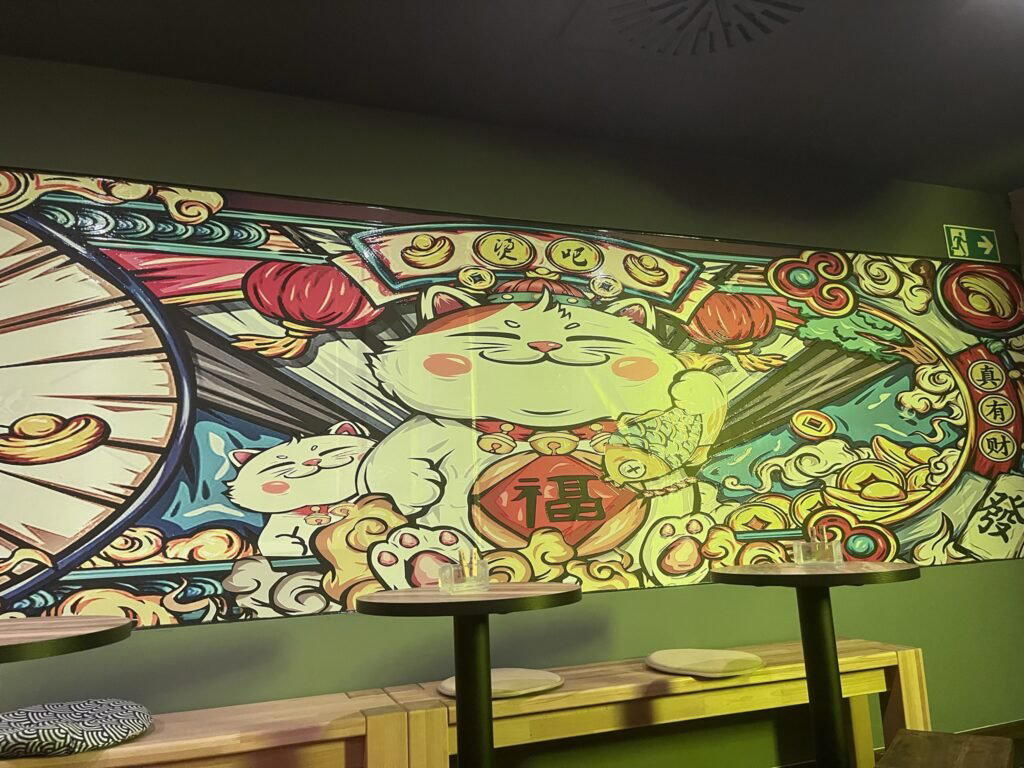
Stuttgart's Dining Scene and Where TangBa Sits Within It
Stuttgart has spent the better part of two decades assembling a varied dining scene. The city tends to draw less international attention than Munich or Hamburg, but the density of serious kitchens per capita tells a different story. Creative and modern cuisine formats dominate the upper tier, with Speisemeisterei, Délice, and Der Zauberlehrling each occupying distinct positions across the creative and classic registers. 5 and Hegel Eins represent the modern cuisine strand that has grown in prominence over the past decade. TangBa, at Hauptstätter Str. 33/35 in the city centre, sits within this scene as a Chinese street food malatang restaurant.
The address itself carries weight. Hauptstätter Strasse runs through the commercial and cultural heart of Stuttgart, connecting the city's shopping corridor to its older residential quarters. A venue at this location is visible, accessible by foot from the main rail hub, and positioned to attract both destination diners and the city's working professional crowd. That dual audience has shaped many of Stuttgart's most durable dining formats, and understanding it is essential context for reading what TangBa is attempting.
The Evolution Question: What This Address Has Become
Stuttgart's restaurant culture has shifted noticeably since the early 2010s. The city once clustered its serious dining in the refined suburbs, the vineyard-facing hillside addresses that carried an implicit association with occasion dining. Over time, the centre has reasserted itself. Operators who might once have sought a view and seclusion are now reading the city differently, recognising that visibility and foot traffic complement rather than compromise a serious dining proposition. This shift mirrors patterns visible in other German mid-size cities, where urban-core dining has increasingly displaced the destination-outside-town model.
TangBa's Hauptstätter Strasse location positions it squarely within this urban-core shift. Whether the format has evolved to match the location, or whether the location was chosen to signal a particular direction, is precisely the kind of editorial question worth tracking. Germany's broader dining evolution over the past five years has seen formats once considered peripheral (Asian-inflected tasting menus, counter-seated casual fine dining, ingredient-led formats borrowing from multiple traditions) move decisively toward the mainstream of serious-restaurant discourse. The cities that have absorbed this most fluidly are those where diners already had a working vocabulary for ambitious food. Stuttgart, with its established tier of creative fine dining and a population accustomed to reference-quality cooking, qualifies.
Across Germany, comparable evolution is visible in venues that have repositioned or reinvented themselves within established dining cities. CODA Dessert Dining in Berlin reframed an entire meal structure around what had previously been a single course. JAN in Munich demonstrated that a non-German sensibility could embed itself credibly within a German fine-dining context. Further afield, Aqua in Wolfsburg and Schwarzwaldstube in Baiersbronn represent the benchmark against which German regional dining is still measured. These reference points matter because they define the register within which Stuttgart's next generation of venues must position themselves.
Reading the comparable set
Within Stuttgart specifically, the competitive grouping that TangBa most naturally sits adjacent to spans the mid-to-upper price tier. Der Zauberlehrling operates at the €€€ level with a creative format; Speisemeisterei and 5 anchor the €€€€ ceiling. That gap between the two tiers has historically been where Stuttgart's most interesting new openings have found traction, formats serious enough to warrant a reservation but not requiring the full ceremony of a multi-hour tasting menu with wine pairings. Whether TangBa is positioning for that middle register or aiming at the upper tier is information the venue itself needs to communicate clearly, since Stuttgart diners are increasingly confident in their ability to read pricing signals and format cues.
The German fine-dining circuit beyond Stuttgart offers additional context. Vendôme in Bergisch Gladbach, Victor's Fine Dining by Christian Bau in Perl, Waldhotel Sonnora in Dreis, and Schanz in Piesport define what sustained critical recognition looks like at the German apex. ES:SENZ in Grassau and Restaurant Haerlin in Hamburg illustrate that serious kitchens operate across a range of formats and city sizes. For international comparison, Le Bernardin in New York City demonstrates what sustained institutional authority looks like in a competitive urban market; Atomix in New York shows how a format can carry a cuisine tradition into new critical territory. TangBa's trajectory will ultimately be read against these kinds of reference points by Stuttgart's more travelled diners.
What to Track at TangBa
Stuttgart's dining scene does not tend to anoint venues quickly, the restaurants that have built durable reputations here have done so over multiple seasons, earning trust incrementally rather than through a single high-profile launch. That dynamic favours kitchens that are consistent rather than merely clever, and locations that are genuinely convenient rather than romantically inaccessible.
The Hauptstätter Strasse address satisfies the convenience criterion straightforwardly. From Stuttgart Hauptbahnhof, the venue is walkable in under ten minutes, which places it on the itinerary of visitors arriving by rail from Frankfurt, Munich, or further afield. Stuttgart's position within the Baden-Württemberg rail network means that a dinner reservation here can anchor an evening for travellers who are not staying overnight, a format that has driven footfall for several of the city's central dining addresses.
Know Before You Go
- Address: Hauptstätter Str. 33/35, 70173 Stuttgart, Germany
- Getting There: Walkable from Stuttgart Hauptbahnhof, approximately 10 minutes on foot; well-served by Stuttgart's central tram network
- Price Range: Not confirmed, verify with venue at time of booking
- Dress Code: Not specified; central Stuttgart dining norms suggest smart casual as a baseline for evening visits
A Pricing-First Comparison
Comparable venues nearby, for context on price, style, and recognition.
| Venue | Cuisine | Price | Notes |
|---|---|---|---|
| TangBaThis venue — the venue you are viewing | Gablenberg, Chinese Street Food Malatang | $$ | Not listed |
| Suzuna | Not listed | $$ | Gablenberg, Traditional Japanese Izakaya & Ramen |
| Block House | Gablenberg, Classic Steakhouse | $$ | Not listed |
| Bull Burgerhouse | Gablenberg, American Burgers & BBQ | $$ | Not listed |
| Büffel & Koi | Dachswald, Japanese-Vietnamese Fusion | $$ | Not listed |
| N14 Restaurant | Gablenberg, Asian Fusion Sushi | $$ | Not listed |
Continue exploring
More in Stuttgart
Restaurants in Stuttgart
Browse all →
Bars in Stuttgart
Browse all →

Hotels in Stuttgart
Browse all →

At a Glance
- Modern
- Trendy
- Casual
- Casual Hangout
- Solo
- After Work
- Open Kitchen
- Standalone
- Beer Program
Current opening hours
- Monday
- Closed
- Tuesday
- 4–10 PM
- Wednesday
- 4–10 PM
- Thursday
- 4–10 PM
- Friday
- 1–10 PM
- Saturday
- 1–10 PM
- Sunday
- 2–9 PM
Hours can change for holidays and private events. Last verified .
Modern, casual Chinese street-food setting with a buffet-style ingredient station and show-kitchen counter.