On Calwer Strasse in Stuttgart's city centre, Bull Burgerhouse represents the more casual, ingredient-focused end of a dining scene better known for Michelin-starred ambition. Where Stuttgart's fine-dining addresses lean toward creative tasting menus, Bull Burgerhouse occupies the counter-programming position: a burger-led format in a city that has historically underserved the category at quality level.
- Address
- Calwer Str. 31, 70173 Stuttgart, Germany
- Phone
- +4971188793222
- Website
- bullburgerhouse.de
- Directions
- Get directions
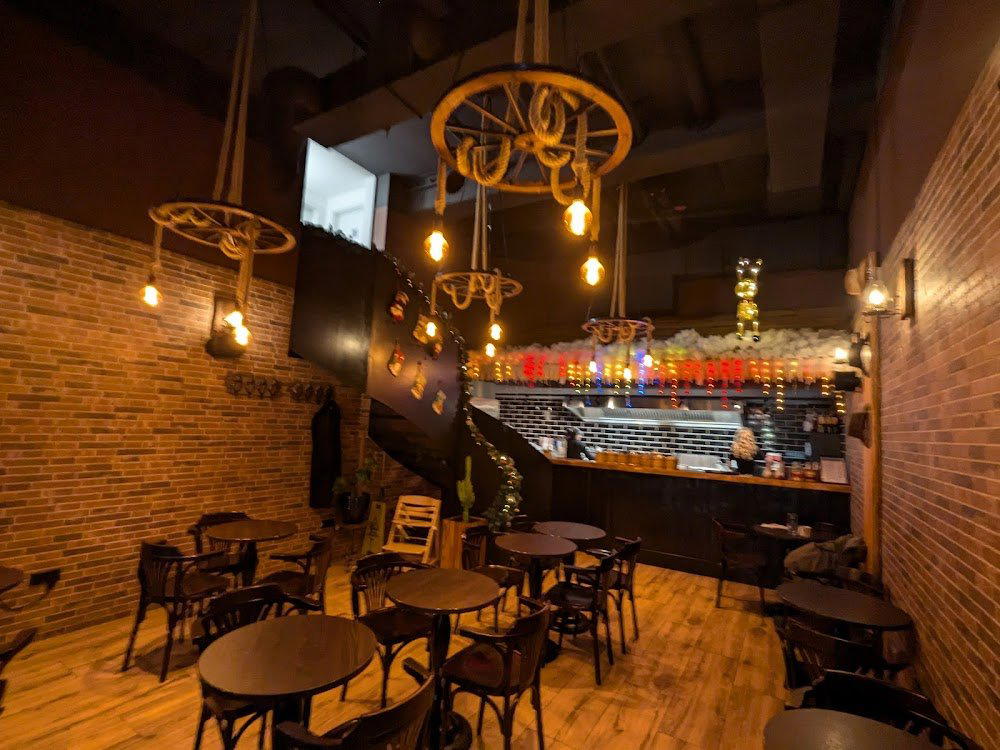
Stuttgart's Burger Scene and Where Bull Burgerhouse Sits Within It
Stuttgart is not a city that made its name on casual dining. Its restaurant reputation was built on the fine-dining corridor stretching from the Weinsteige up toward the Württemberg wine country, anchored by addresses like Speisemeisterei and Délice, and reinforced by the broader Baden-Württemberg region's concentration of serious kitchens, from Schwarzwaldstube in Baiersbronn to Waldhotel Sonnora in Dreis. What this concentration of high-end ambition historically left behind was a credible middle tier: restaurants that take sourcing and preparation seriously without demanding a tasting-menu commitment.
Across Germany's larger cities, this gap has been closing. Berlin's burger and casual dining scene matured a decade ahead of Stuttgart, and Munich's JAN demonstrated that informal formats could sit alongside fine-dining credentials without contradiction. In Stuttgart, Bull Burgerhouse at Calwer Str. 31 occupies this increasingly contested space: a burger-led format in a city that has historically prioritised either the formal or the casual, with little considered ground between.
The Setting on Calwer Strasse
Calwer Strasse runs through one of Stuttgart's more characterful central stretches, close enough to the pedestrian zones to catch foot traffic but with enough neighbourhood texture to feel less transient than the main shopping arteries. The street hosts a mix of independent retailers and eating options that have changed fairly consistently as Stuttgart's inner city has evolved over the past decade. Arriving at Bull Burgerhouse, you are in a part of the city where the built environment is dense and urban rather than the leafy residential settings that frame some of Stuttgart's other dining addresses. The physicality of the space, tight to the pavement, immediate in its street-level presence, signals from the outside that this is a different kind of proposition than the dining room at Hegel Eins or the converted spaces associated with Der Zauberlehrling.
The format is walk-in casual. The restaurant follows that pattern. For visitors arriving from cities with longer waits at comparable spots, the logistics here are likely to be more direct, though peak lunch and dinner periods on weekdays and weekends require patience at any venue operating in a busy central location.
Sourcing, Sustainability, and What the Burger Format Demands
The sustainability question is more pointed in burger-format restaurants than it is in tasting-menu kitchens. A burger operation working at volume faces the opposite pressure: the same cuts ordered in larger quantities, bun production scaled to demand, and a format where consistency requires uniformity rather than improvisation.
Germany's food culture has pushed the sustainability conversation into the mainstream faster than in many peer markets. The country's strong regulatory framework around food labelling and its deep consumer interest in provenance have created conditions where sourcing claims are more likely to be interrogated by regular customers, not just food press. For a burger restaurant operating in a city where the fine-dining comparable set, including addresses comparable to 5 in Stuttgart, treats sourcing as a core identity signal, the expectation that even casual formats engage seriously with ingredient origin has sharpened.
The ethical sourcing argument in beef-centric formats is also structurally complex. Grass-fed, regional, or heritage-breed beef programmes carry significant cost premiums and require supply chain relationships that most volume operations do not build. The more considered burger operations in Germany's larger cities have moved toward smaller supplier relationships, named farms, and reduced menu breadth as a way of making the sourcing commitment viable.
What to Order and How to Think About the Menu
Burger menus in the quality segment have generally stabilised around a smaller core rather than the sprawling options lists that defined fast-casual expansion in the 2010s. The logic is both practical and philosophical: a shorter menu means better execution, less waste, and clearer sourcing. For a kitchen operating in Stuttgart's central restaurant zone, where Speisemeisterei and Délice set the broader tone for what the city's food culture expects, even informal formats face pressure to be deliberate rather than generalist.
What the format and location suggest is that the core burger offering is the primary reason to visit, rather than extended sides or ancillary items. Visitors who have eaten through Germany's more considered burger segment, from Berlin operations that approach ingredient sourcing with the rigour associated with CODA Dessert Dining in Berlin to regional kitchens in the mould of ES:SENZ in Grassau, will recognise the markers quickly: patty quality, bun-to-filling ratio, and whether the kitchen exercises restraint with condiments or defaults to excess.
Placing Bull Burgerhouse in Stuttgart's Broader Dining Picture
Stuttgart's fine-dining tier is genuinely strong by any European standard. The city and its surrounds produce serious kitchens with regularity, and the concentration of Michelin-recognised addresses in Baden-Württemberg rivals regions with far higher international profiles. For context, German kitchens like Aqua in Wolfsburg, Vendôme in Bergisch Gladbach, Victor's Fine Dining by Christian Bau in Perl, Schanz in Piesport, and Restaurant Haerlin in Hamburg operate at a level that competes with any European reference point, including Le Bernardin in New York City or Lazy Bear in San Francisco in terms of technical ambition and produce discipline.
The restaurant does not compete in that register, nor does it try to. Its role in the Stuttgart dining picture is the counter-programming function: a reliable, accessible format on a central street that allows visitors and residents to eat well without the commitment structure of the tasting-menu tier. For a city with Stuttgart's food ambitions, having that tier function at quality level matters.
Planning Your Visit
The restaurant is at Calwer Str. 31, 70173 Stuttgart, a central address reachable on foot from the Stadtmitte U-Bahn station in under five minutes. The format is casual and walk-in oriented, making it a practical option for visitors who have not built restaurant reservations into their Stuttgart itinerary. Price is about $15 per person.
Compact Comparison
Comparable venues nearby, for context on price, style, and recognition.
| Venue | Cuisine | Price |
|---|---|---|
| Bull BurgerhouseThis venue — the venue you are viewing | Gablenberg, American Burgers & BBQ | $$ |
| Burger House | Gablenberg, American Burgers | $$ |
| Buddiez Burger | Gaisburg, Craft Burgers & Fries | $$ |
| 4 Brothers Burger | Gaisburg, Smash Burgers | $$ |
| Pops Burger | Berg, American Smashed Burgers | $$ |
| Esszimmer | Gablenberg, Authentic Thai | $$ |
Continue exploring
More in Stuttgart
Restaurants in Stuttgart
Browse all →
Bars in Stuttgart
Browse all →

Hotels in Stuttgart
Browse all →

At a Glance
- Cozy
- Casual
- Casual Hangout
- After Work
- Group Dining
- Standalone
Cozy atmosphere with attentive service, casual and welcoming environment for burger enthusiasts.